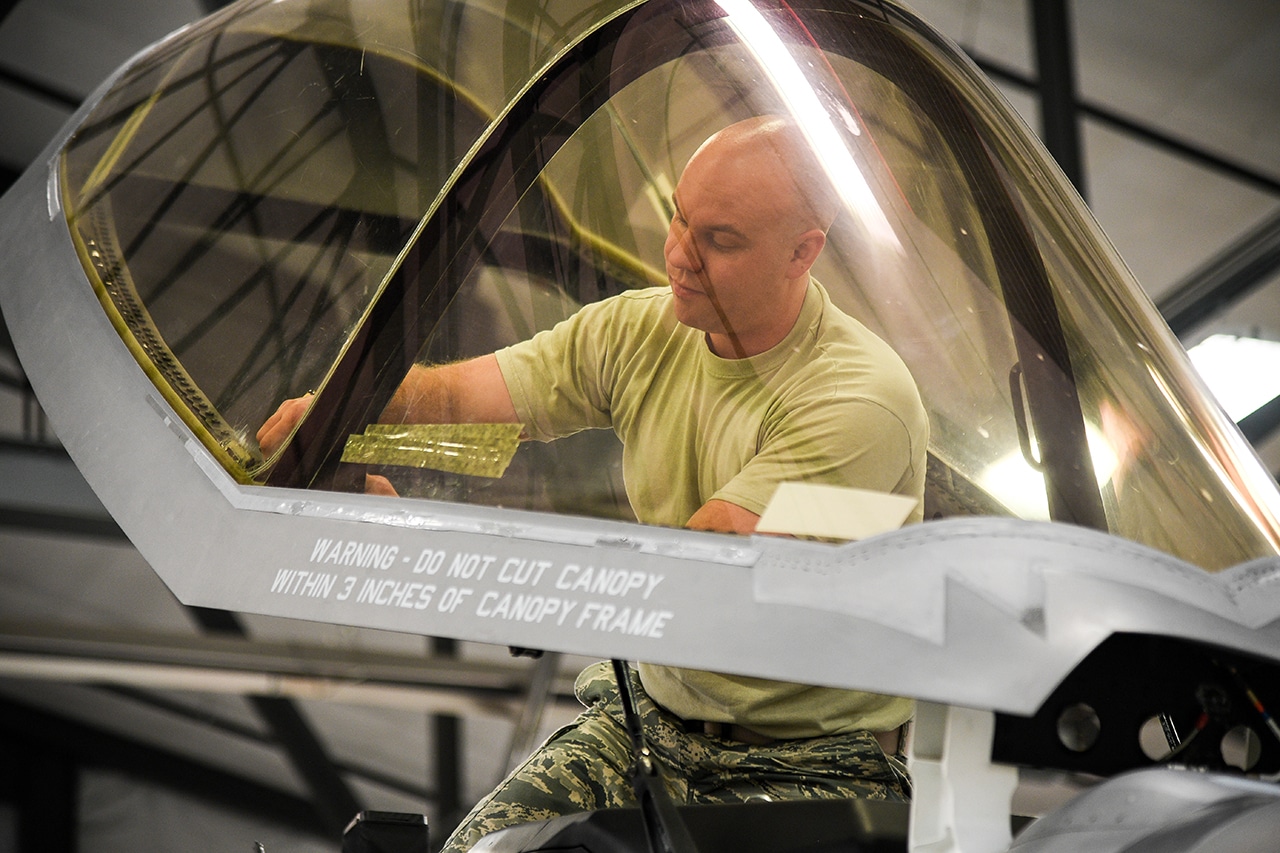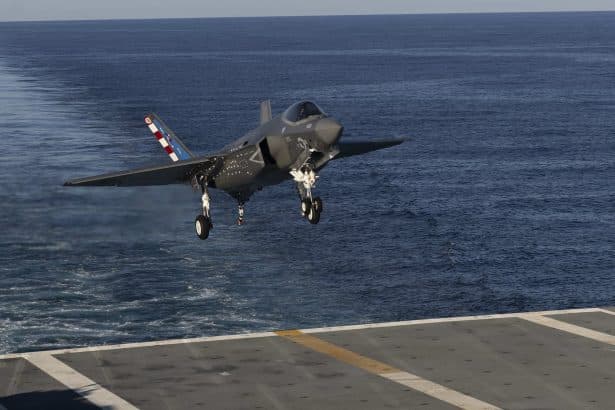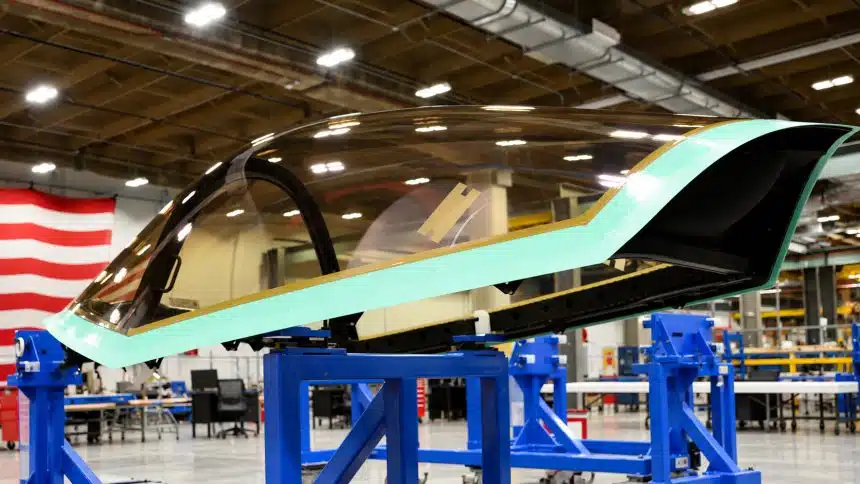
An F-35 canopy won’t give away the secrets of the entire aircraft, but its radar-absorbent coating and construction could still provide valuable intelligence about the 5th generation jet’s Low Observable technology.
As you probably already know by now, a shipment of unserviceable F-35 components, including a canopy, was mistakenly routed through Hong Kong while being transported from Australia to the U.S.. Some of those parts remain unaccounted for, prompting investigations in both the U.S. and Australia and raising obvious questions about whether China may have gained access to components belonging to one of the world’s most sensitive combat aircraft.
We covered the incident in detail here at The Aviationist earlier this week, including what is known about the shipment and the investigation now underway.
The investigation will also determine whether this was simply an extraordinary logistics error or something more deliberate. Inevitably, given where the shipment ended up, questions will be asked about the possibility of an extremely complex Chinese operation to gain access to F-35 hardware. At present, however, there is no publicly available evidence pointing to such an operation.
But one aspect of the story deserves a closer look since it’s been subject to lot of speculations and bad takes online: just how much does it matter if China gets its hands on something like an F-35 canopy?
Australia’s Defence Minister Richard Marles said that the missing parts are ‘not sensitive.’ But the answer to that question requires some nuance.
A canopy or another part of the airframe, like a weapons bay door, is obviously not going to reveal the secrets of the entire F-35, let alone allow anyone to simply reverse-engineer the aircraft. Low Observability is the result of an extraordinarily complex integration of design, materials, sensors, systems and software. Still, having physical access to an actual component can provide opportunities for technical examination that photographs, drawings or even previously obtained data cannot necessarily offer. And the F-35 canopy might be a particularly interesting example.
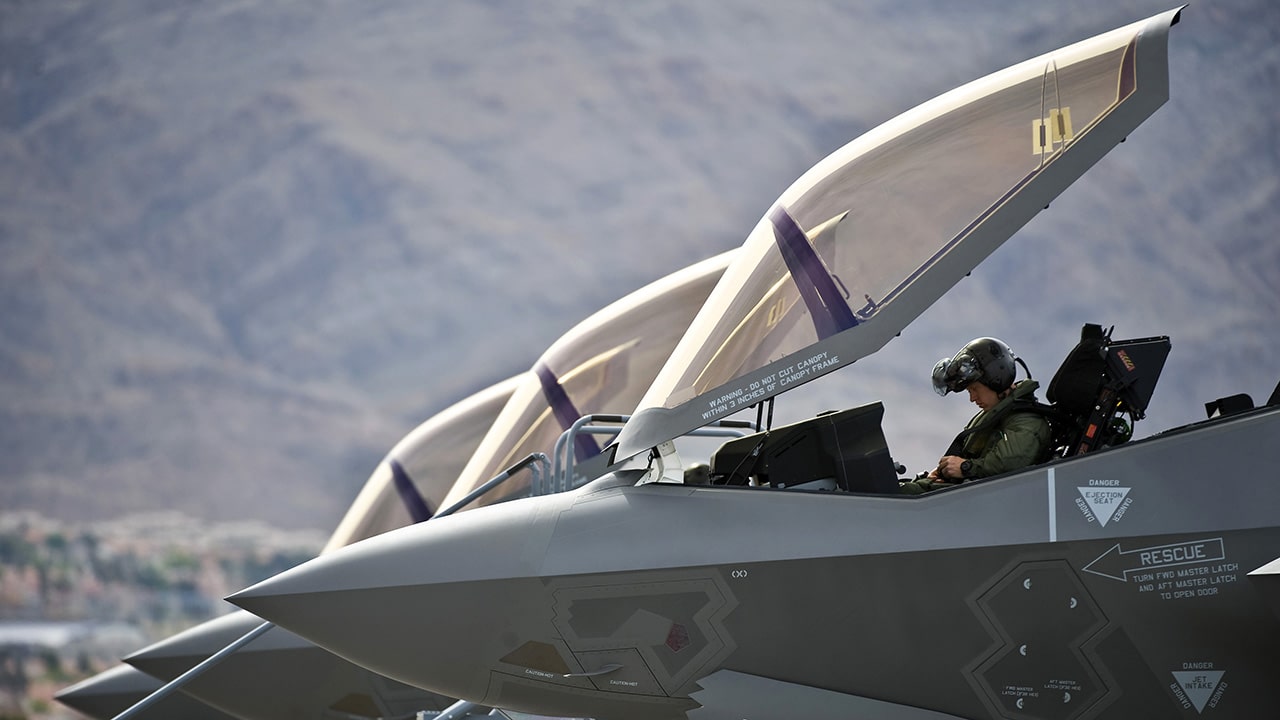
To be honest, I was quite surprised to learn that some F-35 components were sent to Hong Kong. Given the sensitivity surrounding many aspects of the aircraft’s design and technology (including, for instance, restrictions on close-up photography of certain areas and components, from certain angles I personally experienced several times), I was surprised to hear that parts such as these were being transported through commercial shipping channels. I would expect the incident to be causing significant concern.
The F-35 is often described as a “system of systems,” and LO (Low Observability) can be considered a system in itself. It is achieved through the aircraft’s shape, the design and characteristics of its engine, its radar-absorbent materials, and its onboard systems, all tightly integrated and managed through millions of lines of software code. This means that it would be extremely difficult to reverse-engineer the aircraft or reproduce its overall low-observable performance from just a few of its components. That being said, individual components such as a canopy or weapons bay door could still potentially provide useful intelligence about materials, manufacturing techniques, treatments, geometry and other aspects of the aircraft’s low-observable design.
The F-35’s canopy, in particular, is far more sophisticated than a conventional transparent enclosure. Its stretched acrylic transparency is covered by a thin layer of transparent radar-absorbent material designed to reduce radar reflections and help preserve the aircraft’s low-observable signature. According to the U.S. Defense Logistics Agency, degradation of this layer can create a radar-signature vulnerability and affect the aircraft’s full mission capability. In fact, the canopy has been the subject of considerable development and troubleshooting following problems that have affected it over the years.
As early as 2019, the U.S. Government Accountability Office reported approximately 20 incidents in which F-35 canopy transparencies had experienced delamination after fewer than 100 flight hours. Some production batches experienced degradation, peeling and separation of the external coating. In addition to affecting the aircraft’s low-observable characteristics, delamination can degrade the pilot’s visibility through the canopy.
Modifications were introduced beginning in 2019 to mitigate the problem, including the addition of a vent to the canopy frame. However, a 2024 GAO report said some F-35 canopies were still experiencing external-coating delamination and that the program was continuing to work on root causes and corrective actions. More recently, a 2026 GAO report identified the canopy as one of the components constrained by industrial-base capacity and among the top contributors to F-35 non-mission-capable rates, although the report does not attribute those current readiness impacts specifically to coating delamination.
We don’t know the production batch, condition or exact configuration of the canopy involved in this incident.
However, we can certainly say that the canopy is a technologically crucial component of the F-35, particularly from a Low Observability perspective. While it’s probably not the most sensitive one, it is not a component you’d want a competitor to gain access to and examine in detail.