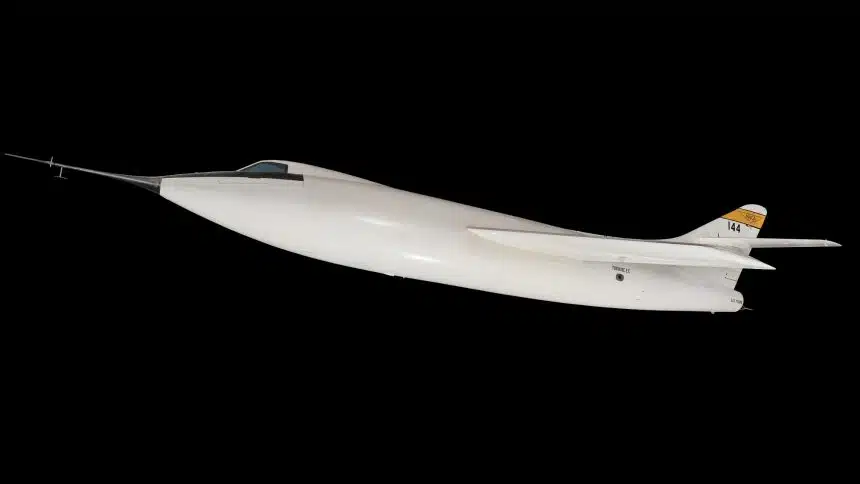
Using both turbojet and rocket propulsion, the Douglas D-558 Skystreak and Skyrocket research aircraft set a series of speed and altitude milestones in the years after World War II, culminating in the first flight beyond Mach 2.
During a period of abundant experimental record-breaking designs, men and machines were pushed to the edge of the envelope in ever increasing speeds and altitudes. The Douglas D-558 series aircraft played a major role in aircraft experimentation and development, eventually becoming the first to fly Mach 2.
The Douglas D-558-1 Skystreak
Kept as simple as possible, the Douglas D-558-1 was designed to meet the requirements of both the NACA (National Advisory Committee for Aeronautics) and the United States Navy (USN) Bureau of Aeronautics for a high-speed research aircraft. This particular aircraft design would focus on researching and studying high subsonic speeds.
Requirements included flight speeds of Mach 0.75 up to 0.85 and to operate at altitudes between sea level and 40,000 ft. The aircraft would also need to gather aerodynamic loads and pressure measurements in free flight at these speeds and altitudes; as such data could not be obtained from wind tunnels at that time.
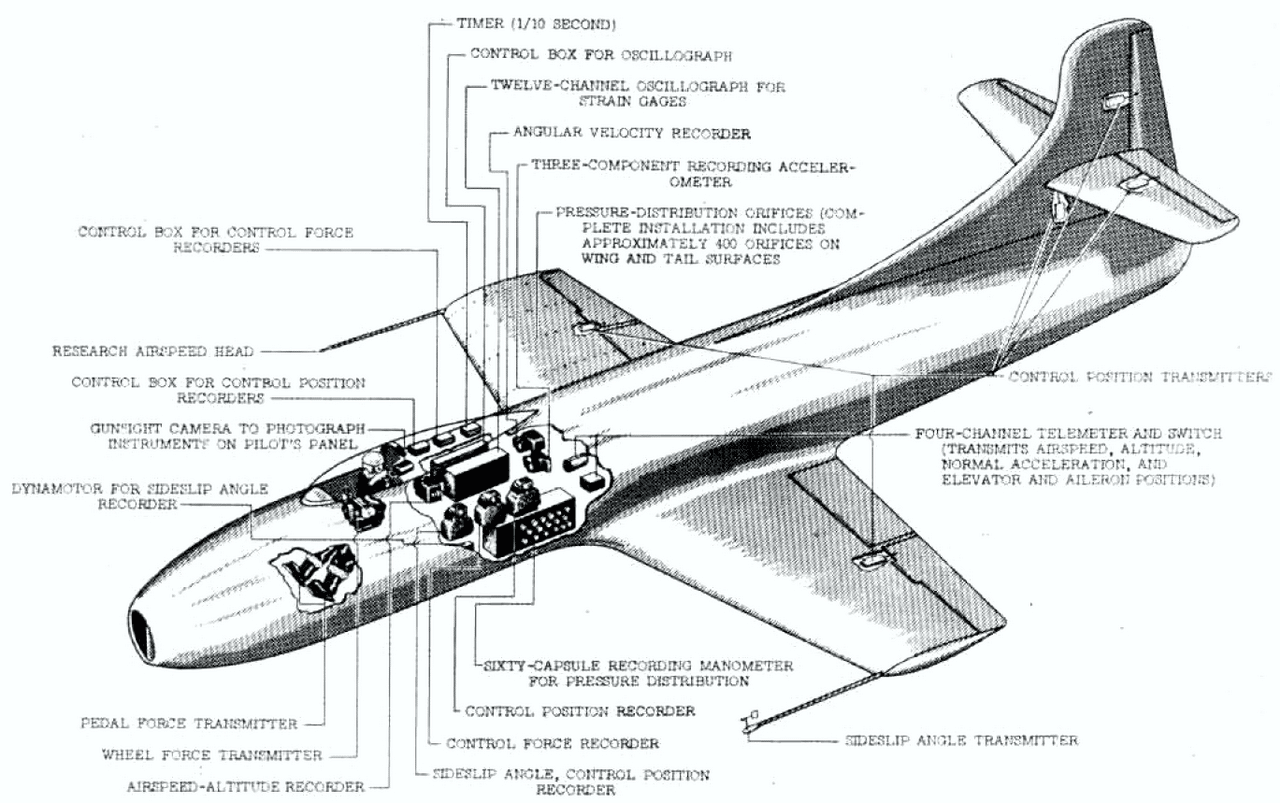
An automated pressure recording system had 400 measuring points from the airframe connected to it, along with strain gauges placed on selected tail section and wing section positions. At least 500 lbs of instruments would need to be carried.
The D-558-1, known as the Skystreak, was a cantilever low-wing aircraft with large vertical tail surfaces and the horizontal tail surfaces attached one-third up the vertical fin. Tricycle retractable landing gear kept the aircraft streamlined along with the slender circular fuselage design. The aircraft would be required to take off and land on its own power.
The pilot sat in a single-seat cockpit that in an emergency would be jettisoned with the entire nose section from just rear of the pilot’s seat forward. It was intended the pilot would then bail out conventionally from this jettisoned nose section after separation and slowing.
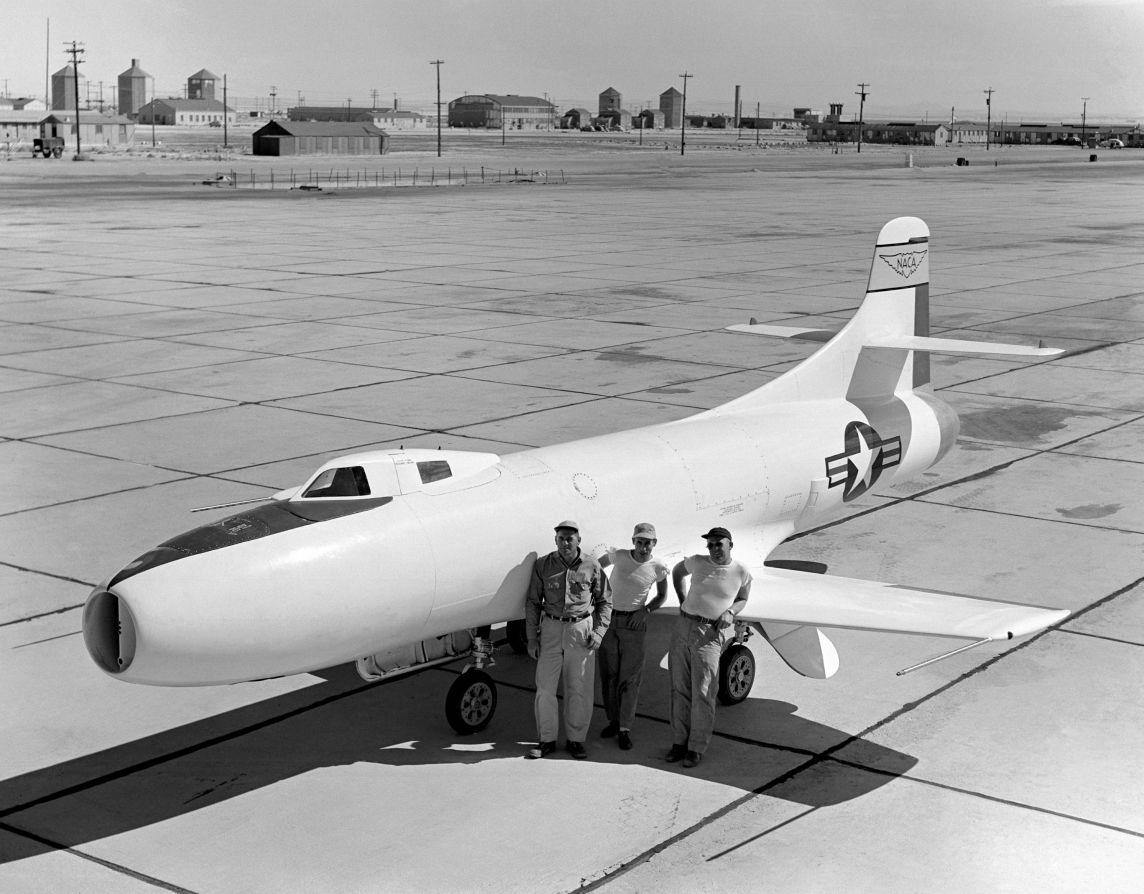
Originally fitted with a rounded windscreen, a more streamlined V-shaped unit was later installed for high-speed testing. This configuration further shrank the room in the cockpit and mandated the pilot wear a chamois covering on his helmet or a soft helmet to prevent scratching the glazing.
A total of three D-558-1s were constructed, with the first flight in the spring of 1947 at Muroc Army Air Field (Edwards Air Force Base) by Douglas test pilot Eugene F. May. Powered by a single Allison J-35-A-11 turbojet, a new world speed record was established on Aug. 20, 1947 of 640.743 mph (miles per hour) average speed by the first D-558-1 flown by USN Commander Turner Caldwell at an altitude of 75 ft [note: NASA gives 640.663 mph, while the Navy museum gives 640.743 mph]. That record was soon shattered five days later when an average speed of 650.6 mph was reached in the second D-558-1 flown by Marine Lt. Colonel Marion Carl at times at only 25 ft in altitude.
Records claimed by the Germans during the war years flying the Me 163 Komet were achieved in secrecy, without official observers and not under strict regulated conditions using timed runs, so the Komet was not officially recognized as holding the official air speed record.
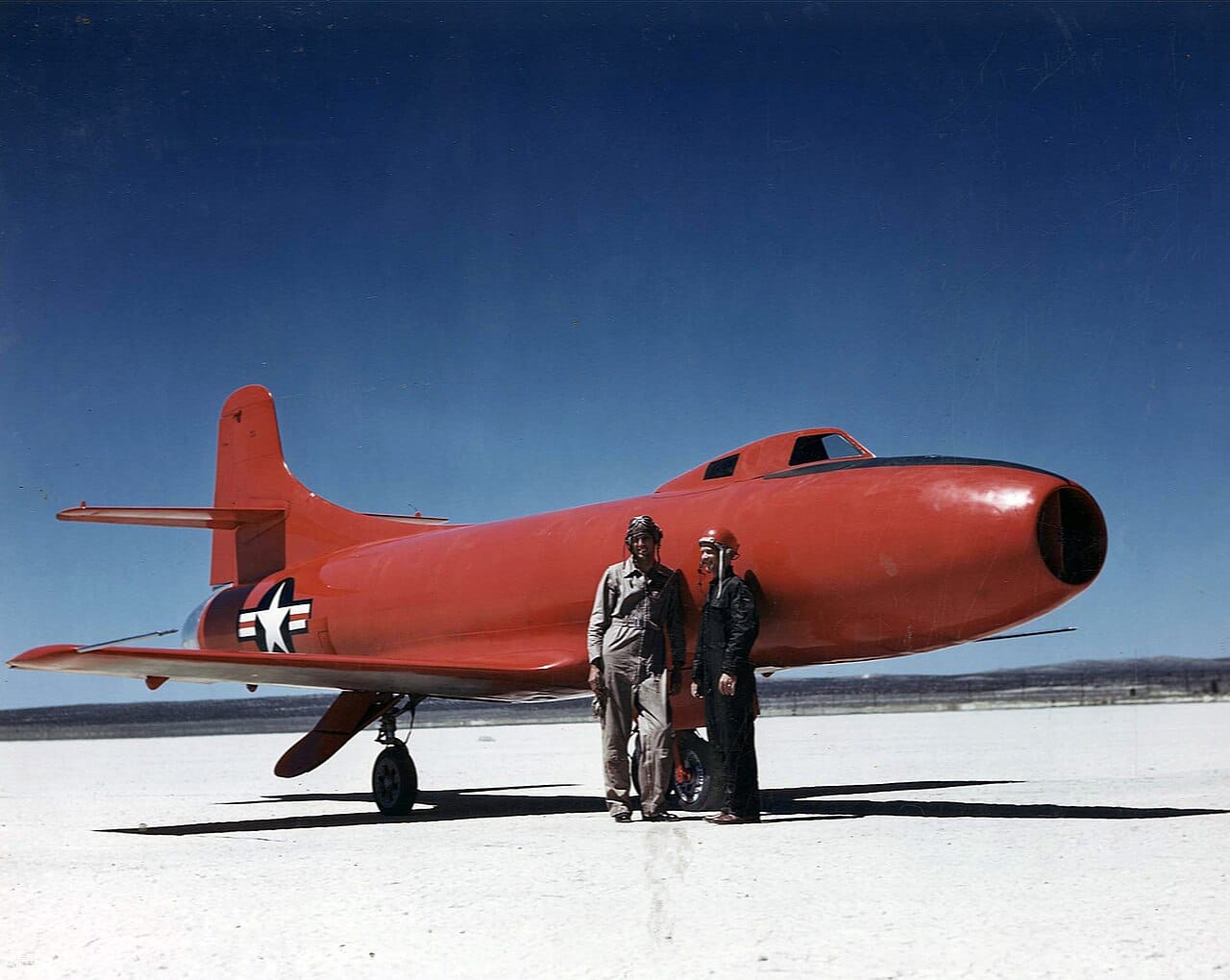
The second D-558-1 was lost on May 3, 1948 when the engine compressor disintegrated after takeoff, killing NACA pilot Howard C. Lilly. It had completed 27 flights total before NACA instrumentation, then Lilly flew five NACA research flights in spring 1948 before the fatal crash. A third Skystreak completed a total of 82 flights by June 10, 1953. The third aircraft had been kept in operation with spares and components robbed from the first prototype: NACA 140 was never flown by NACA and was used as a spares source for NACA 142. Three additional D-558-1 examples were cancelled.
The D-558-1 held the distinction of the fastest aircraft in the world for a short time, as the bright crimson painted Skystreak was soon overshadowed by the X-1 and Captain Chuck Yeager. Eventually the paint was changed to white in order to improve visibility, tracking, and photography. The aircraft had played an important role in research flying extended periods at transonic speeds.
The Douglas D-558-2 Skyrocket
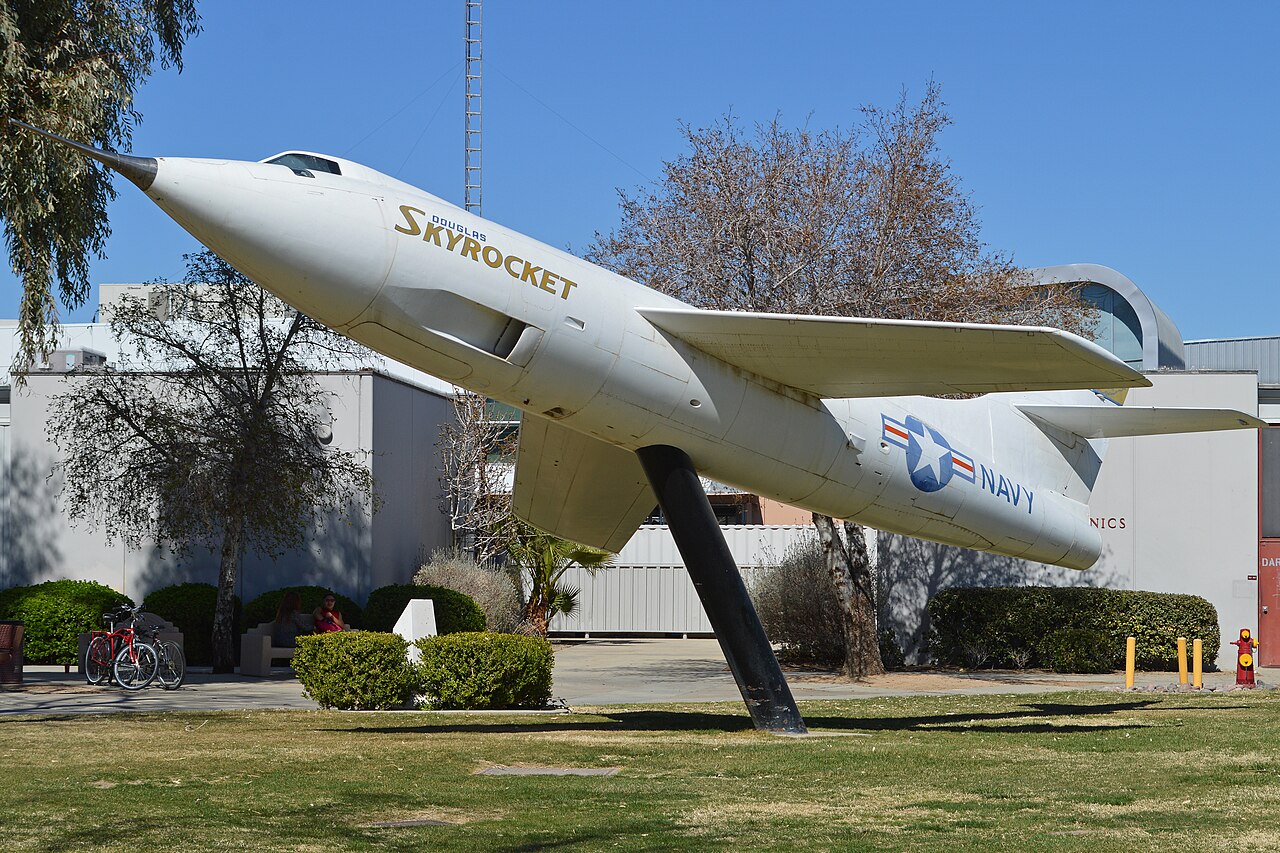
The phase-two version of a planned three-phase program, the D-558-2 became more than just a modified D-558-1. Designer Ed Heinemann determined his previous design would need extensive modifications to allow for two sources of propulsion, both jet and rocket. The fuselage would need to be larger and a smaller turbojet used. However, Heinemann also wanted to develop sweptback wings as well for the aircraft. This led to a new and different research aircraft designated the D-558-2 Skyrocket.
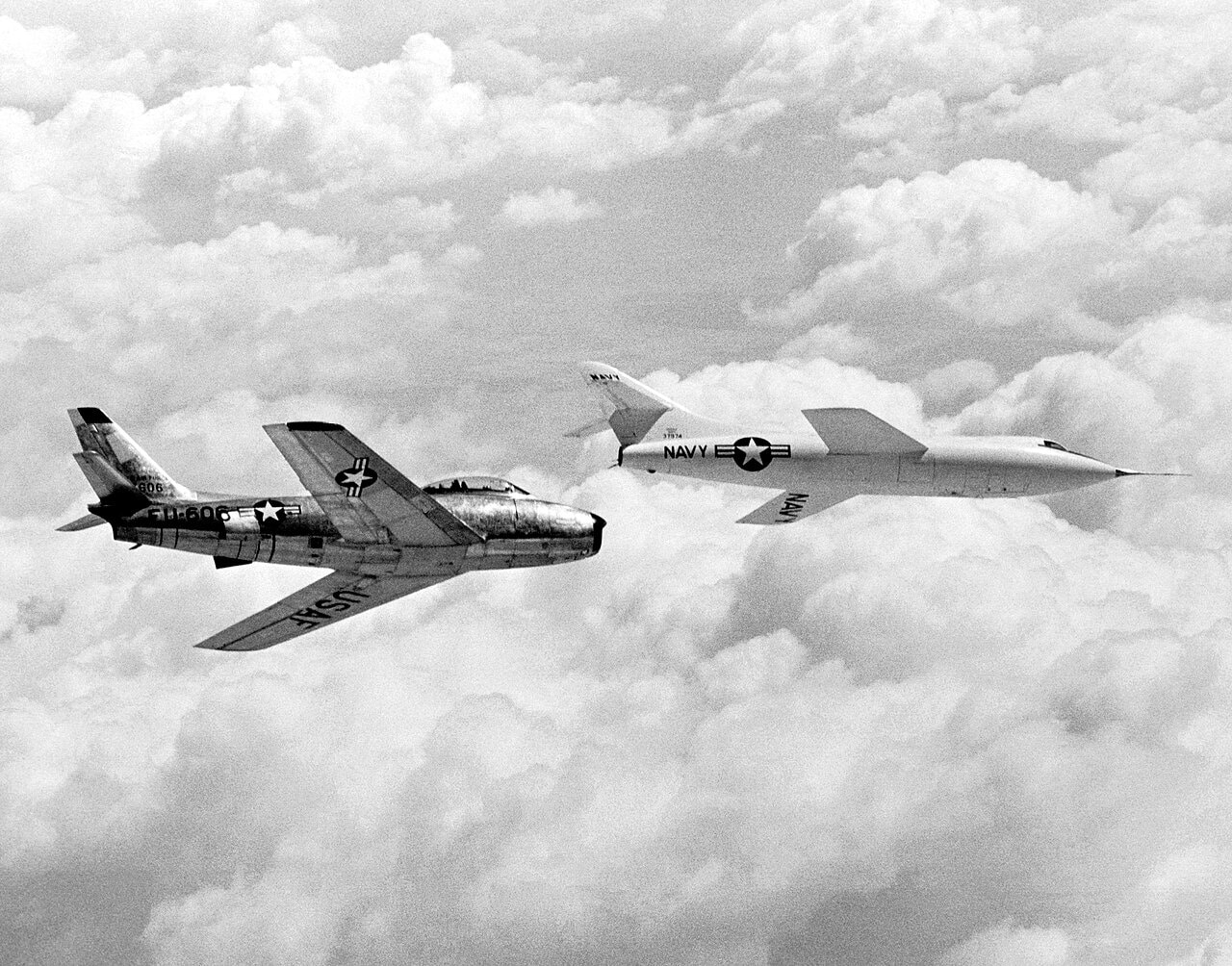
Three D-558-2 aircraft were substituted for the original additional three D-558-1 cancelled aircraft. Mid –set wings sweptback at 35 degrees produced a wing span of 25 ft and complemented by horizontal stabilizers swept at 40 degrees. The design retained the jettisonable nose section and tricycle landing gear of the Skystreak.
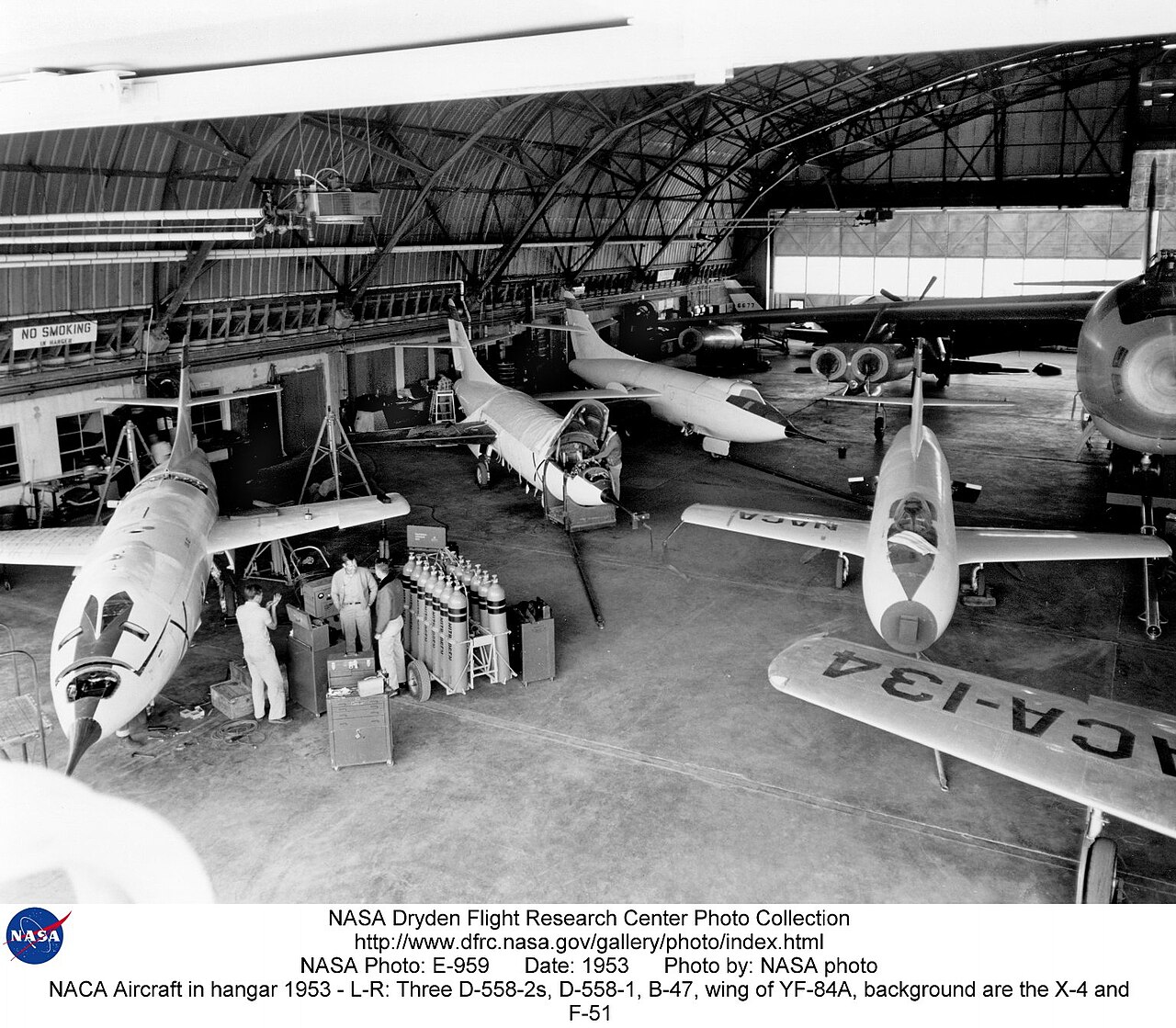
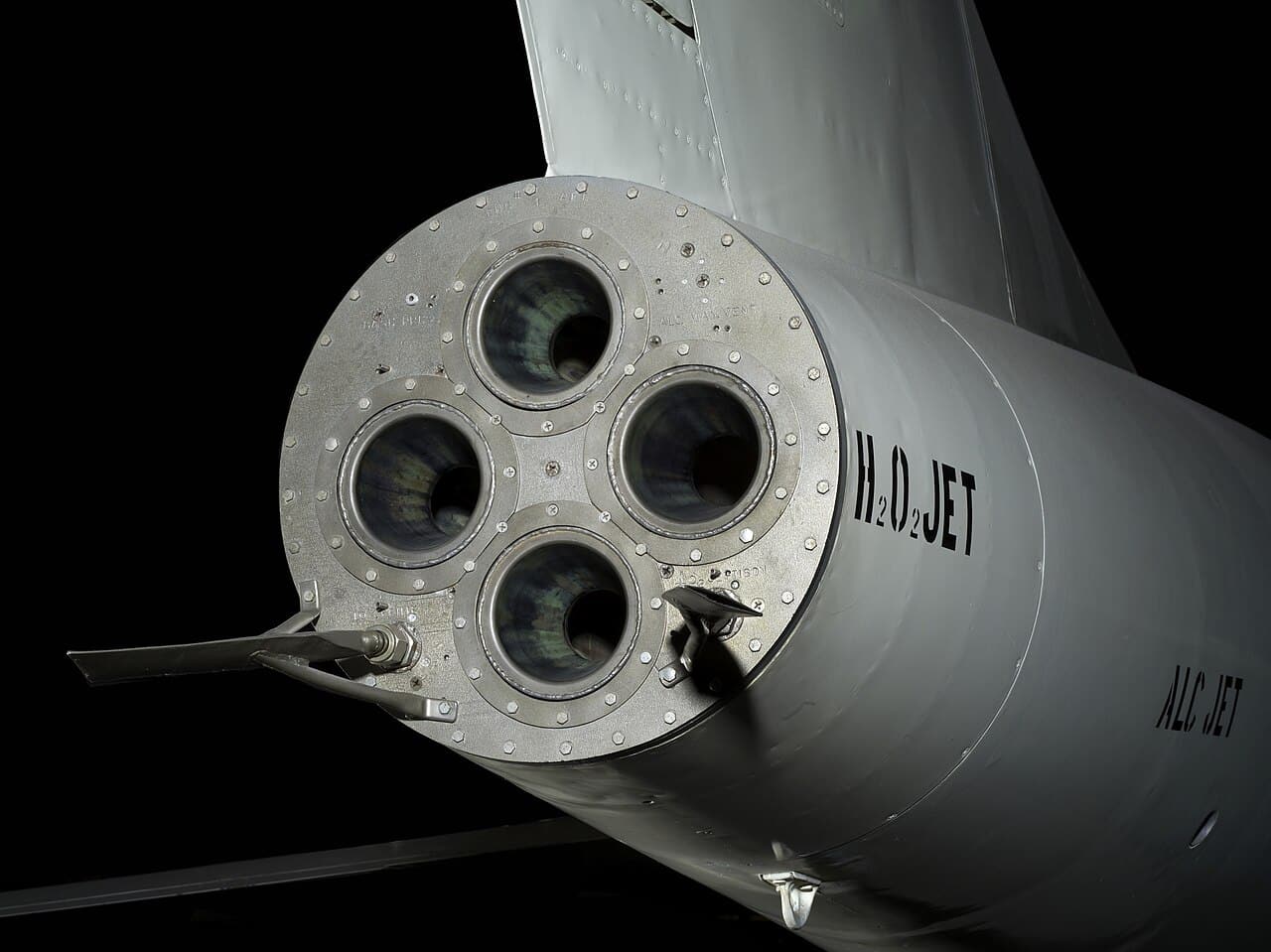
A Westinghouse J34 turbojet engine was intended to power the 42 ft in long aircraft during takeoff, climbing and landing. An additional power source, a four-chamber Reaction Motors LR8-RM-6 rocket was to be used for high-speed flight.
The flush cockpit canopy of the D-558-2 was also reconfigured with a raised cockpit and angled windows to increase poor visibility. The larger profile area had to be balanced by adding 14 inches to the height of the vertical stabilizer.
On Feb. 4, 1948, Douglas test pilot John F. Martin flew the Skyrocket for the first time at Muroc, although the aircraft was only equipped with a jet engine. It was the beginning of a successful test program in which the characteristics of swept-wing aircraft at transonic and supersonic speeds were studied. A great deal of information and data was gathered about pitch-up issues along with drag and buffeting characteristics of swept-wing aircraft traveling at high speeds.
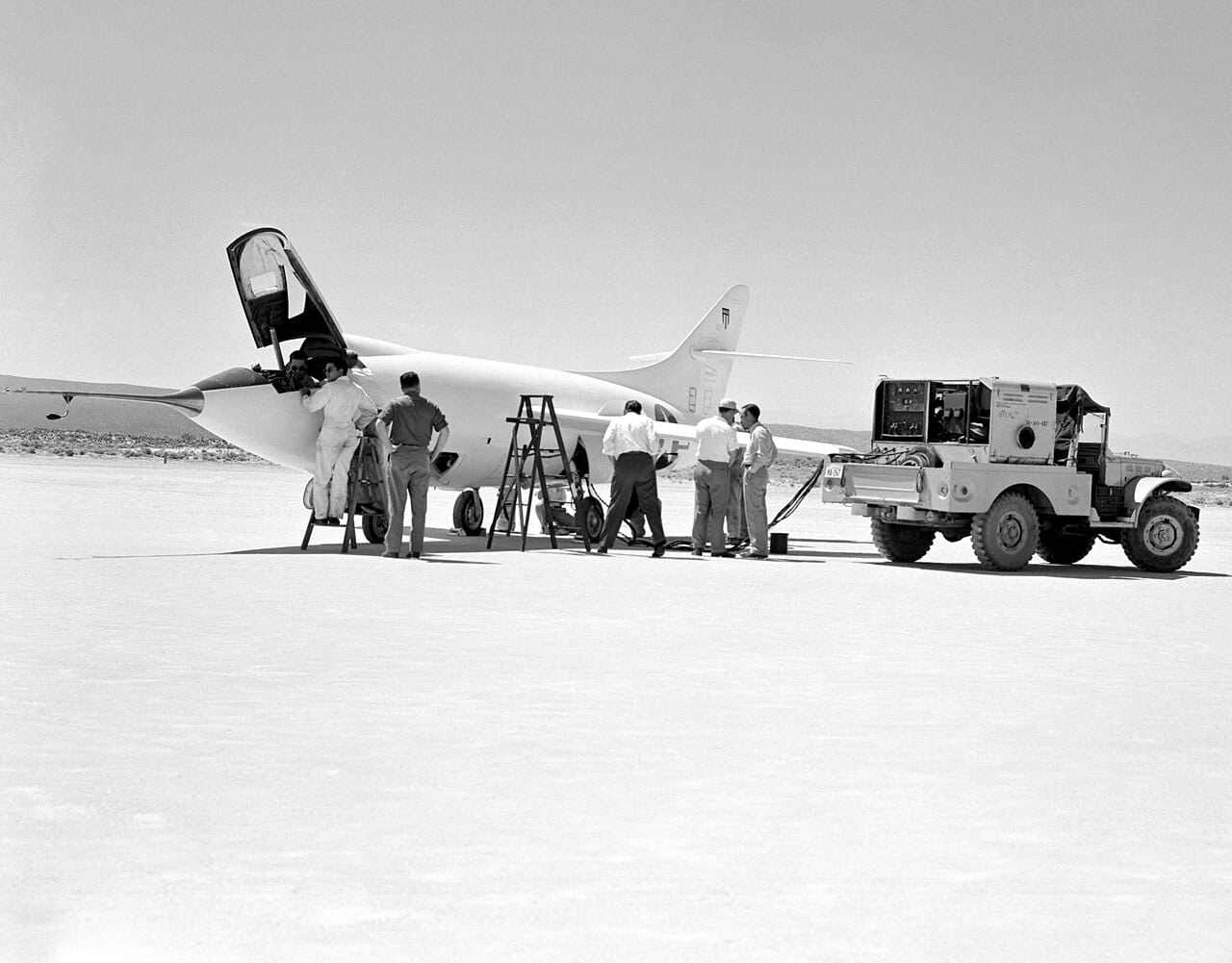
NACA 144 (Bureau No. 37974) was flown by NACA pilots Robert A. Champine and John H. Griffith 21 times to conduct testing and research on airspeed calibrations and stability and control. The turbojet engine was replaced in 1950 with an LR-8 rocket engine.
Douglas pilot Bill Bridgeman flew 37974 seven times to Mach 1.88 and to 79,494 ft setting an unofficial record at the time on Aug. 15, 1951. Without the jet engine for takeoffs, the rocket configured Skyrocket was now slung under a P2B-1S Navy variant of the Boeing B-29 bomber.
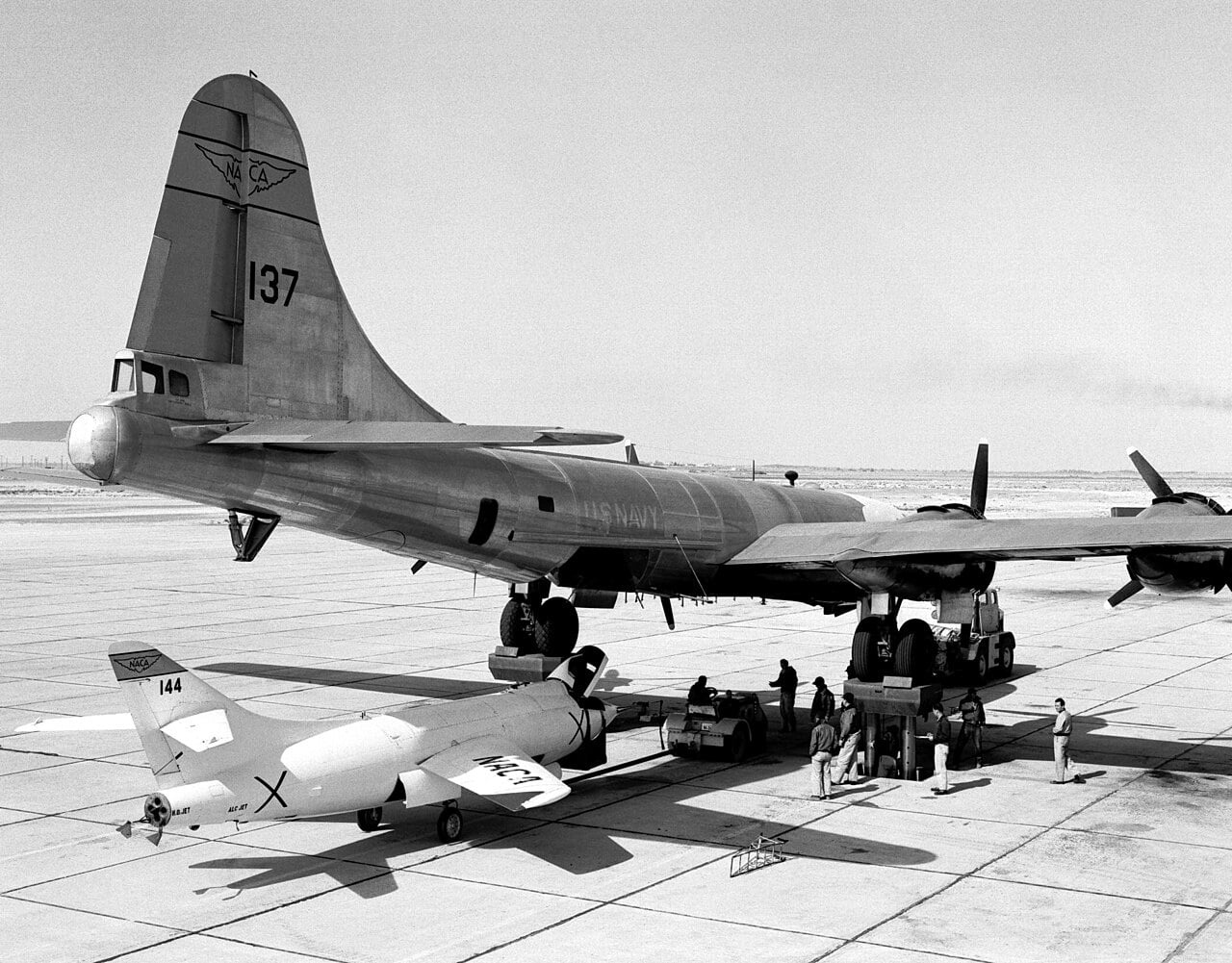
The P2B-1S was specially modified for the project, and would fly to 30,000 ft and drop the D-558-2. Known as ‘Fertile Myrtle’, aircraft 84029 would be used as the ‘mothership’ to launch Skyrocket aircraft during the 1950s. Identified with the call sign ‘NACA 137’, the P2B would be placed on jacks in order to provide the needed clearance for loading the Skyrocket to its attachment points under the heavily modified bomb bay. The D-558-2 would be dropped from its cradle at altitude, its pilot firing the rockets once clear of the P2B.
Issues with lateral instability were noted during Bridgeman’s supersonic flights, leading NACA engineers to study the aircraft’s behavior prior to their own flight research that began in Sept. 1951.
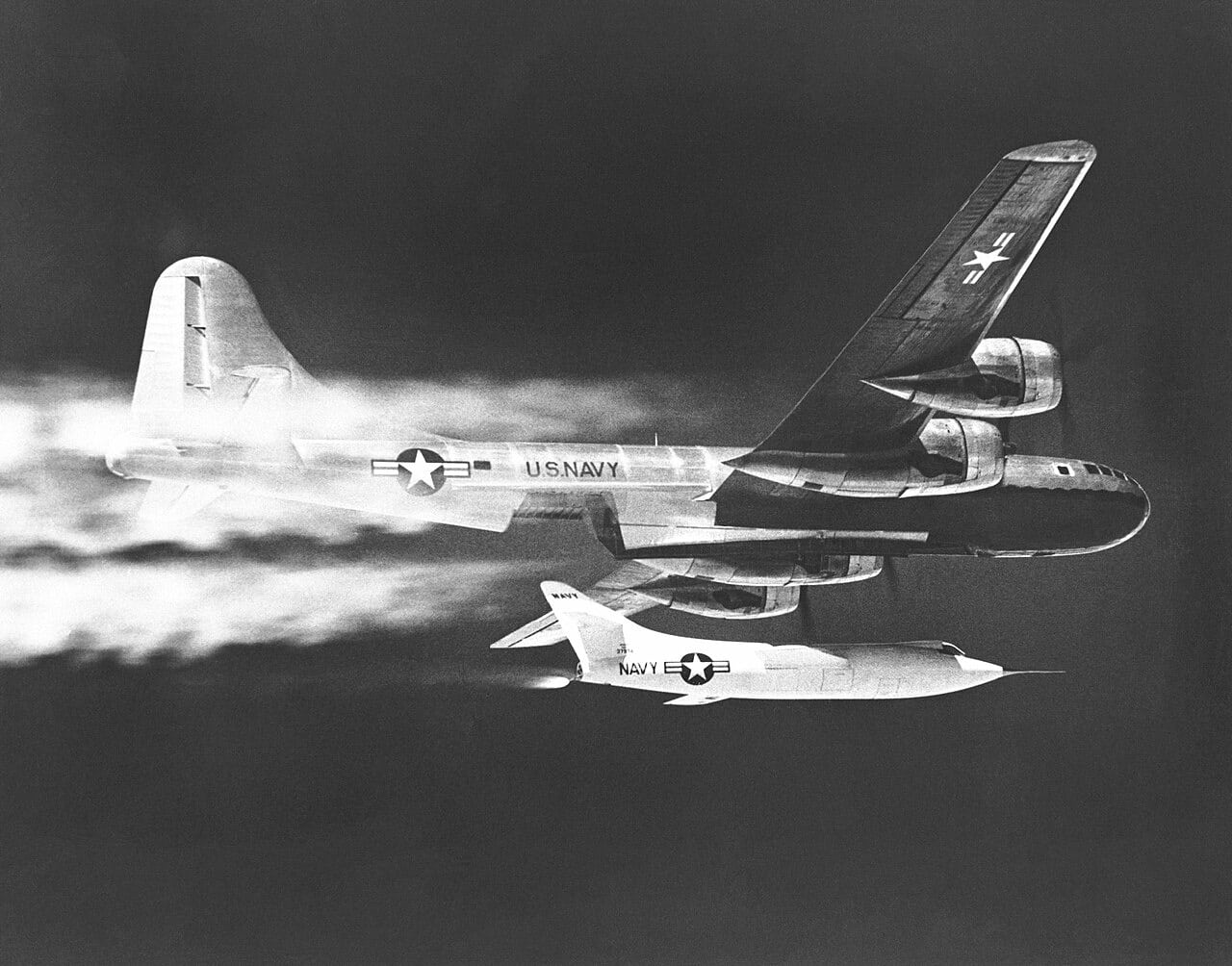
Preparing for twice the Speed of Sound
NACA test pilot Albert ‘Scott’ Crossfield had flown the Skyrocket 20 times over a period of approximately two years, gathering data and studying longitudinal and lateral stability along with control as well as lift, drag, and buffeting characteristics of the aircraft at supersonic speeds up to Mach 1.878.
Marine pilot Lt. Colonel Marion Carl took the aircraft to an unofficial record altitude of 83,235 ft on Aug. 21, 1953, hitting Mach 1.728 during the flight. Since the aircraft did not take off on its own power, the altitude record was not recognized. After Carl’s flights, NACA engineers added nozzle extensions to the LR-8 combustion chambers in order to prevent exhaust gas from affecting the rudder. Engine thrust was also increased by 6.5 percent.
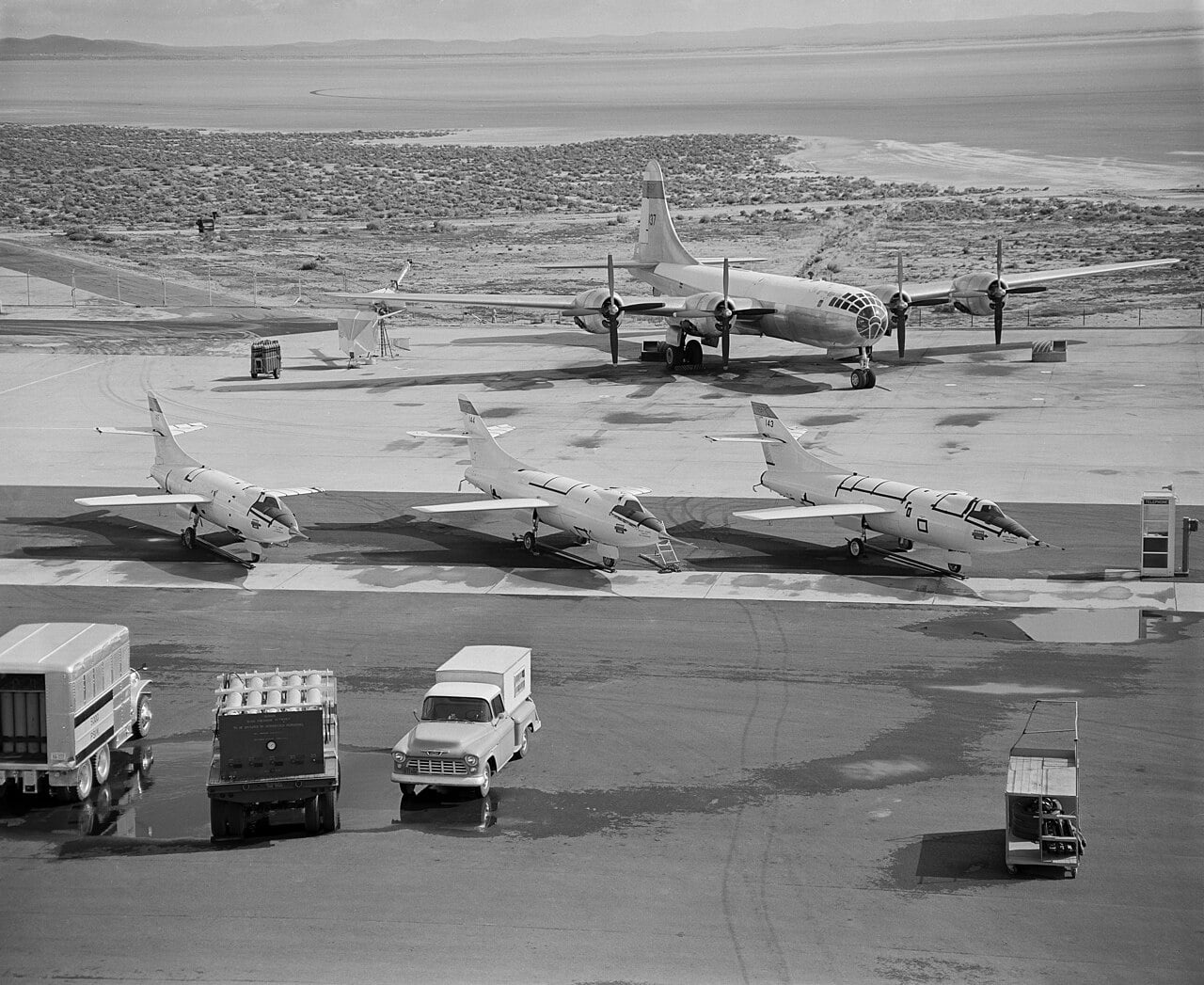
After securing an agreement with the Navy’s Bureau of Aeronautics by Crossfield, NACA allowed the attempt of a record-setting Mach 2 flight in the aircraft.
The NACA flight team personnel waxed the fuselage of the Skyrocket to reduce drag, and chilled the fuel so the tanks would hold more, and fueling the aircraft hours ahead of time gave the fuel time to settle allowing for additional fuel to be added later. Masking tape was placed over any drag inducing cracks, and the stainless steel prime and jettison tubes were replaced with lighter aluminum.
The tubes were bent into the blast of the rocket engine allowing them to be burnt off and fall away from the aircraft once no longer needed, saving a few more pounds. The plan called for reaching 72,000 ft and pushing over into a slight dive. It was hoped the 200 second blast of her rocket engine would push the aircraft past Mach 2.
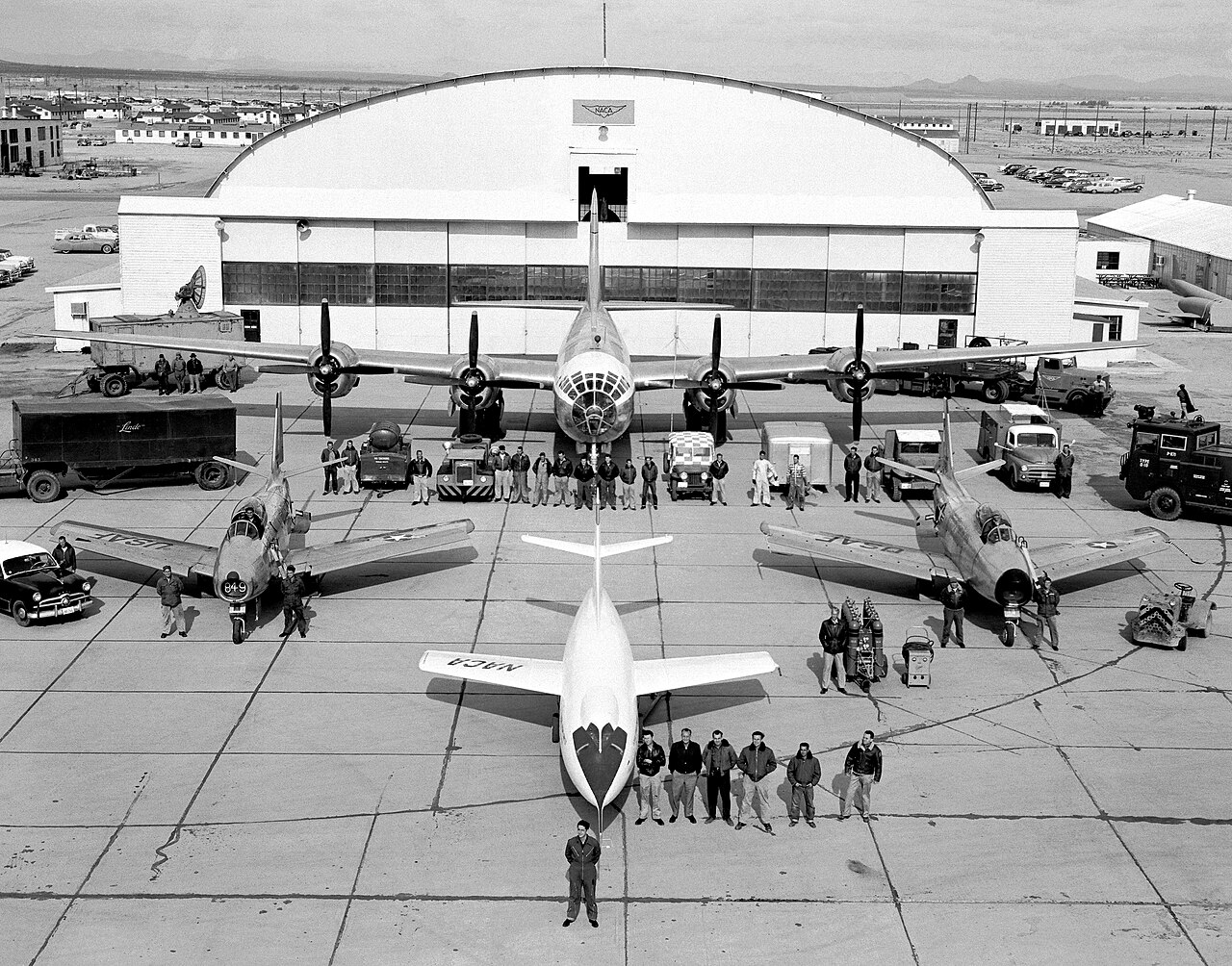
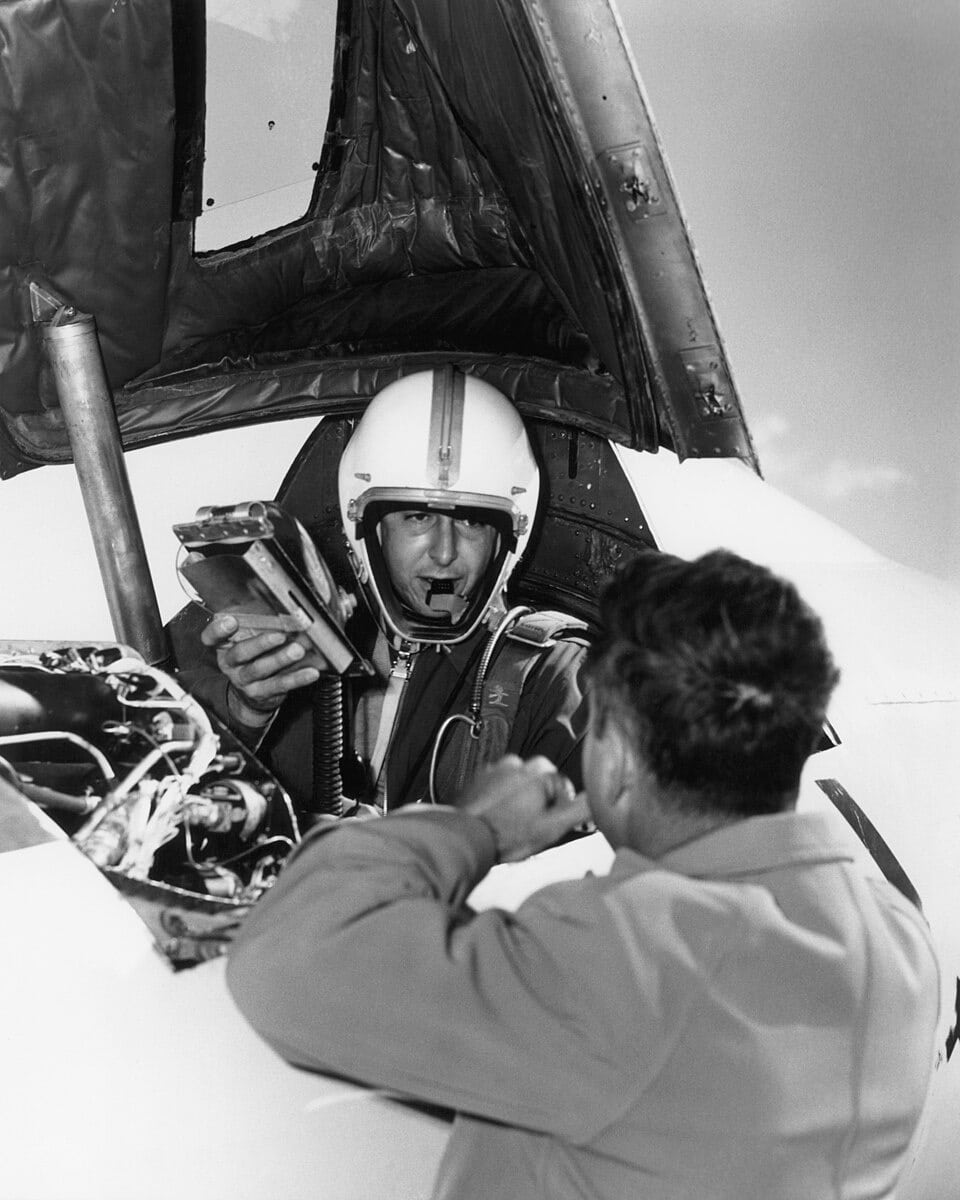
Weak from a bout with the flu, pilot Scott Crossfield approached the P2B sitting on the desert ramp on a cold blustery Nov. 20, 1953. The D-558-2 was tucked under the mothership with mechanics bundled against the cold swarming the scene. Pipes, hoses, and cords plugged equipment carts and fuel trucks into the needy Skyrocket. It was not yet daybreak.
While loading hydrogen peroxide fuel onto the aircraft in the freezing temps and darkness, an accident almost delayed the flight. A frozen vent fitting caused by the ‘cold soak’ practices earlier to allow more fuel capacity had caused the dangerous liquid to burst out of an untapped port showering a P2B launch panel operator in the face. The peroxide was so potent that a rag doused in it would burst into flames. The affected operator, however, due to the quick reaction of a nearby mechanic who sprayed him in the face with a fire hose, only suffered temporary white blotches that lasted a few days. The show went on.
Taking the Skyrocket to Mach 2
When the P2B reached 10,000 ft, Crossfield got into the cockpit of the D-558-2. He would be required to pressurize the cockpit, an experience that produced a sudden burst of gas into the cockpit, not a gradual process. The sudden burst could wreak havoc on human sinuses, and the influenza Crossfield was battling could exacerbate the situation. Scott had brought along a small cork, placing it in the compressed-air inlet tube and gradually easing it out slowly as he turned the valve on. The pressurization gauge slowly reached the green and caused Crossfield no pain or difficulty. The aircraft combination continued on to the launch point.
As the Skyrocket fell away from the belly of the mothership, blinding sunlight hit Crossfield’s eyes. The ship rolled naturally to the right, and he hit the rocket-barrel switches; pausing a split second until each one caught. The D-558-2 surged forward and the horizon disappeared from view. Soon the P2B was below and behind.
Crossfield now had a total of 200 seconds to accomplish his goal. This would be his only chance. As he approached 72,000 ft, he began the pushover with the rocket engines burning furiously. The Skyrocket was living up to its name in this most spectacular dive. Scott closely monitored the Mach needle, and as the fuel lasted an incredible 207 seconds, the needle edged past Mach 2 and stayed at Mach 2.005. He had become the first man to fly twice the speed of sound with the instruments on board the Skyrocket recording the data automatically. The risky ‘cold soak’ process had paid off with an extra seven seconds. The altitude of the Mach 2 peak was about 62,000 ft.
As the engines cut out and the D-558-2 entered thick air, it slowed dramatically throwing Crossfield forward in the shoulder straps. Still coasting at Mach 1.8, he dropped back to Mach 1.0 with the aircraft shaking violently but briefly.
A dead stick landing was the next challenging part of the flight as Crossfield approached the dry lake bed at 15,000 ft performing a victory roll. Chase planes soon lined up on his wing tips guiding him down. The Skyrocket touched down between two painted black lines exactly where it was intended to land, rolling to a complete stop 12 minutes after being launched.
Surviving Skyrockets
The three D-558-2 aircraft flew 313 times setting several records and gathering invaluable data. This data would go on to aid in the design of future aircraft, including the Century Series of fighter aircraft.
The program ended with the last flight on Dec. 20, 1956. A third version of the aircraft, the D-558-3 Skyflash, was an ambitious Mach 9 performer with space capabilities was abandoned in favor of the North American X-15.
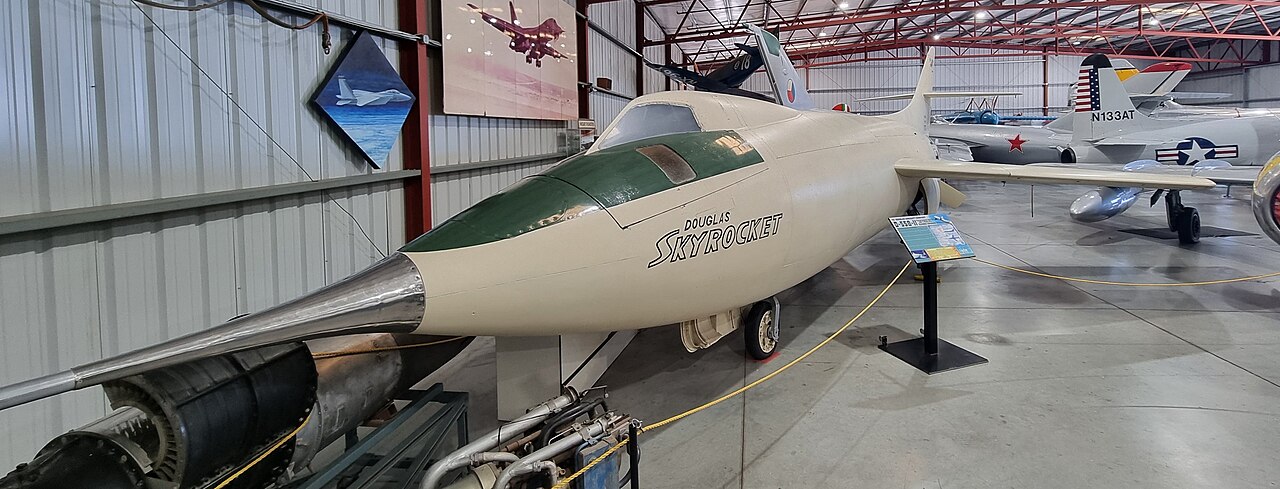
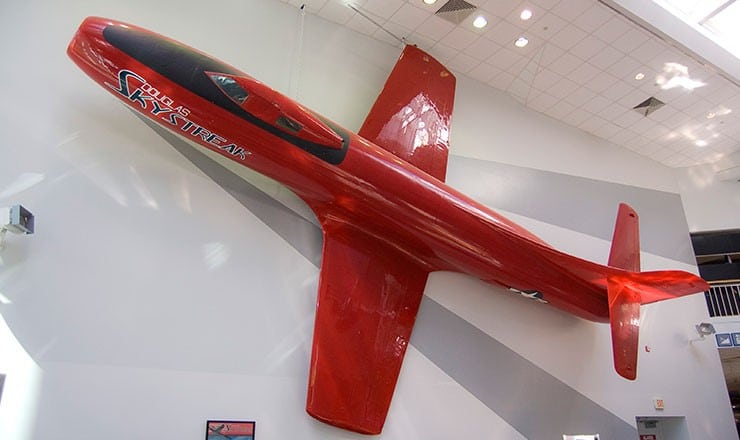
All three of the D-558-2 Skyrockets have been preserved. The first example built is on display at the Planes of Fame Museum in Chino, California.
The second example, the one Crossfield took to Mach 2, resides at the National Air and Space Museum in Washington D.C., and aircraft number 3 is mounted on a pylon at the Antelope Valley College in Lancaster, California.