Held on Aug 26, Rescue Flag 26-1 brought together forces from the USAF, USMC, JMSDF, and JASDF for a comprehensive simulated casualty exercise.
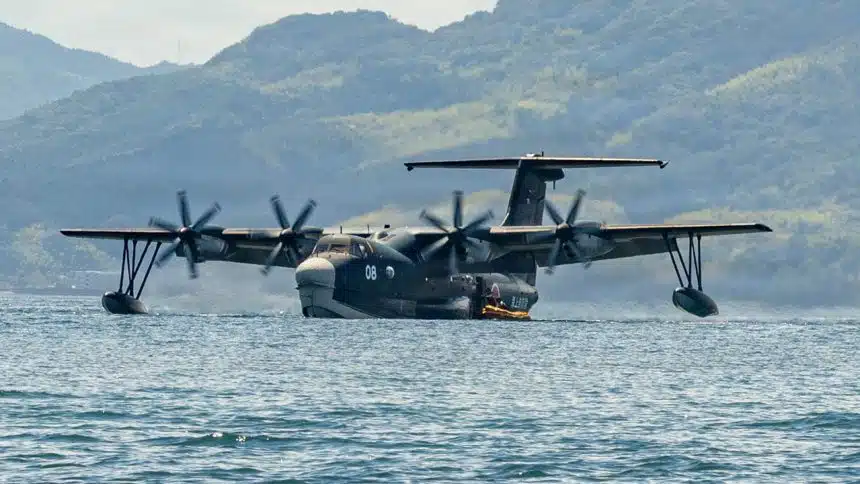
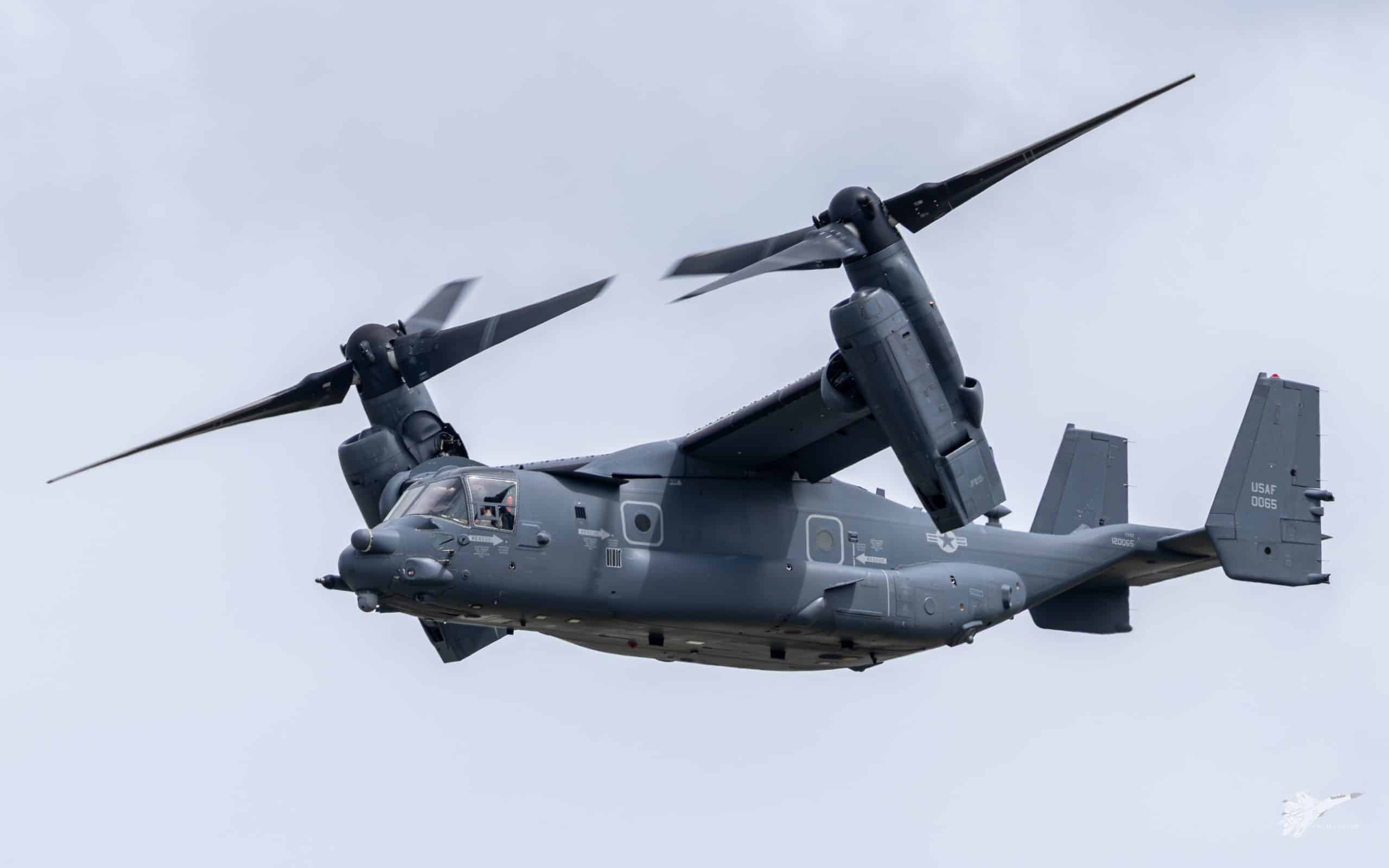
A USAF CV-22B Osprey joined a JMSDF (Japan Maritime Self-Defense Force) US-2 amphibious aircraft for the first time during the Rescue Flag series of exercises. The two aircraft, alongside several others operated by the USMC (United States Marine Corps) and JASDF (Japan Air Self-Defense Force), participated in the CSAR exercise at Marine Corps Air Station Iwakuni on Aug. 26, 2026.
Rescue Flag is a bilateral exercise between the US and Japan, and is typically held in the airspace around Iwakuni or Okinawa. As its name implies, the exercise focuses on CSAR (Combat Search and Rescue), and allows participants to “practice open-water recovery methods, communication protocols, and supply distribution techniques under simulated crisis conditions,” according to the USMC.
📍Marine Corps Air Station Iwakuni, Yamaguchi, Japan, Aug. 26, 2026.@USMC, @usairforce, @JASDF_PAO_ENG, @jmsdf_pao_eng held combined-joint training during Rescue Flag 26-1. pic.twitter.com/JDGNw4YsJq
— 1st MAW Marines (@1stMAW_Marines) September 1, 2026
Both the US-2 and the CV-22B that participated in RF 26-1 are Japan-based aircraft: the US-2 is assigned to Air Rescue Squadron 71, Fleet Air Wing 31 at Iwakuni, while the CV-22B is assigned to the 21st Special Operations Squadron under the 353rd Special Operations Wing based at Yokota Air Base, Tokyo. The USAF’s CV-22Bs all belong under AFSOC (Air Force Special Operations Command), which provides specialized airpower capabilities for special operations, personnel recovery, mobility, and other missions.
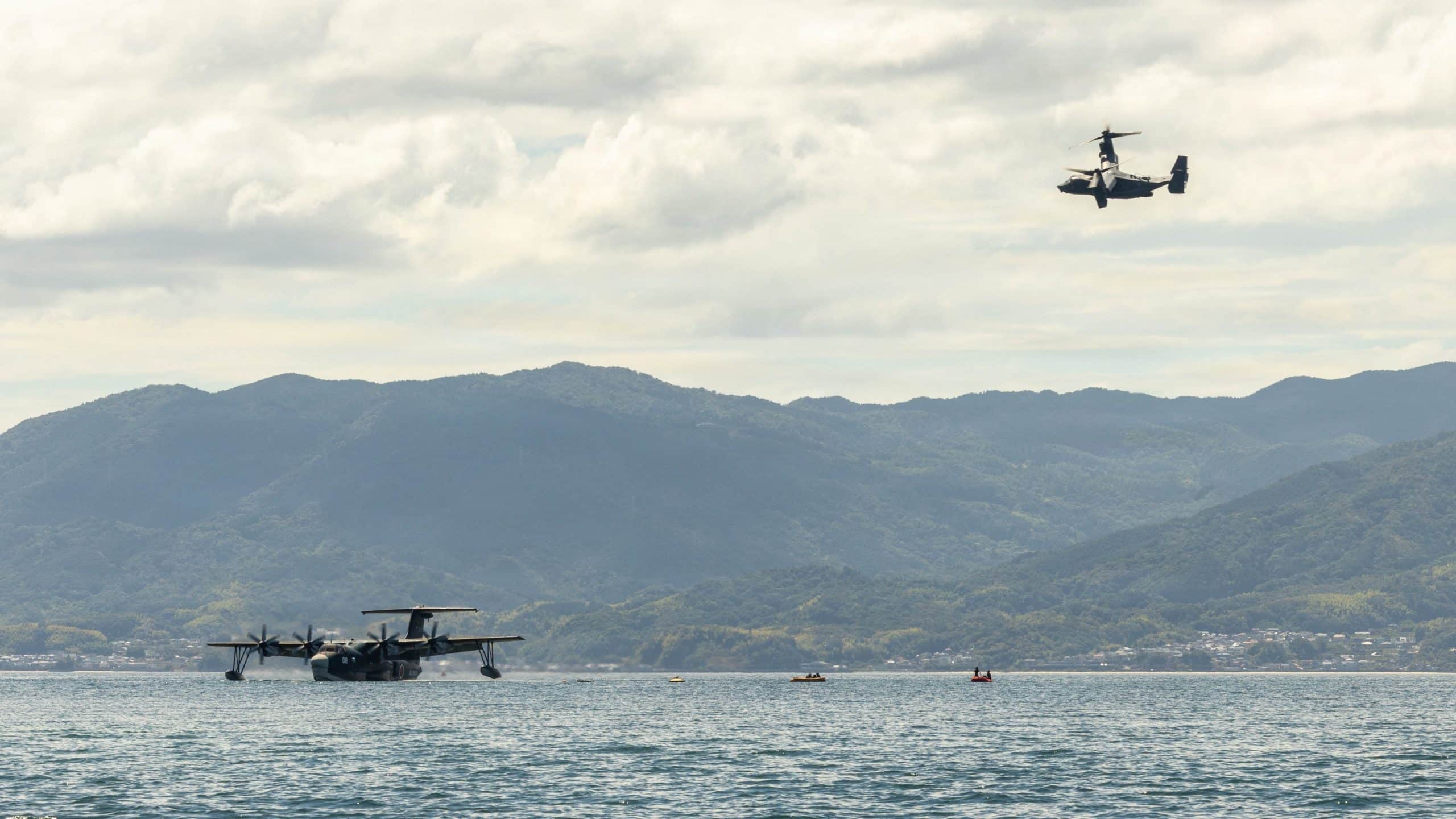
Imagery published on DVIDS shows the aircraft participating in a simulated casualty-rescue scenario, in which US personnel from VMGR-152 were ‘rescued’ from the sea, recovered from rafts, and provided with first aid on board the US-2. The CV-22B, alongside a UH-60J(II) from the JASDF’s Air Rescue Wing Nyutabaru, is also shown hoisting simulated casualties during the exercise.
Notably, USMC Col. William B. Millett III, the commanding officer of MAG-12 (Marine Aircraft Group 12), was onboard the US-2 during the exercise, providing a direct opportunity for a senior USMC aviation commander to observe the aircraft’s amphibious rescue capabilities firsthand.
While this marks the first time a USAF CV-22B has participated in the Rescue Flag series, it is not the first time the two aircraft types have operated together. Notably, they both participated in the 2023 edition of Cope Angel – another bilateral CSAR exercise between the two nations – which was held between February and March of that year.
Past iterations of Rescue Flag saw participation from other assets from the various services, including HH-60G/Ws, MC-130Js, F-35Bs, MV-22Bs, AH-1Zs, CH-53Es, and U-125As.
The Amphibious Capabilities of the US and Japanese Forces
Japan already operates a dedicated amphibious aircraft in the form of the ShinMaywa US-2, giving the JMSDF a capability that is particularly well suited to the country’s vast maritime operating environment. The aircraft, which can operate from both conventional runways and the open water, is employed mainly in the CSAR role while serving a secondary purpose as a transport aircraft. The aircraft – initially designated the US-1A Kai (改, meaning ‘improved’ or ‘revised’), was a development of the US-1 – and its incredible low-speed handling – helped, in part, by its boundary-layer control system – allows it to conduct the sea-borne CSAR mission incredibly effectively.
Seaplanes also provide an additional layer of safety in an active combat environment: their lack of dependence on a land-based airfield means that it is able to operate somewhat effectively even if its home base is destroyed by enemy action, giving mission planners more flexibility. Indeed, U.S. Forces have also actively pursued innovative airborne capabilities like the MAC (MC-130J Amphibious Capability) – whose development was paused in 2024 due to budgetary constraints – in an effort to make ‘runway independence’ and operations from austere environments more feasible in the form of an amphibious aircraft.
The US interest in such ideas inevitably led them to closer contact with the JMSDF, who are one of the most experienced operators of amphibious aircraft, even on a global scale. In 2022, it was reported that the deputy commander of AFSOC visited JMSDF US-2 crews and observed the aircraft’s ability to operate from both land and water, and described the Japanese platform as an example from which the U.S. could learn while exploring its own amphibious options. Thus, the repeated use of the US-2 in bilateral training provides the U.S. with an opportunity to work alongside an established amphibious capability while developing its own concepts for operating beyond conventional runways.
Although there are currently no amphibious aircraft in service with any branch of the US armed forces, such a capability could prove to be highly valuable in future conflicts in the Pacific, particularly in a conflict against the PLA, where land-based airfields could come under significant attack in the opening stages of hostilities. China itself is also moving forward with its own amphibious capabilities through the development of the AG600, a four-engine amphibious aircraft that is largely similar in shape to the US-2, highlighting the continued interest in large amphibious aircraft in the region.
AG-600と似たアングルから撮ったUS-2の画像と比較してみた。 pic.twitter.com/w9D8y5AoDr
— ふにに (@hunini181202) February 10, 2022