Leonardo confirmed at Farnborough International Airshow that funding for the Proteus uncrewed helicopter demonstrator had been renewed to carry over through to mid 2027.
Speaking to the press during a briefing at Farnborough International Airshow 2026, Leonardo Helicopters UK Managing Director Nigel Colman confirmed that the Proteus helicopter program is continuing following questions over a potential lapse in funding.
The Proteus airframe, serial number LH001, has flown on only one occasion. This first flight took place in January 2026 at Predannack Airfield, Cornwall, home of the National Drone Hub.
🚁 Liftoff!
The UK’s first autonomous full-size helicopter, #Proteus, has completed a historic maiden flight at Predannack airfield in Cornwall.
Designed and built by #Leonardo in Yeovil, the Home of British Helicopters, Proteus is a major step forward in autonomous maritime… pic.twitter.com/nqZ9Qyp23Z
— Leonardo Helicopters (@LDO_Helicopters) January 16, 2026
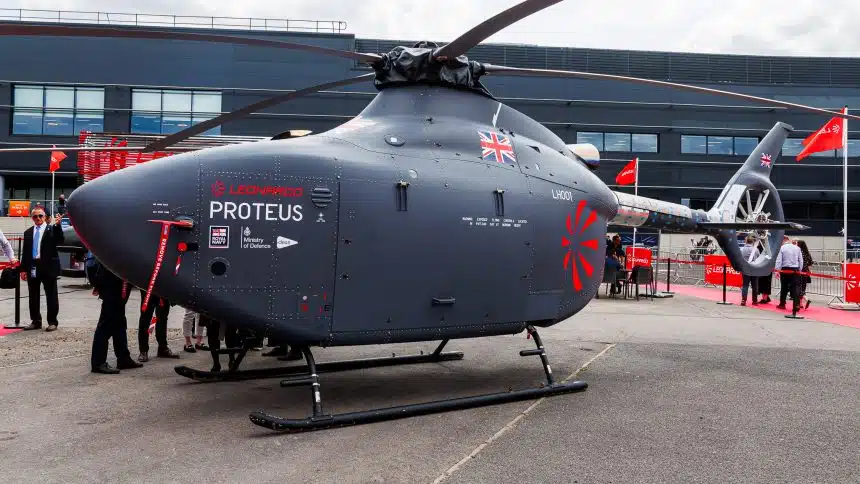
It was subsequently taken by road back to Yeovil, and was displayed in the flesh at Farnborough International Airshow 2026 (Jul. 20-24).
Proteus is a technology demonstrator advancing autonomous rotary wing capability for the UK.
Designed and built by Leonardo in Yeovil, in partnership with the @RoyalNavy and @DefenceHQ’s Defence Equipment and Support Future Capability Innovation team, it is helping define how… pic.twitter.com/JTka3xDzdp
— Leonardo Helicopters (@LDO_Helicopters) July 22, 2026
Responding to questions from the media, Colman clarified that it had only flown once because it “only needed to fly once”. Much of the necessary development is able to be completed in a virtual environment, with the company’s view being that any available money is “best spent” on this and mission systems development rather than more flight testing than absolutely required.
Enabling this, Leonardo uses a ‘digital twin’ of Proteus to conduct advanced testing without physical test flying.
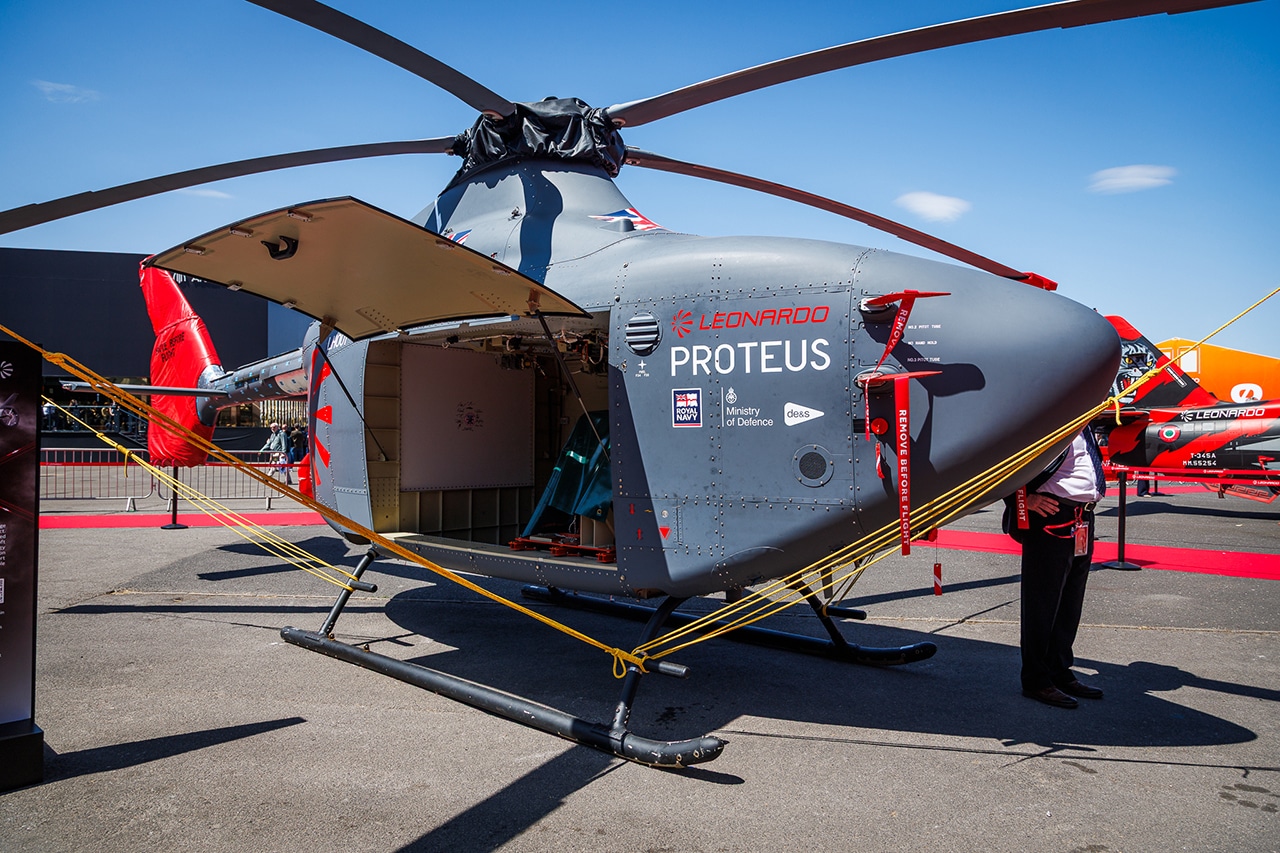
Proteus, as a demonstrator, is not envisioned to directly enter operational service but will directly inform the development of operational models. These would be marketed both towards the UK as well as overseas, particularly to operators of other Leonardo maritime helicopter products like the Merlin and Wildcat.
The helicopter, which features a sizeable modular payload area in the fuselage, was previously shown off with concepts of mission modules and payloads that could be a sign of what a future operational airframe based on the design could look like.
An interesting modular model was displayed at last year’s @DefenceIQ International Military Helicopter conference… pic.twitter.com/pZM0q6sw6v
— Gareth Jennings (@GarethJennings3) January 7, 2025
Leonardo sees the future of rotary wing maritime aviation as a natural area for crewed-uncrewed teaming (CUC/T, also known as manned-unmanned teaming or MUM/T). Autonomous systems would conduct “dull, dirty, dangerous missions” reducing overall cost and minimizing risk to personnel.
Autonomy is shaping the future of rotary wing aviation.
At the @FIAFarnborough Airshow, we spoke with Mike Roberts, Product Marketing Specialist at @LDO_Helicopters UK, about #Proteus.
Proteus is a technology demonstrator advancing autonomous rotary wing capability for the UK.… pic.twitter.com/VAjDxhmrQA
— Leonardo (@Leonardo_live) July 24, 2026
Anti-submarine warfare (ASW) is one of the most complex tasks available even for crewed aircraft, so getting uncrewed aircraft to the level of working alongside a highly trained ASW force is likely to take some time. At the most basic level, however, an autonomous vehicle could be directed to deploy patterns of sonobuoys or deploy a dipping sonar at various programmed locations. Any data produced could then be streamed back to a crewed helicopter, ship, or shore station for processing.
In terms of Leonardo’s response to the Defence Investment Plan (DIP), the company is still in the process of digesting what it means both for the firm and for UK defence as a whole. It is working with the Ministry of Defence to understand what it will require from Leonardo in the coming years.
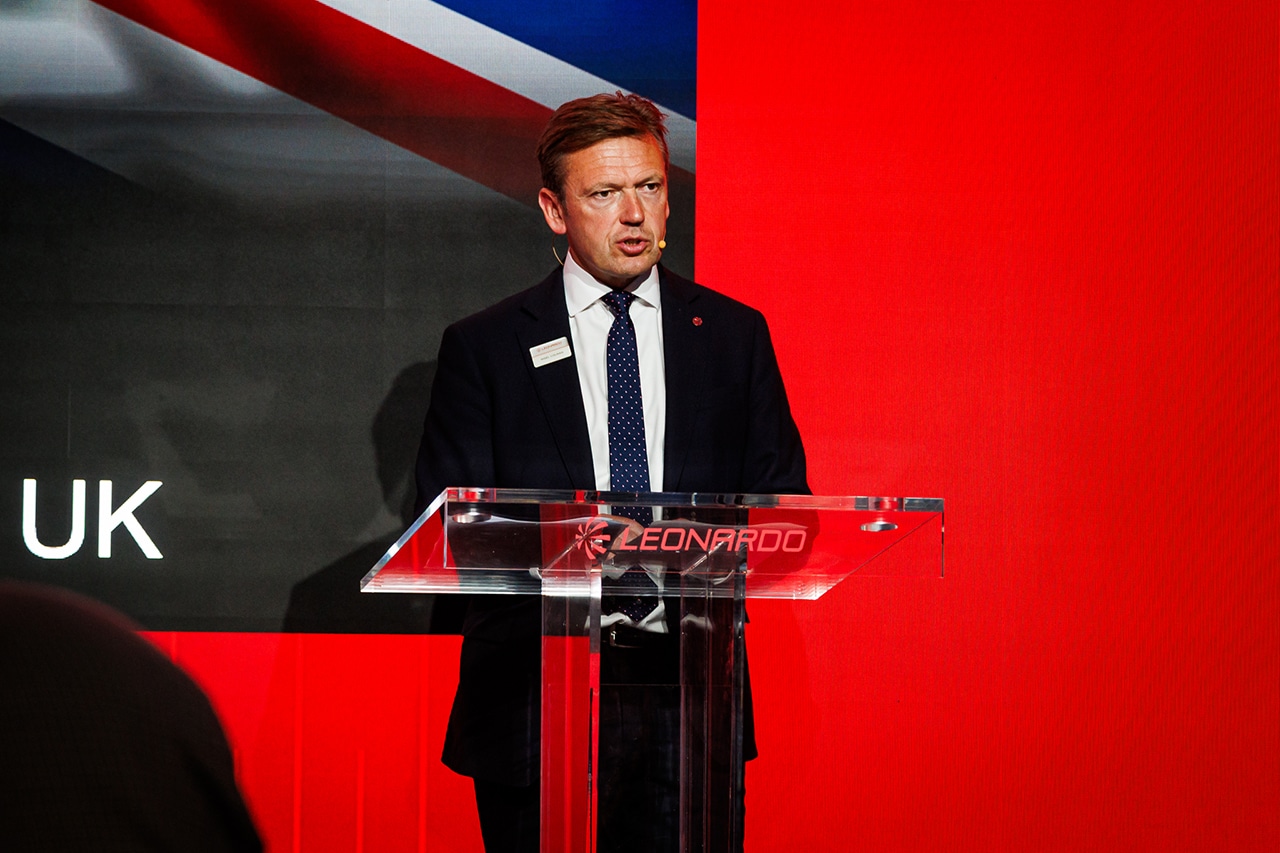
Colman says Yeovil is ensured to stay as not only the home of British helicopters but as a UK centre of excellence in autonomous systems. “When people think of Yeovil they think of helicopters,” he said. “Yeovil’s future is not defined by one aircraft type.”