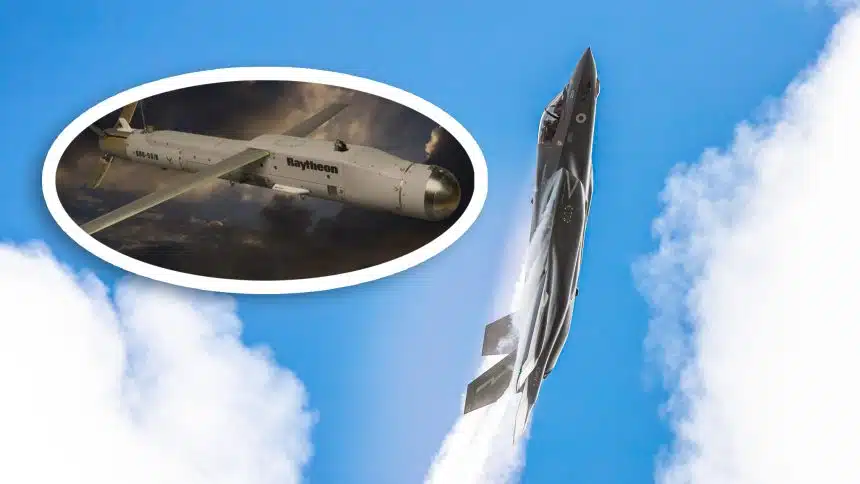
To mitigate delays to the integration of the SPEAR 3 missile, the Ministry of Defence confirmed plans to procure SDB II munitions from the U.S. through a Foreign Military Sales (FMS) program have been given the go ahead.
First reported by our friends at the UK Defence Journal, a letter published on May 14, 2026, dated Apr. 30, 2026, from the Ministry of Defence’s Permanent Secretary to the UK’s Public Accounts Committee (PAC) states “approvals have been given to proceed with a Foreign Military Sales (FMS) procurement of the precision-guided munition, Small Diameter Bomb (SDB-II). This acquisition will provide the F-35 with an interim stand-off capability until the introduction of SPEAR-3 into service”.
The Ministry of Defence has approved the procurement of the Small Diameter Bomb II as an interim standoff weapon for the F-35. Click image for more.https://t.co/48Tp6dXPoW
— UK Defence Journal (@UKDefJournal) May 14, 2026
The statement was made in response to the PAC’s earlier recommendation that the MoD “should set out in the Defence Investment Plan how it will ensure a standoff capability in the coming years before Spear 3 is fully integrated onto the aircraft”. The National Audit Office (NAO) had previously reported that while plans to acquire SDB II had been mooted, funding had yet to be approved.
While we still wait for the full, heavily delayed Defence Investment Plan (DIP) to be published, the acquisition of the SDB has previously been all but confirmed to be part of the plan.
🇺🇸🇬🇧 The UK’s National Audit Office recommended, and (per Aviation Week) the upcoming Defense Investment Plan will fund the procurement of GBU-53/B StormBreaker (Small Diameter Bomb II) for this reason.
Spear 3 is very comparable to SDB II, whereas SDB I would provide… https://t.co/azt0cO5Ttq pic.twitter.com/8TuYVT2DHp
— Colby Badhwar (@ColbyBadhwar) December 11, 2025
As The Aviationist and many others have reported previously, the UK’s fleet of F-35 Lightning IIs is severely under-equipped with air to surface weaponry. Despite the plethora of options available to the aircraft elsewhere, in UK service the jets currently rely solely on the Paveway IV precision guided bomb. While the Paveway IV is well regarded with excellent performance, as an unpowered bomb with no glide kit it is very much a stand-in weapon and is riskier to use in contested airspace.
Meanwhile, the GBU-53/B StormBreaker, or SDB II, uses deployable wings to extend its endurance beyond 100 kilometres in ideal circumstances. While shorter in range than the turbojet powered SPEAR 3, it nonetheless provides a valuable interim capability which may indeed be preserved even once SPEAR 3 enters service.
GBU-53/B #Stormbreaker pop up air turbine alternator. pic.twitter.com/Vpqdy5i7X2
— Air-Power | MIL-STD (@AirPowerNEW1) March 10, 2025
Like SPEAR 3, each F-35B is able to carry eight SDB IIs internally at any one time – four munitions in each internal bay. This exceeds the total payload of Paveway IVs carried even in the ‘beast mode’ configuration which sees four bombs carried externally on the wings as well as two internally. This means SDB II could become the weapon of choice even in some situations where maximum stealth is not required, allowing a single jet to strike more targets during each sortie (and, if all weapons are carried internally, additionally making the aircraft more aerodynamic and fuel efficient).
#F35 BF-5 dual GBU-53/B SDB-II #Stormbreaker release. April 2023. NAS Patuxent River. Presently being integrated on all F-35 variants, the StormBreaker is an all-weather precision guided munition capable of performing in GPS degraded or denied environments. Its tri-mode seeker… pic.twitter.com/RCLkCWcRrJ
— Air-Power | MIL-STD (@AirPowerNEW1) February 21, 2026
F-35 Spares Situation
The Permanent Secretary’s letter also reveals that when F-35Bs were deployed on board HMS Prince of Wales during Operation Highmast, also known as Carrier Strike Group 25, the amount of available spares were below the ideally desired level. Even while 24 F-35Bs were deployed on board the ship – a surged force intended to satisfy the requirements for declaring full operating capability – the spares pack on board remained at a level usually designed for 12 jets.
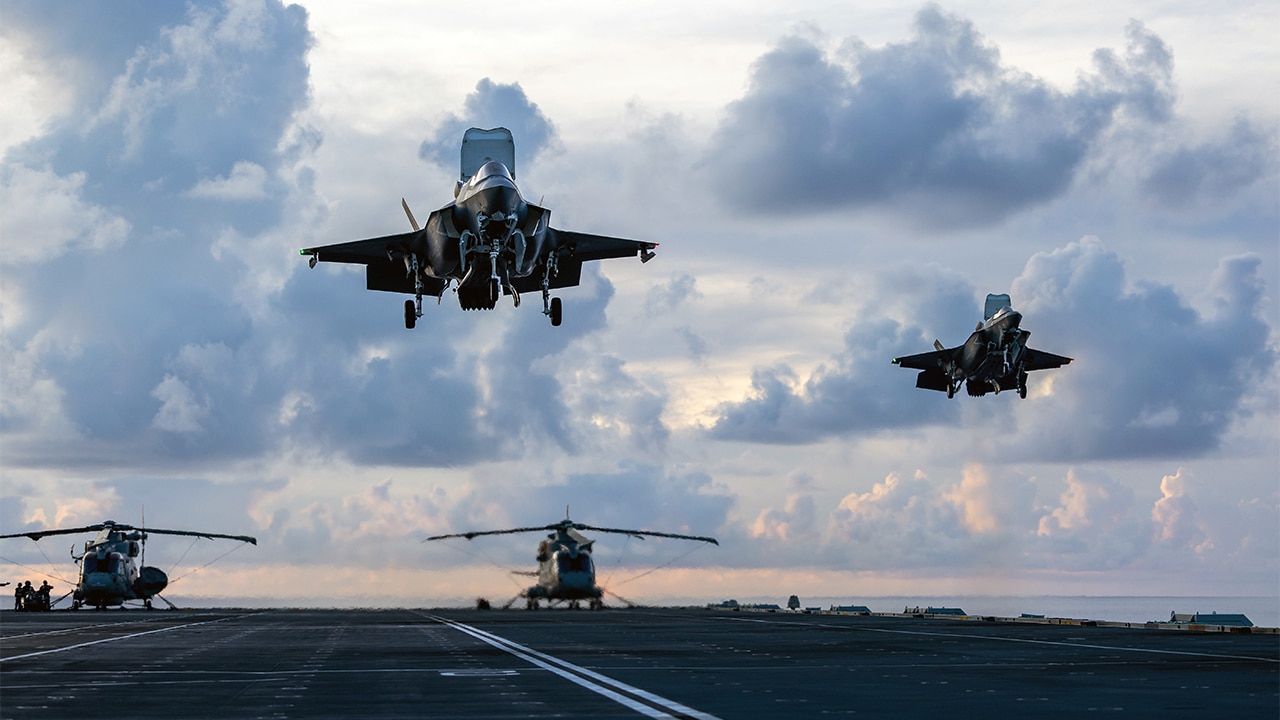
Spares packs are standardized sets of spare parts designed to support the routine operation of an aircraft away from its home base. For the UK’s F-35B force there are Deployable Spares Packs (DSPs) tailored for land-based deployments and Afloat Spares Packs (ASPs) for on board the aircraft carriers. To mitigate the reduced number of spares, additional materials were pulled from DSPs and from RAF Marham to supplement the carrier’s stocks. However, the nature of a carrier deployment and difficulties with maintaining a supply chain to the ship led to problems ensuring these were delivered on time.
Plans are in place to double the capacity of the ASP, and procure an additional DSP. These are expected to be confirmed in the Defence Investment Plan (DIP).
Letter reveals issues with corrosion and confirms earlier Aviation Week reporting that the UK will go and purchase the Small Diameter Bomb (SDB-II) to give UK F-35Bs some semblance of stand-off air-to-ground capability. And the less said about #Marham, the better. https://t.co/Ic4m5AVMni
— Tony Osborne (@Rotorfocus) May 14, 2026
The Secretary says that lessons have been taken on board following these difficulties, with new planning processes now in place – already put into action for the deployment of F-35B aircraft to RAF Akrotiri.
Mission capable (MC) rates for the F-35Bs on Operation Highmast were comparable to the global average for the variant, at some points exceeding the average. Since the end of the lengthy deployment, rates have fallen as the F-35B force regenerates and jets are rotated through corrosion repair programs.