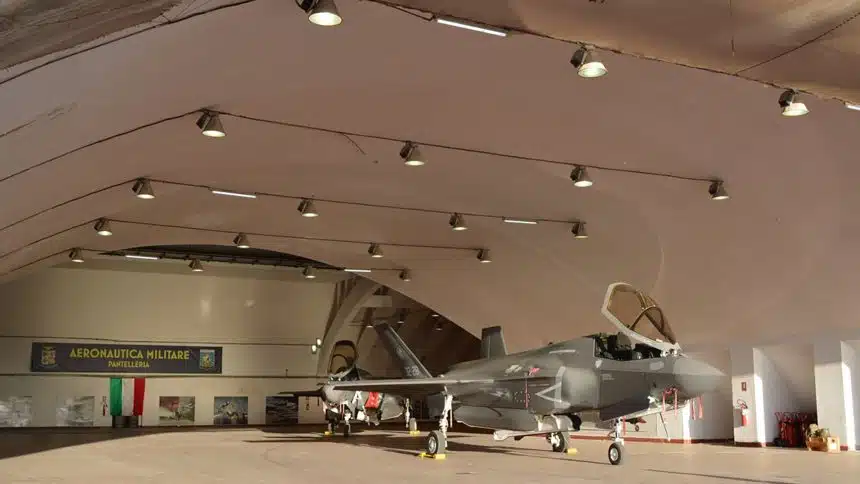
The image shows Italy’s STOVL stealth fighters inside Pantelleria’s cavernous wartime aircraft shelter, a massive reinforced-concrete structure built into the island’s volcanic landscape before World War II.
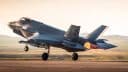
Two F-35B aircraft, belonging to the 101° Gruppo (Squadron) of the 32° Stormo (Wing), based at Amendola Air Base, deployed to Pantelleria airport, from Apr. 20 to 24, 2026, the Italian Air Force announced. The service has been deploying the type to the Mediterranean island, located about 100 km (62 miles) southwest of Sicily and 60 km (37 miles) east of the Tunisian coast, since 2020.
However, the most recent deployment marked an important milestone in the integration process and in the development of the weapon system’s expeditionary capability.
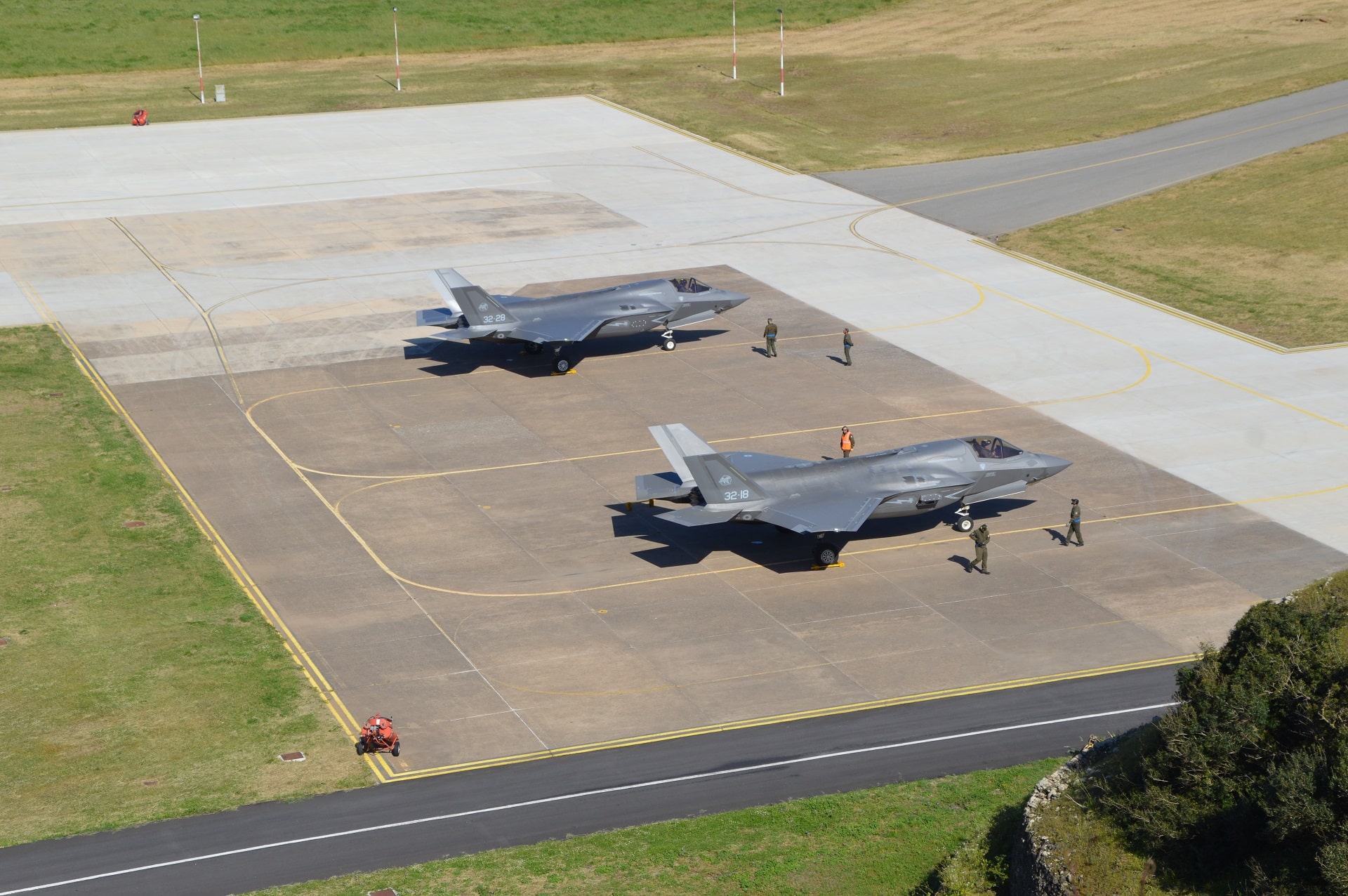
In fact, compared to previous training-operational missions conducted with F-35B aircraft at Pantelleria airport, where an aircraft took off from Amendola and landed on the island for hot pit refueling, immediately taking off again to complete the mission, the novelty is the deployment of the entire logistics elements serving the system. In fact, a large team of specialists, appropriately equipped and with accompanying instrumentation, was deployed on site to allow the system to fully exploit all its capabilities away from its usual home base.
As happened in 2020, when the service’s first F-35B (MM7453/32-14) deployed to Pantelleria for the first time as part of an “Expeditionary” PoC (Proof of Concept), the two short take-off and vertical landing STOVL ( Short Take-Off and Vertical Landing) jets were recovered inside the base’s iconic “Nervi Hangar”, a massive cavern-like reinforced concrete structure built in the late 1930s.
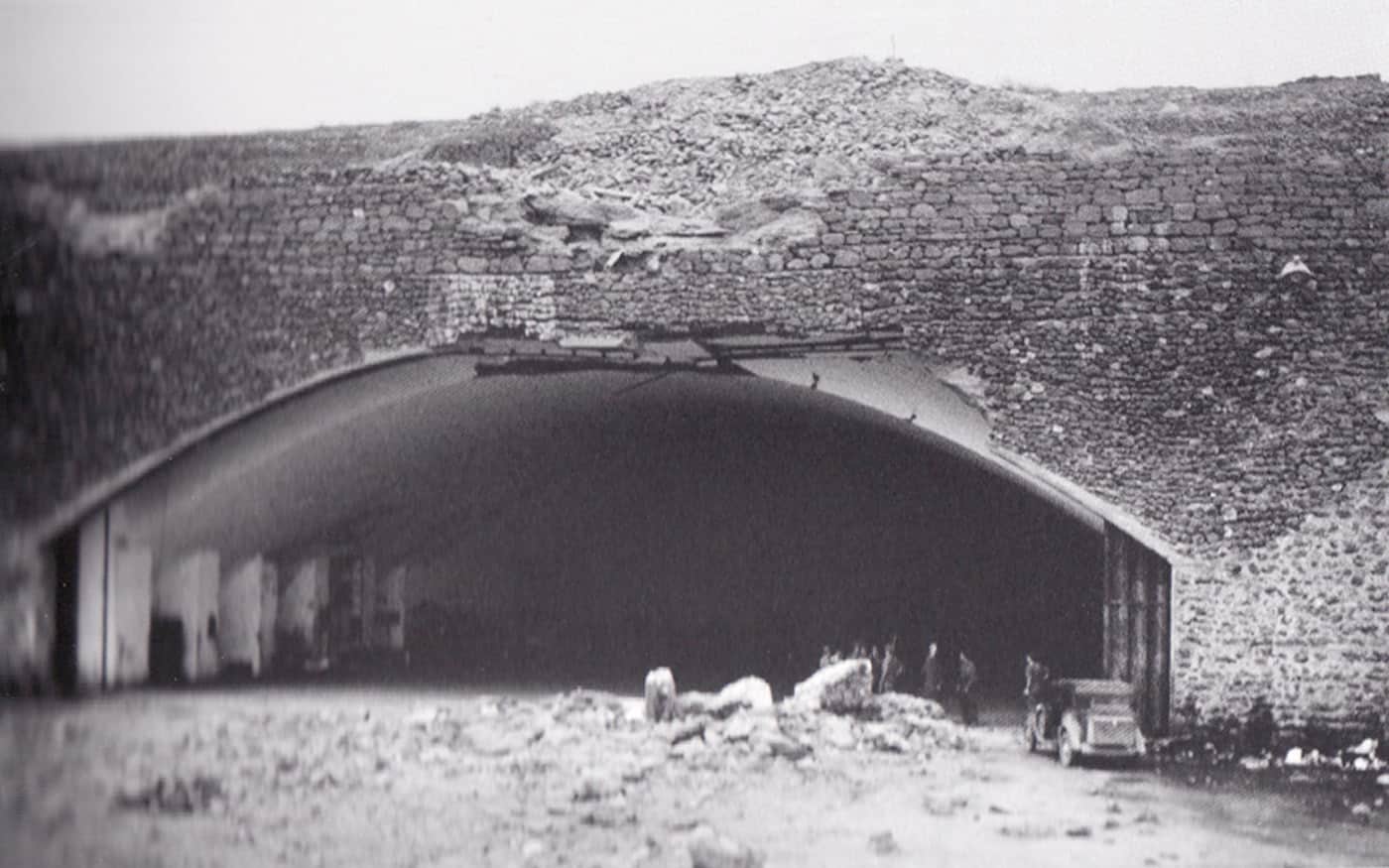
Measuring about 340 meters in length and 26 meters in width, the shelter was designed to protect dozens of Regia Aeronautica (Italian Royal Air Force) aircraft beneath a parabolic vault camouflaged into the island’s volcanic landscape. It features two entrances and an original capacity reportedly estimated at around 80 aircraft. Although its name traditionally links it to Pier Luigi Nervi, more recent studies have questioned this direct attribution.
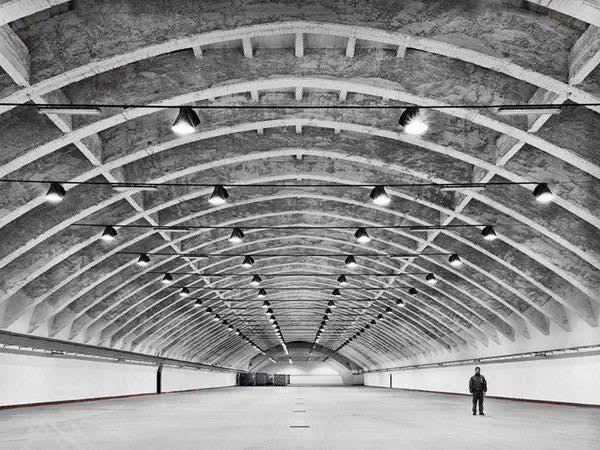
During the years, the hangar has been used to host few Italian assets (including MB-339 and Tornado aircraft) during short deployments of various Italian Air Force’s tactical units.
As part of the imagery released by the Aeronautica Militare at the end of the latest deployment, one shows two F-35Bs inside the hangar, an image that brings together Italy’s most modern aircraft and one of the most iconic protected aircraft shelters built about a century ago, even before World War II.
Expeditionary training
According to the Italian Air Force, the late April’s deployment was “a complex and detailed operation that required careful analysis and meticulous planning of sorties, involving a variety of different types of assets, specialized personnel, and the highest levels of logistical capabilities.”
The deployment involved several teams, including technicians and specialists, support systems, operational infrastructure setup, maintenance equipment supply, and all the components necessary to make the aircraft fully operational in a context different from its usual one. Needless to say, logistics played a key role, and the support provided by the Pantelleria Airport Detachment was significant.
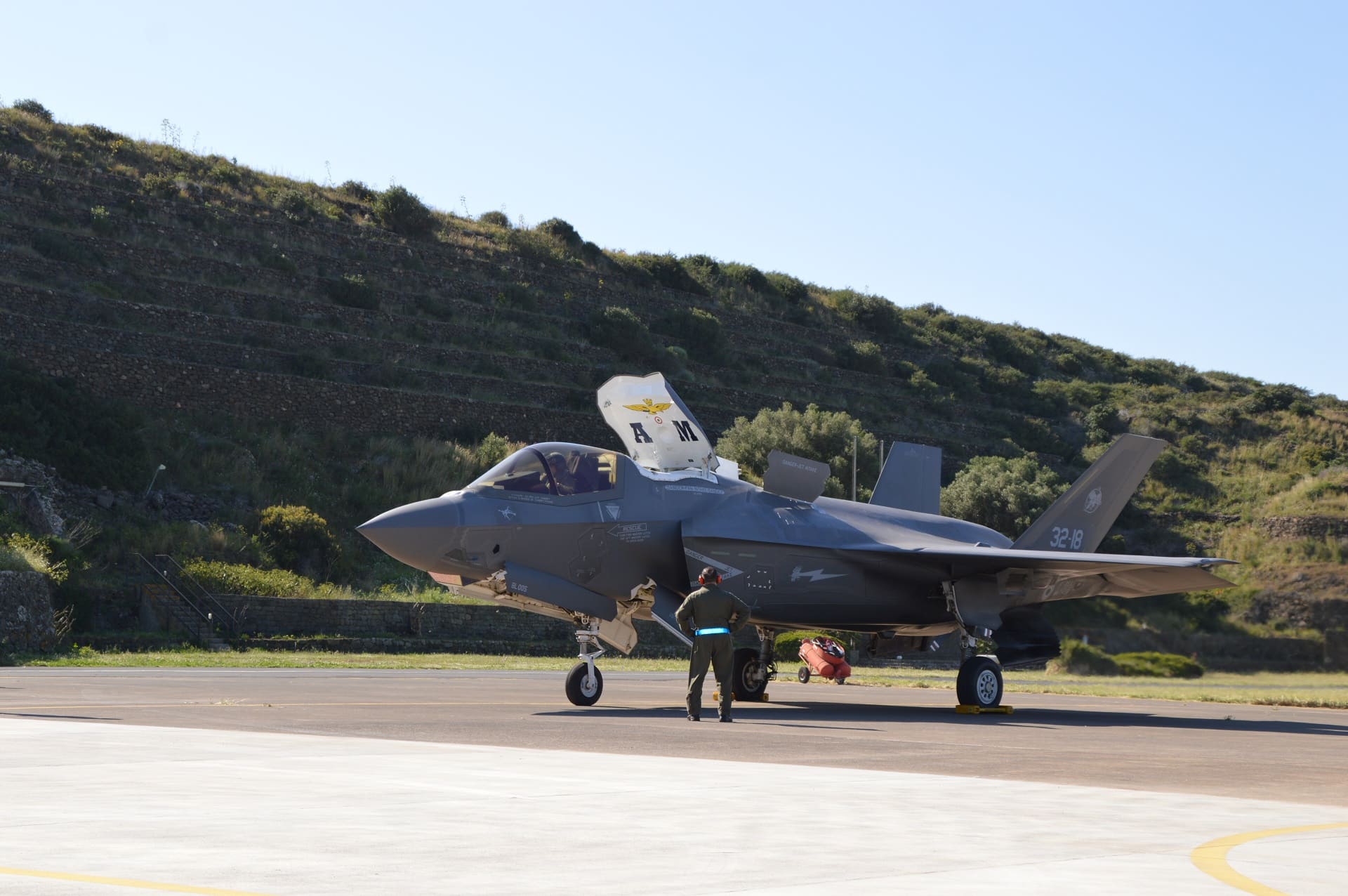
Its mission is to provide assistance to national and international military aircraft, deployed or in transit, as well as to ensure the organization’s high level of operational efficiency. Indeed, in carrying out their assigned mission, the Detachment’s personnel were responsible for planning, coordinating, and implementing all activities necessary to ensure logical and technical-operational support for the deployed assets. Specifically, the activities carried out in support of the 32nd Wing’s crews included the performance of operations related to the pre- and post-flight phases of the deployed aircraft, involving numerous members of the Detachment.
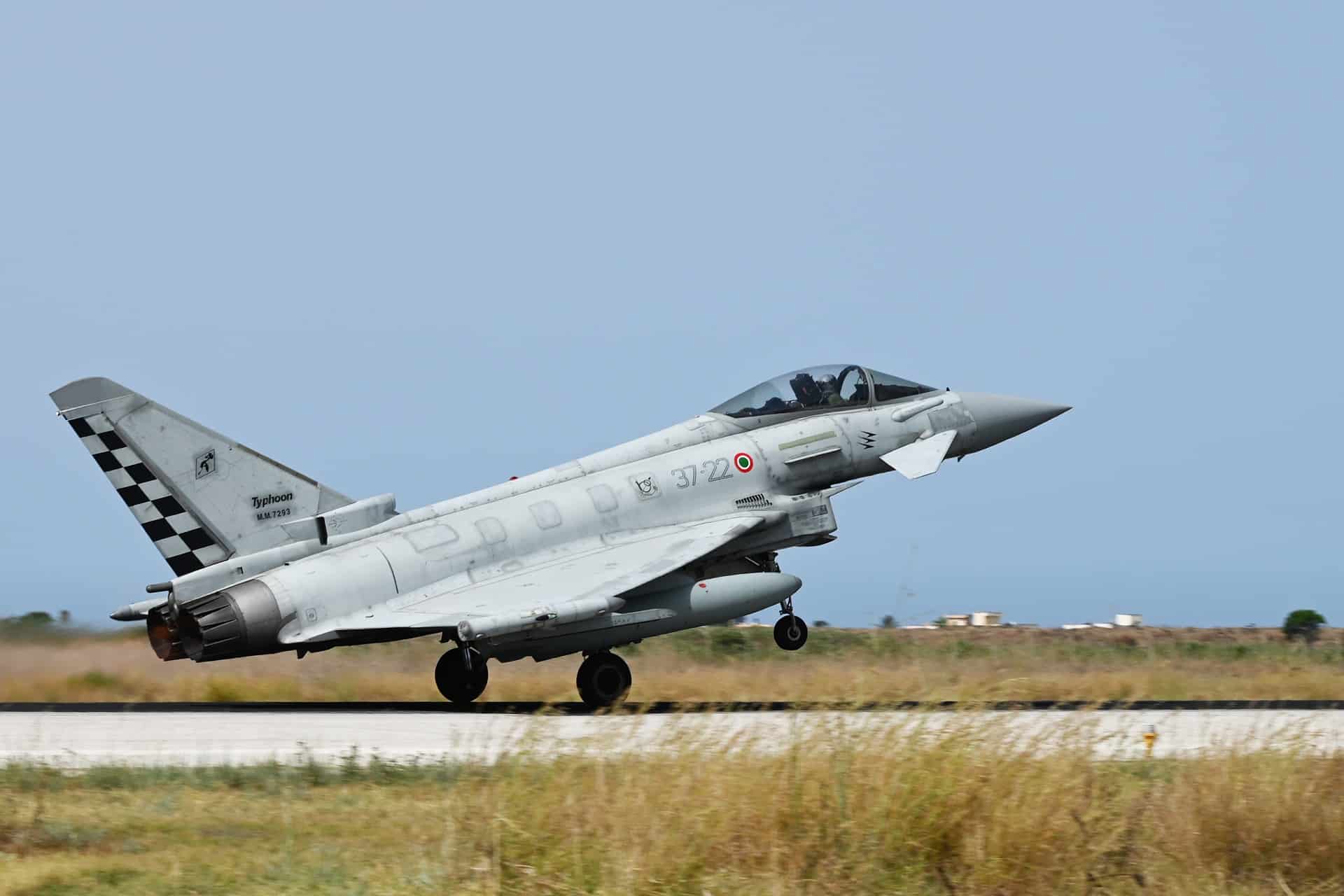
The F-35Bs did not operate alone: they integrated with the Eurofighter Typhoon aircraft of the 37th Wing, which operated from their home base at Trapani-Birgi with the goal to refine cooperation and interoperability capabilities between different assets, contributing to raising the overall level of training and operational readiness. Moreover, the deployment was supported by the C-130J aircraft of the 46th Air Brigade from Pisa.
Training activities of this type enable the development of the NATO Agile Combat Employment (ACE), an operational concept designed to improve the resilience and survivability of Air Power, i.e., the ability to move from a base and regenerate its air operational capability in geographically dispersed locations, and then continue to conduct the assigned mission, i.e., to be resilient and capable of generating operational readiness from the air in any circumstance.
Since the arrival of the first F-35B, the Italian Air Force has started to revive the expeditionary capability that had been put on the shelf with activities at Pantelleria and other (more or less) austere airfields. In 2020, the then Italian Air Force Chief of Staff Lt. Gen. Rosso said:
“This capability is extremely important to face new scenarios or situations like the one we had during the Gulf War. Our Tornado jets were deployed to an airbase [Al Dhafra Air Base, UAE] that was far away from the area of operations: this implied that our aircraft had to fly several hours and carry out several aerial refuelings before reaching their targets. The ability to operate from shorter runways can allow the selection of a closer airbase and solve the problem.
In terms of flexibility, just think that in Africa there are about 100 runways that have a length between 2,800 and 3,000 meters but there are 20 times as many runways between 1,000 and 1,500 meters in length. Being able to use short runways allows you to multiply your ability to deploy where needed, in a more convenient and faster way, especially closer to the area of operation. Having an aircraft that is capable of taking off from shorter runways allows incredible flexibility even in those scenarios that are currently only barely conceivable.
In case of conflict, aircraft that are able to operate from shorter runways can also be dispersed to increase their survivability. This flexibility to operate from bare/austere runways or even highways makes the air power more unpredictable and represents a fundamental capability in any scenario.
For this reason, after carefully studying all the scenarios and costs, the Italian Air Force has identified, as done by other air arms, a mixed fleet of F-35A and B aircraft, as the most economically convenient and effective configuration.”
Obviously, deploying two jets to a remote airbase does not mean the capability is “ready for use”; still, it is one step toward building experience and learning lessons that might come in handy when the need to use it for real arises.