Nigeria is acquiring 24 M-346FA jets, the light fighter variant of the M-346 trainer, as part of the modernization of its air force.
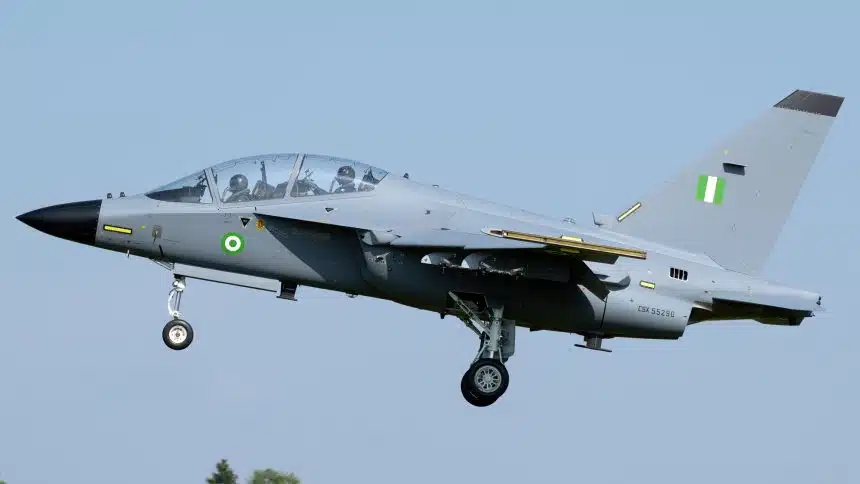
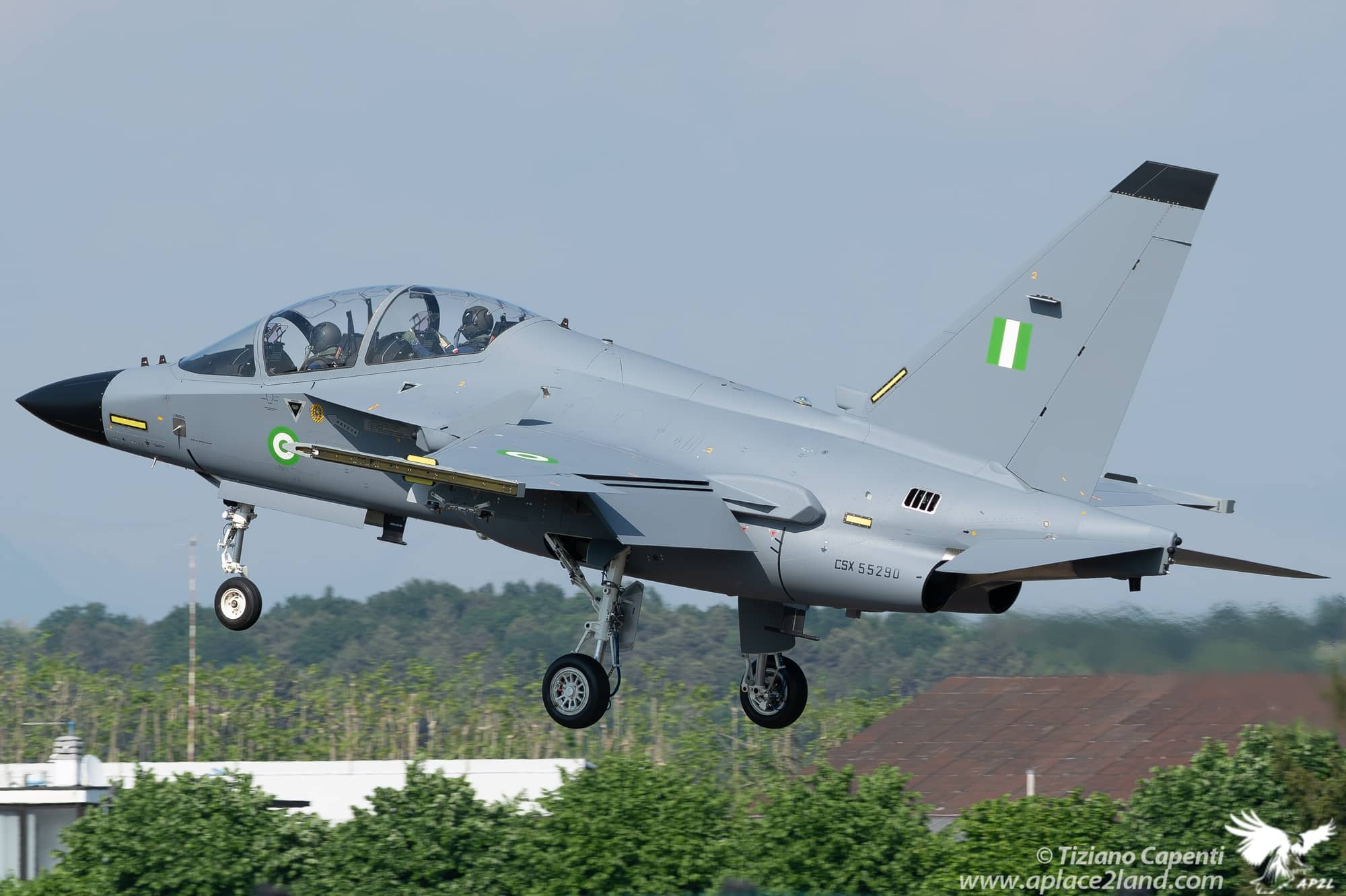
For the first time, an M-346FA destined to Nigeria has flown with the full Nigerian Air Force livery. The aircraft, which is currently flying with the provisional Italian serial CSX55290, is the third built for the African country, which flew for the first time earlier this month.
Aviation photographer Tiziano Capenti captured the aircraft as it returned from a test flight at Venegono airfield, in northwestern Italy, home to Leonardo S.p.A.’s facilities, on Apr. 27, 2026, and kindly shared the photo with us. The M-346 sports a full gray livery, with the nose radome and the top of the vertical tail painted black.
The livery is completed by the roundel of the Nigerian Air Force below the cockpit and on the wings, as well as a Nigerian flag on the tail. This appears to be the only aircraft with the Nigerian insignia, as a second M-346FA, CSX55284, is currently flying with only the gray livery.
M-346FA for Nigeria
Nigeria signed a deal for the procurement of 24 M-346A aircraft in November 2023, although this was only confirmed in 2024, after the country’s Presidency confirmed its interest in the aircraft few months earlier. The country also procured ten new AW109 Trekker helicopters, which would join the two already in service.
The deal is valued at approximately €1.2 billion ($1.4 billion) and includes a training systems, ground support equipment, spare parts, munitions, and long-term logistical support. According to the reports, the support by Leonardo with last 25 years, with a program office and maintenance hub to be established in the country.
The M-346s are divided in four different batches, each including six aircraft. In 2024, when the Chief of the Air Staff of the Nigerian Air Force visited Leonardo’s facilities in Venegono, the first aircraft were already being built.
Initially, it was reported that the first aircraft were to be delivered by 2025. It is unclear when the M-346s will be ferried to Nigeria, but it is likely to happen this year as soon as all the first three aircraft receive the final livery.
The procurement of the new aircraft is part of the modernization of the Nigerian Air Force, which saw a number of new assets being acquired. In addition to training, the M-346FAs are expected to be employed in Close Air Support (CAS) and Counter-insurgency (COIN) operations against insurgents in the region.
Interestingly, this is not the first Italian jet bought by Nigeria. In fact, the country operates also MB-339s which were bought in the 1980s.
The M-346FA
The M-346 Master celebrated in 2024 the 20th anniversary since its first flight. The aircraft, considered by many as the most advanced jet trainer currently available, brought many new technologies to improve the training of future 4th and 5th gen fighter pilots, including the state-of-the-art Ground-Based Training System and the Live Virtual and Constructive (LVC) technologies.
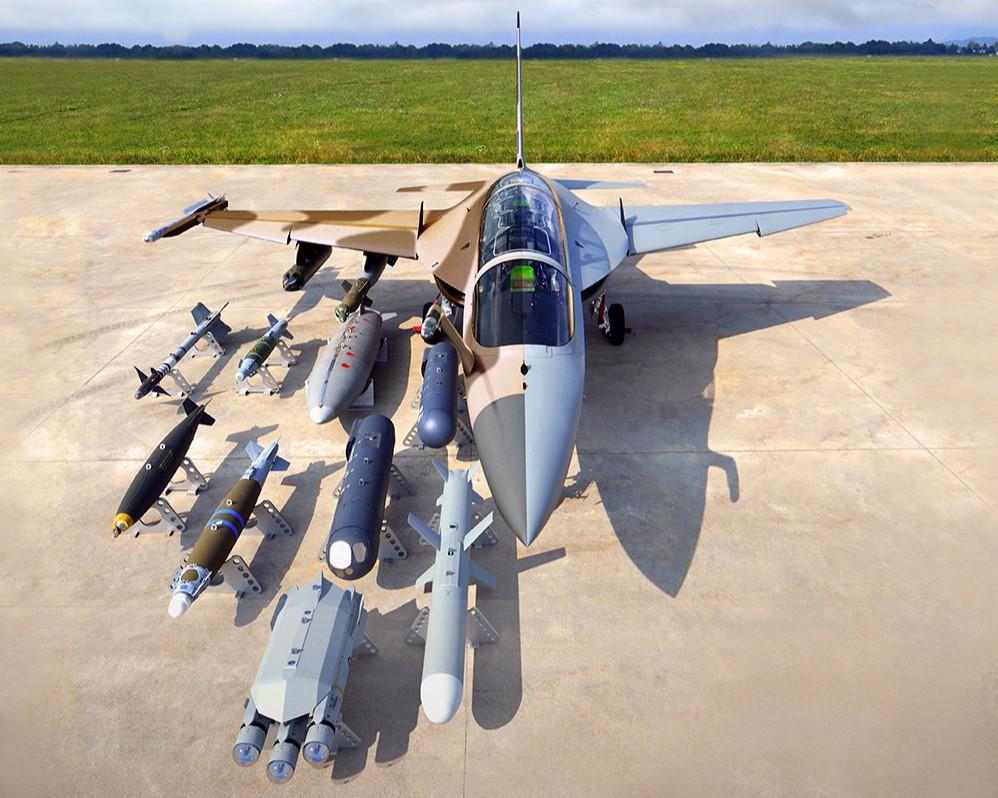
In addition to its training variant, Leonardo has developed a combat-capable version of the aircraft called the M-346 FA (Fighter Attack), also known as Light Fighter Family of Aircraft (LFFA). The most visible differences from the standard AJT configuration are the two wingtip missile rails, that bring the total hardpoints to seven, new antennas and the Defensive Aid Sub System (DASS).
The M-346FA variant is designed to retain the full dual role capability of the AJT version, already in service with the Italian, Israeli, Polish and Singapore Air Forces, while incorporating also some new features like a tactical data link, Grifo-346 mechanical scan, multi-mode radar, new secure radios and IFF system (Identification Friend or Foe), and a stronger airframe.
The aircraft, which is being proposed for Homeland Defence/Air Policing, Slow Mover Intercept, Close Air Support (CAS), Counter INsurgency (COIN), Forward Air Controller – Airborne (FAC-A), Combat Search And Rescue (CSAR), Interdiction, Battlefield Air Interdiction (BAI), Tactical Air Support for Maritime Operations (TASMO) and Tactical Reconnaissance roles, can carry more than 2,000 kg of weapons.
Thanks again to Tiziano Capenti for the photo he sent us and make sure to follow him on Instagram, Facebook or Twitter @aplace2land for more!