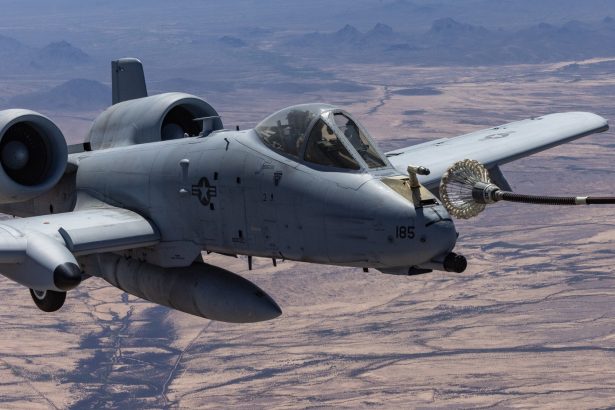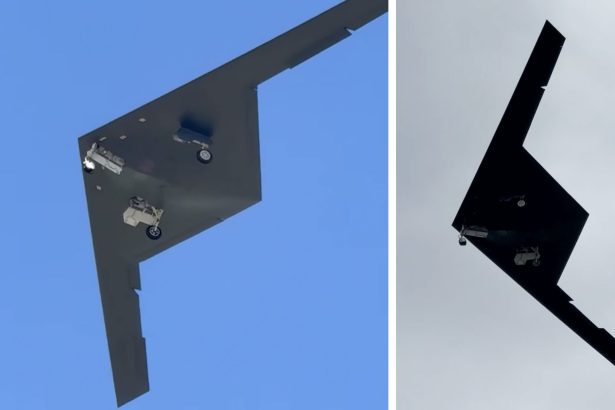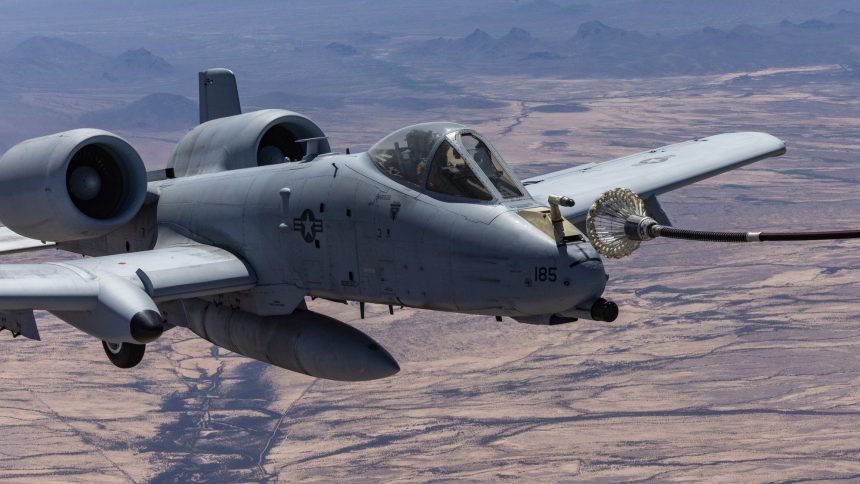
A new Probe Refueling Adapter, developed in response to an urgent combatant command requirement, allows the A-10 to significantly expand its refueling options as it is currently dependent on the KC-135.
Few days after a photo circulated on social media, the Air National Guard Air Force Reserve Command Test Center (AATC) has now provided more details and photos about the latest development for the A-10C Thunderbolt II. In fact, the close air support aircraft, has now received a new probe and drogue air refueling capability.
One of the distinguishing traits of the A-10C is its air refueling receptable on the nose, just in front of the cockpit, where the tanker’s operator plugs the flying boom. However, as the AATC noted, “with KC-10 tankers retired and KC-46 certification pending, A-10 units remained dependent on KC-135 aircraft for aerial refueling.”
Not AI. Current testing.
Hog on a Droge.
When they start landing in Carriers, I’m out. pic.twitter.com/17quJjBf4M
— COL (Ret) Jeff in 🇦🇹 (@JeffFisch) April 3, 2026
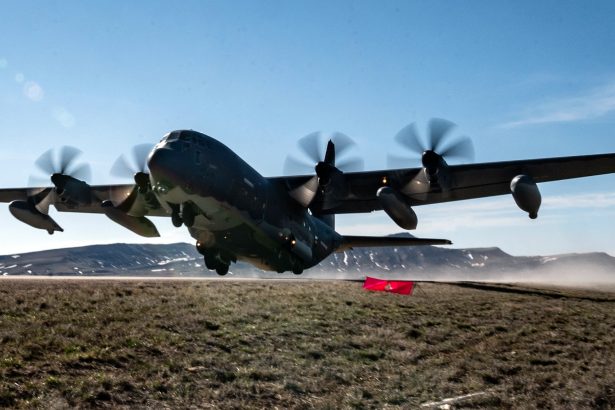
An urgent combatant command requirement thus emerged to address operational availability of aerial refueling in theater, leading to “a rapid multi-organization effort.” As a result, the A-10 can now refuel from C-130-based tankers, such as the KC-130J Super Hercules, MC-130J Commando II and HC-130J Combat King II.
Rapid Development
According to the statement, AATC was in charge of coordinating the effort across multiple organizations to compress development timelines. The probe itself was developed and built by an unspecified industry partner, with the A-10 System Program Office providing engineering oversight for aircraft integration.
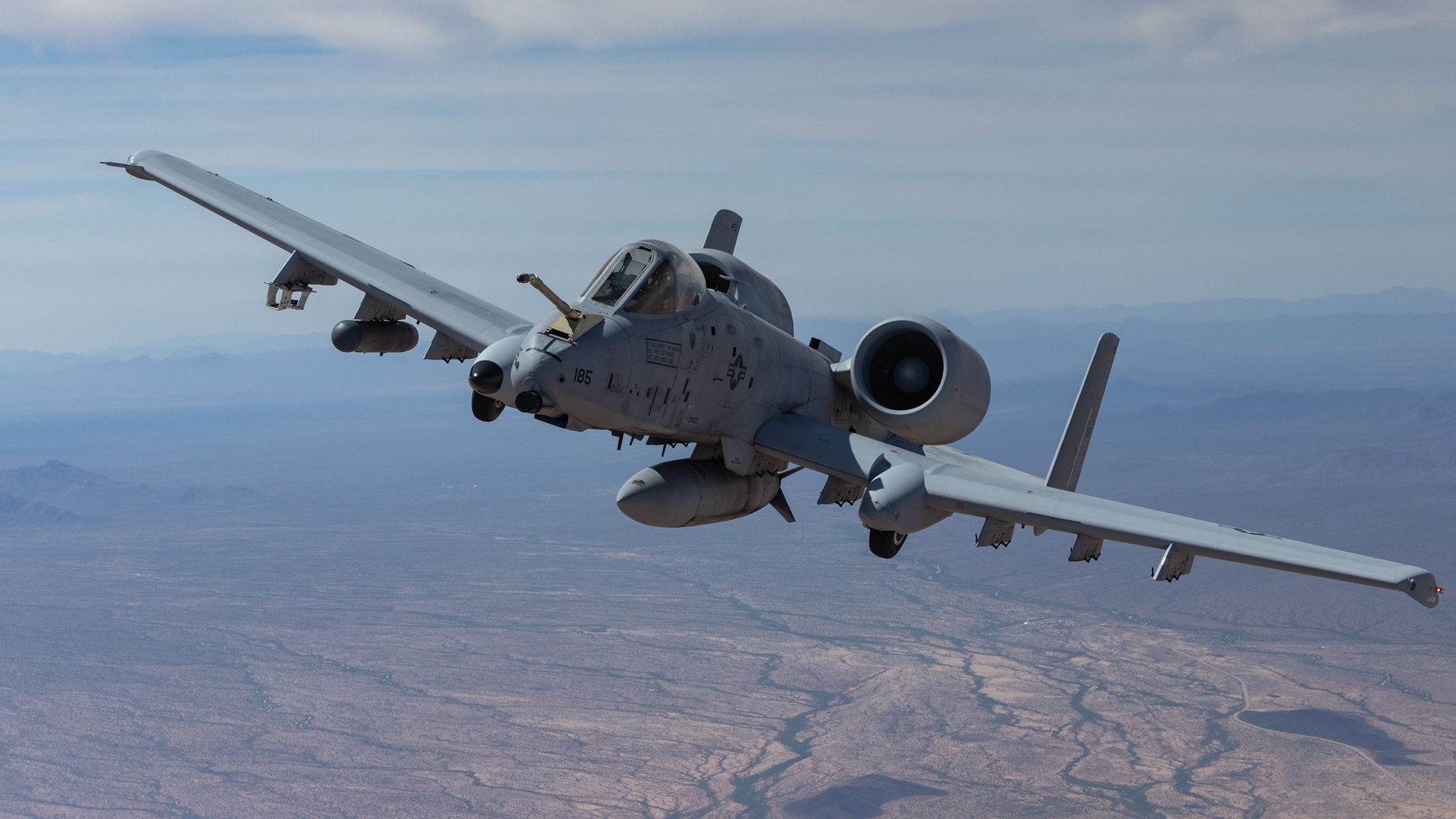
Additionally, ARCWERX – the Air National Guard and Air Force Reserve’s innovation hub – enabled rapid contract acquisition, and Luke Air Force Base fabricated supporting components to accelerate delivery. The 418th Flight Test Squadron then provided a HC-130 and crew for the first refueling test mission with the new probe.
“Once the combatant command issued the requirement, all of the standard acquisition processes began immediately, but everyone involved understood the urgency,” said Lt. Col. Luke Haywas, A-10 Combined Test Force director. “The SPO, ARCWERX, industry partners, and supporting units each brought critical expertise to the effort. Nothing was shortcut or compromised from a technical or safety standpoint. We just accelerated every step we could.”
As it can be seen in the photos, the adapter fits into the air refueling receptacle on the nose of the A-10. Once installed, this converts the aircraft from its standard boom refueling configuration to a probe and drogue system.
AATC says the probe adapter is a field-configurable solution, and thus can be installed by operational flight line personnel “in a matter of hours,” without having to resort to depot facilities. This allows “aircraft to be reconfigured between boom and probe refueling capability based on mission requirements,” explains the statement.
“This project demonstrates that AATC can serve as a rapid response mechanism when combatant commanders face urgent capability gaps,” said Col. Daniel Wittmer, AATC commander. “We maintained relationships with system program offices and industry partners, and we brought the test expertise needed to move from concept to fielded capability in weeks. That’s not a one-time accomplishment. It’s a model for how the Air Force can deliver operationally relevant capabilities to warfighters at the speed that modern conflict demands.”
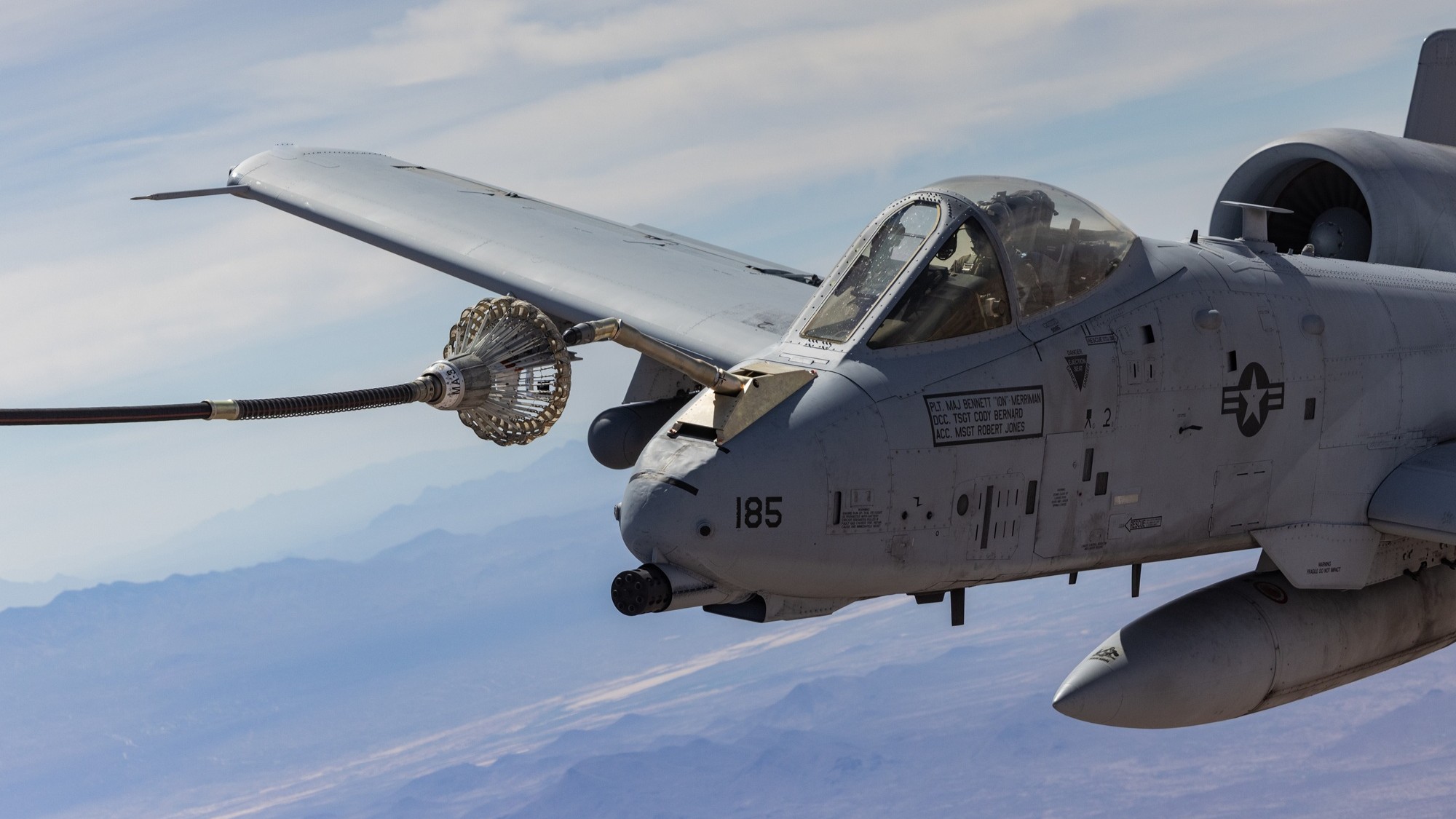
Probe and Drogue & A-10C
As mentioned earlier, the testing to clear the A-10 for refueling from the KC-46 Pegasus tanker is still in progress, and the Warthog is currently being refueled only by the KC-135 Stratotanker. This obviously represents a problem, as there would be no redundancy in case a KC-135 could not refuel the A-10, possibly forcing to abort the mission.
The difficulties of the testing with the KC-46 were reportedly related to the boom, and specifically an actuator inside the boom which prevents the A-10C to be refueled. According to the reports, the A-10 can’t generate enough force to stay connected to the boom due to its low speed, so the hydraulic actuator provides that force to keep the boom rod in the receptacle.
The A-10 is notoriously slower than other fighter jets currently in service with the U.S. Air Force. Its maximum speed, according to the Air Force, is 420 miles per hour (Mach 0.56), or 365 knots at sea level.
Normally, fighter jets in U.S. service refuel at around 300 knots, while the A-10C reportedly refuels at around 200 knots. This obviously forces the KC-46 to fly at a very low speed will possibly being still at its maximum weight at the start of a refueling mission.
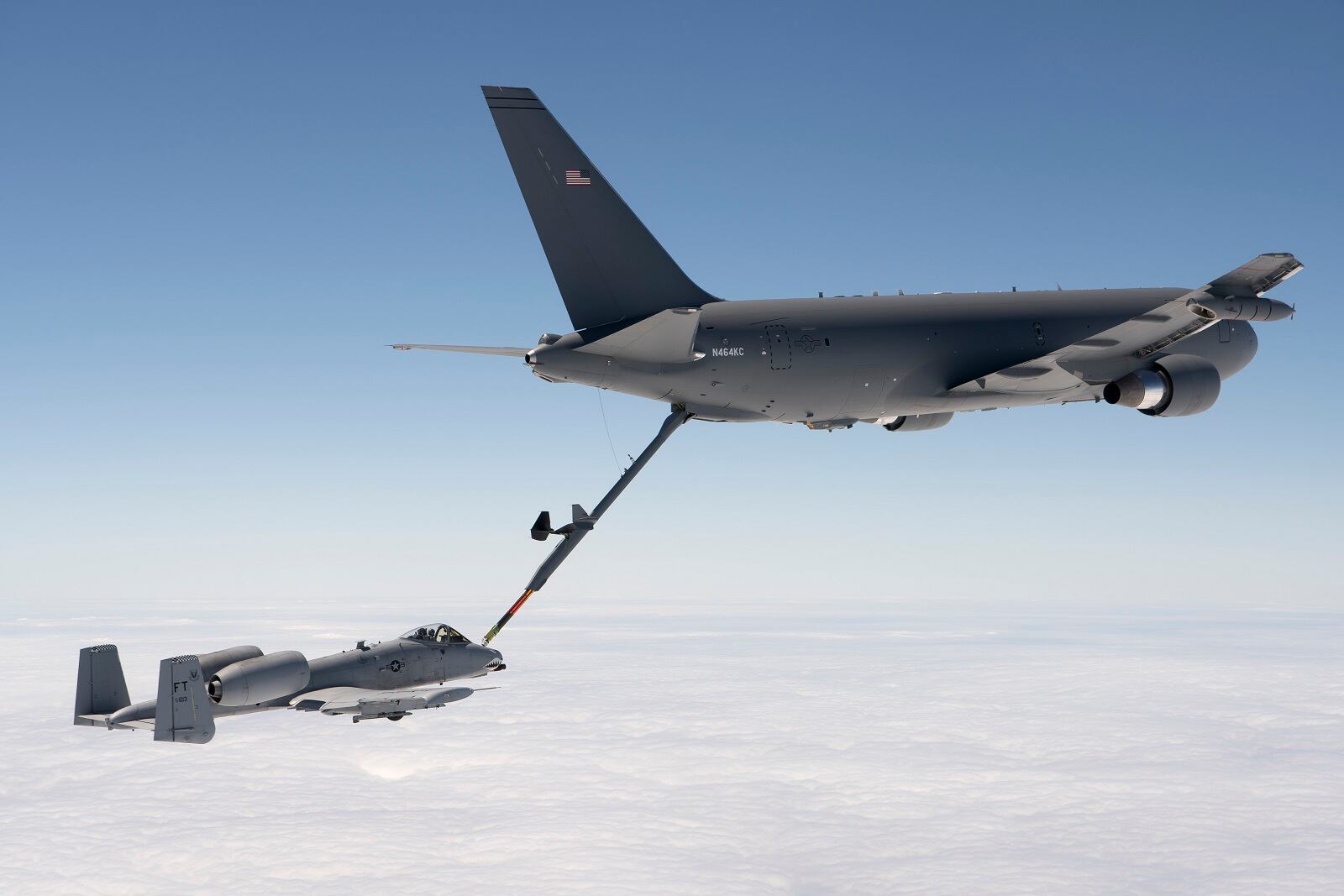
On the other hand, a C-130-based tanker can fly much easily at lower speeds and altitudes. This is also mentioned by the service in the statement, saying the C-130’s “airspeeds and altitudes prove more compatible with A-10 operations” and its “mission sets align more closely with close air support and combat search and rescue operations.“
Obviously, a C-130 tanker with a flying boom refueling system does not exist, and such a solution would have taken a long time to develop and test. On the other hand, multiple C-130 variants are capable of air refueling with the probe and drogue system and they are already in service.
This made the decision straightforward, and we might soon see the new Probe Refueling Adapter in new photos from operational deployments. Considering that the new probe in installed on top of the existing air refueling port, it is possible that the training required to pilots, before being cleared to use the new refueling system, will be short.