Operation Epic Fury has now entered the third week, with additional bombers arriving at RAF Fairford and a Marine Expeditionary Unit headed to the Middle East.
After being initially expected to last just few days, Operation Epic Fury has now entered its third week. While it is unclear how long the U.S. plans to continue the combat operations, CNN reports that the Israel Defense Forces (IDF) are planning to continue their own Operation Rising Lion for three more weeks.
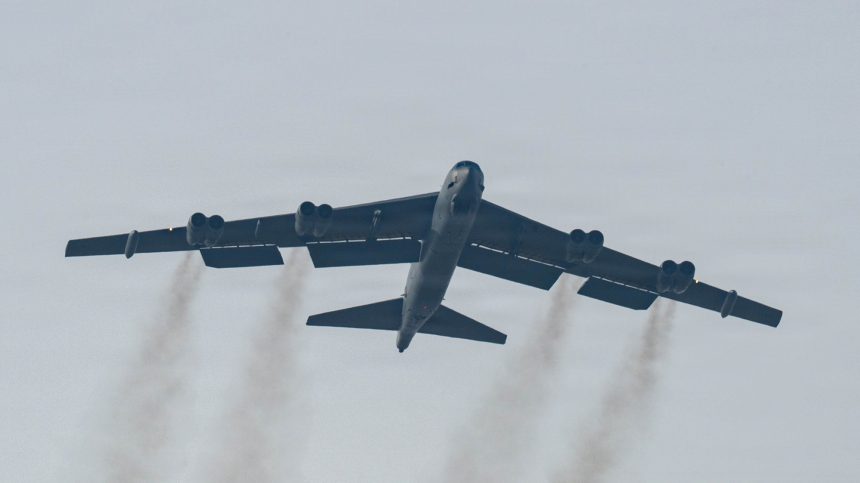
Meanwhile, the U.S. Air Force has deployed three more B-52 Stratofortress bombers to RAF Fairford, UK, and ten F-35A Lightning II fighters arrived at RAF Lakenheath. Additionally, components of an Amphibious Ready Group (ARG) and a Marine Expeditionary Unit (MEU), reportedly the USS Tripoli (LHA-7) and 31st MEU, respectively, are on their way to the Middle East.
B-1B Lancers – capable of carrying a payload of 75,000 pounds – have operated over the Middle East in support of Operation Epic Fury. Nicknamed the BONE, B-1Bs hold world records for speed, payload and range. pic.twitter.com/pwYq7n1BMO
— U.S. Central Command (@CENTCOM) March 15, 2026
Bomber Activity
On Mar. 13, 2026, three more B-52 Stratofortress bombers arrived at RAF Fairford, UK, following a strike mission over Iran. Their arrival brought the total number of bombers at the British base to 18, including 12 B-1B Lancers and six B-52s.
08:29 FLIP 61 flt x3 USAF B-52/H Statofortress’s
Inbound to RAF Fairford from CONUS via a striking mission in Iran.#FLIP61 flt wkg Swanwick 275.620 / A2A 323.750. pic.twitter.com/NyRVc4BtzF
— Andy (@Andyyyyrrrr) March 13, 2026
More B52 Stratofortress long range bombers have arrived at RAF Fairford. Three landed this morning. There are now six on the ground. They join a fleet of 12 B1 Lancers. Two B1 bombers took off this morning. Supplies of JDAM bunker busting bombs continue to be moved around the… pic.twitter.com/XxwfWSRKQD
— Richard Gaisford (@richardgaisford) March 13, 2026
Up to Mar. 15, five bomber missions have been observed departing the UK, each involving at least two B-1s. The first mission was recorded on Mar. 10.
#USAF United States Air Force – Iran War
Global Strike Command Operations / RAF Fairford
15 March – 1045z
As of 0920z on the 15th of March, there have been five Air Force Global Strike Command bomber sorties launched from RAF Fairford, all so far being Rockwell B-1B Lancer’s.… https://t.co/vNeYU5P0Ad pic.twitter.com/WZ4PFj3lrk
— Armchair Admiral 🇬🇧 (@ArmchairAdml) March 15, 2026
The bombers have been using both the AGM-158 Joint Air-to-Surface Missile (JASSM) and the GBU-31 Joint Direct Attack Munition (JDAM), and specifically the GBU-31(V)3 based on the BLU-109/B bunker buster. Both weapons were sighted during loading and unloading procedures at Fairford.
Update: https://t.co/gi0vwn93GI
— Richard Gaisford (@richardgaisford) March 11, 2026
Meanwhile, bomber round-trip missions are still being launched from CONUS. At least two B-2 Spirit stealth bombers and three B-52s have been observed flying from the U.S. to Iran and back this week.
#FUJI31 flt (x3 B-52H) heading back to Barksdale AFB earlier today after a strike mission against Iran, working New York HF 8825. pic.twitter.com/Xw38gGsor8
— EISNspotter (@EISNspotter) March 10, 2026
#ENTRY21 flt (x2 B-2) with Santa Maria HF 6628 this morning on their way back west for Whiteman AFB after an Iran strike mission. pic.twitter.com/ZdvQeBBTiT
— EISNspotter (@EISNspotter) March 12, 2026
B-2 stealth bombers takeoff to conduct a mission during Operation Epic Fury, delivering long-range fire to not only eliminate the threat from the Iranian regime today, but also eliminate their ability to rebuild in the future. pic.twitter.com/ebyUYNnOLo
— U.S. Central Command (@CENTCOM) March 13, 2026
On Mar. 15, two B-52s loaded with 10 JASSMs each took off from Fairford on their way to Iran. Reportedly, the B-52s deployed to Fairford were not yet employed in missions over Iran since their arrival in the UK, possibly making this their first mission.
— OSINTtechnical (@Osinttechnical) March 15, 2026
B-52H “Stratofortress” Long-Range Strategic Bombers armed with AGM-158 Joint Air-to-Surface Standoff Missiles (JASSM) take off Sunday from RAF Fairford in Gloucestershire, England, for strikes against Iran in support of Operation Epic Fury. pic.twitter.com/8o9BA9ZITg
— OSINTdefender (@sentdefender) March 15, 2026
More F-35s
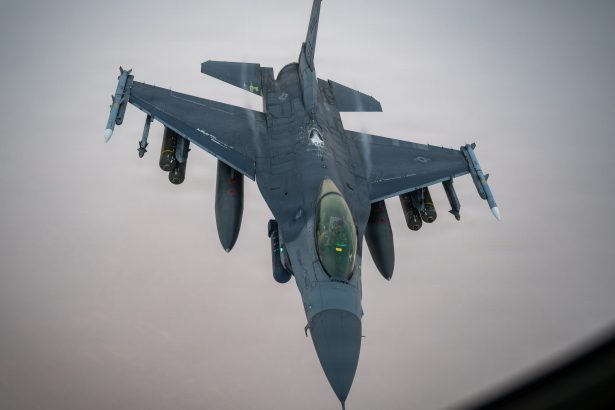
Additional F-35A Lightning II fighters are being deployed to the Middle East. Ten aircraft arrived at RAF Lakenheath from Hill Air Force Base, Utah, after a stop at Burlington Air National Guard Base, Vermont.
KC-135 #CLEAN71-72 & #CLEAN81-82 are up on Coronet East 046 with “HL” F-35A #TABOR81-86 & #TABOR91-94, which are en route to RAF Lakenheah from Burlington ANGB after diverting there on Thursday. KC-135 #CLEAN75 & #CLEAN85 from RAF Mildenhall will pick them up around 40W. pic.twitter.com/je8F8A5sbr
— EISNspotter (@EISNspotter) March 14, 2026
Overnight F-35 Arrivals to RAF Lakenheath #FreeIran
— Operation EPIC FURY —
Overnight we had 10 new F-35A arrivals from the HL tailcode, supported by “CLEAN” callsign tankers. The jets are:
F-35A “TABOR81” 18-5477 #AE6A82
F-35A “TABOR82” 20-5610 #AE6F4D
F-35A “TABOR83″…
— DefenceGeek 🇬🇧 (@DefenceGeek) March 15, 2026
It is unclear if these fighters will relieve some of the F-35s deployed in the CENTCOM Area of Responsibility or if they will supplement them.
Zeus 95
As we reported on Mar. 12, 2026, a U.S. Air Force KC-135R Stratotanker was lost during a mission over Iraq, with all six crew members killed in the crash. The aircraft, callsign Zeus 95, was operated by a mixed crew of the 121st Air Refueling Wing from Rickenbacker Air National Guard Base, Ohio, and the 6th Air Refueling Wing from MacDill Air Force Base, Florida.
We will never forget the KC-135 crew, Zeus 95, that paid the ultimate sacrifice. These heroes make up our total force team and we mourn with their families. Their memory strengthens our resolve to fight, as we carry their legacy forward. NKAWTG…N!https://t.co/XGJKl3cBng
— General Ken Wilsbach (@OfficialCSAF) March 15, 2026
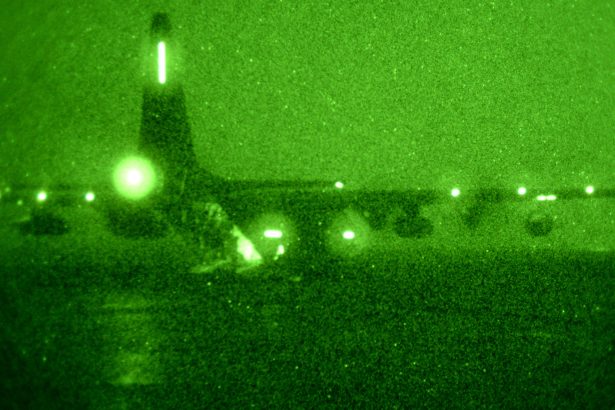
A second aircraft was also involved, but it was able to safely land at Ben Gurion Airport in Israel. The KC-135 was missing a large part of its vertical stabilizer.
תיעוד: אחד ממטוסי התדלוק האמריקניים, שהיה מעורב אתמול בתאונה בשמי עיראק, צולם בנתב”ג ללא חלק משמעותי ממיצב הכיוון בזנב המטוס. תיעוד המטוס הגיע אלינו הבוקר, ומלמד משהו על התאונה החריגה במהלך התקיפות באיראן
המטוס השני שהיה מעורב בתאונה התרסק בעיראק, גורל ששת אנשי הצוות לא ידוע pic.twitter.com/igBPfEOZjf
— איתי בלומנטל 🇮🇱 Itay Blumental (@ItayBlumental) March 13, 2026
The causes of the mishap are still unknown, and an investigation has been launched by the Air Force. The U.S. Central Command (CENTCOM) stressed that the “loss of the aircraft was not due to hostile fire or friendly fire,” and that the mishap happened in “friendly airspace.”
Marines Deployed
U.S. media reported that officials confirmed that elements of an Amphibious Ready Group (ARG) and a Marine Expeditionary Unit (MEU) will be deployed to the CENTCOM’s AOR, after U.S. Secretary of Defense Pete Hegseth approved a request from the command.
The U.S. is sending the 2,200 Marines and sailors of the 31st Marine Expeditionary Unit from INDOPACOM to the Middle East.
The 31st MEU is based around the USS Tripoli (LHA 7) and its air wing of Ospreys and F-35s. pic.twitter.com/Q1ZMn9eBF8
— OSINTtechnical (@Osinttechnical) March 13, 2026
According to the reports, the USS Tripoli (LHA-7) and 31st MEU are the elements currently sailing from the Pacific Ocean to the Middle East, although it is unclear if other warships are also present. In fact, the Tripoli ARG also includes the USS San Diego (LPD-22) and USS New Orleans (LPD-18).
Satellite imagery from earlier today, March 14, captured the America-class amphibious assault ship USS Tripoli (LHA-7) and her 2,500 embarked Marines with the 31st Marine Expeditionary Unit (31st MEU), quickly steaming towards the Middle East, having already entered the South… pic.twitter.com/U3jtPRPndn
— OSINTdefender (@sentdefender) March 14, 2026
A MEU is the U.S. Marine Corps’ mobile, self-contained, rapid reaction force, with a complement of fully-integrated air and ground forces. The MEU consists of approximately 2,200 Marines and Sailors, divided in a Command Element, a Ground Combat Element, an Aviation Combat Element and a Logistics Combat Element.
If you’re wondering what a Marine Expeditionary Unit is, here’s a write up I did last year on the 24th MEU. While the unit being deployed is the 31st MEU, the concept is still the same.
For those interested in a more detailed explanation from the experts themselves, below are… https://t.co/6J6SVCGkEE
— TheIntelFrog (@TheIntelFrog) March 15, 2026
A more in depth look at the Ground Combat Element (GCE).
— TheIntelFrog (@TheIntelFrog) March 15, 2026
Among the missions the MEU can undertake while deployed are Peacekeeping/Enforcement, Humanitarian/Disaster Relief, Security Operations, Noncombatant Evacuation Operations, Reinforcement Operations, Amphibious Raids/Assaults/Demonstrations, Tactical Deception Operations, Airfield/Port Seizures, Show-of-Force Operations, Reconnaissance and Surveillance, and Seizure/Recovery of Offshore Energy Facilities.
A-10s Still on the Frontlines
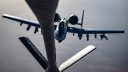
While the U.S. Air Force continues with its efforts to retire the A-10C Thunderbolt II, the platform has still something to say, as it continues to be used even as part of Operation Epic Fury. It has been often argued that the A-10 is not designed for combat operations in heavily contested environments, but here CENTCOM mentioned the aircraft’s involvement in combat missions since the beginning.
B-1B Lancers – capable of carrying a payload of 75,000 pounds – have operated over the Middle East in support of Operation Epic Fury. Nicknamed the BONE, B-1Bs hold world records for speed, payload and range. pic.twitter.com/pwYq7n1BMO
— U.S. Central Command (@CENTCOM) March 15, 2026
Notably, the A-10 has been shown equipped with AGM-65 Maverick air-to-ground missiles and AGR-20 laser-guided rockets. Its ability to loiter for hours and effortlessly fly at low speeds makes it an ideal platform to counter OWA drones, in addition to striking targets of opportunity.
U.S.-Israeli Strikes
U.S. and Israeli strikes are continuing relentlessly, with the U.S. Central Command said it has struck about 6,000 targets in Iran and the IDF saying it has carried out roughly 400 waves of strikes.
Among the recent U.S. targets is Kharg Island, which serves as Iran’s oil export hub and is located around 15 nautical miles (24km) off the coast. CENTCOM says it has struck “more than 90 Iranian military targets on Kharg Island, while preserving the oil infrastructure.”
Last night, U.S. forces executed a large-scale precision strike on Kharg Island, Iran. The strike destroyed naval mine storage facilities, missile storage bunkers, and multiple other military sites. U.S. forces successfully struck more than 90 Iranian military targets on Kharg… pic.twitter.com/2X1glD4Flt
— U.S. Central Command (@CENTCOM) March 14, 2026
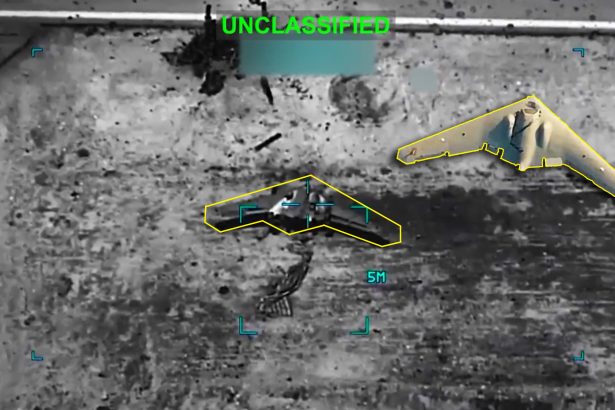
The strikes are continuing to target every Iranian military capability. A particular focus has been put on the aircraft and ships employed by Iran’s military. Among the targets are also the P-3 Orion maritime patrol aircraft.
IRIAF P-3F 5-8704 from 71 ASW squadron is no more.
Iran’s five P-3Fs that started the war had unique camo patterns for ID, as well as you can partially make out the 5-___4 of the tail, which in of itself is a giveaway to the airframe’s ID. https://t.co/1pPpdgJS9w pic.twitter.com/SvMBibwWdI
— Evergreen Intel (@vcdgf555) March 12, 2026
New satellite photos also confirm the destruction of the Iranian F-14 Tomcat fighters, previously show in videos by CENTCOM.
Thread: High-resolution satellite images released by @vantortech reveal damage at several new air bases and missile sites in Iran after US/Israeli strikes.
Images captured on 9 March show damage to Iranian F-14 Tomcats at the Isfahan air base (Shekari 8). pic.twitter.com/JjcbInnsdq
— Shayan Sardarizadeh (@Shayan86) March 11, 2026
A massacre of aircraft was perpetrated by Israeli fighter jets at the Iranian airbase in Isfahan. All warplanes were completely destroyed, including those in fortified shelters. pic.twitter.com/HFjNAHySEk
— Ph.Gritti (@Philipp27960841) March 10, 2026
U.S. Navy aircraft are still among the main assets being used in the strikes, with multiple videos and photos from CENTCOM highlighting their role.
A U.S. Air Force KC-135 Stratotanker refuels a U.S. Navy F/A-18F Super Hornet over the middle east during Operation Epic Fury. pic.twitter.com/3z9UzXyLt9
— U.S. Central Command (@CENTCOM) March 12, 2026
While some may argue that Super Hornets are mainly being employed to lob stand-off weapons at targets in Iran, it appears that the area has become permissive enough to conduct operations at low altitude. Videos emerged online show F/A-18s operating freely at low altitude over the Iranian port city of Chabahar, and also strafing targets with their M61 20 mm cannon.
Strafing run happened last week, but Navy Super Hornets have continued to operate at low level over Chabahar since. https://t.co/J5JT3FaywK
— OSINTtechnical (@Osinttechnical) March 15, 2026
Israeli F-35I Adir fighters have also been conducting at least some missions with external loads and radar reflectors on, as shown by images emerged throughout the week.
Here’s a much closer look at an F-35I in a non-LO combat configuration carrying external GBU-31s and AIM-9Xs. Likely for Iran ops given that this was taken today. https://t.co/63IfoFGDJG pic.twitter.com/2CyMRuTkIn
— Abd (@blocksixtynine) March 11, 2026
Iranian Retaliation
Although it has suffered heavy losses, Iran still continues to retaliate against any Israel- and U.S.-linked target in the region. The attacks are being conducted mainly with ballistic missiles and one-way attack drones.
An attack that is being noted is the one conducted with First Person View (FPV) drones against the former Camp Victory outside Baghdad, which U.S. forces left months ago.
Second attack impacted the hanger here: 33.264603 44.212980 pic.twitter.com/267gtzB8EE pic.twitter.com/zGYSnlm5ke
— Evan Hill (@evanhill) March 15, 2026
FPV drones at Baghdad International Airport https://t.co/vOF3Hm7H9N https://t.co/qafjMbJJrU pic.twitter.com/YP1e3yaQpa
— Samir (@obretix) March 15, 2026
Ali Al-Salem Air Base in Kuwait has been repeatedly attacked by Iranian drones. In the most recent attack, an Italian MQ-9 Remotely Piloted Aircraft (RPA), deployed there as part of the Counter-ISIS coalition, was destroyed when a drone struck the shelter where it was parked.
— Evergreen Intel (@vcdgf555) March 13, 2026
Italian Air Force MQ-9 Remotely Piloted Vehicle destroyed in drone attack on Ali Al Salem Air Base in Kuwait. No personnel were harmed, according to the Italian MoD. pic.twitter.com/aaVCTBlwYf
— The Aviationist (@TheAviationist) March 15, 2026