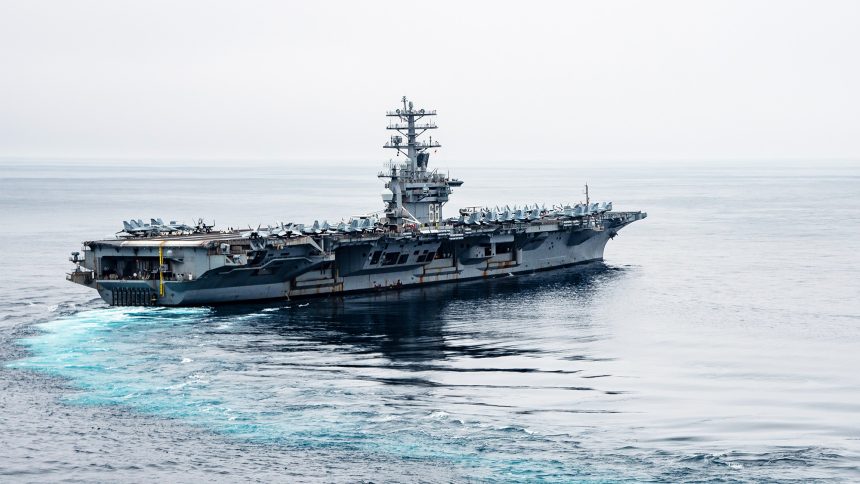
Instead of decommissioning this year, Breaking Defense reports that the U.S. Navy’s oldest commissioned aircraft carrier will now officially remain in service until at least March 2027.
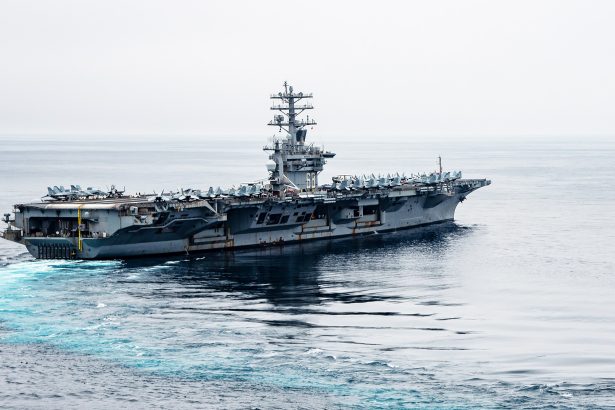
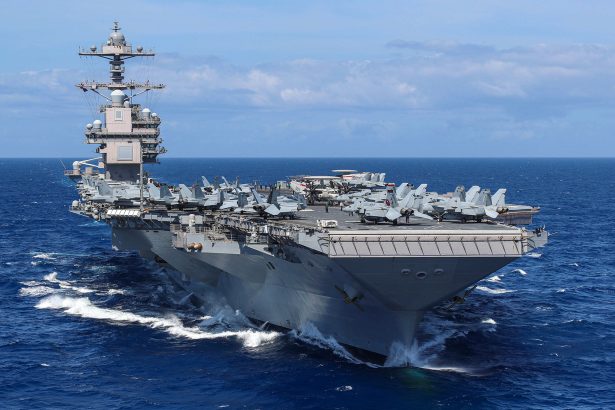
The change of plans, which was relayed to Breaking Defense by a U.S. Navy official, will theoretically align the USS Nimitz’s (CVN-68) official decommissioning date with the planned commissioning of the Gerald R. Ford class aircraft carrier John F. Kennedy (CVN-79). Originally, the Nimitz was due to decommission in May 2026.
This will maintain the U.S. Navy’s on-paper fleet of aircraft carriers at the current 11 ships, which is the mandated minimum amount set in federal law. Despite this, it remains unlikely that the Nimitz will see any further operational tours outside of a genuine emergency situation – by the time the carrier could be regenerated for a further frontline deployment the new decommissioning date would be rapidly approaching.
Aircraft carrier Nimitz gets service life extension, won’t be decommissioned until 2027 https://t.co/IZq2jgU3Ca
— Breaking Defense (@BreakingDefense) March 14, 2026
Significant further use of the Nimitz is also restricted by the ship’s finite reserves of nuclear fuel. While nuclear power allows for exceptional endurance, it is not an unlimited source of energy and each Nimitz class aircraft carrier was designed to be refueled once during their five decade planned service lives. As the first of class, Nimitz began its refueling and complex overhaul (RCOH) process in 1998 – 23 years after being delivered to the U.S. Navy – and did not again put to sea until September 2001.
Now 25 years since its last refueling, we can’t be certain how much life is left in the ship’s two nuclear reactors but it can be assumed to be relatively limited and not conducive to a busy extension in service life. A further RCOH would not be cost effective for a ship of Nimitz’s age and would crucially take away resources needed to support the refueling plans of newer ships in the class. The USS John C. Stennis (CVN-74) is currently in the middle of a much delayed RCOH process, and the next ship due in is the USS Harry S. Truman (CVN-75).
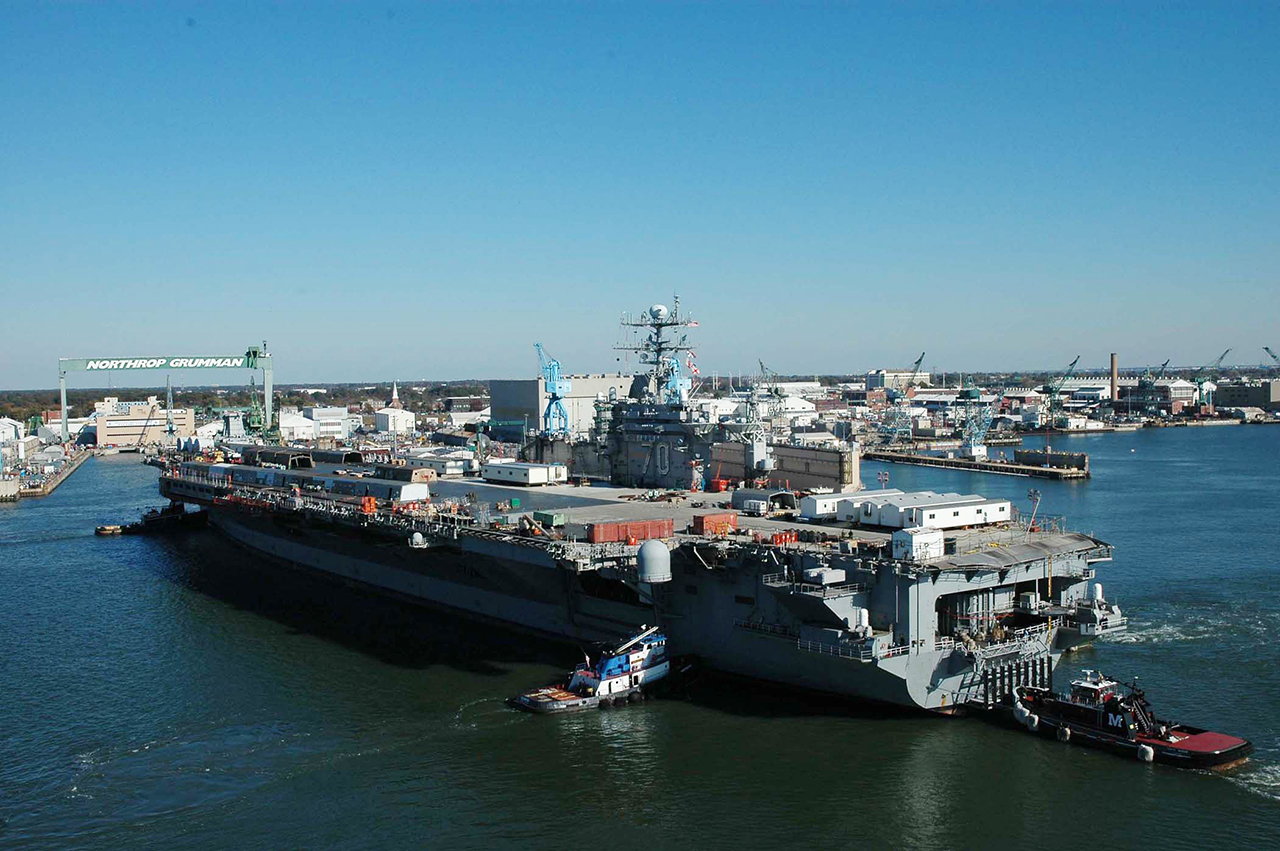
At present, the Nimitz is in the process of sailing from Naval Base Kitsap, Washington, to its new homeport at Naval Base Norfolk on the East Coast – with a short farewell stop in San Diego. This move was already planned well in advance as the decommissioning process would then take place at Newport News shipyard, near to Norfolk.
USS Nimitz (CVN 68) Nimitz-class aircraft carrier leaving San Diego for the final time – March 14, 2026 SRC: X-@Panranch pic.twitter.com/STfNWPKOaJ
— WarshipCam (@WarshipCam) March 14, 2026
Replacement
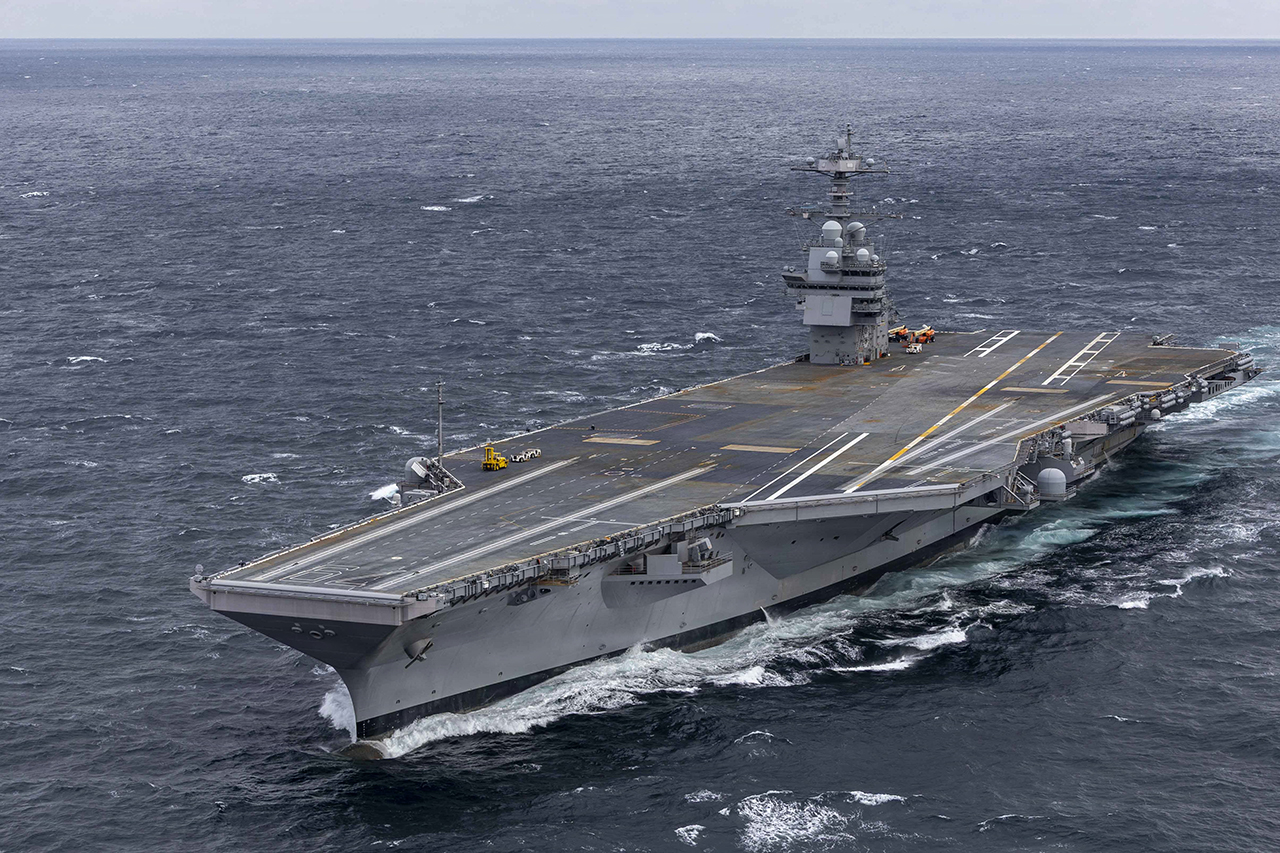
Its replacement, the John F. Kennedy, completed its manufacturer sea trials in early February and has now returned to port for some final works before being evaluated by the U.S. Navy in rigorous acceptance trials ahead of officially entering the fleet. Unlike the USS Gerald R. Ford (CVN-78), the Kennedy will be delivered with the necessary modifications required for long-term operation of the F-35C Lightning II – a change which did see additional delays to the ship’s service entry, but one that will save the need for the modifications to be added in a subsequent refit.
Operating F-35Cs as part of a carrier’s regular air wing requires the integration of the type’s advanced maintenance network systems, facilities for maintaining the aircraft’s type specific equipment and technology – including engines, avionics, and radar-absorbent material (RAM) coatings – as well as upgraded jet blast deflectors able to cope with the extreme heat of the Pratt & Whitney F135 engine, which outputs around the same amount of thrust as both of the F/A-18E/F Super Hornet’s F414s combined.
Future for the Nimitz
Though future frontline use is unlikely outside of an urgent need, due to the aforementioned constraints, there is a chance the Nimitz could be used to support training requirements closer to home while the rest of the carrier force is stretched by ongoing conflicts.
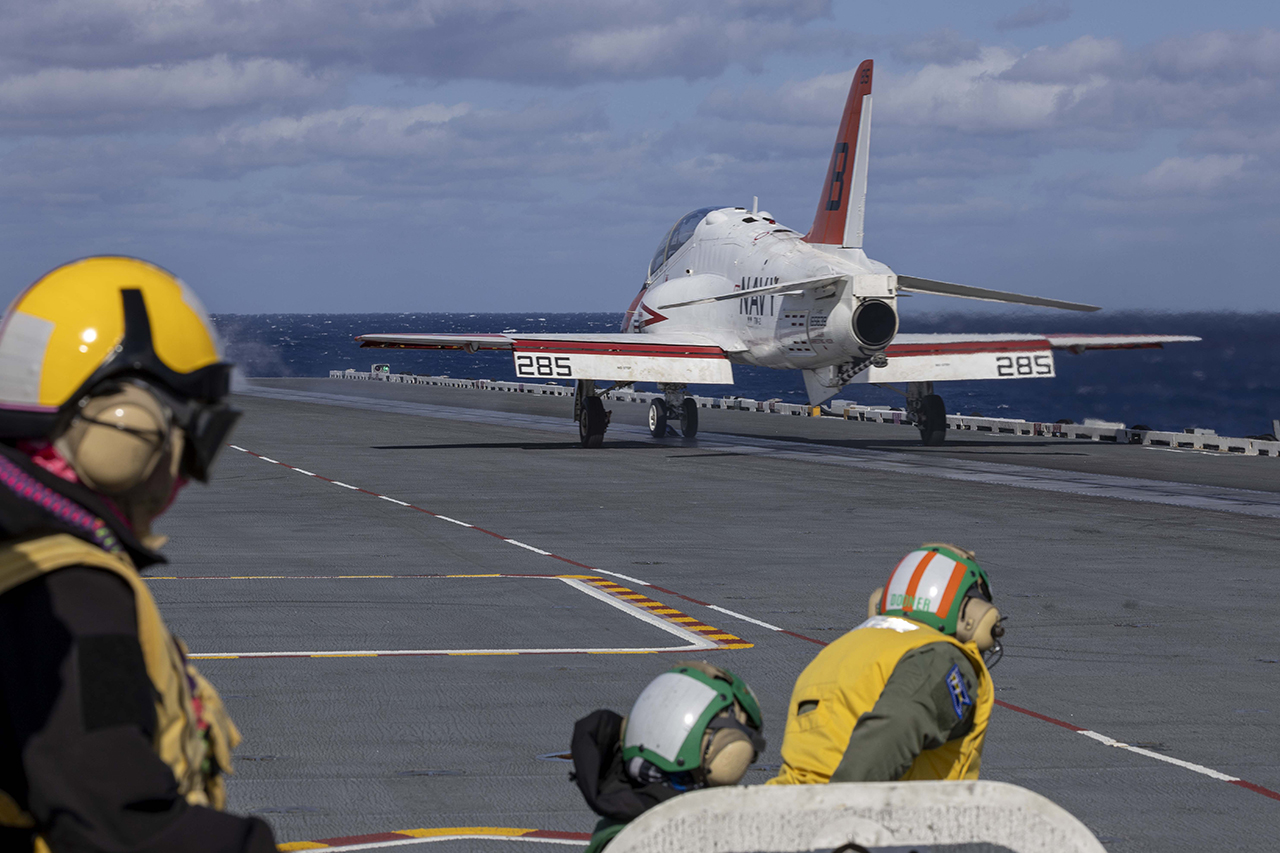
Supporting exercises, or acting as a host for carrier qualifications by new pilots, would not require the ship to be generated to a full operational standard and can be completed relatively close to home.
The US Navy has confirmed that the USS Nimitz (CVN 68) will NOT be decommissioned this may as planned and will remain in service until at least 2027, maintaining a fleet of 11 CVNs.
It likely will not deploy again, but will remain in/around North American waters filling in for… https://t.co/cVRQcpHltB
— TheIntelFrog (@TheIntelFrog) March 14, 2026
Because of the above explained limitations introduced by the use of nuclear power, keeping the Nimitz in a reserve fleet – either mothballed, or dedicated to training use – for years like with some historic conventionally powered ships is not possible. Equally, preserving the ship as a museum or scuttling it as an artifical reef are complicated by the risk of contamination and, for the former, the cost of removing the nuclear reactors without irreparably damaging the fabric of the vessel.
This brief reprieve is almost certain to be just that, brief, and it has almost certainly been decided primarily to maintain the U.S. Navy’s theoretical ‘in service’ fleet.