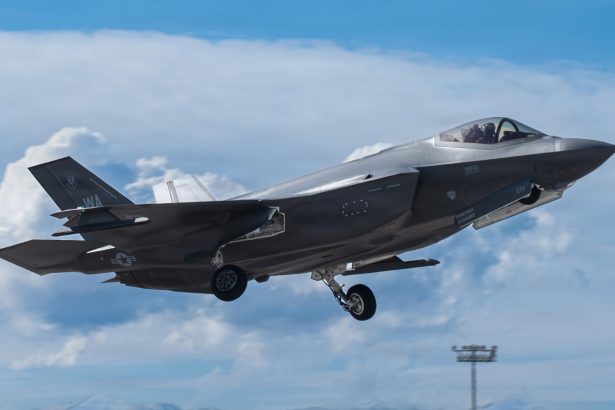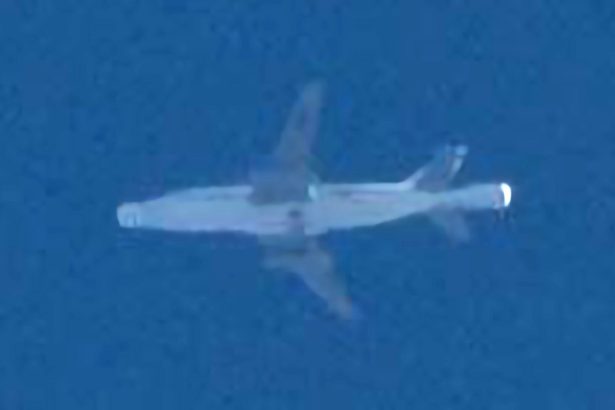
The intercept was carried out as the Russian Tu-95MS bombers and their escorting fighters transited the Alaskan ADIZ (Air Defense Identification Zone).
On Feb. 19, 2026, the U.S. Air Force launched two F-16s, two F-35s, one E-3, and four KC-135s tankers to “intercept, positively identify, and escort the aircraft until they departed the Alaskan ADIZ.”
According to NORAD (North American Aerospace Defense Command), the Russian aircraft were identified as being two Tu-95s, two Su-35s, and one A-50 AEW (Airborne Early Warning) aircraft: a “package” that was previously observed flying off Alaska during routine long-range training missions in the past.
“The Russian military aircraft remained in international airspace and did not enter American or Canadian sovereign airspace. This Russian activity in the Alaskan ADIZ occurs regularly and is not seen as a threat,” an official press release stated.
Actually, there must be some sort of seasonality in such Russian sorties: a quite similar mission was carried out (with the same outcome – the intercept by the F-35s) on the very same day (Feb. 19, 2025) last year, as we reported in detail here.
According to the Russian MOD, the Tu-95MS were involved in a +14-hour mission over the Bering Sea that involved AAR (Air-to-Air Refueling). Moscow says the fighter escort was provided by Su-35S and Su-30SM multirole aircraft of the Russian Aerospace Forces. “At certain stages of the route, the strategic missile carriers were accompanied by fighters of foreign states.”
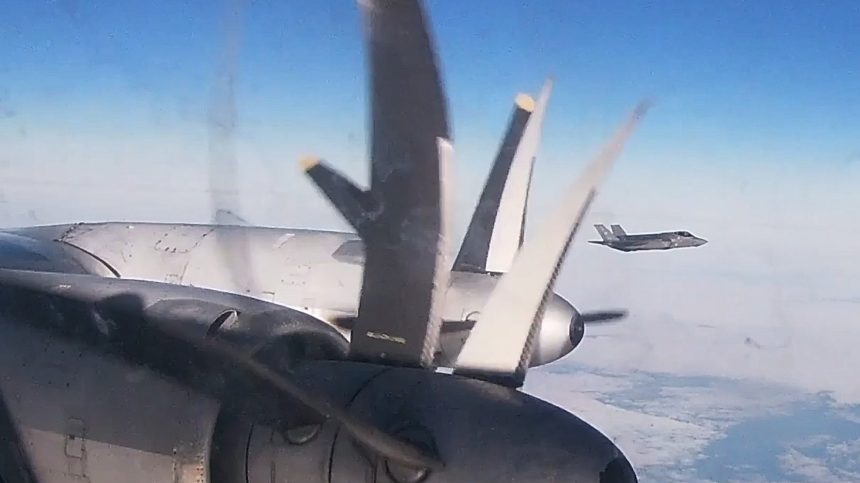
Footage released by the Russian MOD on Telegram indeed shows Alaska-based U.S. F-35s and F-16s shadowing the Tu-95s and Su-35s during their transit through the ADIZ (interestingly, the clips don’t show any Su-30SM that the Russians said were part of the mission).
The Russian MoD released footage from the VKS sorties into the Alaskan ADIZ.
Top left: a Su-35S and an F-35A (filmed from a Tu-95MS).
Top right: an F-35A (filmed from a Tu-95MS).
Bottom left: a pair of F-16Cs (filmed from a Su-35S).
Bottom right: a pair of F-16Cs. https://t.co/eOUNAgVbyu pic.twitter.com/RmSAJCB6vg
— Guy Plopsky (@GuyPlopsky) February 20, 2026
“Crews of the long-range aviation regularly carry out flights over the neutral waters of the Arctic, the North Atlantic, the Pacific Ocean, the Baltic and Black Seas. All flights of the aircraft of the Russian Aerospace Forces are carried out in strict accordance with international rules of airspace use.”
Once again, it’s worth highlighting a couple of things:
- such close encounters are quite routine
- there’s a subtle difference between standard English and aviation usage of the word “intercept”: in aviation it means to approach, identify, monitor and eventually shadowing/escorting another aircraft whereas in English language there’s clear implication of stopping or preventing.
- there’s a significant difference between ADIZ and national airspace. The ADIZ is an airspace surrounding a nation or part of it where identification, location, and control of aircraft over land or water is required in the interest of national security. This means that any aircraft flying in these airspaces without authorization may require identification through interception by fighter aircraft in QRA (Quick Reaction Alert). ADIZ around the world extend well beyond the boundaries of the national airspace above territorial waters (in fact, they are not defined in any international law), but any (civil) aircraft that enters such closely monitored airspace is tracked and requested to provide its planned course, destination and any additional details that may help its identification. Military aircraft that do not intend to enter the national airspace are not required to identify themselves or otherwise comply with ADIZ procedures but it is a common practice that any foreign military aircraft flying within the ADIZ, is intercepted, identified and escorted. On the other side, territorial sky is the nation’s sovereign airspace over territorial land and waters (that extend to 12NM from the coast).
A-50 Mainstay’s role
As explained, the Russian mission on Feb. 19, 2026, was almost a copy of a mission flown on Feb. 19, 2025. The main difference, this year, is the confirmed presence of a Beriev A-50 Mainstay. The AEW sometimes accompany the Russian Bear on their long-range patrols across the world. Here’s what we wrote about the presence of the AEW platform in a mission near Alaska in May 2017:
The presence of the Mainstay should not be underestimated. It was flying well behind the Flanker and Bear aircraft with a specific purpose. As an AEW (Airborne Early Warning) platform the A-50 is believed to embed some ESM (Electronic Support Measures): in other words, it is able to detect far away targets as well as able to sniff radar, radio and data link emissions. Furthermore, Raptors in QRA (Quick Reaction Alert) *usually* fly with external fuel tanks and Luneburg lenses: this means that they are (consciously) visible to radars. In such conditions, although it can’t “characterize” the clean F-22’s signature, the Mainstay can at least gather some data about the interceptors’ radar emissions (if any) and observe and study their tactics.
Therefore, as frequently happens on both sides since the Cold War, on May 3 [2017], the Russians most probably carried out another simulated long-range strike mission but with a precise ELINT (ELectronics INTelligence) objective: the Flankers and Bears were acting as a “decoy” package to test the American scramble tactics and reaction times, whereas the Mainstay, in a back position, tried to collect as much signals and data as possible about the US fighters launched to intercept them.
Russia’s ageing A-50 AEW fleet, which was already small a decade ago, has been reduced even further by losses suffered during the war with Ukraine. Parked A-50s have been targeted by FPV drones while at least two have been shot down.
Only a handful of A-50s are still operational, and its A-100 replacement seems to be making little progress. In November 2025, Ukraine attacked Beriev plant reportedly destroying a one-of-a-kind testbed aircraft designated the A-100LL, the prototype for Russia’s new A-100 AEW jet.