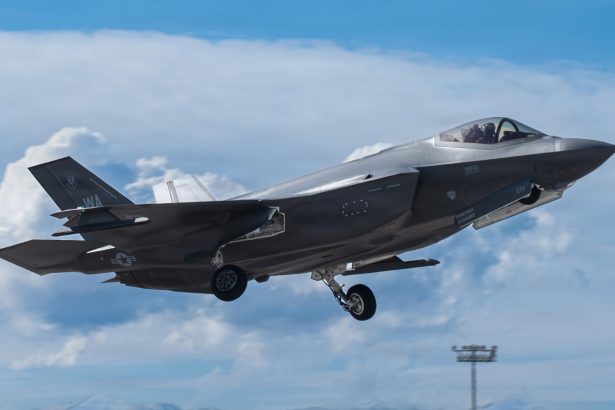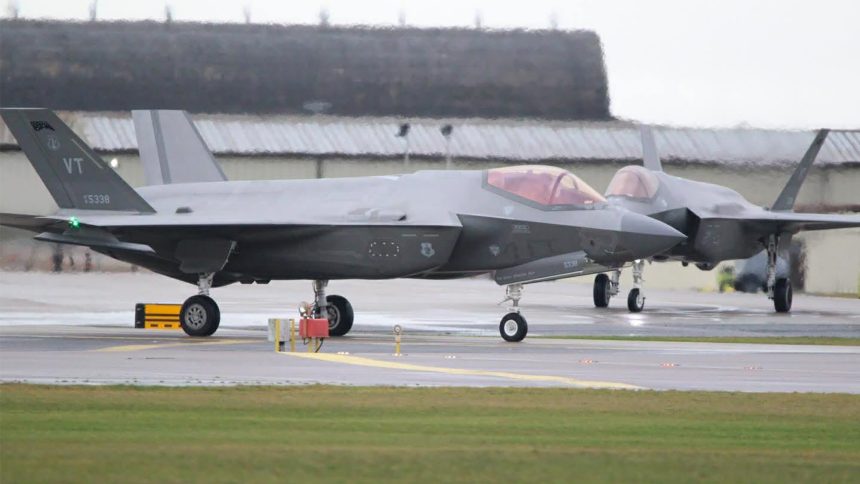
Six F-35A Lightning IIs from the Vermont ANG, previously forward deployed to Puerto Rico, have departed RAF Lakenheath on their way to the Middle East.
The six jets are part of a total of 12 F-35As from the Vermont unit that have been noted making a transit towards the U.S. Central Command (CENTCOM) area of responsibility. Rather than traveling via the UK, the other jets instead took a southerly routing and arrived for a stopover at Morón Air Base in Spain on Feb. 10, 2026.
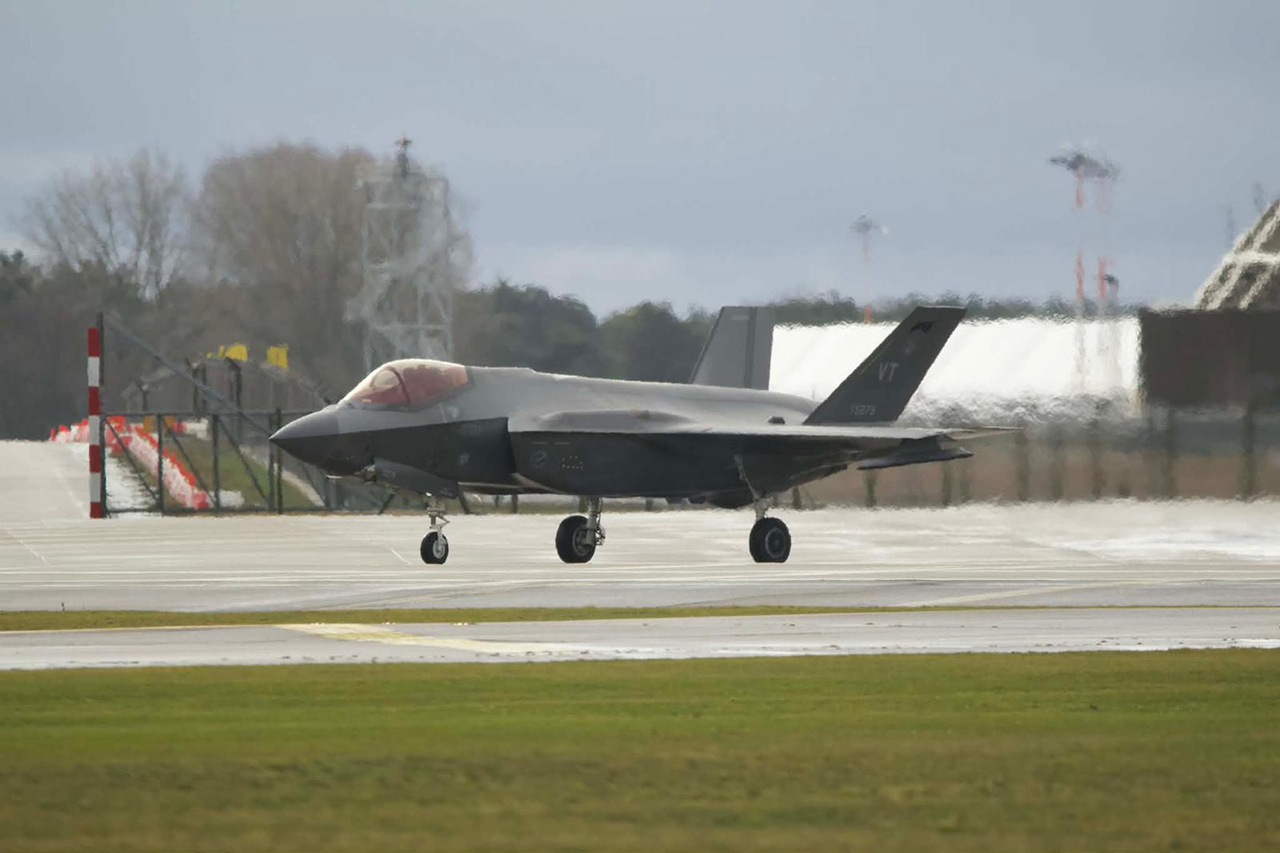
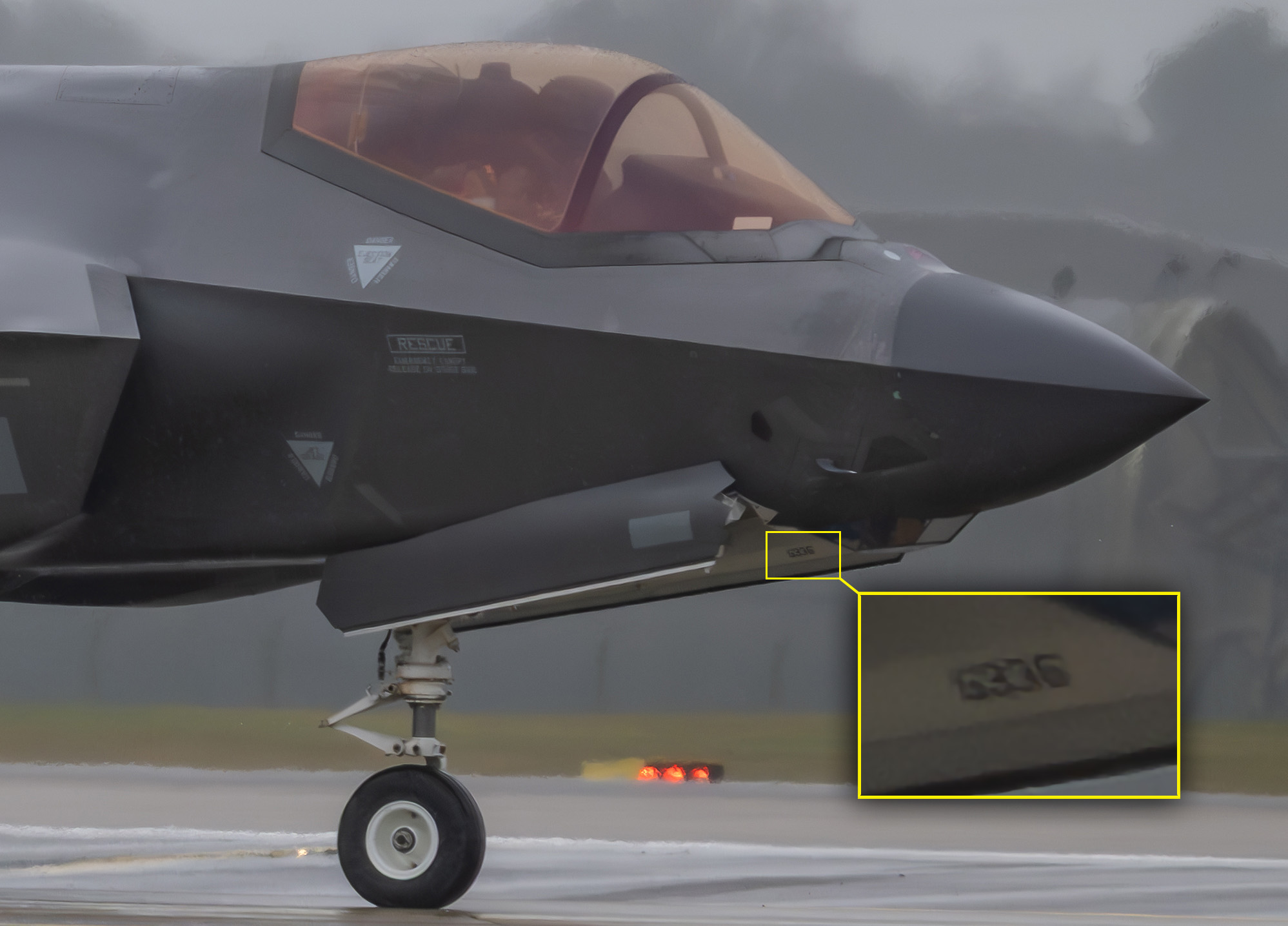
Interestingly, the first of the six F-35s to taxi out for departure had almost all of its identifying marks obscured, while other aircraft flew with full tail numbers visible. Upon close inspection, photos showed that the last four digits of the serial number had been instead painted inside the nose‑wheel door, identifying the F-35 as 18-5336.
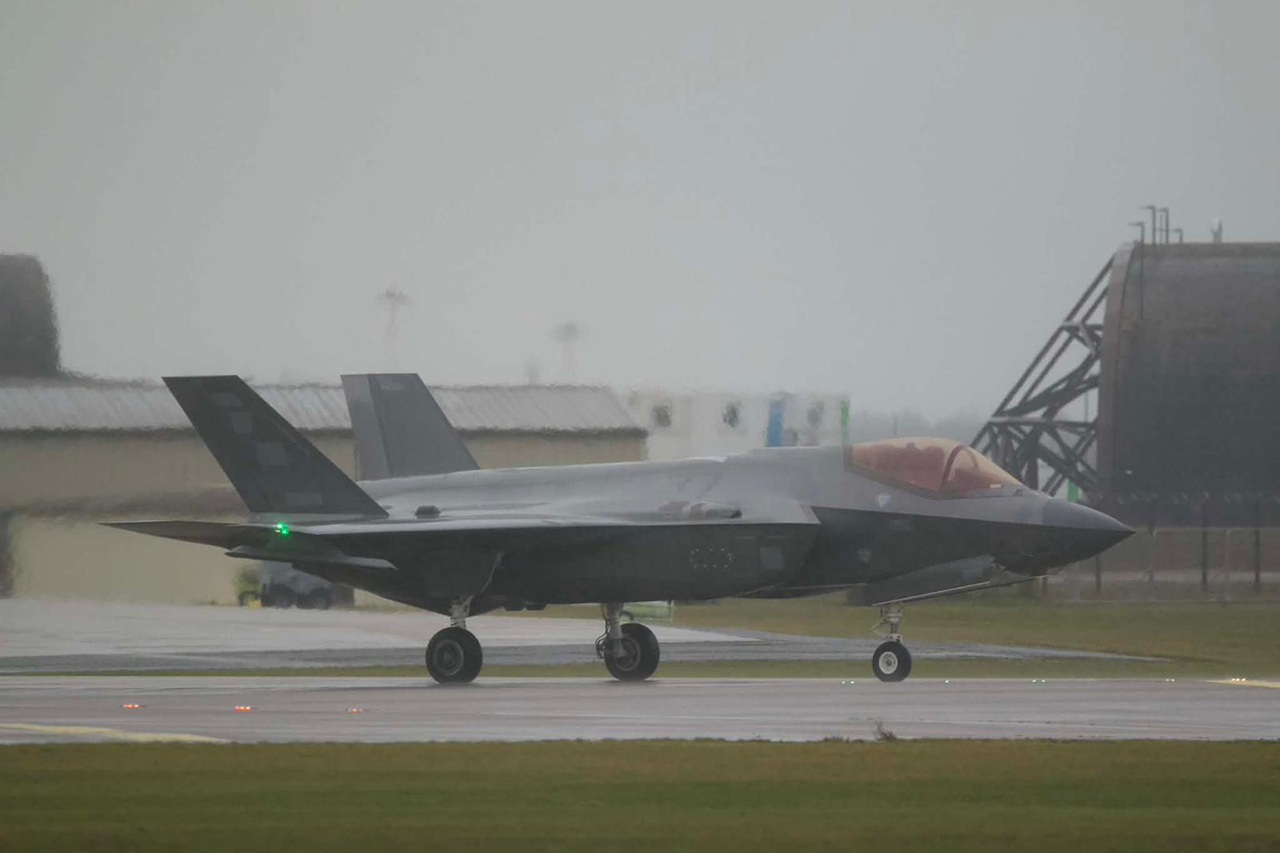
The F-35s are all fitted with the commonly seen radar reflectors on the upper and lower fuselage, which aid in tracking the aircraft on primary radar by air traffic control and allied aircraft and also obfuscate the F-35’s true radar signature. These would be removed when required in theater.
While rotations of fighter aircraft into the Middle East are far from uncommon, the fact these jets have been taken directly from a previous forward deployment – supporting Operation Southern Spear and Operation Absolute Resolve in the U.S. Southern Command (SOUTHCOM) area – gives our clearest indication that this is an out of sequence movement.
Notably, though, the F-35s in particular have made slow progress – spending a week on the ground at Rota, Spain, before moving to Morón. One of their accompanying refueling aircraft suffered from an engine failure issue while attempting to depart Morón last week.
Photos of 4 of the 6 #usaf F35A from Vermont that arrived in Moron this afternoon after a short flight from Rota #aviation #avgeek #avgeeks #usmc #aviationphotography #planespotting #aviationdaily@scan_sky @air_intel @Saint1Mil @MilRadar @haltman pic.twitter.com/HpNWPTR48M
— Daniel Ferro (@Gibdan1) February 10, 2026
The tanker’s speed at the point of the engine failure required heavy braking in order to stop before the end of the runway, ultimately leading to all eight of the KC-46’s tires blowing out. This may have been caused by the thermal safety fuses incorporated into each wheel that automatically blow the tires when they reach dangerously high temperatures in order to avoid an uncontrollable blowout. The aircraft was then stuck on the runway for some time.
U.S. Buildup
Alongside this, the 12 jets will join an already well-stocked inventory of U.S. fighter aircraft in the Middle East, now consisting of three squadrons of F-15E Strike Eagles, a squadron each of F-16C Fighting Falcons and A-10 Thunderbolt IIs, as well as the carrier air wing of the USS Abraham Lincoln. Additional EA-18G Growlers, augmenting those deployed with the carrier, have also been dispatched to the Middle East from previous operations in SOUTHCOM. It should be stressed that some of these aircraft – particularly the A-10s and some of the F-15Es – were already in the region as part of Operation Inherent Resolve and are not inherently linked to any emerging plans.
#USAF United States Air Force – Middle East Activity
Coronet East 035
Boeing KC-135 Stratotanker 3x#AE04CC 62-3499 – GOLD 83#AE0506 61-0293 – GOLD 82#AE07C3 63-8023 – GOLD 81
Lockheed Martin F-35A Lightning II 6x
18-5336 – TABOR 41
18-5344 – TABOR 42
18-5338 – TABOR 43… https://t.co/mTAACLA8Gg pic.twitter.com/WLuvsoFGTQ
— Armchair Admiral 🇬🇧 (@ArmchairAdml) February 11, 2026
In recent days, the contingent of P-8A Poseidon maritime patrol aircraft deployed to CENTCOM has also apparently been increased with the addition of two jets routing in from Naval Air Station Sigonella, Italy.
US Navy VP-10 P-8A #LD430 & #LD440 out of NAS Sigonella are en route to Isa AB and Thumrait AB, respectively. This will bring the number of Poseidons in the Middle East to four.
168430 / #AE6851
168440 / #AE6814 pic.twitter.com/MTgCXMEDBG
— EISNspotter (@EISNspotter) February 9, 2026
The F-35s at Lakenheath and Morón come from Vermont ANG’s 134th Fighter Squadron (FS) which, as we noted when they were sent to Puerto Rico, are currently a specialist suppression of enemy air defences (SEAD) unit. SEAD-focused F-35A pilots in tandem with the EA-18Gs in theatre form a potent capability against even the most sophisticated forms of air defence systems, and this would be vital during any move against Iran. U.S. President Donald Trump has consistently reaffirmed his demands for the Iranian government, telling Israel’s Channel 12 that “Either we reach a deal, or we’ll have to do something very tough”.
Although we are seeing a significant buildup, the deployed force still lacks several notable elements. Despite many non-evidenced claims to the contrary abundant on social media, commercial satellite imagery confirms that no strategic bombers have deployed to the region.
Diego Garcia, further out into the Indian Ocean but still well-placed for operations against Iran (and, crucially, less vulnerable to attack), also shows no activity that can be linked to bomber movements. There are hangars at Diego Garcia for B-2 Spirit stealth bombers but no activity surrounding these hangars has been seen. It should also be noted that a major element of motivation for deploying strategic bombers would be as a negotiating tactic, so having these capabilities deployed but not visible would likely be counter to current U.S. interests.
Additional CSG
Rumors have swirled indicating that the U.S. administration would prefer to have an additional carrier strike group (CSG) in the region before commencing any operations. Though this may well be their ideal plan, it is clear to anyone familiar with CSG movements that no such group is, ideally speaking, available at present. Any additional CSG deployment would most likely involve either sending the USS Gerald R. Ford – which was already brought back from a planned CENTCOM deployment to take part in operations off Venezuela – just as the carrier should be due to wrap up a long nine months at sea, or the USS George H. W. Bush which is gearing up for a future deployment and has yet to finish all of the training and evaluations needed to be fully combat ready.
🚨Exclusive: President Trump told me in an interview on Tuesday that he’s considering sending a second aircraft carrier strike group to the Middle East to prepare for military action if negotiations with Iran fail. My story on @axioshttps://t.co/JRpkoERtHw
— Barak Ravid (@BarakRavid) February 10, 2026
The U.S. Navy carrier fleet is suffering badly from a number of unexpected deployments and extensions over the previous few years, pushing many carriers out of their planned sequences for maintenance and regeneration. Any further impact to these timetables would be key for the Navy to avoid, as they not only incur a significant financial penalty but also mean longer periods out of service at times when there are fewer spare carriers to cover the shortfall.