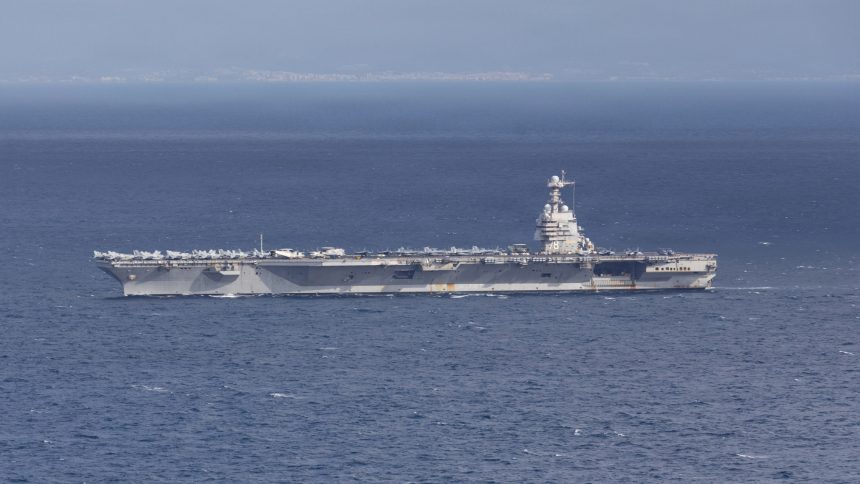
The Gerald R. Ford Carrier Strike Group entered the U.S. Southern Command (SOUTHCOM) area of responsibility (AOR) on Nov. 11, 2025, after a high profile redeployment from European waters.
Alongside the nuclear powered aircraft carrier USS Gerald R. Ford (CVN 78), the newest active carrier in the U.S. Navy, the carrier strike group (CSG) comprises the Arleigh Burke class guided missile destroyers USS Bainbridge (DDG 96), USS Mahan (DDG 72), and USS Winston S. Churchill (DDG 81).
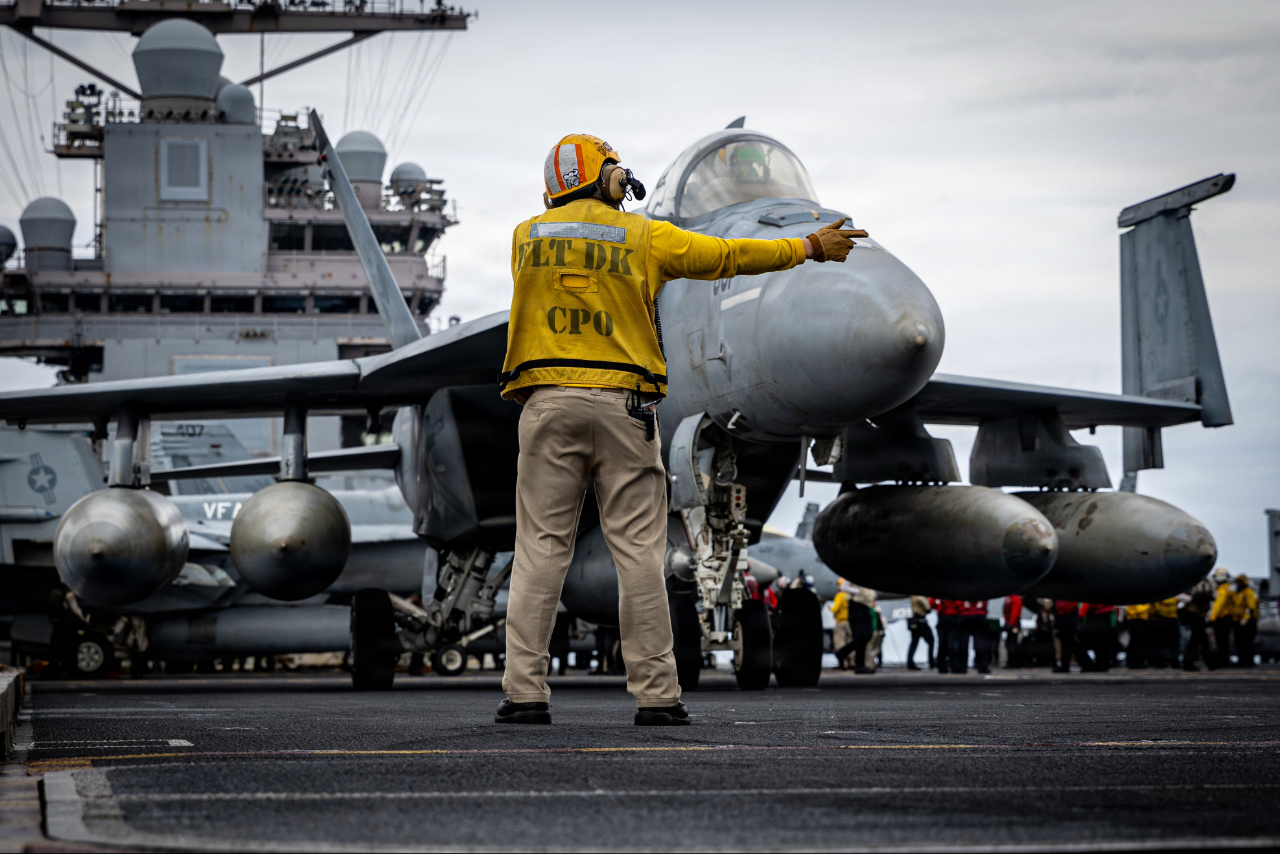
Deployed as the group’s air wing are F/A-18E Super Hornets of Strike Fighter Squadrons (VFA) 31, 37, and 87, F/A-18F Super Hornets of VFA-213, EA-18G Growlers of Electronic Attack Squadron (VAQ) 142, E-2D Hawkeyes of Airborne Command and Control Squadron (VAW) 124, C-2A Greyhounds from Fleet Logistics Support Squadron (VRC) 40, and MH-60S and MH-60R Seahawks of Helicopter Sea Combat Squadron (HSC) 9 and Helicopter Maritime Strike Squadron (HSM) 70 respectively.
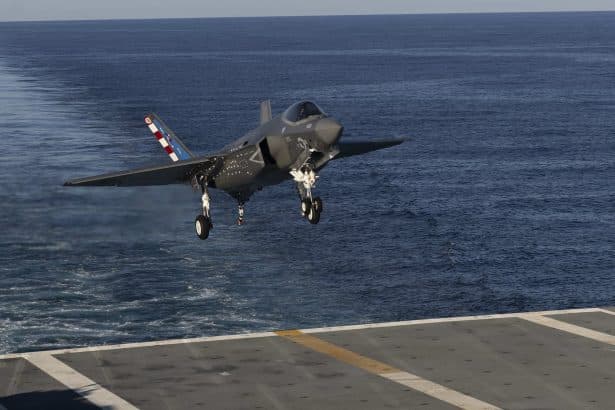
Note that as the Gerald R. Ford has yet to undergo its first in-service refit to receive modifications designed to accommodate the F-35C Lightning II, its combat air wing is entirely formed of Super Hornets.
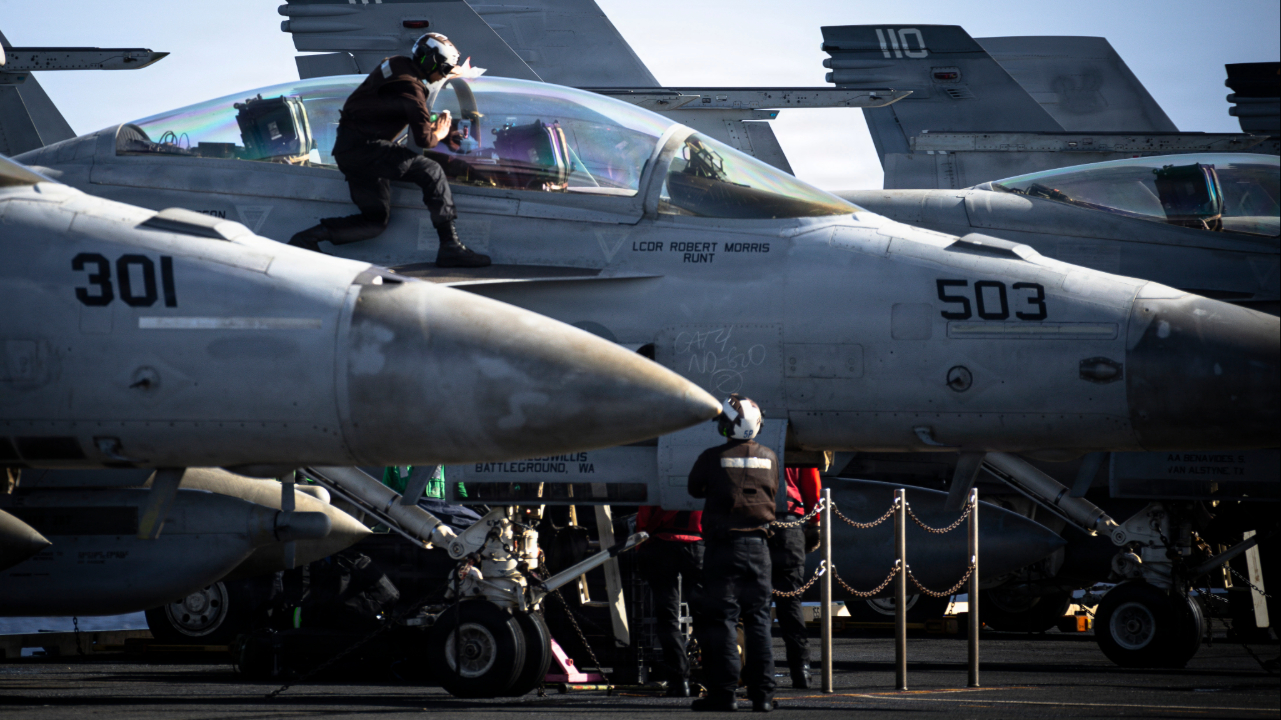
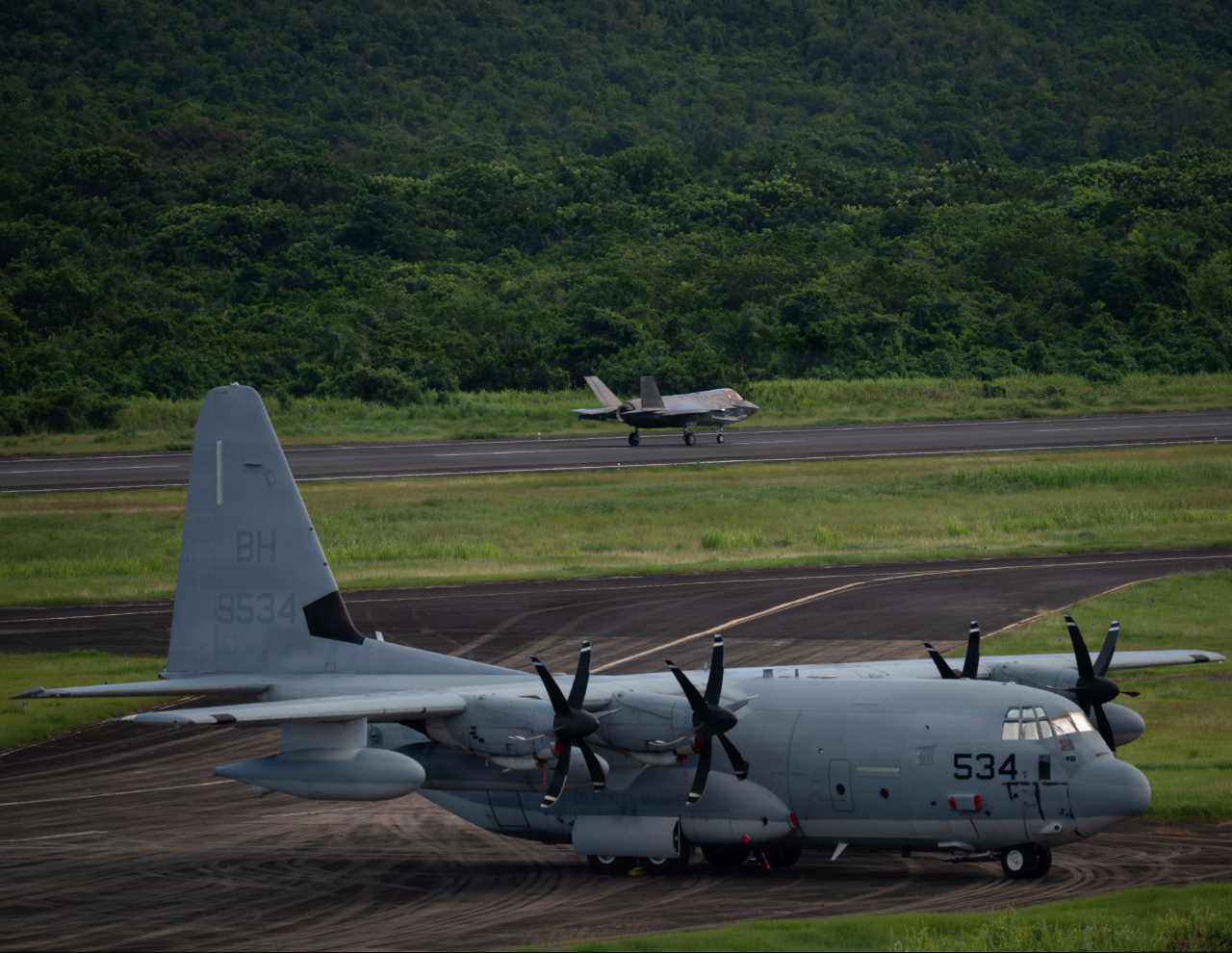
The Ford CSG was ordered to head away from its planned deployment in Europe and the Middle East – which it has been undertaking for several months already – to the Caribbean region in October as U.S. combat operations against alleged drug smuggling operations intensified significantly. A staggering amount of U.S. forces have been forward deployed south to support these operations, with airstrikes on what the U.S. has identified as drug smuggling boats being carried out by AC-130J Ghostrider gunships and MQ-9 Reaper unmanned aerial vehicles.
As the buildup has continued, far beyond the usual levels required for drug interdiction, plans for direct actions against Venezuela – which the U.S. claims is secretly supporting regional drug cartels – have been increasingly rumored. Flights of B-52 Stratofortress and B-1B Lancer strategic bombers have been orchestrated through Venezuela’s flight information region (FIR) while remaining outside of its sovereign airspace.
📍Coast of #Venezuela (🇻🇪)
The @usairforce (🇺🇸) B-52s have re-appeared after making the pass through the waters between La Blanquilla Island and Isla Margarita and is back to being ~50 miles (80 Km) north of the Venezuelan capital of Caracas. https://t.co/fZrRGbd2XP pic.twitter.com/3SNu7bQa77
— SA Defensa (@SA_Defensa) November 6, 2025
Intelligence aircraft ranging from P-8 Poseidon maritime patrol aircraft to brand new business jet-based U.S. Army platforms have conducted intelligence, surveillance, and reconnaissance missions across the region. Movements of a secretive example of another U.S. military Boeing 737 variant have also been noted by aviation enthusiasts.
(1/2) I would like to highlight the fact that USAF C-40 N235JF also operated “due regard” out of St. Croix (STX/TISX) 🇻🇮 for a brief period back in September, possibly alongside VPU-2 since they were also in PR at the time.
CREDIT: u/Chippersworld1 (Reddit) https://t.co/cKNNcvVbuv pic.twitter.com/saapIzHmnH
— LatAmMilMovements (@LatAmMilMVMTs) November 10, 2025
According to Chief Pentagon Spokesperson Sean Parnell, the Ford’s presence in the region along with other assets will “bolster U.S. capacity to detect, monitor, and disrupt illicit actors and activities that compromise the safety and prosperity of the United States homeland and our security in the Western Hemisphere”. He added: “These forces will enhance and augment existing capabilities to disrupt narcotics trafficking and degrade and dismantle Transnational Criminal Organizations.”
“Through unwavering commitment and the precise use of our forces, we stand ready to combat the transnational threats that seek to destabilize our region,” said Admiral Alvin Holsey, Commander of SOUTHCOM. “The USS Gerald R. Ford Carrier Strike Group’s deployment represents a critical step in reinforcing our resolve to protect the security of the Western Hemisphere and the safety of the American homeland.”
Deployments of U.S. Navy aircraft carriers to SOUTHCOM are not unprecedented, though this is certainly a less than usual circumstance. In many previous cases, carriers have fallen under the command of SOUTHCOM while taking part in exercises with South American allies, and/or during transits via the Strait of Magellan to cross between the Pacific and Atlantic Oceans.
Many moving pieces in SOUTHCOM as the Ford Carrier Strike Group steams toward the Caribbean & POTUS considers striking land targets in Venezuela.
Visualizing U.S. force posture, w/ illustrative Tomahawk Land Attack Missile & Joint Air-to-Surface Standoff Missile strike packages: pic.twitter.com/fEEusUZFTe
— Ian Ellis (@ianellisjones) November 10, 2025
Wider Picture
U.S. actions against alleged drug smuggling operations Central and South America since the beginning of September have seen at least 75 alleged drug traffickers killed. The administration in Washington D.C. maintains that these operations targeted those who pose an imminent threat to the security of the U.S. homeland – often referring to the individuals as narco-terrorists. On Oct. 1, President Trump formally issued a notification to Congress that the U.S. was engaged in an ‘armed conflict’ with the drug cartels and will “conduct operations against them pursuant to the law of armed conflict.”
🇺🇸🇻🇪 US President Trump announced that the US military carried on a second kinetic strike on what was described as “narcoterrorists from Venezula transporting illegal narcotics.”
The strike on a boat that was said to belong to a drug cartel reportedly took place in the SOUTHCOM… pic.twitter.com/kcx3ha2Ooe
— Status-6 (Military & Conflict News) (@Archer83Able) September 15, 2025
Sources in the governments of close allies, including the UK, have quietly expressed concern over the legality of these targeted strikes. While many nations conduct counter-narcotic operations, usual practice involves the interception of and seizure of identified vessels. According to CNN, the UK has made the decision to suspend some of its intelligence sharing regarding Caribbean drug trafficking with the U.S. due to the possibility that the information would be used to inform lethal strikes. As a result of British Overseas Territories in the region, the UK maintains a close interest in Caribbean affairs and often stations a Royal Navy vessel in the area – commonly used to take non-lethal action against drug trafficking as well as render aid following natural disasters.
Whether the Ford CSG takes part in any combat operations while with the U.S. 4th Fleet remains to be seen – President Trump himself has reportedly gone back and forth on his decisions about taking further lethal action, and the Ford’s journey to the region, contrary to social media reports, was made at a relatively normal pace.
Troubles at home – not least with the U.S. federal budget shutdown – may prove to be too much of a distraction for the admin to simultaneously engage in what’s likely to be a complex armed conflict. Conversely, some within the administration may hope that such a conflict is exactly what is needed to shore up voter support after Trump’s Republican Party faced heavy defeats in recent elections.