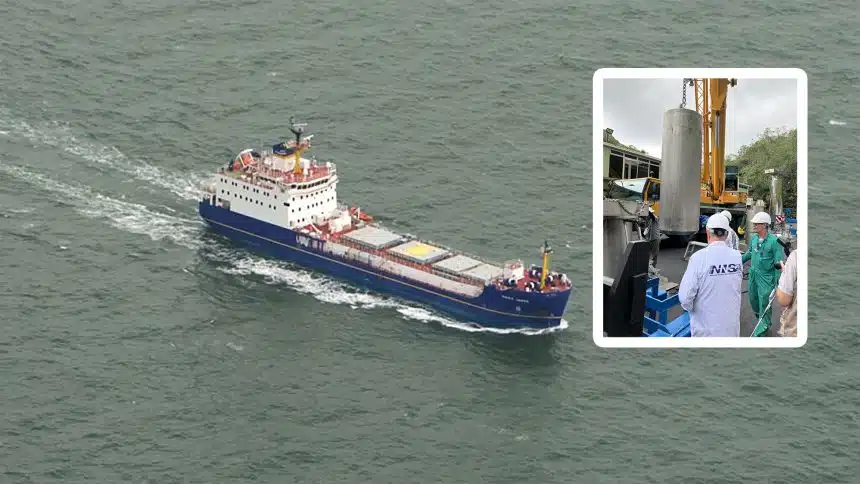
13.5 kilograms of excess uranium nuclear fuel, originally supplied by the U.S. and UK, was extracted from the dormant RV-1 research reactor site in Altos Mirandinos and transported by a British ship to the Savannah River Site, South Carolina.
The coordinated plan to remove the last remaining nuclear fuel from the closed RV-1 reactor site was developed following a gradual normalisation of U.S. relations with Venezuela after Operation Absolute Resolve. Formal diplomatic relations between the two nations are in the process of being reestablished: the U.S. Embassy in Caracas reopened in February 2026 for the first time since 2019, and the first U.S.-Venezuela commercial flight since the same year took place on Apr. 30.
Securing the nuclear fuel was seen as a priority measure as part of the implementation of the U.S. administration’s ‘stabilization, recovery, and transition’ three phase plan for Venezuela. The RV-1 reactor – the only one ever operational in Venezuela – was purchased from the United States in 1956 under the Atoms for Peace initiative. Operating until 1991, the reactor was kept operational by regular nuclear fuel shipments from both the U.S. and the United Kingdom.
Highly enriched uranium (HEU) was commonly used to power small research-focused reactors in the early Cold War, but are now most often run using low enriched uranium (LEU). This change in technology was made largely due to the risks of HEU proliferation, being a key material for the construction of nuclear weapons. Securing the remaining stocks of HEU as well as plutonium around the world has been a major focus of U.S. non-proliferation efforts since the mid 1990s, with over 7 tons of material in total recovered.
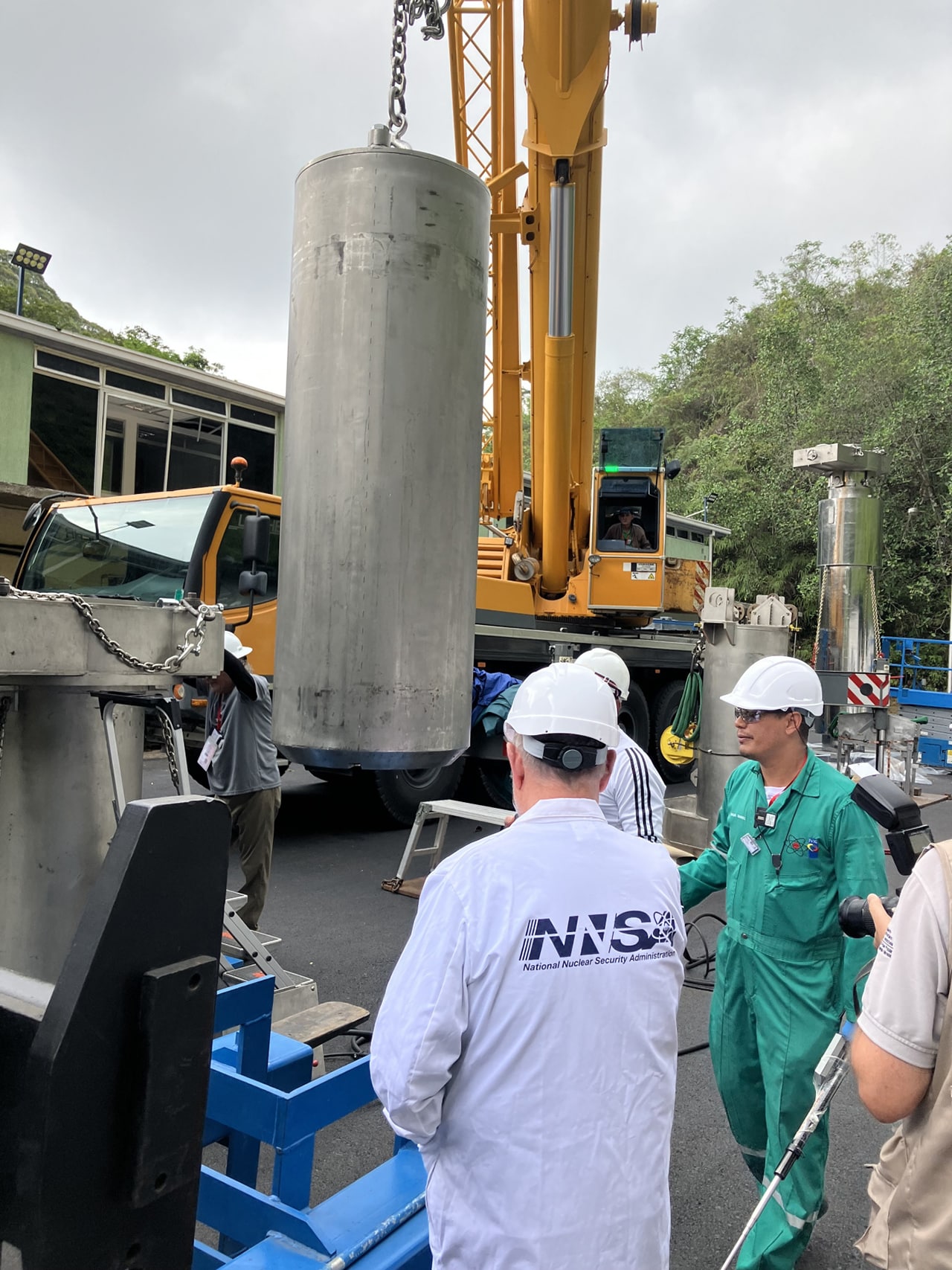
The Venezuelan government requested assistance from the International Atomic Energy Agency (IAEA) to remove the surplus fuel, and the U.S. then agreed it would take custody of the material. Just six weeks after an initial site inspection by the U.S. National Nuclear Security Administration (NNSA) Office of Defense Nuclear Nonproliferation (DNN), the fuel was loaded into a specialized transport container (or cask) and transported by road under Venezuelan military protection to Puerto Cabello.
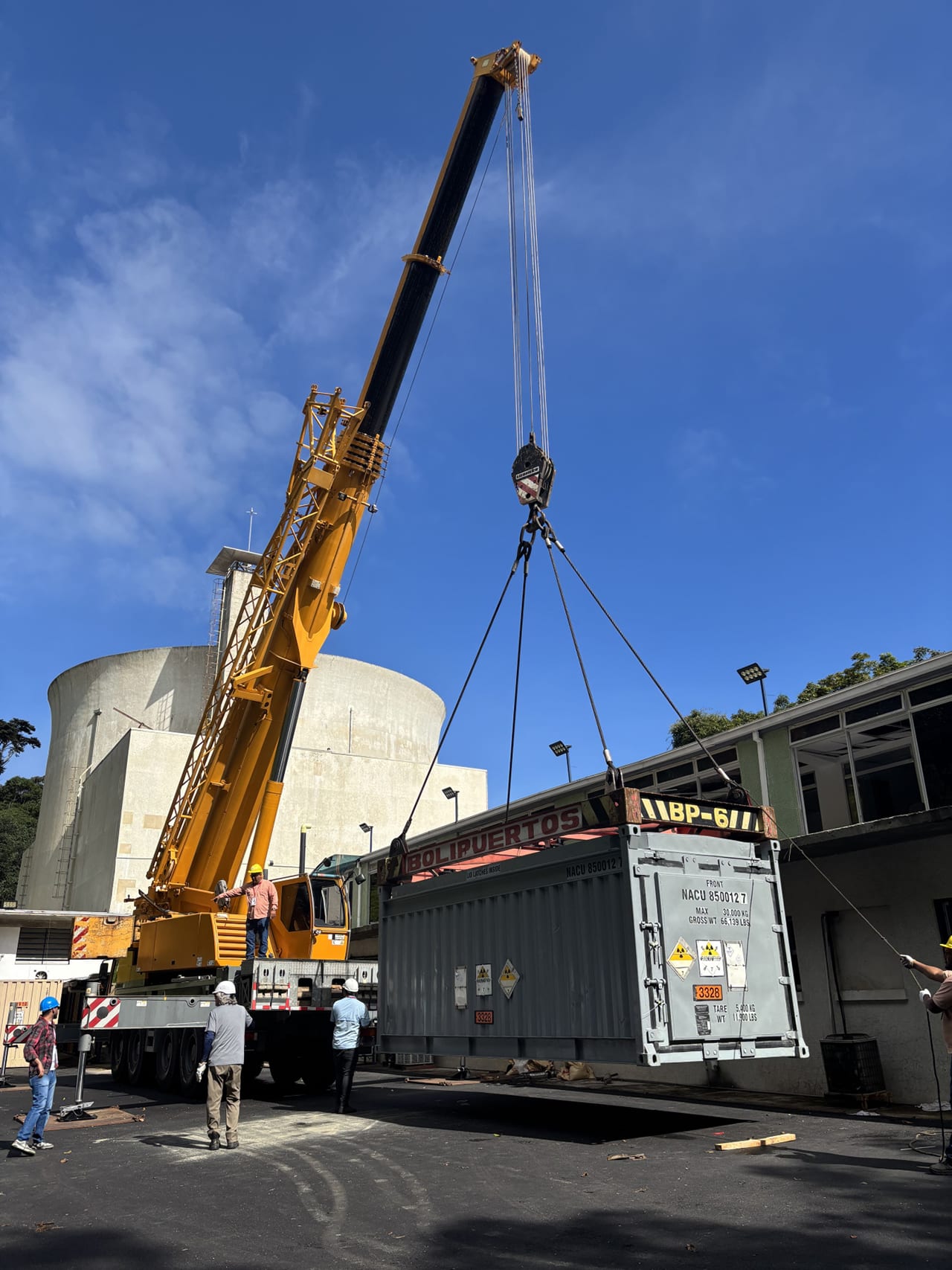
From Puerto Cabello, the cask was transferred to a British-flagged vessel operated by Pacific Nuclear Transport Ltd (PNTL). PNTL is a subsidiary of Nuclear Transport Solutions, itself a division of the UK’s Nuclear Decommissioning Authority. Three specialist nuclear fuel transport ships are operated by PNTL, built to specifications beyond the requirements of the highest regulations for nuclear fuel transportation. MV Pacific Heron, MV Pacific Grebe, and MV Pacific Egret travel throughout the world to transport high-level nuclear waste and fuel.
Pacific #Nuclear Transport Limited’s Pacific Grebe ship is the first of its fleet to be adapted to carry a new flask for the transportation of used mixed oxide fuel https://t.co/SorYGSOMdl pic.twitter.com/YqE6HVUnbg
— World Nuclear News (@W_Nuclear_News) May 5, 2026
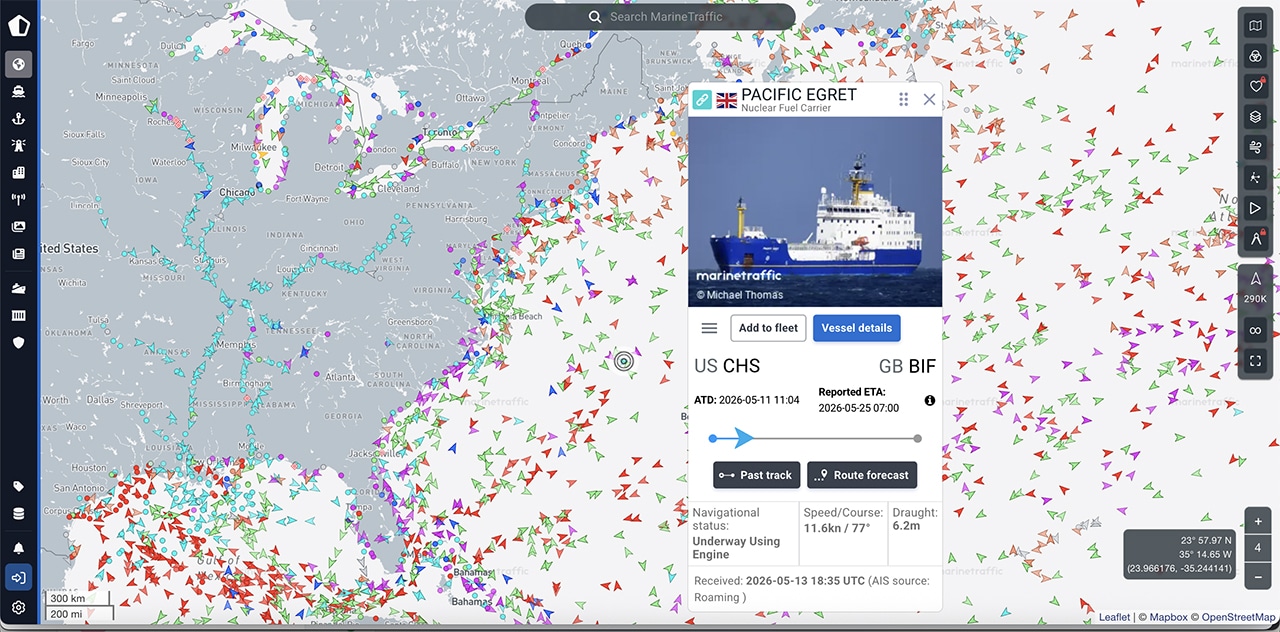
The fuel from Venezuela was almost certainly collected and transported by MV Pacific Egret, which has most recently been recorded by MarineTraffic as operating off the U.S. East Coast heading back towards the UK.
Now in the custody of the U.S. Department of Energy (DOE) Office of Environmental Management, the HEU will be reprocessed into LEU at the Savannah River Site for future reuse.
Dr. Matt Napoli, DNN Deputy Administrator, said: “NNSA’s long history in removing nuclear material and the team’s extensive know-how were key to this success. I would also like to extend my appreciation to our Venezuelan partners for finalizing this material removal and establishing the foundation for future cooperation.”
A fast-tracked international effort to remove all the remaining high-enriched uranium from a legacy research reactor in Venezuela has been completed, with the material now set to be processed into high-assay low-enriched uranium for use in the USA #nuclear https://t.co/ln7AL9ZGI1 pic.twitter.com/H3QjgEMbzl
— World Nuclear News (@W_Nuclear_News) May 13, 2026
The UK’s assistance with its specialist vessels, requested by both the U.S. and IAEA, was approved at ministerial level by the UK Government due to the potential risks of the sensitive operation. NTS’ known expertise and exemplary safety record allowed authorities to underwrite the mission up to a potential liability of £10 billion.
A spokesperson for the UK’s Office for Nuclear Regulation said: “We worked closely with domestic and international stakeholders to provide assurance that the necessary security measures were in place for key elements of this move of nuclear material. Our team worked at pace to meet challenging timelines, while maintaining the necessary diligence to support a proportionate and effective approach to nuclear security and safety throughout. The successful result was a testament to the dedication, teamwork and professionalism of all those involved.”
“This has been an example of the strong will, effective coordination, dedication and professionalism of all the parties involved,” said IAEA Director General Rafael Grossi.