Boeing confirmed that the deal for 24 F-15EX will not proceed, with Indonesia meanwhile signing a Letter of Intent to replace the Hawk with the M-346F Block 20.
After some years in a limbo, it appears that Indonesia has abandoned its plan to acquire the F-15EX Eagle II. At the same time, the country has now selected the M-346F to continue its modernization and replace the Hawk, which the country operates in the Mk. 209 and Mk. 109 variants.
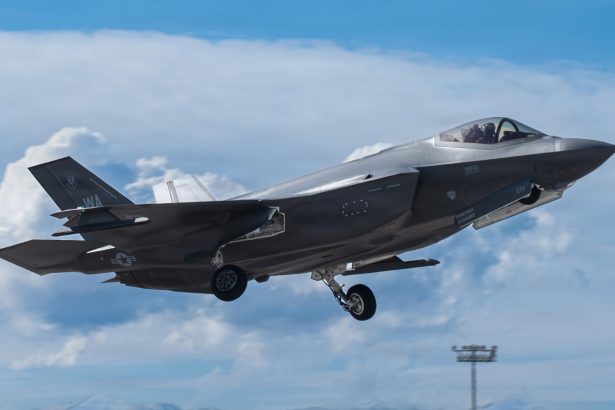
No More Indonesian F-15EXs
On the first day of the Singapore Airshow, on Feb. 3, 2026, Boeing confirmed that Indonesia will not procure the F-15EX Eagle II. “In terms of our partnership with Indonesia, it is no longer an active campaign for us,” said Bernd Peters, vice president of business development and strategy at Boeing Defense.
We’re honored to host Indonesian Minister of Defense Prabowo Subianto on a tour of our F-15 production line in St. Louis.
Indonesia is an important partner and we are humbled that they have chosen F-15 to advance their capabilities for the future.
More: https://t.co/DEegc15qkw pic.twitter.com/Hnz28Eoq0J
— Boeing Defense (@BoeingDefense) August 22, 2023
Indonesia and Boeing signed a Memorandum of Understanding to finalize the sale of 24 F-15EX Eagle II aircraft on Aug. 21, 2023. A year earlier, the U.S. Defense Security Cooperation Agency (DSCA) already approved a possible Foreign Military Sale to Indonesia for up to 36 F-15EXs.
However, it seems that since 2023 there has been no progress on the formalization of the deal and the final acquisition contract. At the time, the F-15EX was expected to join the Rafale and the KF-21 in a state-of-the-art fleet that would have replaced legacy aircraft types.
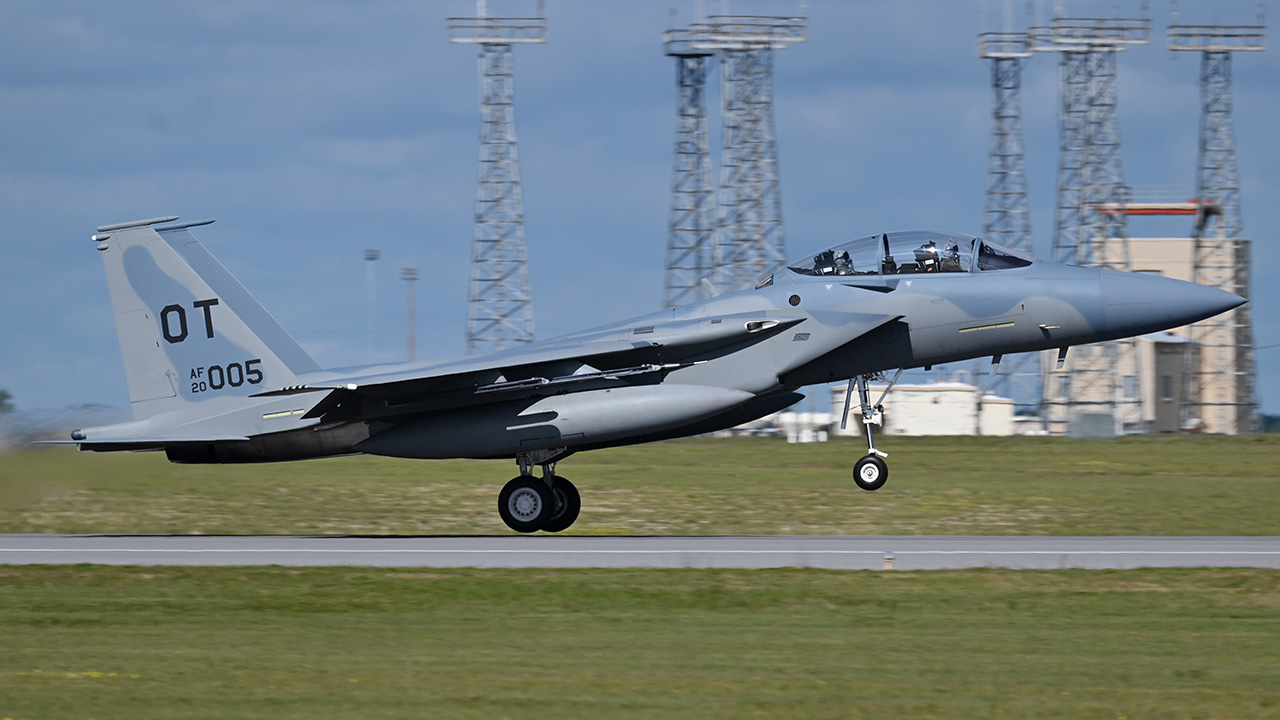
The deal would have made Indonesia the first export operator of the Eagle II, which would have come in a specific variant called F-15IND. Specific details about the configuration of the aircraft were not provided, although some U.S.-only systems were expected to be removed.
According to the DSCA announcement, the proposed F-15IND included the AN/APG-82(v)1 Advanced Electronically Scanned Array (AESA) radars, AN/ALQ-250 Eagle Passive Active Warning Survivability Systems (EPAWSS), Advanced Display Core Processor (ADCP) II digital computers, Joint Helmet Mounted Cueing Systems (JHMCS) for both pilots and Weapon Systems Officers (WSO), AN/AAQ-13 LANTIRN navigation pods, AN/AAQ-33 Sniper Advanced Targeting Pods (ATP), MS-110 Recce Pods, AN/ASG-34 Infrared Search and Track International (possibly integrated in the Sniper’s pylon).
M-346F Letter of Intent
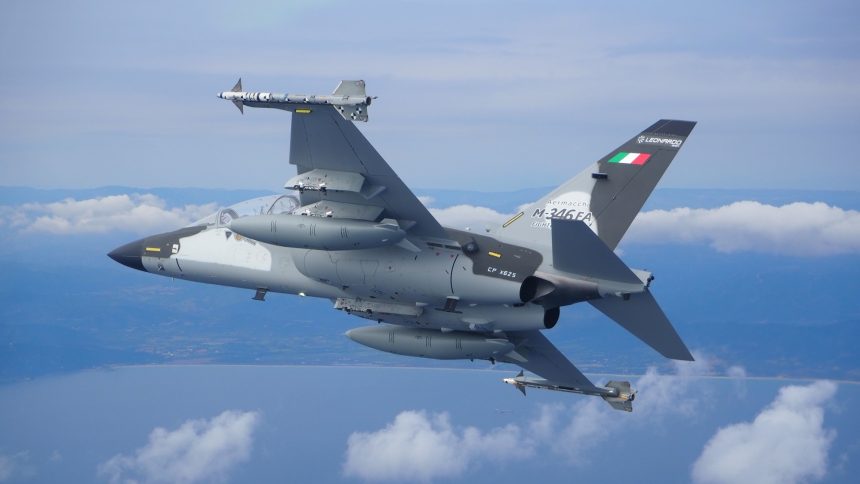
On Feb. 4, 2026, the second day of the Singapore Airshow, Leonardo announced the signing of a Letter of Intent (LOI) with PT ESystem Solutions Indonesia and the Indonesian Ministry of Defense (MoD) for the supply and support of the M-346F Block 20. The MoD selected the M-346F to satisfy its training and combat capability requirements, replacing the Hawk currently in service in the Mk. 209 light fighter variant and Mk. 109 trainer variant.
The M-346F Block 20 is the latest light fighter variant of the M-346 trainer, announced in 2024 at the Farnborough International Air Show. Leonardo did not disclose how many aircraft Indonesia is planning to acquire, a detail which might be defined during the now ongoing discussions, however mentioned the LoI includes the localization of a range of support, maintenance, overhaul, training capabilities as well as human capital development.
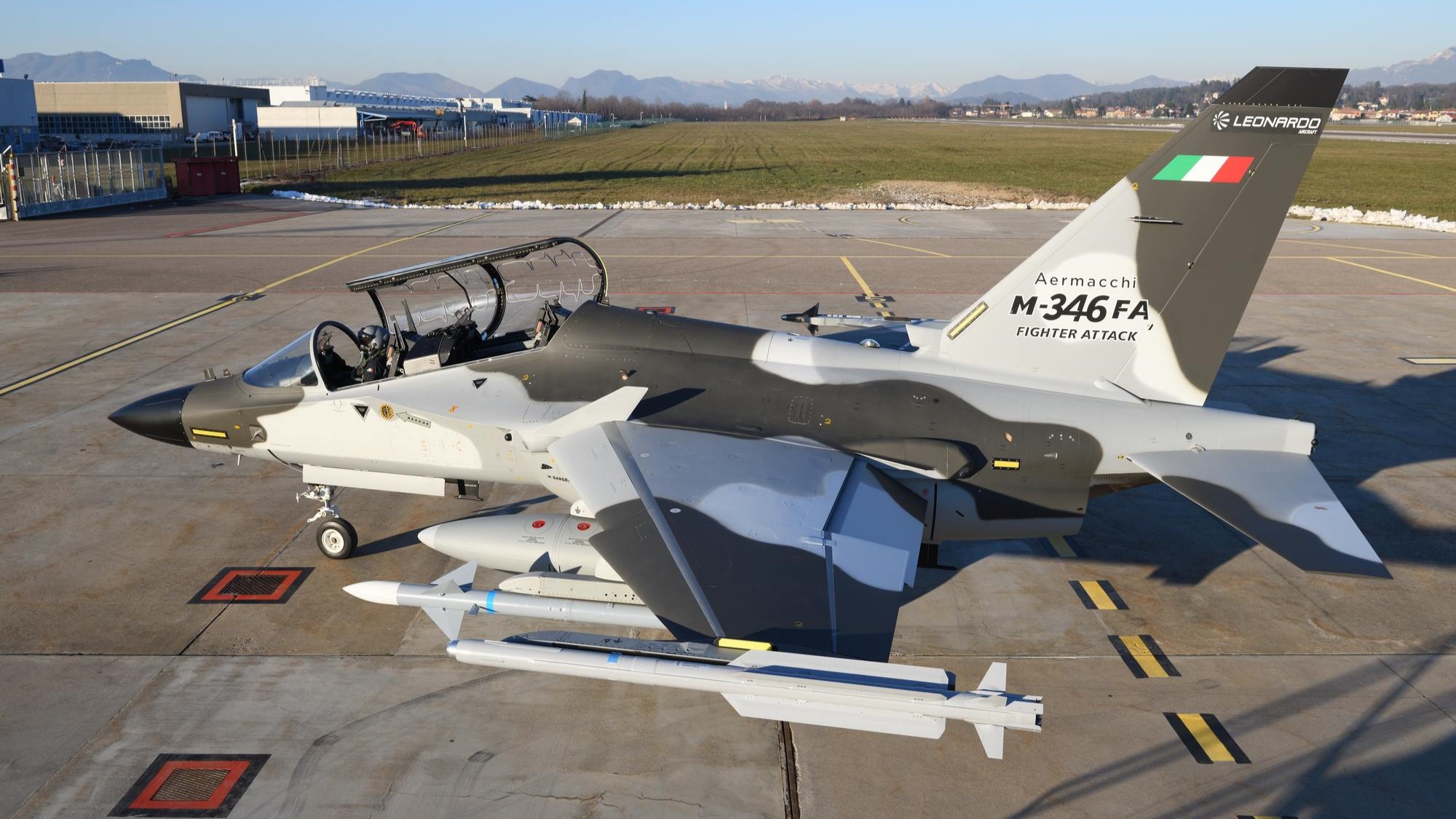
The Block 20 standard cockpit will be completely renewed, featuring two Large Area Displays (LAD), one per each seat, replacing the existing six Multi-Functional Displays (MFD), plus a low-profile Head-Up Display (HUD). These will be combined with a new digital video and data recorder and a new augmented reality Helmet Mounted Display (HMD).
The M-346 Block 20 will also benefit from new navigation, weapon management, flight management system, IFF (Identification of Friend or Foe) transponder. Specifically for the M-346 F variant, further critical capability enhancements include an AESA (Active Electronically Scanned Array) radar featuring fire control radar capability, integration of new weapons for both air-to-air and air-to-ground roles in addition to a built-in missile datalink.
🔴#LDO_PR At the @SGAirshow, #Leonardo announced the signing of a Letter of Intent (#LOI) with PT ESystem Solutions Indonesia and the Ministry of Defence (MoD) of the Republic of #Indonesia (@Kemhan_RI) aimed at cooperating for the supply and support of the Leonardo #M346F… pic.twitter.com/U4QgY77HNn
— Leonardo Aeronautics (@LDO_Aeronautics) February 4, 2026
The most visible differences of M-346F from the standard configuration are the two wingtip missile rails, that bring the total hardpoints to seven, new antennas and the Defensive Aid Sub System (DASS). The aircraft, which is being proposed for Homeland Defence/Air Policing, Slow Mover Intercept, Close Air Support (CAS), Counter INsurgency (COIN), Forward Air Controller – Airborne (FAC-A), Combat Search And Rescue (CSAR), Interdiction, Battlefield Air Interdiction (BAI), Tactical Air Support for Maritime Operations (TASMO) and Tactical Reconnaissance roles, can carry more than 2,000 kg of weapons.
Indonesia’s Future Plans and Wide Variety of Aircraft
In recent years, Indonesia has moved to drastically modernize its air force, although not all plans went through, with the most recent instance being the F-15EX.
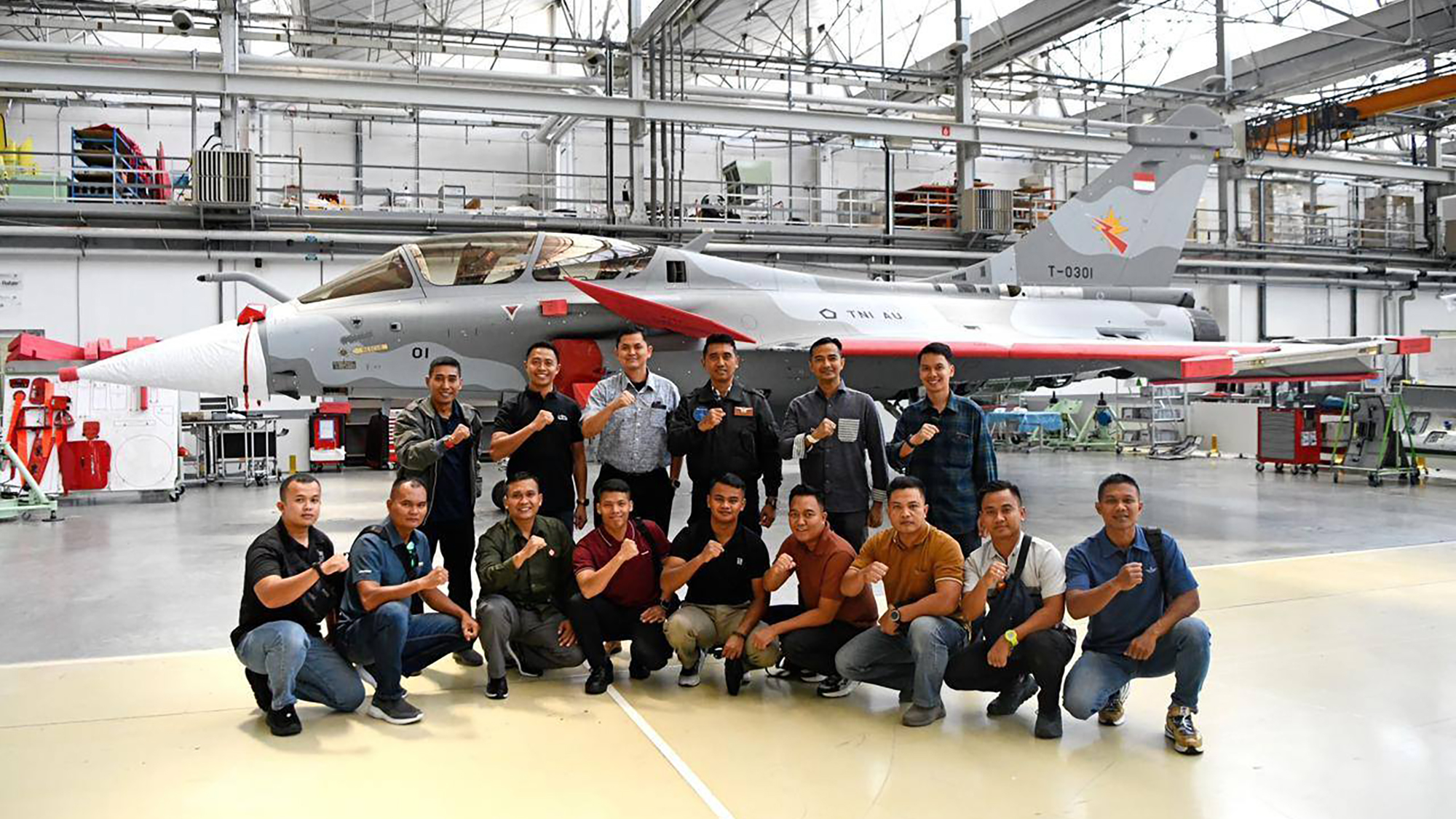
In 2022, Indonesia and France signed a $8 billion deal for 42 Rafale fighter aircraft, with a comprehensive package that covers aircrew training, logistical support for several Indonesian air bases, and a training center with two full-mission simulators. In January 2026, it has been reported the first three Rafales have landed on Indonesian soil.
In 2023, Indonesia also signed a contract to acquire the Qatar Emiri Air Force’s (QEAF’s) total fleet of 12 Dassault Mirage 2000-5 fighter aircraft and prevent a decline in the combat effectiveness of the Indonesian Air Force while waiting for deliveries of the new aircraft. However, a year later the MoD cancelled the contract.
Indonesia continues to be formally involved in the KF-21 program as an investor, with long-standing plans to acquire the aircraft and participate in its manufacture. However, as reported on other occasions, the partnership has been strained by delayed payments and a reduction in Jakarta’s financial contribution.
Being South Korea’s main partner in the KF-X program, Indonesia was set to burden roughly 20% of the development program. The country was also set to receive the fifth KF-21 prototype for local flight testing and weapons integration, but South Korean media recently reported this will not happen anymore.
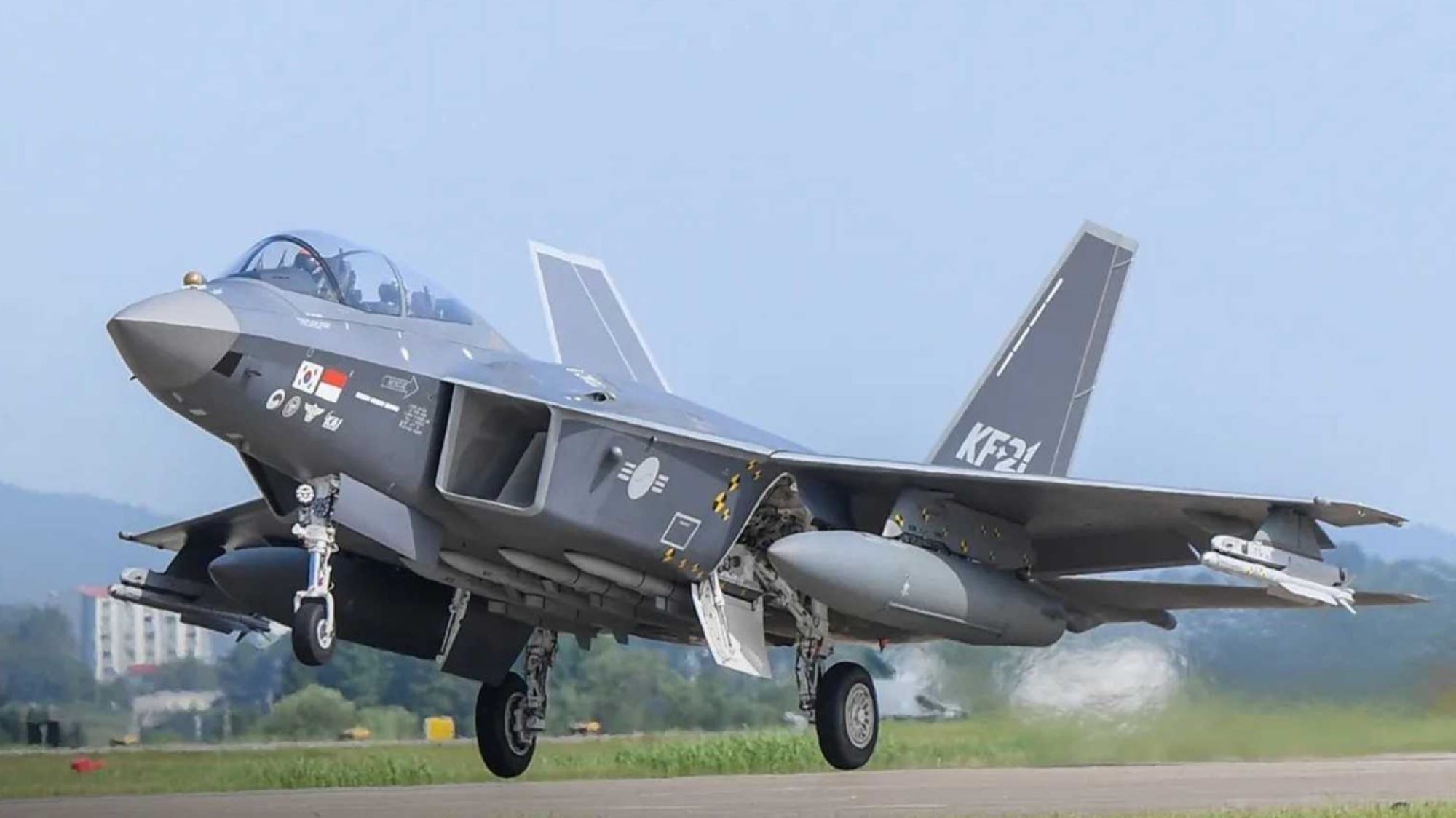
Moreover, Indonesia has yet to sign a contract for the acquisition of the new fighter. Recent reports about the Philippines being in talks to acquire between 12 and 24 KF-21s appear to have prompted urgent negotiations by Indonesia to avoid falling behind in the production queue, with talks about the acquisition of 16 KF-21 Block 2 jets.
The most recent fighter acquisition involves the Turkish Aerospace Industries (TAI) Kaan, Turkey’s first domestically produced combat aircraft. Following the agreement announced in 2025, Indonesia plans to buy 48 aircraft for a total estimated value of $10 billion.
The country currently operates a combination of Western and Eastern aircraft. The Indonesian Air Force (Tentara Nasional Indonesia-Angkatan Udara TNI-AU) has a total of 33 F-16 and a mix of 11 Su-30MK2 and 5 Su-27SKM that serve as the backbone of the fighter force.
Apart from the mainline fighters, TNI-AU also operates BAE Systems Hawk Mk. 209 and Mk. 109, EMB-314 Super Tucanos, and T-50i as light attack aircraft. With the South Korean T-50i being used as both Lead In Fighter Training (LIFT) and an attack platform, Indonesia decided to buy 6 additional airframes in 2021.
Visualizza questo post su Instagram
With previous ties with the former Soviet country dissolving, the Indonesian Air Force seems to be transitioning closer to Western air platforms. Indonesia is in a strategic position in the light of the great power competition with China, and it should be no wonder that the many countries are willing to equip the TNI AU with their newest fighter jets.