The new live-fire event demonstrated the ability of the AGM-88G AARGM-ER to navigate a challenging flight profile in a GPS-denied environment.
The U.S. Navy’s Naval Air Systems Command (NAVAIR) and Northrop Grumman announced on Jan. 27, 2026, a new live-fire test of the AGM-88G Advanced Anti-Radiation Guided Missile Extended Range (AARGM-ER). The announcement comes a month after the company and the U.S. Air Force conducted a new test of the Stand-in Attack Weapon (SiAW), which has been developed using technology from the AARGM-ER.
New Live-Fire Test
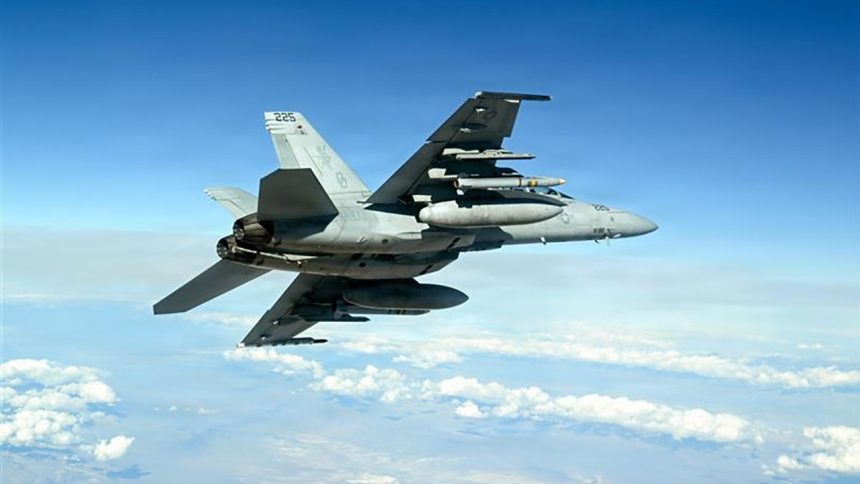
According to the photos on DVIDS, the test was conducted on Jan. 12 over Point Mugu Sea Range in California. An F/A-18F Super Hornet can be seen carrying two live AGM-88Gs, with at least one being launched.
In a post on social media, NAVAIR said the test demonstrated the missile’s “ability to navigate a challenging flight profile in a GPS-denied environment.” The service did not further elaborate on the technology used.
Exciting progress for AARGM-ER! The successful live fire event showcases the dedication and innovation of the @USNavy and our teams. This critical test is a significant milestone on the path to delivering advanced strike missile capabilities to the fleet. https://t.co/gAaH9zuG3x
— Northrop Grumman (@northropgrumman) January 27, 2026
The GPS is used by the AGM-88G and its predecessor, the AGM-88E, in combination with an anti-radiation homing receiver to introduce a counter-shutdown capability. This allows the weapon to be effective against enemy radar and communications sites that would shut down to confuse incoming anti-radiation missiles.
NAVAIR further added that this test is “a critical step in paving the way for operational capability later this year.” The Initial Operational Capability (IOC) was initially planned for 2024, before it slipped to 2026.
It is unclear how many captive carry flights, drop tests and live-fire events were conducted with the AARGM-ER. So far, according to public data, the weapon has been fired at least five times since the first live-fire event in July 2021, with the latest reported in May 2023.
AARGM-ER
The AARGM-ER is the evolution of the latest variant of the AGM-88 HARM (High-Speed Anti-Radiation Missile), the AGM-88E AARGM, a medium-range air-to-ground missile employed for Suppression and/or Destruction of Enemy Air Defenses (SEAD/DEAD). The AGM-88E is the result of a cooperative program with the Italian Air Force started in 2005 and developed as an upgrade and compliment to the AGM-88B/C. The AARGM program designed and produced a new Guidance Section and modified the existing Control Section, which are coupled with the legacy HARM Rocket Motor and Warhead Section, wings and fins.
The new Guidance Section features a passive anti-radiation homing receiver, satellite and inertial navigation system and a millimeter wave radar for terminal guidance, with the added ability to send images of the target via a satellite link before impact. The purpose of these new Guidance Section is to improve the effectiveness of the legacy HARM, especially against enemy radar and communications sites that would shut down to confuse incoming anti-radiation missiles (counter-shutdown capability) or pop-up threats.

As stated by the U.S. Navy, AARGM baseline capabilities include an expanded target set, counter-shutdown capability, advanced signals processing for improved detection and locating, geographic specificity providing aircrew the opportunity to define missile-impact zones and impact-avoidance zones, and a weapon impact-assessment broadcast capability providing for battle damage assessment cueing.
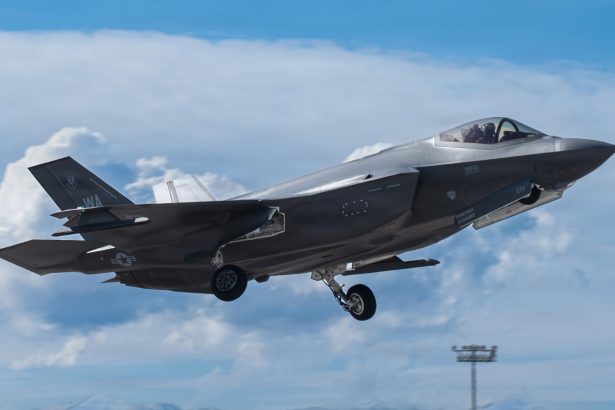
The AARGM-ER builds up on these capabilities to obtain an even more advanced weapon that is being integrated on the F/A-18E/F Super Hornet and EA-18G Growler and it is compatible for a future integration on all the variants of the F-35 Lightning II. The AARGM-ER combines the Guidance Section and Control Section of the AGM-88E with a new, larger rocket motor and a new warhead. The control surfaces have been redesigned too, obtaining aerodynamic strakes along the sides for increased lift and low-drag tail surfaces. The missile will reportedly have roughly double the range and speed of the AGM-88E.
One of the factors behind the AGM-88G design was the need for the missile to fit inside the F-35’s weapons bays, as the previous versions of the AGM-88 can’t fit because of their large control fins. So, until the missile is ready for fielding, the F-35’s SEAD capability is mostly reliant on its AESA (Active Electronically Scanned Array) radar with sophisticated electronic attack capabilities, including false targets, network attack, advanced jamming and algorithm-packed data streams.