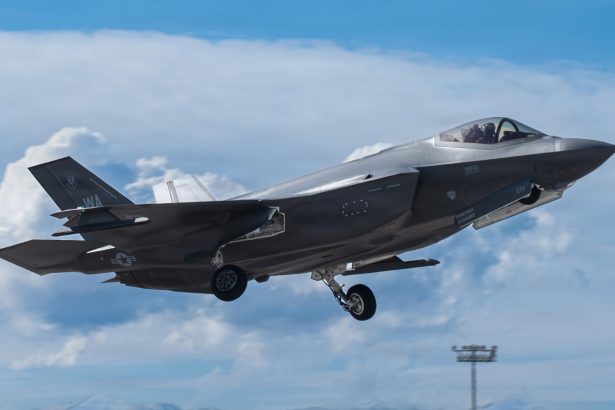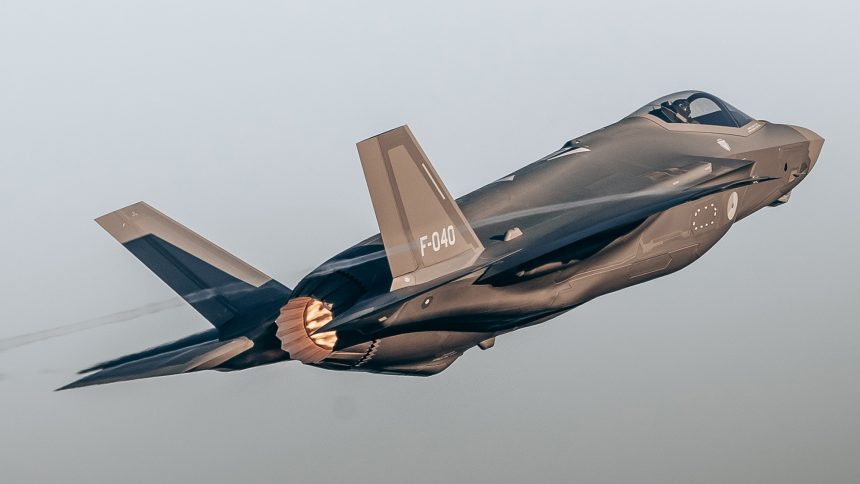
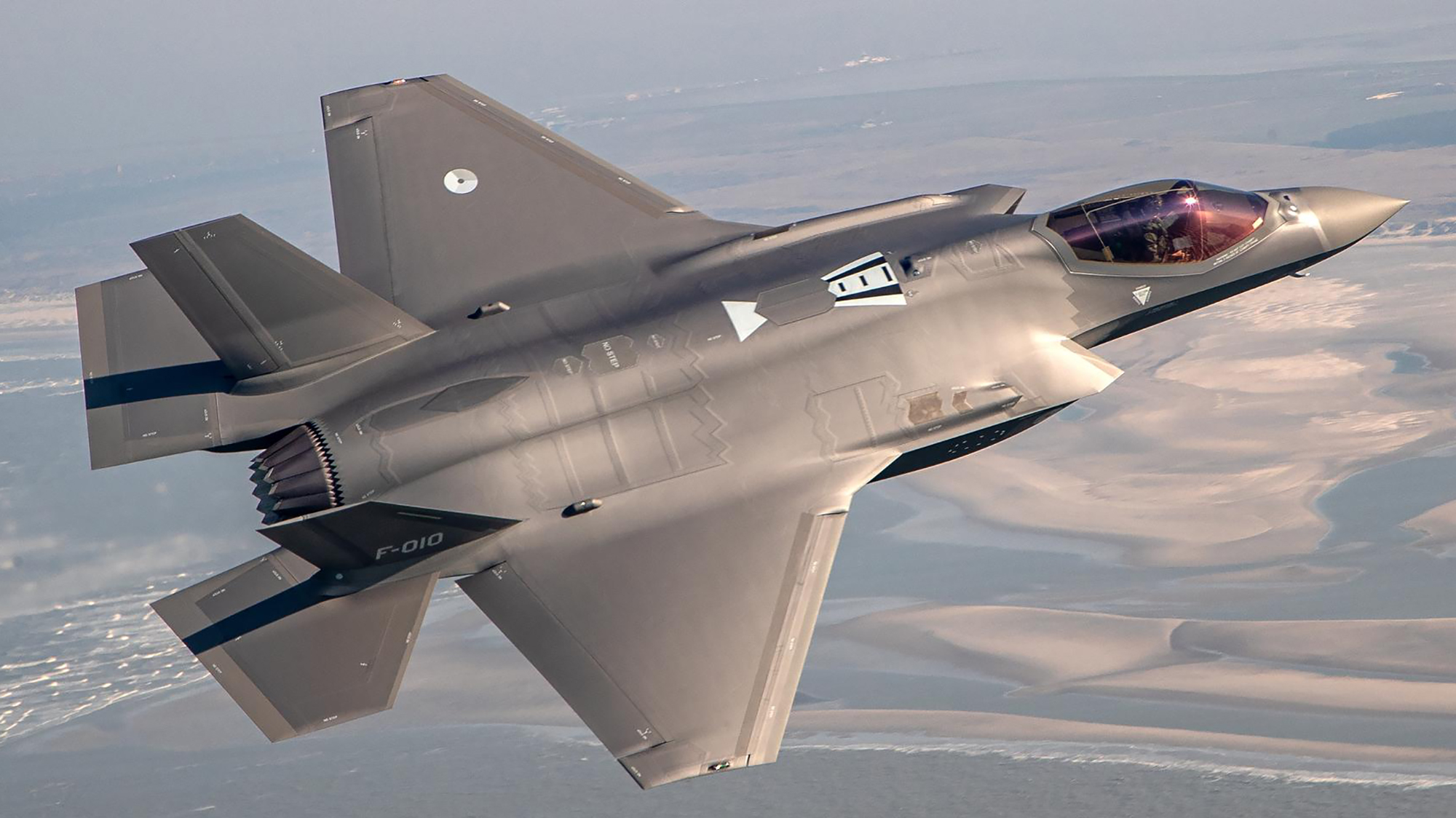
Four Dutch F-35 Lightning II fighters and a tanker operated from the Netherlands’ main international airport, one of Europe’s busiest, during the NATO-led exercise Avatar.
Schiphol Airport, located just 9 kilometres southwest of Amsterdam, is one of the busiest airports in Europe. Over the past couple of days, alongside its usual flow of civilian airliners, the airport also hosted some unusually loud and uncommon visitors: four Dutch F-35 fighter jets.
According to details released by the Dutch Ministry of Defense and reported by local Dutch media, a quartet of RNLAF F-35 fighter jets operated from Amsterdam Schiphol Airport on Jan. 27 – 28, in what marked the first military exercise ever conducted at the Netherlands’ largest civilian airport.
The activity was part of Operation Avatar, a NATO-led exercise designed to assess Schiphol’s ability to function as an alternative operating location should military air bases become unavailable during a crisis or wartime scenario.
“In a crisis or in wartime we might not have access to our own airfields,” Air Commodore Robert Adang, acting commander of the Royal Netherlands Air Force, explained. “In that situation, we can rotate between airfields so that we can operate in the most unpredictable way possible.”
Koning Willem-Alexander bezocht vandaag oefening Avatar op Schiphol. De @Kon_Luchtmacht trainde met F-35’s en een NAVO-tank- en transportvliegtuig het veilig opereren vanaf een civiele luchthaven.
Lees meer via: https://t.co/C8UxRr5kbr pic.twitter.com/Tcqg6jIC9F
— Ministerie van Defensie (@Defensie) January 28, 2026
The four F-35s arrived at Schiphol shortly after 12.00PM on Tuesday, landing while normal passenger traffic continued around them. After spending roughly an hour on the ground, the jets taxied again for departure.
Later in the afternoon, just after 3PM, the fighters returned to Schiphol following an aerial refueling mission over the North Sea, reportedly extending as far as Danish airspace. An MRTT tanker of the Multinational Multi Role Tanker and Transport (MRTT) Fleet (MMF) also took part in the operation.
Throughout both days, the F-35s flew multiple sorties, operating alongside Schiphol’s regular schedule of around 1,100 civilian flights per day.
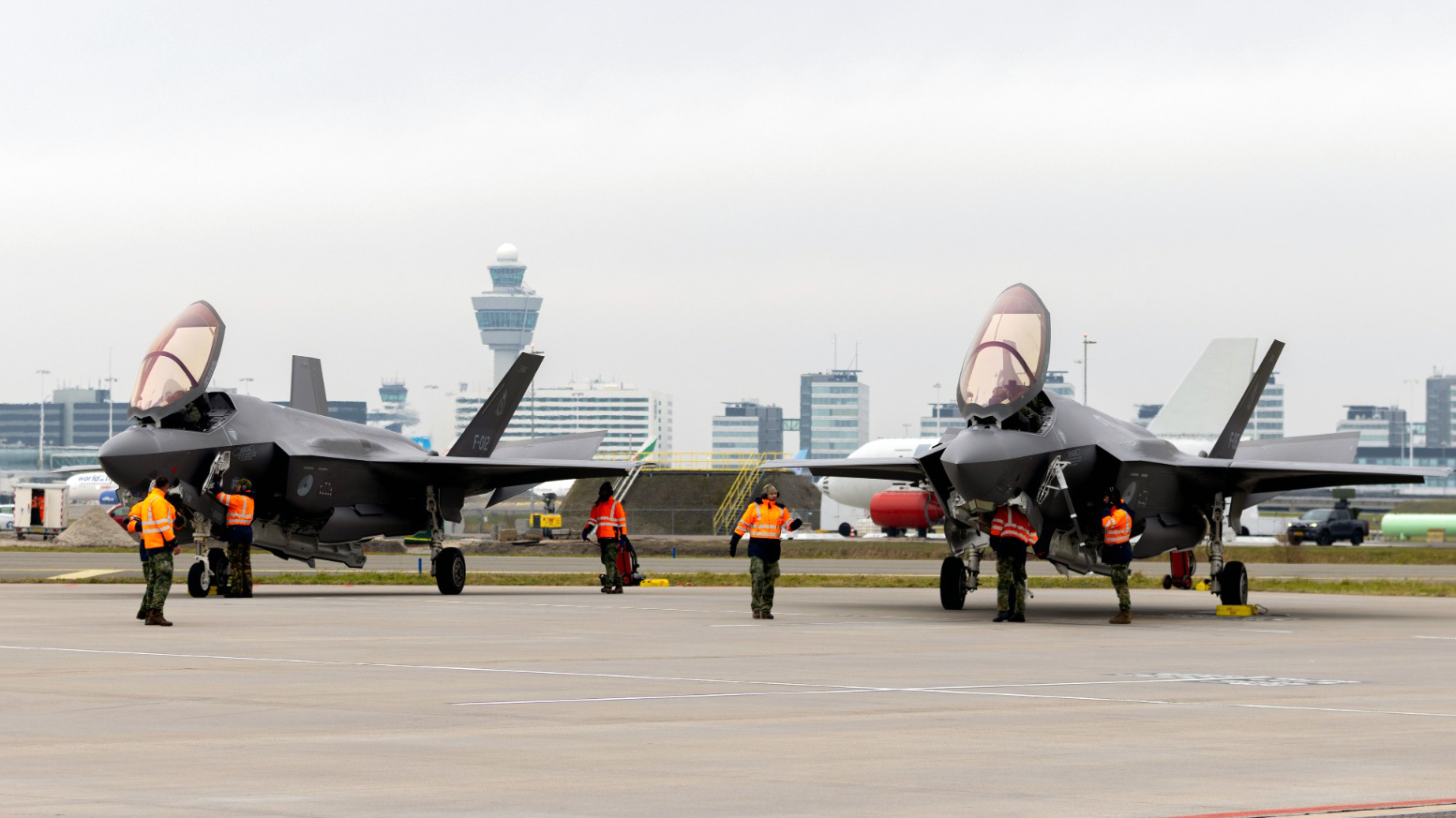
Lieutenant Colonel Pascal Smaal, commander of 322 Squadron based at Leeuwarden Air Base, described the two-day exercise as a crucial test of the practical challenges involved in running military operations from a major international airport.
“Our aim is to work safely and, above all, to train without having any impact on Schiphol’s air traffic,” Smaal said. “From that perspective, passengers should notice nothing.”
Operating from such a busy hub required extensive coordination between the Royal Netherlands Air Force and civilian partners, including Schiphol Airport, Air Traffic Control the Netherlands, and local authorities. While residents in surrounding areas may have noticed increased noise levels, the Ministry of Defense stressed that the impact was temporary and limited to the duration of the exercise.
Deputy Defense Minister Gijs Tuinman framed Operation Avatar as a practical demonstration of Agile Combat Employment, another concept increasingly emphasized within NATO air forces.
“As the threat environment in Europe intensifies, we don’t want to operate F-35s only from Volkel and Leeuwarden,” Tuinman said. “We want to be able to disperse, so that potential adversaries do not know which airfields we are using.”
Tuinman acknowledged that Schiphol represented the most demanding environment in which to test the concept. “With around 1,100 civilian take-offs and landings every day, Schiphol is the hardest place to do this. If it works here, it can later be expanded to regional airports such as Maastricht, Groningen, Rotterdam and Twente.”
While dispersion is a concept that is becoming increasingly important among European air arms, using civilian airports, rather than public roads and highways, for dispersed airfield operations remains quite unusual. Whether other nations will deploy their F-35s to busy civilian airports remains to be seen.
The Dutch Ministry of Defense emphasized that national security and resilience are not solely military responsibilities. Operation Avatar involved close cooperation between military and civilian stakeholders, reinforcing the idea that major civilian infrastructure may play a critical role in future high-intensity conflict scenarios.
As a side note, it is also worth noting how much F-35 operations have evolved over the past decade. When the Lightning II first began entering service with European air forces around ten years ago, with the Italian Air Force becoming the first European operator to receive the aircraft at its home base in late 2016, operations were strictly confined to restricted areas within military airfields. Dedicated, “fortified” zones were created to isolate the new fifth-generation platforms from legacy aircraft, reflecting concerns about the F-35’s sensitive systems, sensors, and operating procedures.
Exercises like Operation Avatar highlight how that phase has largely passed. Today, the F-35 no longer requires secluded citadels or operations conducted far from public view. This shift likely reflects a deliberate trade-off between secrecy and the need to be prepared for dispersed airfield operations and overall operational continuity. In a contested environment, the ability to keep flying from a wide range of locations, including civilian infrastructure, may ultimately matter more than maintaining the same level of isolation that characterized the program’s early years.
Dealing with the military-civil cooperation, last year we reported that thanks to an agreement between KLM Royal Dutch Airlines and the Dutch Ministry of Defense, airline pilots among the former 5th generation fighter pilots who left active service to join KLM will serve as reserve F-35 pilots in the RNLAF.