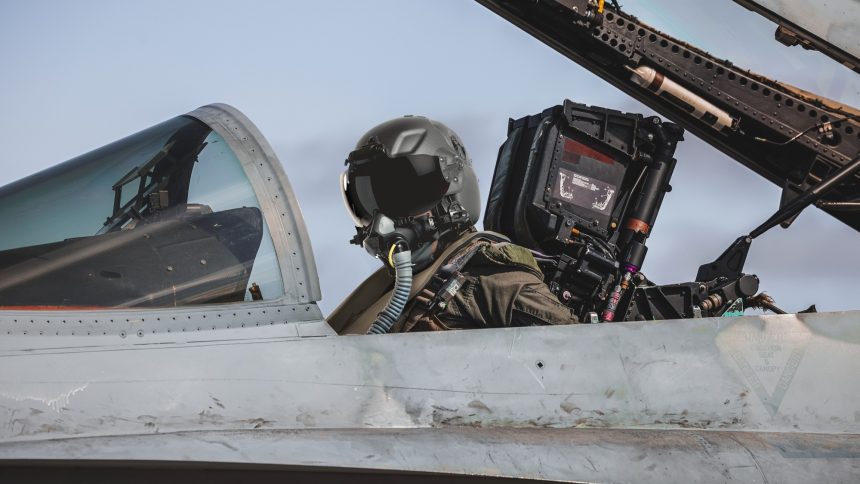
The U.S. Navy has selected the Gentex Pursuit helmet as the Next Generation Fixed Wing Helmet (NGFWH) to equip flight crews of E-2D, F/A-18, E/A-18G, T-45, T-6 and UJTS.
Gentex Corporation has announced that the U.S. Navy’s Naval Aircrew Systems program office (PMA-202) selected its Pursuit helmet as the Next Generation Fixed Wing Helmet (NGFWH). The new helmet will replace the HGU-68P, also made by Gentex, across the E-2D, F/A-18, E/A-18G, T-45, T-6 and, in future, the Undergraduate Jet Training System (UJTS) fleets.
Following the selection, the company was awarded a 5-year Indefinite Delivery, Indefinite Quantity (ID/IQ) contract to deliver over 5,000 NGFWH systems and associated spares. The contract, awarded under PMA-202’s Helmet Mask Regulator (HMR) program and covering both Low-Rate Initial Production (LRIP) and Full-Rate Production (FRP), is anticipated to total approximately $22 million.
“This contract award from the US Navy is a significant milestone for Gentex and demonstrates our unwavering commitment to advancing the world’s most innovative protection solutions for warfighters,” said Robert McCay, Vice President of Aircrew Systems at Gentex Corporation. “The PURSUIT system delivers meaningful advancements in aircrew safety, comfort, and mission performance, ensuring Naval Aviators and Naval Flight Officers are equipped with technology that keeps pace with the rapidly evolving demands of modern aviation. We are honored to continue our trusted partnership with the US Navy and look forward to providing the US military and international allies with the PURSUIT Helmet System for decades to come.”
Next Generation Fixed Wing Helmet
The Next Generation Fixed Wing Helmet (NGFWH) program has been in motion for some years now, with the fielding initially anticipated to begin by 2025. The program is led by the Naval Aircrew Systems program office (PMA-202) as part of the Helmet Mask Regulator (HMR) initiative.
Visualizza questo post su Instagram
In late 2024, Gentex was awarded an Other Transaction Agreement (OTA) to complete qualification and achieve airworthiness and production readiness qualifications. As a follow on, Naval Air Systems Command (NAVAIR) said in early 2025 it would negotiate a Firm Fixed Price (FFP) contract to Gentex for the Low Rate of Initial Production (LRIP) procurement of NGFWH, saying the company is the sole source to meet requirements on a timely basis and in a cost effective manner.
Similarly to the homonymous Air Force program, the Navy’s NGFWH was envisioned as a lighter, advanced and adaptable helmet to address neck and spine strain issues as well as ejection injury risks. These are both attributed also to the imbalance caused by the integration of Helmet Mounted Displays (HMD) and Night Vision Googles (NVG).
To achieve a better balance, Gentex says it has worked with various HMD manufacturers with the goal of achieving 600 KEAS (Knots Equivalent Air Speed) protection. The company also says the helmet was developed trough extensive collaboration with both the Navy and Air Force, as well as undisclosed international partners.
The new helmet is made of a lightweight carbon shell, coupled with an enhanced ventilation system and internal padding. The Pursuit helmet comes in four sizes, meant to be fit for up to 99% aircrews, and incorporates a Modular Open System Approach (MOSA) for seamless integration of current and future HMDs, advanced communications systems, and optical and respiratory protection.
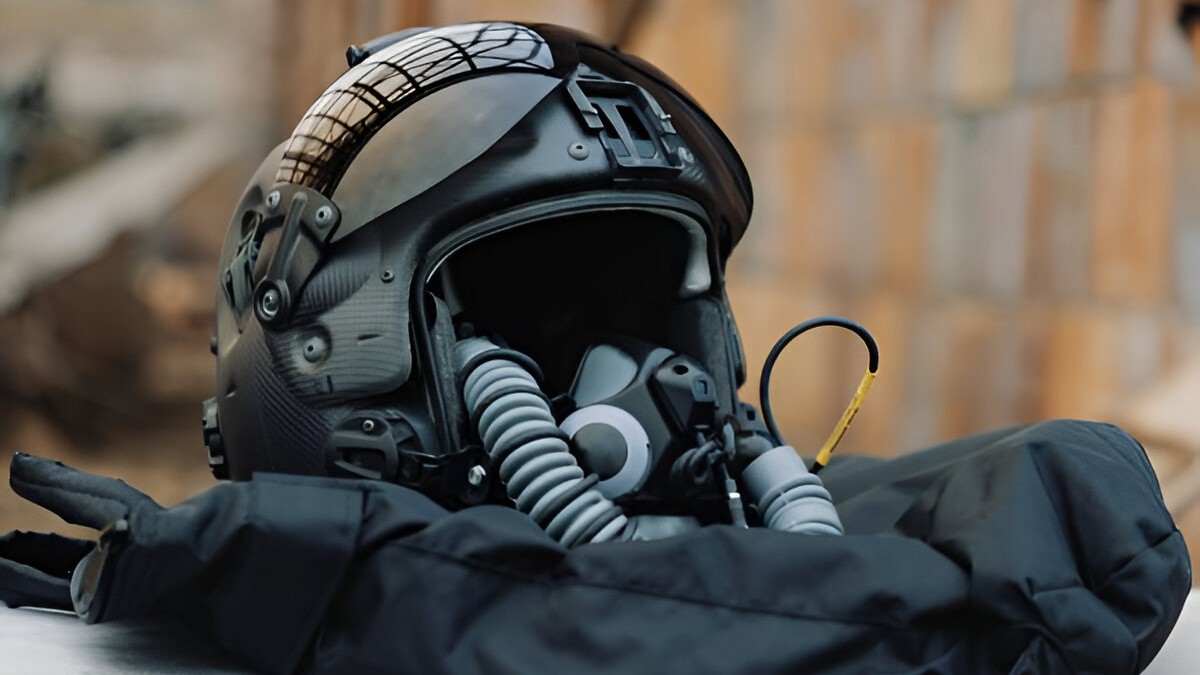
Among the HMD systems currently supported are the Gentex Pursuit Slick, Thales Scorpion, Collins Elbit Vision Systems JHMCS, and Collins Elbit Vision Systems Zero-G HMDS+. The JHMCS is currently the standard HMD system used by F/A-18 and EA-18G aircrews.
As mentioned in the opening, the Pursuit helmet will be fielded across the E-2D, F/A-18, E/A-18G, T-45, T-6 and, in future, the Undergraduate Jet Training System (UJTS) fleets as the new standard issued helmet. The list doesn’t include the F-35 as its pilots have a dedicated helmet.
Improved Joint Helmet-Mounted Cueing System
An effort which has a close relationship to NGFWH is the Improved Joint Helmet-Mounted Cueing System (IJHMCS). The program, similarly led by the Naval Aircrew Systems Program Office (PMA-202), is meant to equip F/A-18 and EA-18G crews with a an HMD lighter in weight with a better center of gravity to reduce potential for pilot back and neck injuries.
The Navy awarded a $16.8 million contract July 28, 2023, to Collins Elbit Vision Systems for the design and development of the IJHMCS. According to the contract solicitation, the new system is specifically meant for Block III F/A-18E/F and EA-18G aircraft, with modifications limited only to the system’s shell, without touching the electronics.
“The contract requirements are to modify the helmet mounted components associated with the Joint Helmet Mounting Cueing System (JHMCS) for Block III F/A-18E/F and EA-18G aircraft to reduce head supported weight and improve helmet center of gravity (CG) with NO changes to the JHMCS Electronics Unit (EU). Efforts also include replacement of the analog wiring interface with a digital wiring interface from the aircraft EU to the helmet. The modified system shall meet all other existing JHMCS requirements and be compatible with existing JHMCS aircraft-mounted equipment.”
— NAVAIR
NAVAIR released in 2023 an image of the IJHMCS, which appears based on Collins Elbit Vision Systems’ Zero-G HMDS+, installed on the new NGFWH made by Gentex. On that occasion, the Navy said it planned to field the new system in 2025, leveraging efforts from the Air Force Next Generation Fixed Wing (NGFW) helmet program.
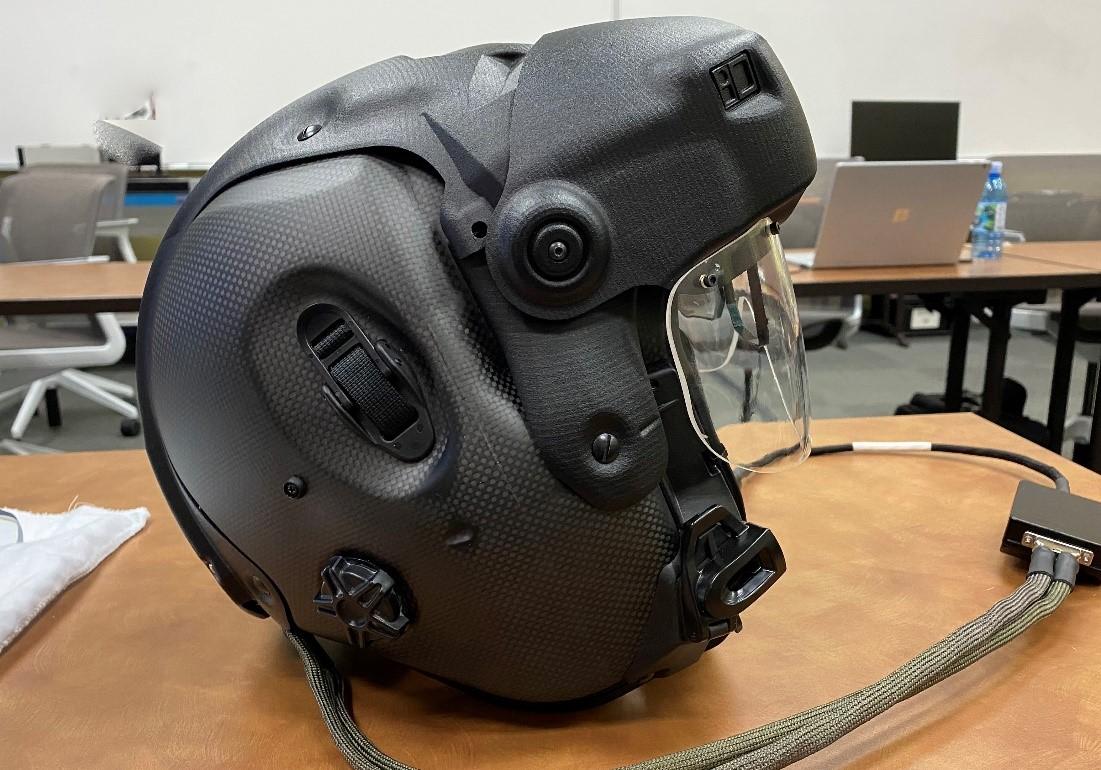
“This upgrade will significantly reduce head and neck health issues for our aircrews that are associated with the legacy JHMCS system, while providing improved display capabilities and reliability for a critical warfighting system,” said Capt. Carey Castelein, then PMA-202 program manager.
The effort, described as a technology refresh, has also the goal of replacing the legacy JHMCS and JHMCS NVCD (Night Vision Cueing and Display) with a single high-definition day and night color display. With the legacy system, aircrews have to replace components on the helmet to switch from a day to night configuration and vice versa.
“The day and night capability associated with IJHMCS will not only provide our aircrews with a lightweight, digital solution, but will also provide increased situational awareness throughout missions and improved reliability, as the aviators will not be required to remove and replace system components in flight,” said Brad Schieferdecker, PMA-202 vision systems team lead.