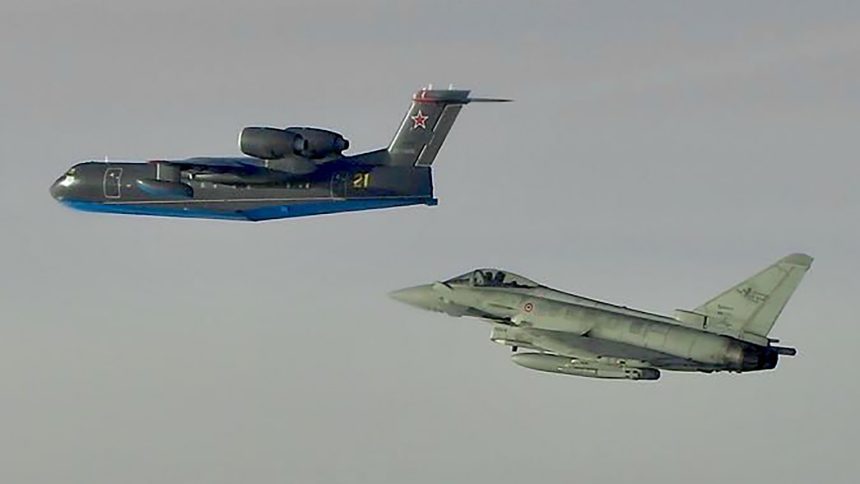
The Russian Navy operates just a handful of multirole jet-powered amphibious flying boats. One was intercepted by the Italian Air Force F-2000s over the Baltic Sea.
On Jan. 16, 2026, at 11.30LT, two Eurofighter Typhoon jets of the Italian Air Force, deployed to Amari, Estonia, to support NATO enhanced Air Policing mission, were scrambled to intercept a Russian Navy Beriev Be-200 aircraft approaching the Baltic Sea.
The photos released by NATO Allied Air Command show the Russian Naval Aviation Be-200PS multirole amphibious aircraft, escorted by one of the two F-2000As (as the Italian single seat Eurofighter jet is designated), while transitioning in international airspace.
11:30 today, 🇮🇹 Eurofighter Typhoons deployed at Ämari, 🇪🇪, were scrambled to intercept a 🇷🇺 BE-200 aircraft approaching the Baltic Sea
In 2025, over 500 scrambles have been executed across NATO airspace.
Air Policing and enhanced Vigilance Activities ensure Allied security 24/7 pic.twitter.com/SgyeaRVnNN
— NATO Air Command (@NATO_AIRCOM) January 16, 2026
While such close encounters regularly occur in the region, what makes this intercept noteworthy is the fact that the Beriev Be-200 Altair, especially in Russian naval service, is a particularly rare aircraft. Designed and built by Russia’s Beriev Aircraft Company as a multipurpose amphibian capable of firefighting, maritime patrol, search and rescue, and transport, the Be-200 represents one of the last significant developments in the tradition of jet-powered flying boats.
Beriev Be-200
According to publicly available sources, the Russian Navy operates only a handful of these large Be-200s, with some estimates citing as many as three aircraft, while others suggest the number may be as low as one.
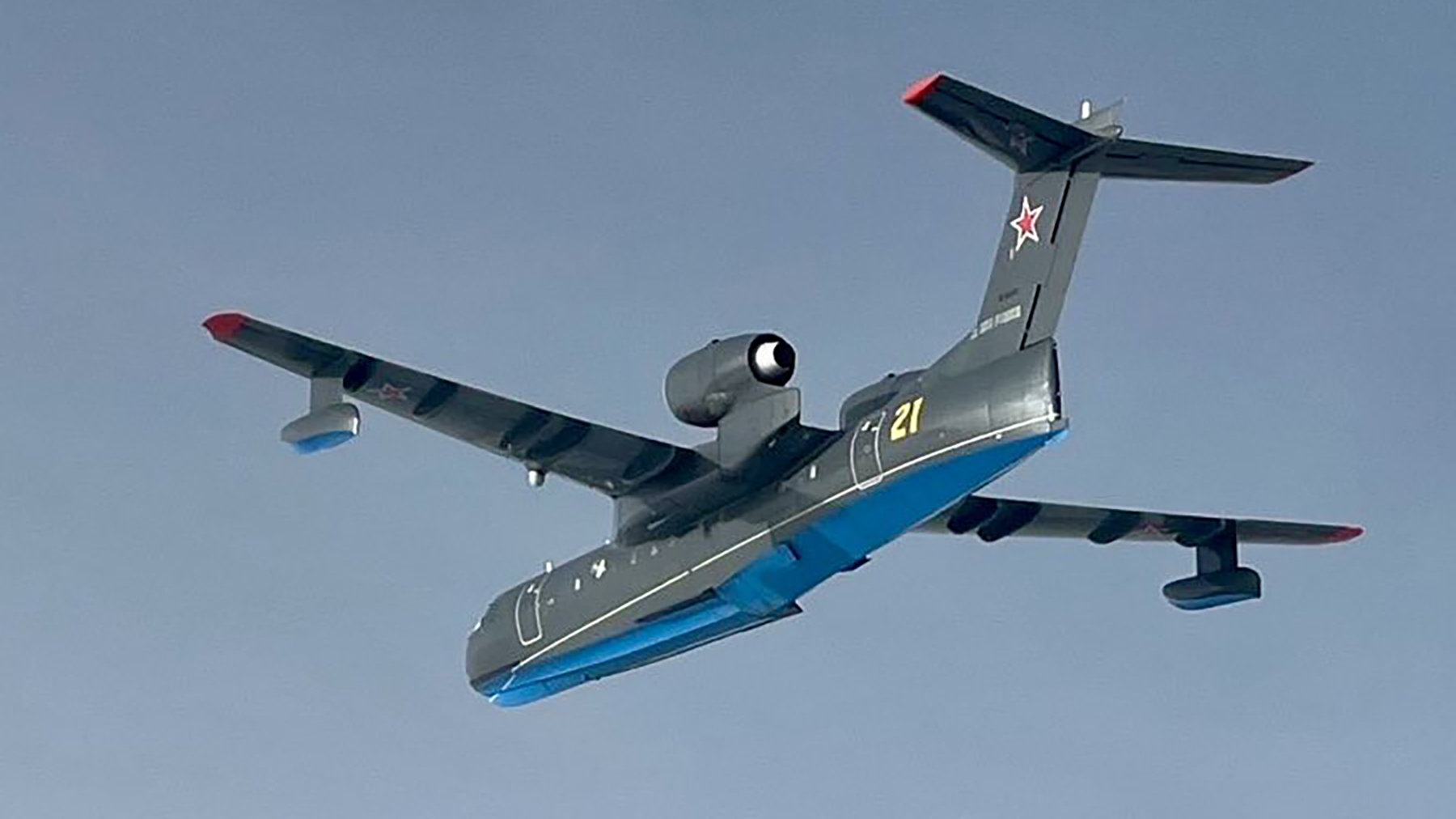
One aircraft was lost on Aug. 14, 2021, when the Russian Navy Be-200 Bort No “20” Yellow / RF-88450, one of three amphibious firefighting aircraft of the type deployed to Turkey on July 8 of the same year as part of an international assistance effort to support the country’s General Directorate of Forestry in responding to widespread forest fire, crashed into mountainous terrain while battling wildfires in Turkey, killing all eight people on board. During the night of March 8 – 9, 2024, the Beriev manufacturing plant in Taganrog was hit by Ukrainian drones, reportedly as part of a strike aimed at Beriev A-50 aircraft undergoing maintenance at the facility. The extent of the damage to the plant and to any Be-200s that may have been inside remains unclear.
The one intercepted over the Baltic Sea today, the Be-200 “21” Yellow / RF-88456, made its maiden flight in 2020.
A Russian Naval Aviation Be-200PS multirole amphibious aircraft (Bort No. “21” Yellow / RF-88456). This aircraft is quite new, having made its maiden flight in November 2020. https://t.co/S0mHtcI7yN pic.twitter.com/NkVF05N7AJ
— Guy Plopsky (@GuyPlopsky) January 16, 2026
This is what we wrote about the Be-200 in a previous article published here at The Aviationist:
According to Beriev public data, the basic configuration of the Be-200 amphibious aircraft is intended for fighting the forest fires using the fire extinguishing fluids. While doing this, the aircraft can carry out the following tasks:
- stop and restrain the spread of the big forest fires by developing the protecting strip due to multiple drops on the fire edge;
- extinguishing the small fire and fire which only starts to develop;
- delivery of fire brigades and fire extingushing equipment to the fire region by landing on preselected water area of airfield, and return to the base.
“A particular feature of the Be-200 aircraft, when compared with the other amphibians, is that it has fully pressurized fuselage, which allows to fullfil a lot of missions. The aircraft is fitted with flight/navigation and communication equipment allowing the navigation and flight control at all flight phases in adverse weather conditions at any season, day and night. The interior for the Be-200 amphibious aircraft firefighting configuration is developed by AIM Aviation Fliteform. Passenger and combi configurations are on the list as well. While designing the Be-200 amphibious aircraft, the designers took into account the design experience and test results of the biggest jet amphibian A-40 “Albatross” which set 148 records,” Beriev website reports.
The Italian detachment
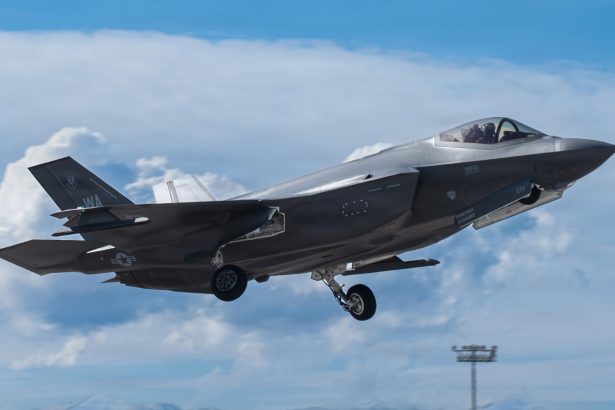
The Italian Air Force Eurofighters that took part in the intercept mission took over the QRA (Quick Reaction Alert) role in support of NATO eAP mission on Sept. 29, 2025. The F-2000s replaced the Italian Air Force F-35A Lightning II jets that carried out the mission for two months logging around 10 A-scramble (Alert Scrambles), over 150 sorties and 300 flying hours. According to NATO, In 2025, over 500 scrambles were executed across NATO airspace.