The MK54 MOD 2 is an advancement over the MK54 MOD 0 and MOD 1, with a more advanced and lethal warhead, and enhanced target tracking and classification system.
Northrop Grumman announced on Jan. 12, 2026, that it has received a $233 million U.S. Navy contract to manufacture and deliver the new MK54 MOD 2 torpedo. The weapon is an improvement upon the existing inventory of MK54 MOD 0 and MOD 1 variants, introducing an “advanced warhead and processing capabilities, resulting in increased performance and lethality.”
The award covers the “proof of manufacturing and qualification phases, as well as delivery of multiple torpedoes for qualification testing.” The company does not mention the number of weapons to be manufactured, but clarifies that it will perform the “integration and initial proof of manufacturing” at its facility in Plymouth, Minnesota, and Allegany Ballistics Laboratory (ABL) in Rocket Center, West Virginia.
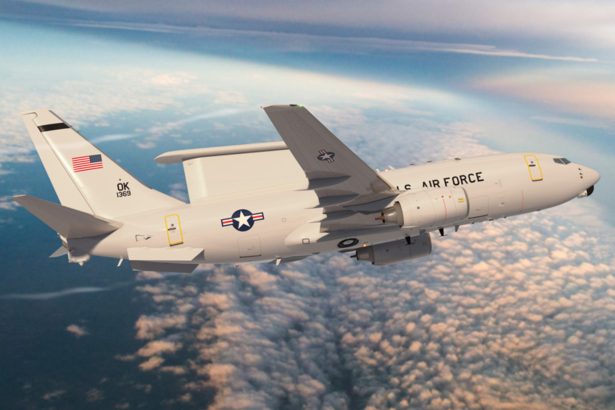
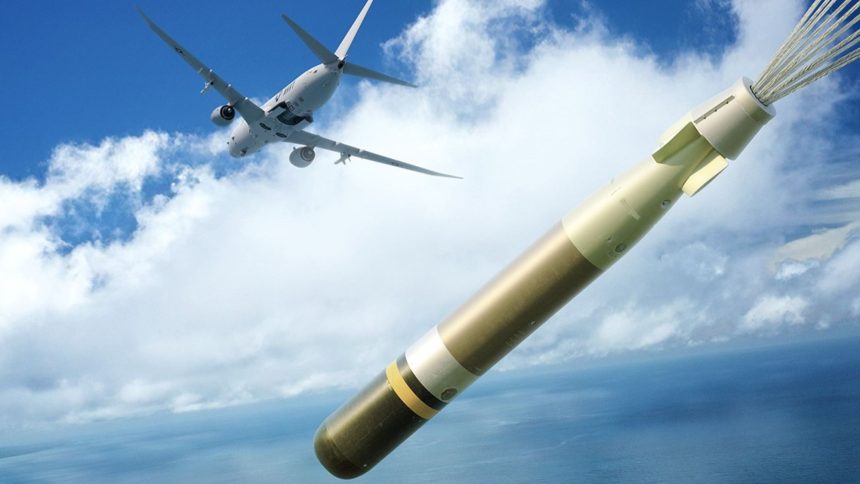
Northrop said the MK54 MOD 2 is “capable of tracking, classifying, and attacking underwater targets,” and can “operate in all ocean environments.” A rendition released by the company showed the new torpedo being launched by the P-8A Poseidon, the U.S. Navy’s sole dedicated maritime patrol and anti-submarine warfare (MP-ASW) aircraft.
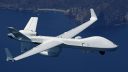
ASW capability is also being expanded onto the MQ-9B SeaGuardian and the Marines’ MV-22B Osprey, although they won’t have torpedo capability.
We’ve been selected by the @USNavy to integrate and perform initial proof of manufacturing for the U.S. Navy’s MK 54 MOD 2 torpedo. Discover how our innovation, advanced manufacturing, and capacity is enabling rapid qualification of this urgent need. https://t.co/EkYMhkxAqq pic.twitter.com/6JhLwOJ3Pm
— Northrop Grumman (@NGCNews) January 12, 2026
MK54 torpedoes
The MK 54 MOD 0 reached Initial Operational Capability (IOC) in 2004, while the MK 54 MOD 1 reached IOC in 2023. According to the Navy, the MK 54 MOD 0 uses the hardware and software from the older MK 46 and MK 50, with advanced Commercial Off-The-Shelf (COTS) digital signal processing technology, advanced guidance and control section, and “tactical software improvements.”
The MK 54 MOD 1 meanwhile provides a hardware upgrade to the sonar array assembly and associated electronics.
Northrop said the MK54 MOD 2 was designed under a cooperative development agreement between the Australian Defence Force and the U.S. Navy. Dave Fine, vice president, armament systems, Northrop Grumman, said in the press release: “This new weapon will provide U.S. and allied sailors with a next-generation response to counter the most advanced undersea threats.”
General Dynamic Mission Systems announced in January 2025 a U.S. Navy contract for MK 54 MOD 1 Lightweight Torpedo Kits, which was a fixed-price contract worth $808.6 million. As for the MK 54 MOD 2, Aerojet Rocketdyne, an L3Harris business, announced on Aug. 1, 2025, the completion of testing of its Stored Chemical Energy Propulsion System (SCEPS) as part of the program’s Increment 2 phase.
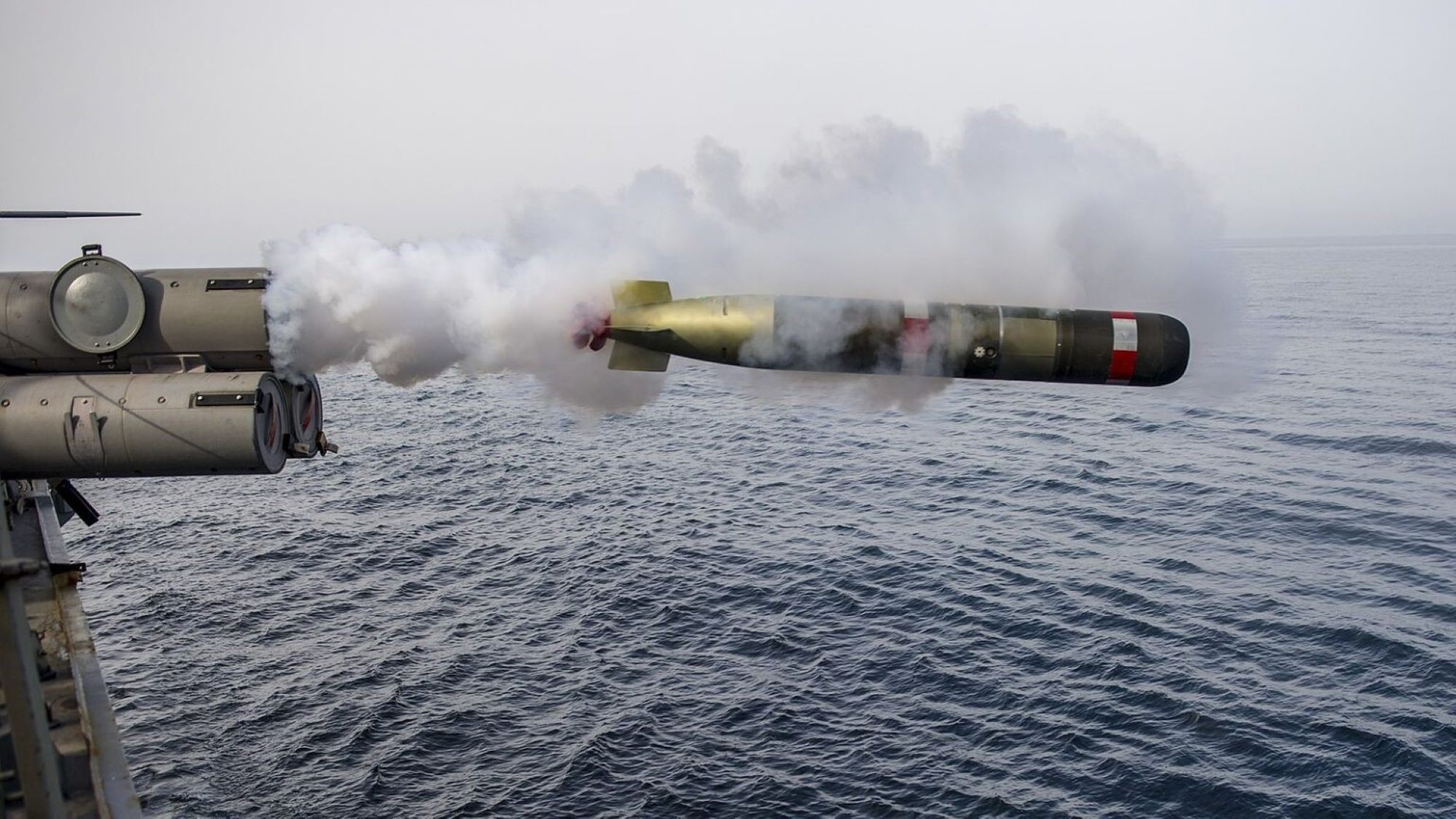
The validation of functionality and performance would set the stage for the SCEPS design verification testing of the fully integrated system that was scheduled for later that year. L3Harris is on contract with the Navy to deliver SCEPS propulsion’s proof of design for the MK 54 MOD 2 torpedo, which includes the power plant system and an integrated tail and torpedo afterbody assembly.
SCEPS uses a lithium boiler to generate the heat required for the creation of the steam that drives the turbine used to propel the torpedo as it intercepts its intended target. The innovative propulsion system is expected to significantly improve U.S. Navy torpedo capabilities.
P-8A modernization
Northrop Grumman’s computerized illustration shows a P-8A releasing a MK54 Mod 2 torpedo from its weapons bay. The accompanying caption said: “Launched from surface ships, fixed-wing aircraft, and helicopters, the MK54 MOD 2 Advanced Lightweight Torpedo is key to the U.S. Navy’s strategy to address modern and future submarine threats.”
Global Reach, Shared Dominance: Welcome Germany to the P-8A Poseidon Family! The P-8A consistently provides enhanced interoperability, persistent surveillance, rapid response and trusted cooperation with our allies and partners.
#GlobalPartnership #Warfighting #NavyReadiness pic.twitter.com/IbNoUt5jpY
— NAVAIR (@NAVAIRNews) November 21, 2025
The P-8A Poseidon itself is poised for a series of upgrades and new acquisitions, underlining its centrality to joint Western allied naval and anti-submarine operations. For instance, Denmark on Dec. 29, 2025, became the platform’s third possible European customer, while Germany received the first of its eight P-8As on Nov. 7, 2025, and plans to expand its fleet to 12 airframes.
The Royal Australian Air Force (RAAF) is putting its fleet of 14 such aircraft through the Increment 3 Block 2 (I3B2) upgrades. Late in July 2025, U.S. Navy’s Naval Air Test and Evaluation Squadron (VX-1) also concluded the operational testing of the Multi-Static Active Coherent-Enhancements (MAC-E) system on one of its P-8As.
Earlier that month, Boeing received a $61 million award for additional production of High Altitude Anti-Submarine Warfare Weapon Capability (HAAWC) kits for Mark 54 torpedoes. However, an FY 2020 Director of Operational Test and Evaluation (DOT&E) report said that the MK54 Mod 2 is not compatible with either the HAAWC or the Vertical-Launched Anti-Submarine (VLA) rocket.
Aircraft on Ground event
On Dec. 5, 2025, Naval Air Systems Command (NAVAIR) announced the Maritime Patrol and Reconnaissance Aircraft Program (PMA-290) conducted several Aircraft on Ground (AoG) events in the preceding months outside Continental U.S. (CONUS), in partnership with the Royal Air Force (RAF) and the Royal Australian Air Force (RAAF). An Aircraft On Ground (AOG) situation occurs when technical issues lead to an aircraft being grounded, preventing it from flying.
Global Partnerships = Unstoppable Readiness
Recent critical P-8A repairs were completed quickly thanks to our strong cooperative partnerships with industry, the @RoyalAirForce and the @USNavy.
📰: https://t.co/dVGLhELUBI#Readiness #Warfighting pic.twitter.com/Z7qJBE6vM3
— NAVAIR (@NAVAIRNews) December 8, 2025
“Virtual, scripted and basic simulated AoG events” were previously practiced in 2023, followed by a simulation on a live asset in July 2025 during Exercise Talisman Sabre in Australia. However, an actual AoG incident involving the wingtip of a deployed P-8A at Guam “became an unexpected, yet fortuitous opportunity to execute the teaming between PMA-290, RAAF, and Boeing Defense Australia (BDA).”
Following immediate “temporary repairs” to the P-8A, the aircraft was flown to RAAF Base Edinburgh under BDA’s care for the “permanent repairs.” NAVAIR’s press release added that “An enormous amount of coordination, parts ordering, and workload planning ensued.”
As the release also mentioned that “written lessons learned from the 2025 Exercise Talisman Sabre AOG simulated event were barely dry” at the time of the Guam event, it might be implied that the incident may have happened anywhere between August 2025 and December 2025.
Minotaur mission management system
PMA-290 on Dec. 16 also declared a major milestone by successfully connecting an I3B2-configured P-8A to the Minotaur cloud-based mission management system. NAVAIR said the “Minotaur Family of Systems (MFoS) Labyrinth hub” is a part of the I3B2 upgrades, as a “government-off-the-shelf” and “government-owned open-architecture software suite” that “combines data from various sensors to create a coherent picture for aircrews.”
“Minotaur offers multiple aircraft and/or assets to share networked information, enhancing intelligence, surveillance, and reconnaissance (ISR) capabilities,” NAVAIR added. Labyrinth, the Minotaur cloud-platform, “adds robust scalability in handling and correlating large volumes of data while providing external stakeholders access via a secure web-based interface.”
PMA-290 successfully tested Labyrinth, a Minotaur cloud-platform, on a P-8A I3B2 aircraft, adding robust scalability in handling and correlating large volumes of data.
🔗: https://t.co/XRlIXAU2gD#NavyReadiness #NavyInnovation #P8 #Readiness #MFoS #Minotaur #Labyrinth pic.twitter.com/4OWW2aS0G2
— NAVAIR (@NAVAIRNews) December 18, 2025
Adding the Labyrinth capability to all Minotaur-equipped platforms automatically expands the scale of access to “vital shared information.” This was proven when a VX-20 P-8A with I3B2 and Minotaur upgrades connected to Labyrinth and “provided thousands of relevant tracks.”