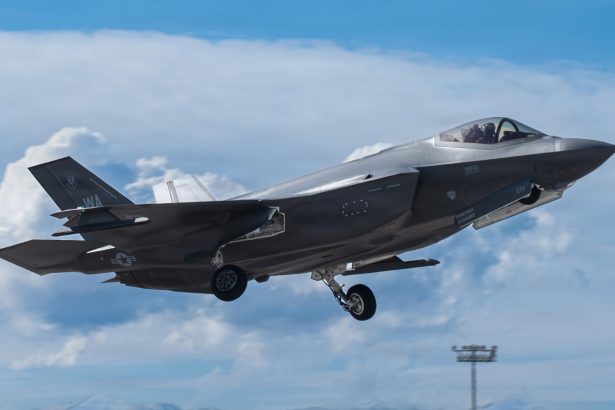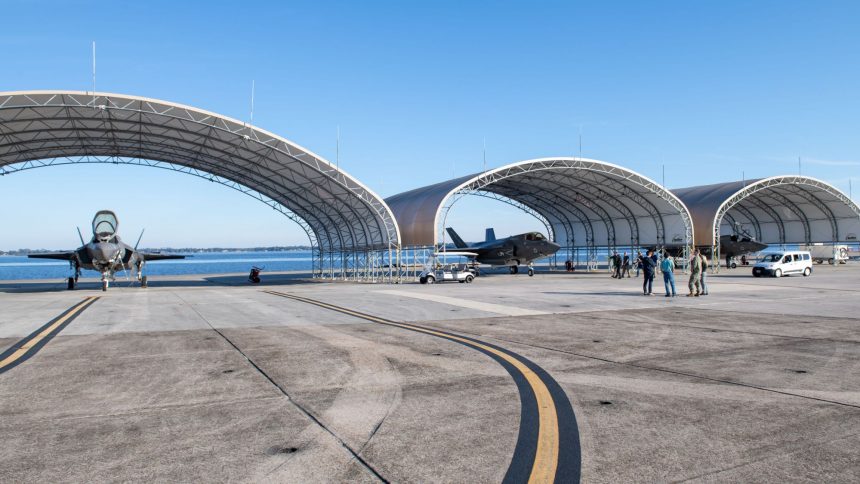
The three Royal Navy F-35Bs will be put through an extensive inspection of airframe and substructure for any corrosive damage, following which those parts will be removed, repaired and reinstalled.
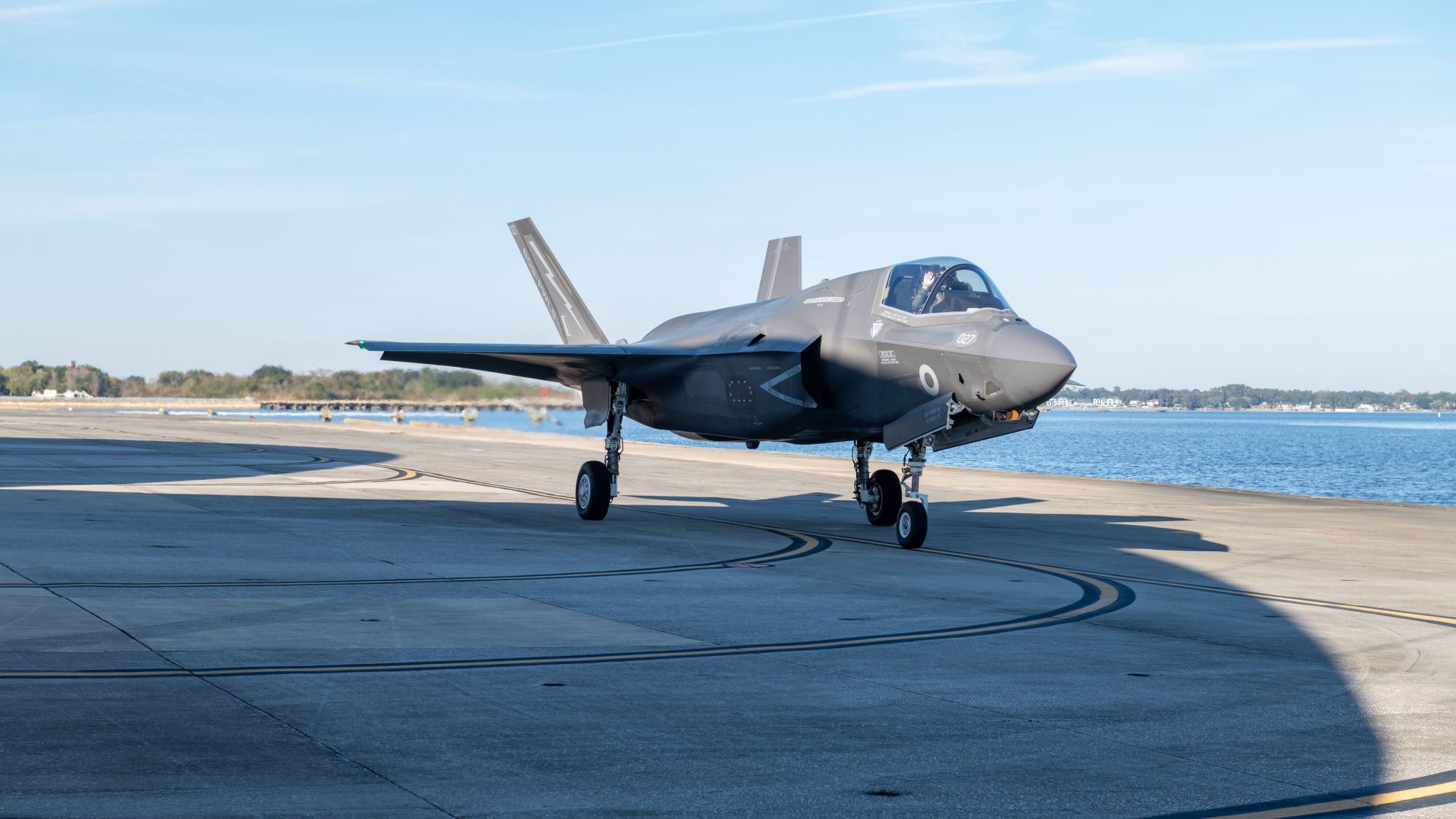
For the first time, the U.S. Navy’s Fleet Readiness Center Southeast (FRCSE) at Jacksonville, Florida, hosted three Royal Navy F-35B Lightning IIs which will undergo a “Production Asset Inspection Requirement Tier II (PAIR II) corrosion-mitigation inspection.” The comprehensive process will see the FRCSE crew assessing, repairing and removing any corrosive damage to the airframe’s outer skin, covered by vital Radar Absorbent Material (RAM) coating.
The FRCSE announced the work on the RN F-35Bs on Dec. 22, 2025, with images showing the aircraft reached the facility much earlier, on Dec. 3, as well as identifying one of the jet as belonging to the 809 Naval Air Squadron (NAS). The FRCSE inducted its first F-35B over a year ago, on Aug. 7, 2024, for PAIR II work, with the jet assigned to the Marine Fighter Attack Squadron 122 (VMFA-122) “Flying Leathernecks”, out of MCAS Yuma, Arizona.
The UK’s Royal Navy and Royal Air Force operate a total of 38 F-35Bs, out of the 48 ordered by the country. A total of 18 to 24 F-35Bs from both the services recently sailed aboard the HMS Prince of Wales during the eight-month long Carrier Strike Group 25 (CSG25) deployment, designated Operation Highmast. The jets were assigned to the 617 Squadron, 809 NAS and 207 Squadron.
UK-U.S. F-35 cooperation and interoperability
It is therefore possible these three RN F-35Bs may have been deployed aboard the HMS Prince of Wales and exposed to the harsh and saline marine environments. The ship sailed the cold, temperate waters of the north Atlantic, the warm Mediterranean Sea, the hotter Arabian Peninsula and the tropical Indian and Pacific Oceans and back, exposing the aircraft to a variety of different conditions, possibly spurring the critical PAIR II process.
The cooperation between the UK and the U.S. has also been reflected in an ‘interfly’ event with the Royal Australian Air Force, U.S. Marine Corps, U.S. Air Force and the Royal Air Force at the recent iteration of the Talisman Sabre in Australia. This is in addition to the several routine cross-servicing drills of the F-35 common aircraft type shared by the U.S., UK and the Netherlands to enhance interoperability and joint operations.
As the FRCSE’ press release added: “Additionally, to reduce future corrosion and repair costs, F-35 corrosion prevention best practices are being shared with RN maintenance counterparts for implementation both domestically and at sea.”
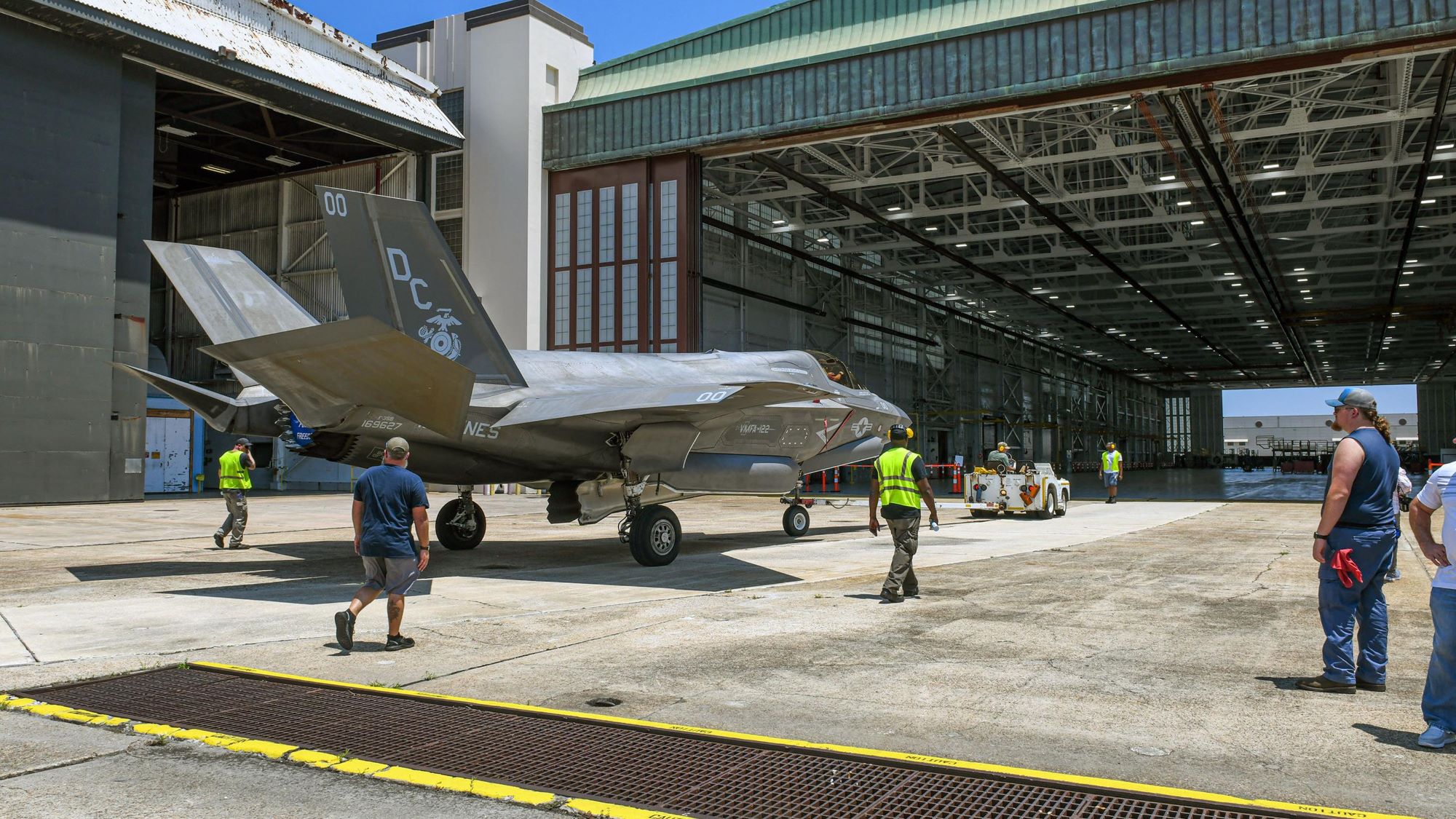
F-35 RAM maintenance and repair
The current work brings to the fore the critical and technically complex LO (Low Observability) and RAM (Radar Absorbent Material) coating maintenance on stealth jets like the F-35 Lightning II, F-22 Raptor and B-2 Spirit. While the special paints, tiles and coatings themselves do not impact airworthiness or combat capability, their degradation makes the aircraft visible to enemy radars.
The need to maintain overall LO durability and reduce the prospect of field repairs also encompasses the cockpit canopies. A “delamination” effect on the canopies had figured in a Senate Armed Services Committee hearing in 2019, requiring redressal by Lockheed Martin, its subcontractor GKN Aerospace, and the F-35 Joint Program Office. New contractors were engaged to repair, and supply fresh canopies with new delamination-resistant technology and production processes.
Individual maintenance units have also brought their own in-house innovations like canopy covers and reusable wash covers for the F-35A Lightning II. Thus, the Royal Navy F-35Bs visiting FRCSE might at the very least be merely checked, if not repaired, for any impact from a prolonged exposure to saline marine air during the course of CSG25.
At least 3 British F-35Bs have arrived at the Fleet Readiness Centre Southeast (FRCSE) in 🇺🇸Jacksonville, Florida to undergo PAIR II corrosion-mitigation work.
The UK does not currently have the ability to conduct PAIR II-level structural corrosion inspections on F-35.… pic.twitter.com/mcOYfNjo9D
— Navy Lookout (@NavyLookout) December 23, 2025
PAIR II on UK F-35Bs at FRCSE
F-35 general foreman Tim Duncan, during VMFA-122’s F-35B depot-level maintenance and repair work at FRCSE in August 2024, explained the PAIR II process: “A PAIR-II inspection consists of artisans removing a number of panels from the aircraft and inspecting the substructure. If we find corrosion present, we will remove it, treat the aircraft’s surface and reinstall the panels.”
This is done on the “corrosion speed line,” as per the latest press release, which will “inspect the aircrafts’ underlying structure then remove and repair any corrosion to prevent further damage.” The comprehensive PAIR II process involves “corrosion mapping, structural assessments, and component repairs or replacements.”
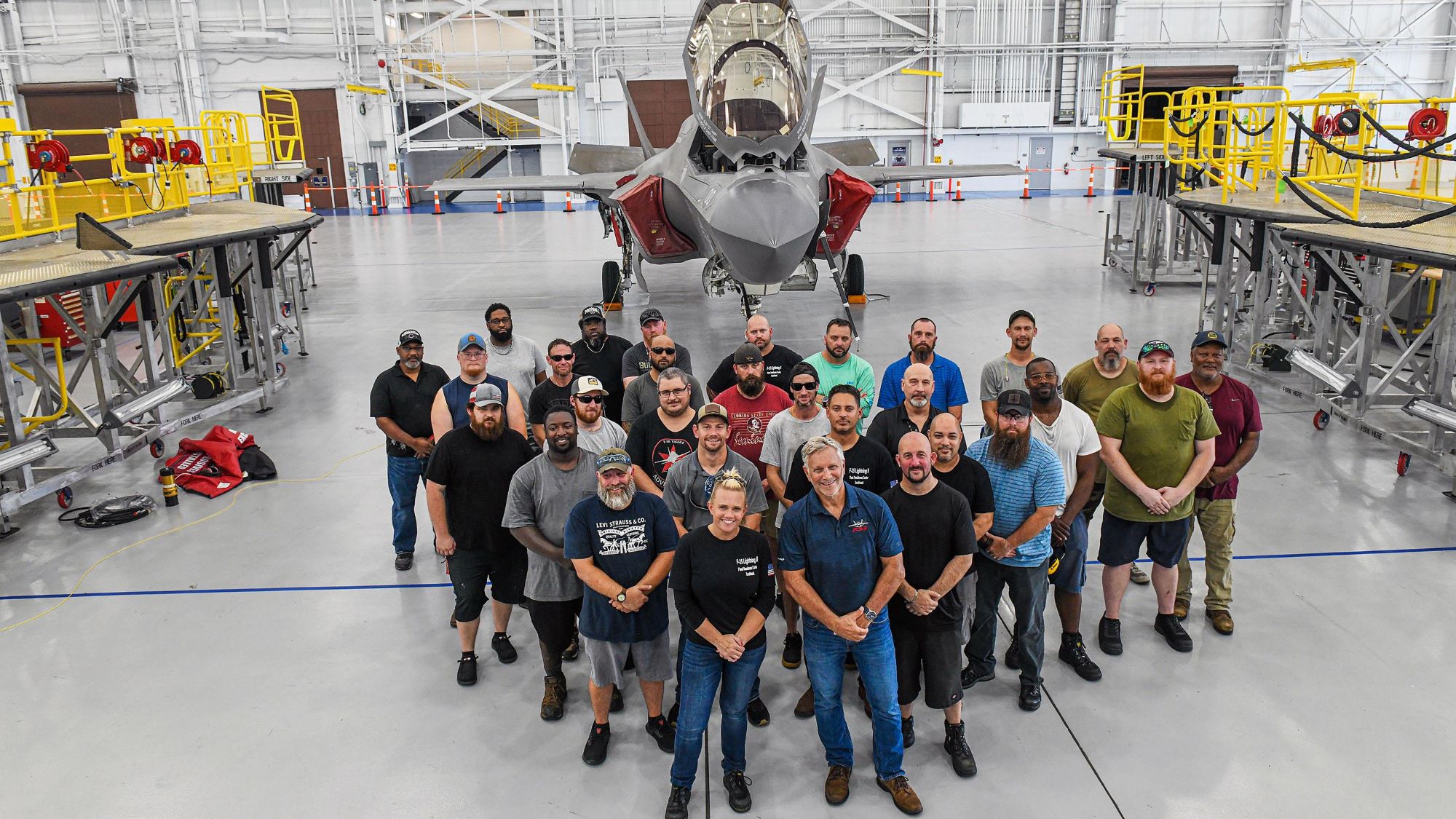
To minimize aircraft downtime, FRCSE artisans optimized the PAIR II process, reducing the standard turnaround time “from 180 days to approximately 60 days, significantly improving the availability of F-35 aircraft for operational service.”
Jets, jets and more jets… 🇬🇧⚡️
The largest number of UK F-35B Lightning jets ever assembled on either of the #RoyalNavy’s new aircraft carriers has been deployed to the Mediterranean for a major allied exercise with @HMSPWLS.#CSG25
Read more: https://t.co/ubeGf3t2Pb pic.twitter.com/xLaFPTMn7d
— Royal Navy (@RoyalNavy) November 6, 2025
FRCSE’s 60 artisans and support staff on the F-35 team have undergone extensive training on its advanced systems, including the Autonomic Logistics Information System (ALIS) and specialized surface coatings. “The FRCSE speed line is recognized within the F-35 community for efficient and cost-effective corrosion mitigation,” said Capt. Mike Windom, commanding officer of FRCSE. “We are proud to extend our expertise to support our Royal Navy allies, ensuring their F-35 aircraft maintain peak mission readiness.”