Long-running mechanical, faulty metallic alloys in the Prop-Rotor Gear Box and lack of synergy between the U.S. Air Force, Navy and Marine Corps have compounded the V-22 Osprey’s troubles.
Faulty parts, inconsistent communication of safety and hazard risks from the Joint Program Office, and poor coordination between the U.S. Marine Corps, Navy and Air Force, despite using the same aircraft type, have contributed to the troubled V-22 Osprey vertical lift tilt-rotor aircraft. Two separate reports by the Government Accountability Office (GAO) and NAVAIR (Naval Air Systems Command), released on Dec. 13, 2025, noted how the Joint Program Office that oversees the V-22 failed to adequately address lingering safety risks and the mounting problems will need at least a decade to fix.
Twenty service members have lost their lives and four aircraft have been destroyed in 12 V-22 Class A mishaps since 2022. Class A accidents are those where the total damage exceeds $2.5 million and/or the aircraft destroyed, with the human casualties involving fatalities or permanent injury.
#NAVAIR has released its comprehensive review of the V-22 Osprey, outlining 32 distinct recommendations for enhanced #Safety and #Readiness. The V-22 Osprey is essential to the @USMC, @USAF and @USNavy. #V22 #Osprey #NAVAIRhttps://t.co/jBresKvMbS pic.twitter.com/uEBWmI6pmF
— NAVAIR (@NAVAIRNews) December 12, 2025
According to NAVAIR, material failure has been found to be a “causal or contributing factor” behind seven of these V-22 accidents, with “human error” in “established airworthiness and flight safety standards” behind the remaining four. NAVAIR, which also manages the CV-22B Osprey used by the Air Force Special Operations Command (AFSOC), began its V-22 Comprehensive Review in September 2023, two months before an Air Force’s Osprey (callsign Gundam 22) crashed off the Japanese coast on Nov. 29.
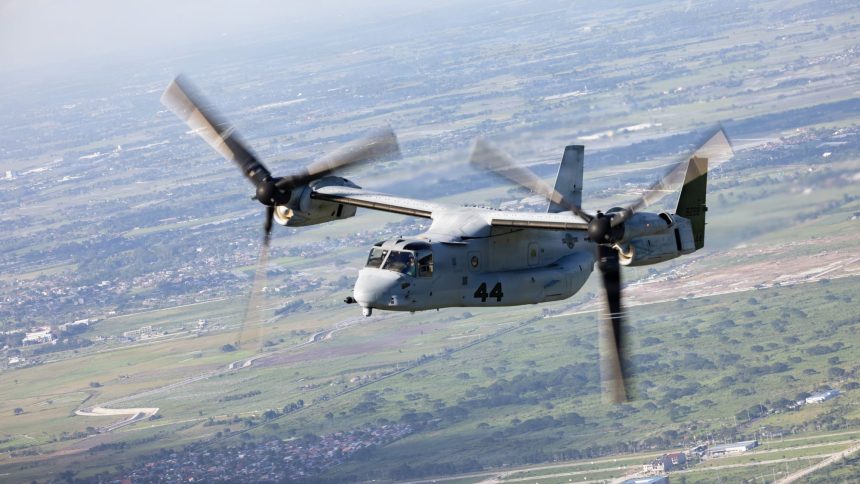
The V-22 also has a low average readiness and availability level in the 2020-2024 timeframe at 50% for the U.S. Navy and AFSOC, and 60% for the U.S. Marine Corps, as per NAVAIR. The Marine Corps operates a fleet of 348 aircraft (MV-22B), the Air Force 52 (CV-22B) and the Navy flies 29 (CMV-22B), according to the GAO. As of early 2025, the program of record for all three services was 464 aircraft.
Material issues and personnel errors
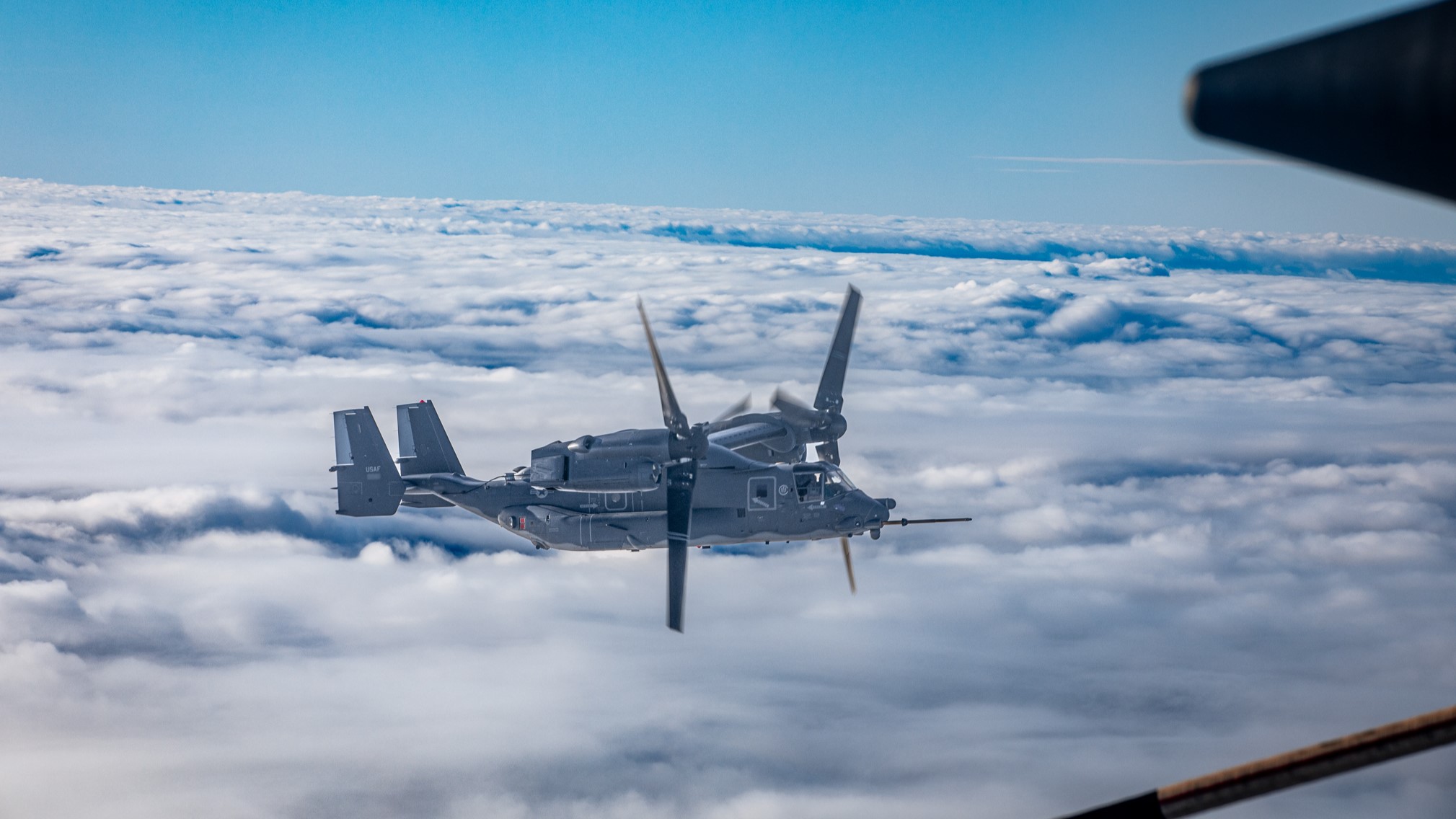
The November 2023 crash killed eight personnel and was owing to a “catastrophic failure” in the high-speed planetary pinion gear of the X-53 Prop Rotor Gear Box (PRGB). This itself was traced back to poor quality control and compromised manufacturing processes by Universal Stainless, the manufacturer of the gear’s alloy.
The issue arising out of the faulty alloy is one of two major common materiel and mechanical problems, the other being a problematic hard clutch engagement (HCE), where the clutch connecting the engine and the PRGB slips and reengages abruptly, according to the GAO.
The sudden transfer of power results in a “degraded drivetrain,” causing torque to either reduce or be lost completely, leading to a “to a loss of controlled flight.” Despite the Joint Program Office conducting a clutch redesign, fault testing and updating the procedural guidance and simulators, it still had an “incomplete understanding of the Input Quill Assembly (IQA) failure mode, additional HCE events continued to occur,” NAVAIR said.
US Navy sailors prepare to launch three CMV-22B Ospreys from aircraft carrier USS Theodore Roosevelt (CVN-71) on May 9. USS Theodore Roosevelt is conducting carrier qualifications in Pacific Ocean ahead of an upcoming deployment workup cycle. pic.twitter.com/pLNgNitAos
— Ryan Chan 陳家翹 (@ryankakiuchan) May 10, 2023
Regarding the X-53 steel alloy metal impurities (inclusions), NAVAIR noted 22 instances since 2006 where inclusions in the drivetrain gears caused cracks in the gears. Among these, the cracked gears “catastrophically failed” in three instances, and in two caused “additional collateral damage” to the PRGB. The program office formally accepted the overall X-53 inclusion risk in March 2024, and introduced “procedural changes, more conservative landing criteria, and a PRGB redesign effort.”
NAVAIR thus faulted the V-22 Program Office for not being prompt in reporting safety issues to the users. “These examples underscore the importance of a ‘closed loop’ safety system where the Program Office continuously identifies and assesses risks, communicates the risk to users, implements interim mitigations, and persistently drives the development and deployment of both material and non-material solutions to further reduce or eliminate those risks,” stated the command.
NAVAIR recommends the services to continue to assess accelerated implementation and fielding of proprotor gearbox material fixes, including retrofitting the PRGB with X-53 “triple melt gears” by 2033 and introducing a gear box vibration monitoring system.
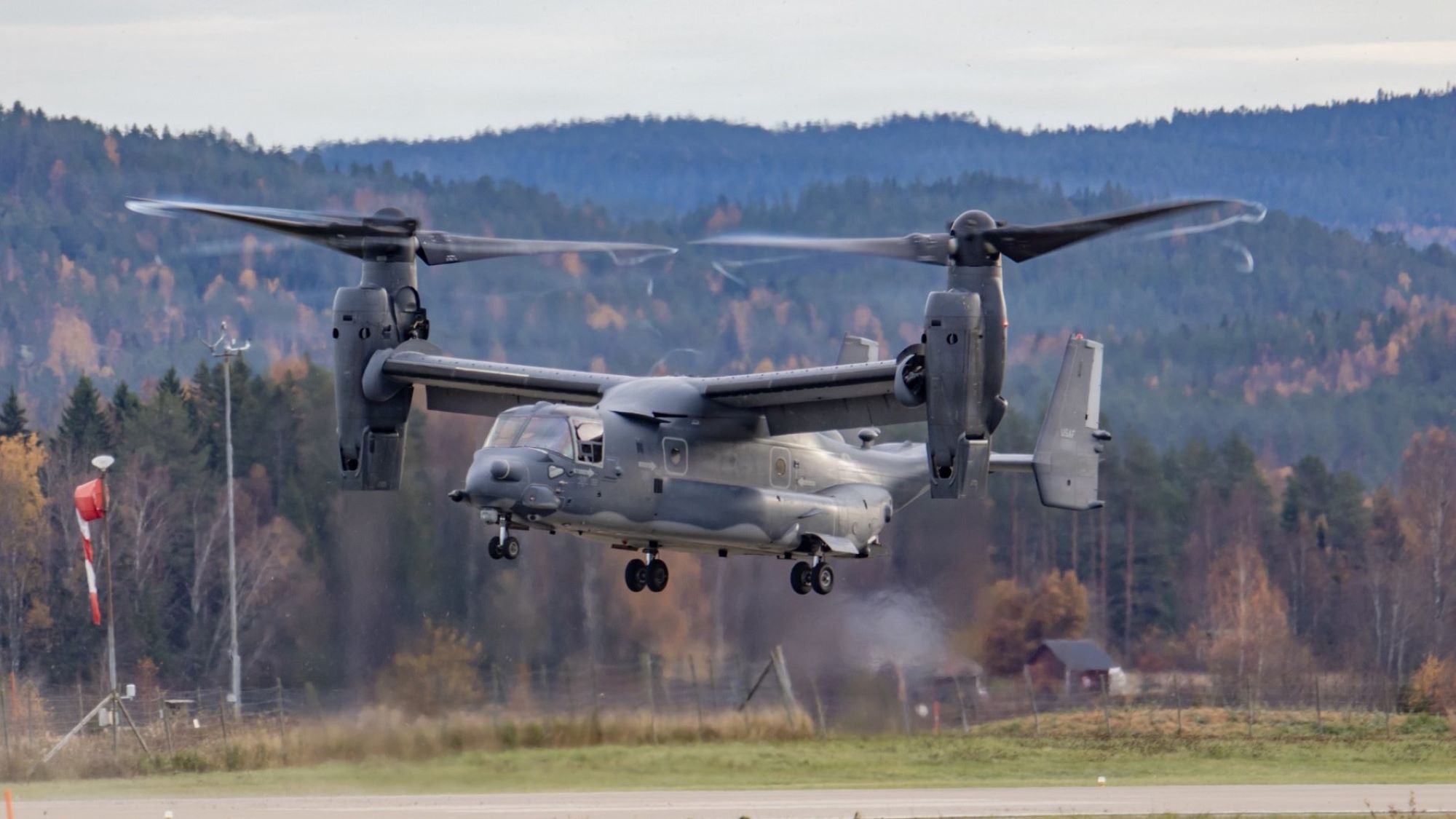
NAVAIR also found “procedural non-compliance by aircrew and maintenance personnel” as a “consistent causal or contributing factor in both flight and ground mishaps,” highlighting problems about maintenance standards. “During a NAVAIR directed review of USN, USMC, and AFSOC V-22 logbooks in JAN-MAR 2024, more than 40 life limited safety critical components across the V-22 fleet were found in excess of their defined airworthiness life limits.”
Same aircraft type, yet different and separate procedures
Despite the U.S. Marine Corps, Air Force and Navy operating the same aircraft type, the Joint Program Office cannot uniformly implement safety recommendations due to each branch’s “differences in service mission sets, priorities, governance and risk tolerance,” NAVAIR said.
These differences run across their implementation authorities, safety policies and reporting procedures, tracking spares/components, and maintenance log protocols. “[…] unrestricted access to cross-service safety data is not universal. Significant discrepancies and differences in critical aircrew and maintenance publications and procedures exist across the USN, USMC, and USAF,” NAVAIR said.
US Navy CMV-22B Ospreys are secured in hangar at Naval Air Station North Island, California, Aug. 19, in preparation for expected inclement weather. pic.twitter.com/jN3ODdMTN5
— Ryan Chan 陳家翹 (@ryankakiuchan) August 19, 2023
However, scope exists to improve V-22 service on the basis of “broad cross-platform applicability” through “shared joint” activities like “maintenance planning, work sequencing, maintenance requirement cards, inspection protocols.” The GAO’s findings meanwhile found that Marine Corps and Air Force variants had the highest rates of the most serious accidents in 2023 and 2024, compared with the average serious accident rate for its V-22 variants for the previous eight years.
Similar to the NAVAIR report, GAO also noted that V-22 program officials were inconsistent in sharing safety data, aircraft information, updated emergency procedures, or common maintenance data. The GAO report highlighted that the services themselves did not regularly exchange information on the operations and maintenance of the Osprey. “Marine Corps, Air Force and Navy Osprey aircrews have not met on a routine basis to review aircraft knowledge and service-specific emergency procedures to promote the safe operation of the aircraft,” reads the report.
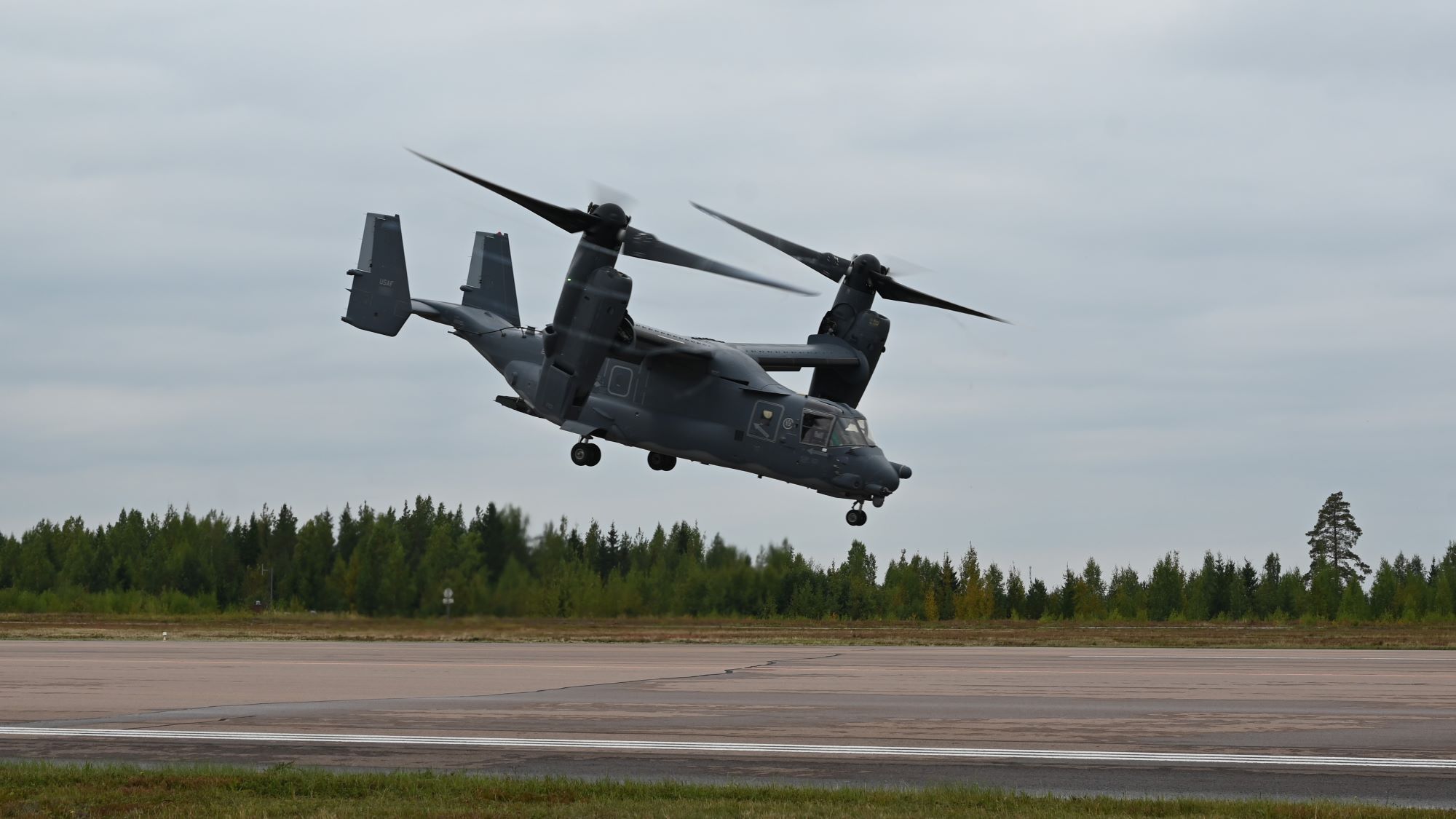
An anonymous Marine officer told the GAO that they have to rely on “underground” information sharing with other services. An Air Force officer further told the GAO: “We must rely on friends in other units to give us some insights… Accident investigations are a can of worms, lawyers can get involved, and delays on decisions and data can occur.” A Navy officer said information requested from the Air Force has to go through the Naval Safety Command and Air Force Safety Center.