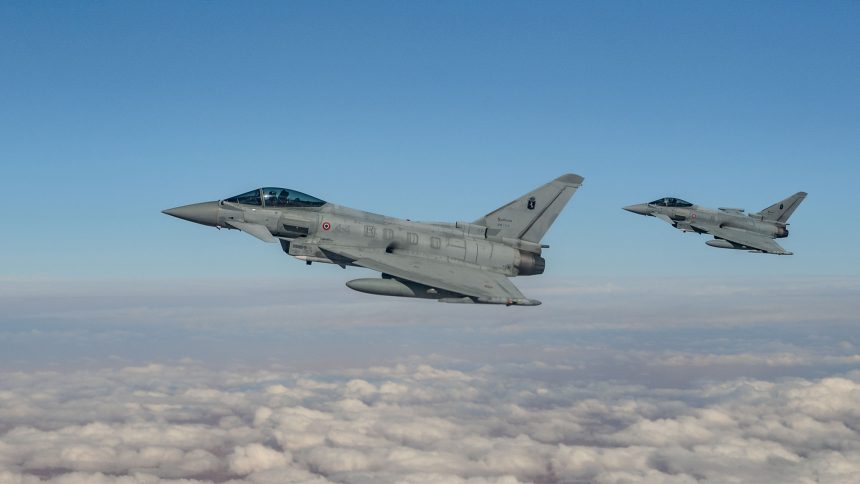
The Bangladesh Air Force has signed a letter of intent with Italian manufacturer Leonardo for the future provision of Eurofighter Typhoon multirole fighter aircraft.
In another step towards implementing the plans set out in the Bangladesh military’s Forces Goal 2030 modernisation program, the letter of intent (LOI) was signed at the headquarters of the Bangladesh Air Force (BAF) on Dec. 9, 2025, in the presence of Chief of Air Staff Air Chief Marshal Hasan Mahmood Khan, Ambassador of Italy to Bangladesh H.E. Antonio Alessandro, and other representatives from both the Bangladesh armed forces and from Italy.
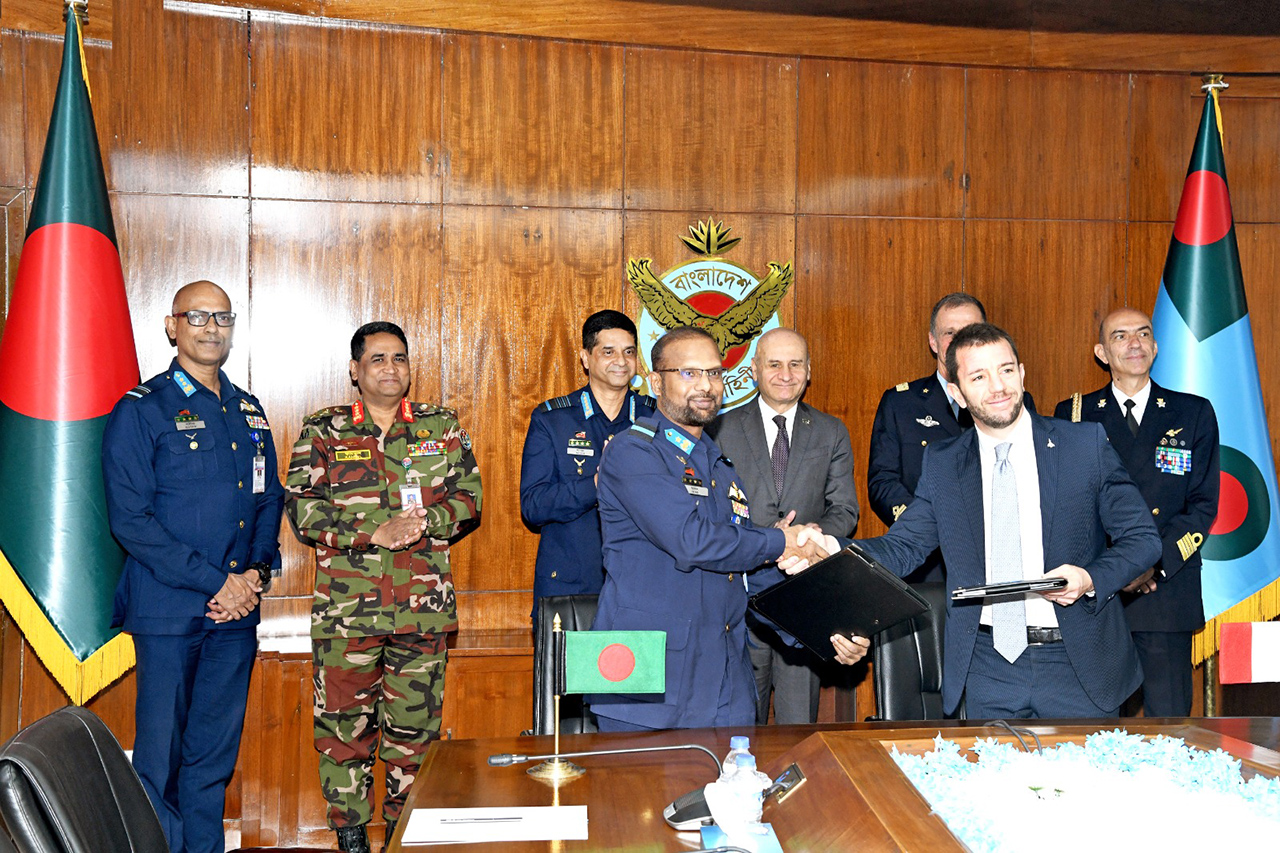
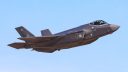
Leonardo, who comprise 21% of the Eurofighter consortium, is acting as the lead in this procurement, and any resulting order will almost certainly see the Typhoon aircraft undergo final assembly in Turin, Italy. Representatives of the BAF visited Turin earlier in 2025 to test fly and evaluate the Typhoon, using the ISPA 6 (Instrumented Series Production Aircraft) airframe fitted with the Captor-E active electronically scanned array (AESA) radar and P3Eb (Phase 3 Enhancements Package b) upgrades.
#Exclusive
Bangladesh Air Force has started evaluating Eurofighter Typhoon combat aircraft. Bangladesh Air Force chief and a senior BAF pilot conducted a flight on Eurofighter during the recent visit to Italy. COAS also evaluated various UAV, helicopters and C-130 facility. pic.twitter.com/ptYdhBnDr3
— Defense Technology of Bangladesh-DTB (@DefenseDtb) May 19, 2025
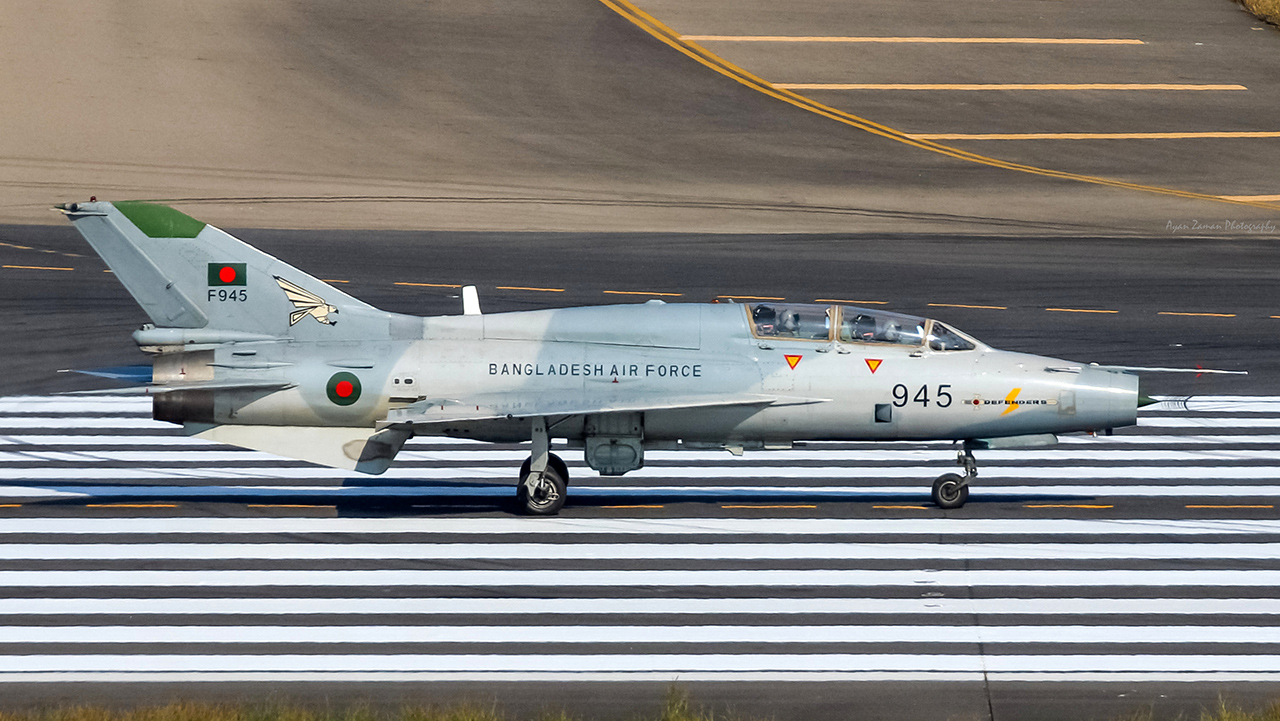
Though the exact number of aircraft to be ordered will likely not be fully finalised until a production order is signed, previous announcements have alluded to a desire for between 10 and 16 Typhoon (or equivalent Western type) aircraft. France had made representations on behalf of Dassault’s Rafale, though the Typhoon has long been apparent as the front-runner. The aircraft will form part of the BAF’s replacement for its Chengdu J-7s, a MiG-21 derivative, and its MiG-29s.
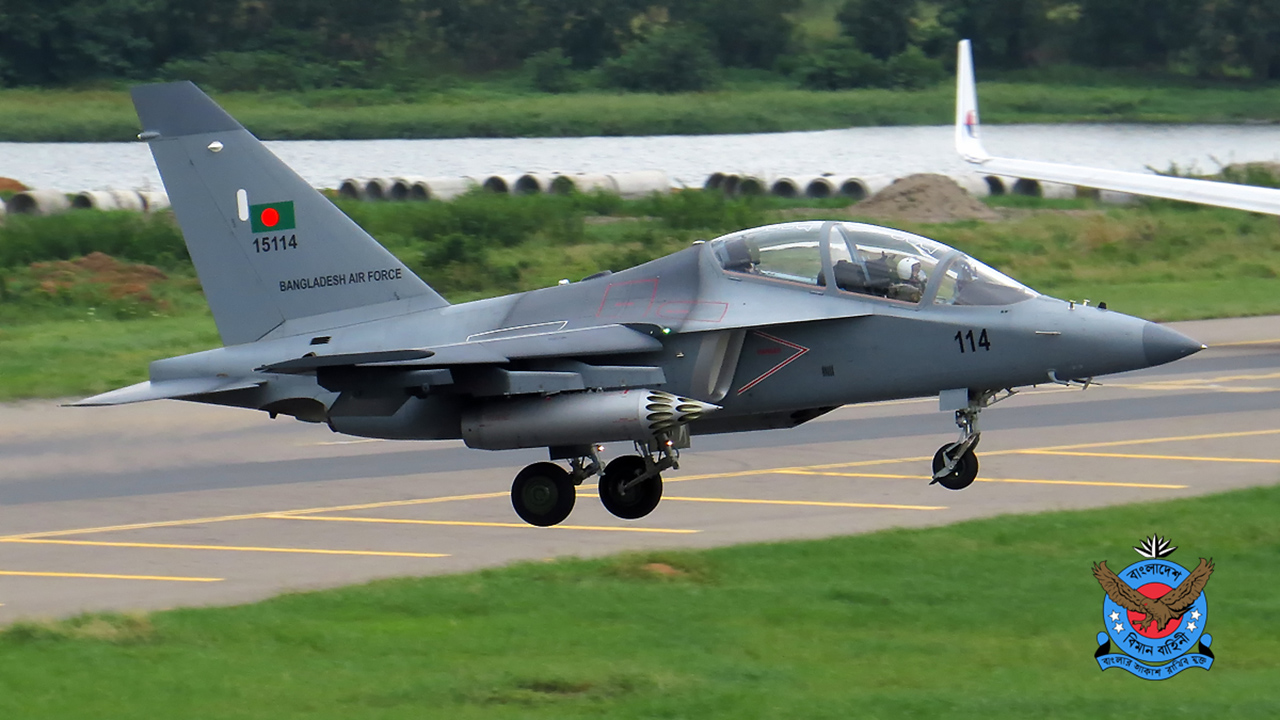
While the BAF signed for and subsequently took delivery of Russian Yak-130 jet trainers in the 2010s, increasing logistical issues and the onset of sanctions against Russia due to the ongoing war in Ukraine is thought to have dissuaded the force from procuring more Russian types. Bangladesh remains friendly with China, and they are tipped to also buy Chengdu J-10Cs which would serve alongside the Typhoons. There are additionally rumors regarding a purchase of JF-17 Thunder fighters from Pakistan.
With or without the JF-17s, the unique combination of Eurofighter Typhoons and Chengdu J-10Cs would be a potent force and a vast improvement over the BAF’s current combat capabilities.
Upon entry to service, assuming it takes place after the first Turkish delivery, Bangladesh would become the 11th operator of the Typhoon worldwide, and the first outside of Europe and the Middle East. The region’s market for European fighter aircraft has previously been cornered by the Dassault Rafale, ordered by Indonesia and operated by India, and the Saab Gripen, operated by Thailand.
The BAF’s aircraft will likely be of Tranche 4 standard, with the first deliveries of Tranche 5 aircraft to any customer not expected until the early 2030s. Any finalised contract will likely also include related weapons for use by the BAF’s Typhoons, as they will not be directly compatible with the nation’s existing Russian and Chinese-designed missile stocks.
Leonardo in Bangladesh
The Typhoon would become the latest aircraft in Bangladesh’s inventory supported by defence industry giant Leonardo. The country currently operates AW109, AW119, and AW139 helicopters in training, search and rescue, and utility roles.
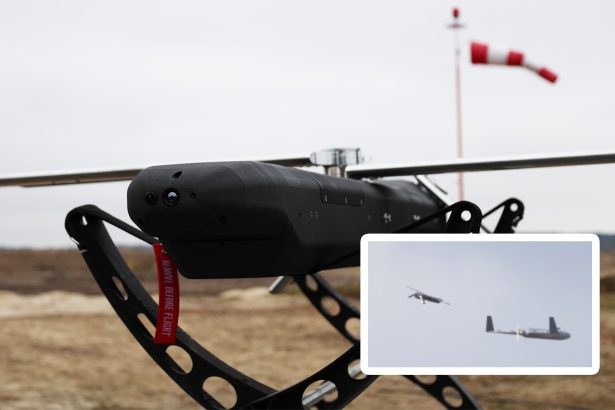
The Bangladesh Navy has officially inducted two Leonardo AW109 naval utility helicopters and two Schiebel S-100 CAMCOPTER unmanned aerial vehicle systems, marking yet another milestone in its long-term modernisation drive. The announcement was made by the Chief of Naval Staff,…
— BDMilitary (@BDMILITARY) November 29, 2025
Additionally, as part of its drive to modernise, Bangladesh has commissioned a number of Falco unmanned aerial vehicles. The Falco was originally developed by Selex ES, which has now been absorbed into the wider Leonardo brand. The drones serve as an asset in Bangladesh’s committment to United Nations peacekeeping obligations – the nation is currently the third largest contributor by number of personnel to UN peacekeeping missions – and in addition to providing intelligence, surveillance, and reconnaissance (ISR) they can also be equipped with Turkish-made 70 mm CIRIT laser-guided missiles.
#Exclusive
Bangladesh Air Force has integrated Turkish @roketsan cirit 70mm laser guided missiles in Selex Falco Astore UAV systems. @TyrannosurusRex pic.twitter.com/NZvl5UbgJI
— Defense Technology of Bangladesh-DTB (@DefenseDtb) August 21, 2023
In 2019, Bangladesh ordered Leonardo’s KRONOS LAND air surveillance radar. Coincidentally, the technology used in the KRONOS family is related to that featured in the CAPTOR-E or E-SCAN AESA radar for the Typhoon. Leonardo Seaspray 5000E maritime surveillance radars have also been procured for the Bangladesh Navy’s Dornier Do 228 patrol aircraft.
Forces Goal 2030 included a future requirement for a long-range maritime surveillance aircraft, which Leonardo could in future offer with its ATR 72MP product, or even a future Bombardier Global-based platform. Bangladesh oversees an exclusive economic zone (EEZ) in the Bay of Bengal of over 118,000 square kilometres, and maritime piracy in the region has been described as a ‘ticking time bomb’.