An investigation is underway after the Île Longue naval base, home to France’s four ballistic missile submarines, detected an incursion by small drones on Dec. 4, 2025.
French news organisations Le Monde and Agence France-Presse (AFP) have said an investigation has been launched by authorities following the incursion into highly restricted and sensitive airspace. Commander Guillaume Le Rasle of the French Navy told AFP that the sensitive infrastructure at the base “was not threatened”. Though he said it was too early to determine the origin of the drones, he believes the intent was to “alarm the public”.
The drones were detected around 7:30pm on Thursday, Dec. 4. Security forces at Île Longue engaged the drones using electronic counter-UAS (C-UAS) jamming technology – previous reports had suggested soldiers had possibly used firearms, but this was later denied. None are believed to have been successfully downed. Primary security at the base is performed by the maritime branch of the French National Gendarmerie.
Frederic Teillet, a French public prosecutor for the region of Brittany, told AFP that no link had yet been established tying the drones to foreign interference. He was unable to confirm the exact number or type of drones, though the first reports from the scene put the number detected at five. Additionally, investigations will consider whether the objects detected were in fact drones.
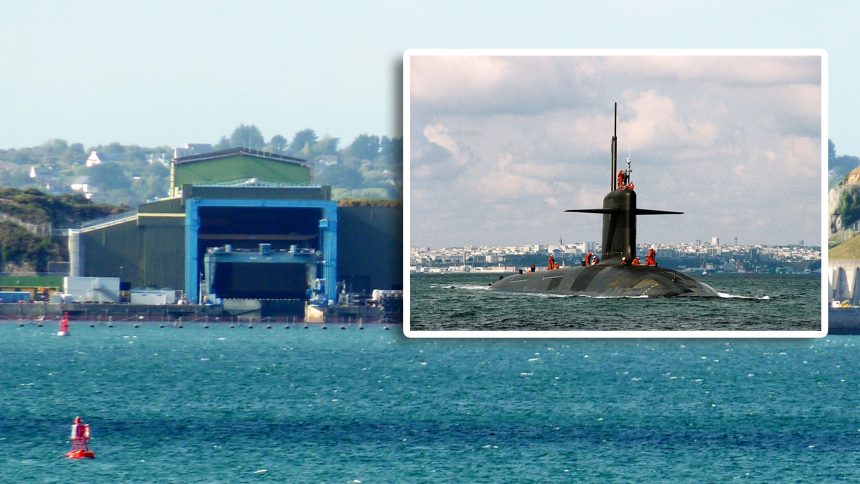
Île Longue, located in northwestern France – just across the water from the port of Brest – is a peninsula used in its entirety by the naval base of the same name. As the base was constructed, the peninsula actually grew in size by around 0.3 square kilometres using reclaimed land. It is the homeport for all four of France’s Triomphant class ballistic missile submarines (SSBN), which can each carry as many as 16 M51 submarine launched ballistic missiles (SLBM) armed with multiple thermonuclear warheads. Île Longue includes storage facilities for these missiles as well as the warheads they are designed to carry, making the peninsula a highly defendable self-contained fortress.
An M51 SLBM prepared to be loaded onto a French Triomphant-class (S-616) SLBM
don’t drop it guys. pic.twitter.com/XHyW2ePJbS
— Tom Antonov (@Tom_Antonov) November 22, 2024
As at least one French SSBN is always maintained at sea with a war-ready load of missiles and warheads, the overflights by these drones did not pose a direct threat to the ongoing nuclear deterrent, however as we have seen in the Russia-Ukraine conflict even small drones with explosive charges can be used to devastating effect against fixed infrastructure or stationary vehicles. This has made protecting sensitive areas, like this naval base, from drone incursions more important than ever. It is impossible to know when these types of drones would stop acting as simply a nuisance and instead become a direct, deadly threat.
Drone Threat
Countries across Europe have reported an increasing number of detected incursions into sensitive or otherwise restricted airspace, like over airports, over the past year. Most notably, Polish airspace was breached by Russian drones in September, a number of which were shot down by fighter aircraft. After incursions over Copenhagen Airport, Aalborg Airport, and Billund Airport later in the same month, Danish authorities said they believed a ‘professional actor’ was to blame.
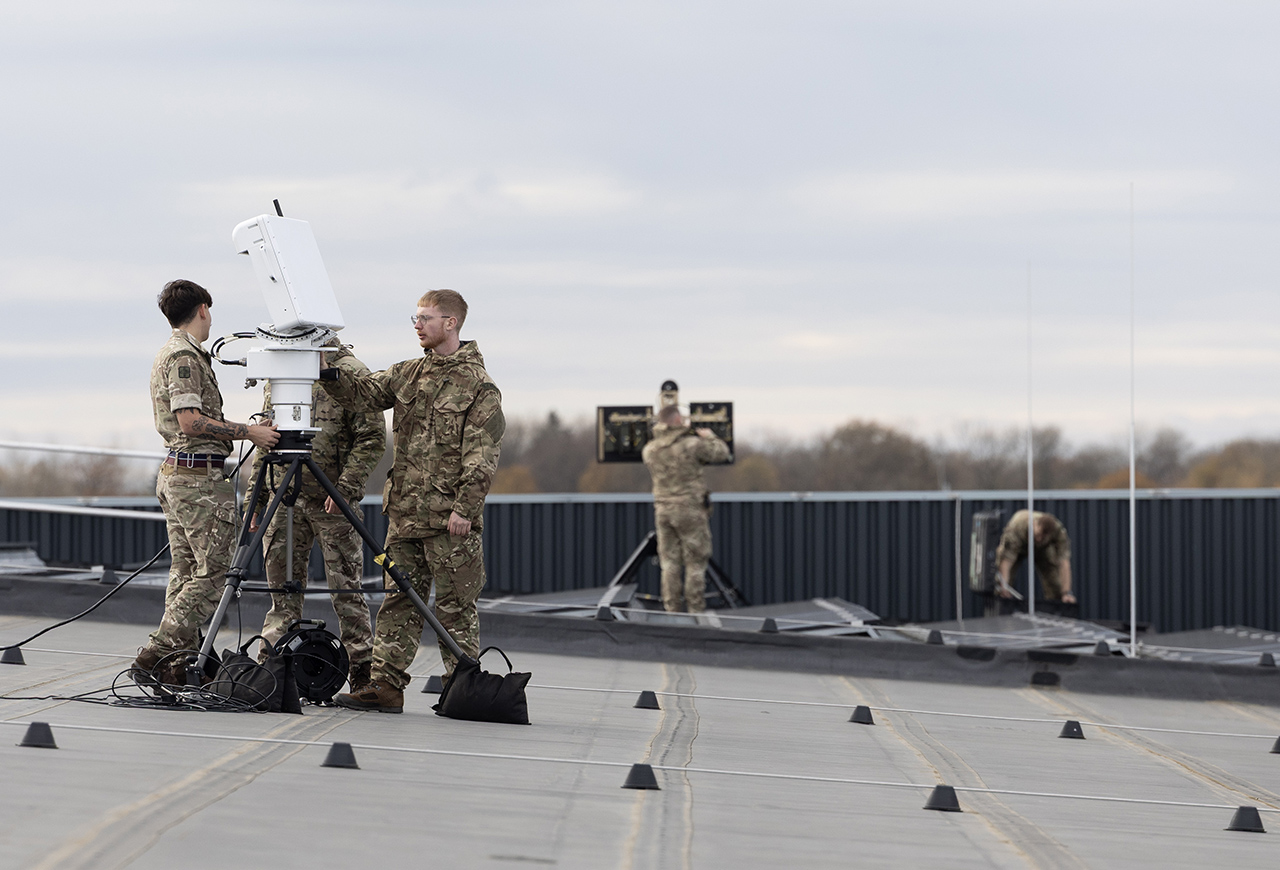
Last year, we reported extensively on reported sightings of unauthorised UAVs which were plaguing U.S. military sites in the UK. At the time, it was suggested that the harassment by drones could have been linked to a decision to allow long range missile strikes by Ukraine deep into Russian territory. F-15E Strike Eagles from RAF Lakenheath were launched, alongside a UK police helicopter and some Royal Air Force assets, in an attempt to surveil the suspected drones and direct security services on the ground towards possible operators.
Despite the huge response, over the following days even more U.S. military sites were reporting drone sightings and special airspace restrictions were soon introduced to forbid unauthorised UAV flights within certain radii of these installations. In October 2025, just shy of a year after these occurrences, Secretary of State for Defence John Healey announced that new powers would be introduced granting military forces in the UK to engage drones that threatened the security of restricted sites.
From the Sea?
Though not all reported drone incursions over Europe have been over coastal locations – in fact France itself has noted potential sightings over inland sites previously – the fact many have been near the sea, and, particularly, near to busy shipping routes, has raised the question whether civilian vessels may be being used as clandestine drone motherships.
French forces boarded the Boracay, a tanker travelling from St Petersburg, Russia, to Vadinar, India as it rounded the Brittany coast – near Île Longue – on Sept. 28 to investigate suspicions that it was involved in launching or otherwise operating the drones which breached the airspace of Danish airports just under a week earlier. Formerly known as the Pushpa, the ship has long been listed as part of Russia’s sanction-evading ‘shadow fleet’. No confirmation has been made by French authorities as to whether equipment that could be linked to drone operations was found on board the ship, though its captain is due to face a trial in a French court in February 2026 for failing to cooperate with authorities.
Taking a stand against increasing Russian provocation of NATO…
🇫🇷@MarineNationale have stopped and boarded MV Boracay, a 🇷🇺Russian ‘shadow feet’ oil tanker off coast of St Nazaire.
At least two of the crew have been detained by the French – the ship is suspected of launching… pic.twitter.com/Wi0lN6jf88
— Navy Lookout (@NavyLookout) October 2, 2025
Brest, and the Île Longue base, sit just to the east of the Ouessant (or Off Ushant) traffic separation scheme (TSS), which handles the majority of shipping traffic heading into or out of the English Channel’s western edge. The English Channel is the busiest shipping lane in the world, with over 500 daily commercial shipping transits. Hiding among these – essentially in plain sight – would be the perfect cover for launching secret drone operations. By the time the necessary assets could be in place to identify the possible origin site of any drones, the ship they launched from could have hidden all related equipment and traveled miles to be in a completely different location.
Using Sentinel-1 radar imagery to make out the shapes of our changing seaborne energy systemhttps://t.co/MUrBix9ErX
e.g. the busy English Channel, where shipping lanes are clearly visible. pic.twitter.com/p8OQgNilcc
— shaun.trennery.com (@shauntrennery) March 7, 2024
Policing such activities, then, becomes an international endeavor – much like the French seizure of a ship related to suspected actions in Denmark.
Exact findings of investigations launched into suspected drone incursions are often only released to the public in redacted form – security forces, understandably, not wanting to reveal the tactics, equipment, or rules of engagement used during C-UAS operations or the intelligence capabilities that inform them or the investigations after the fact. However, with these occurrences becoming more and more frequent it is becoming more difficult for governments to justify their usual responses of instituting new, unspecified security measures. Instead, many demand that firm, public action be taken against invading drones as well as those who operate them.
Update (Dec. 6, 01:11 UTC): An earlier version of this article was titled “French Navy ‘Opens Fire’ at Five Drones Spotted Over Submarine Base”, and contained information based on reports available at the time of writing. Further information has since been released and the article has been updated to reflect newly available details.