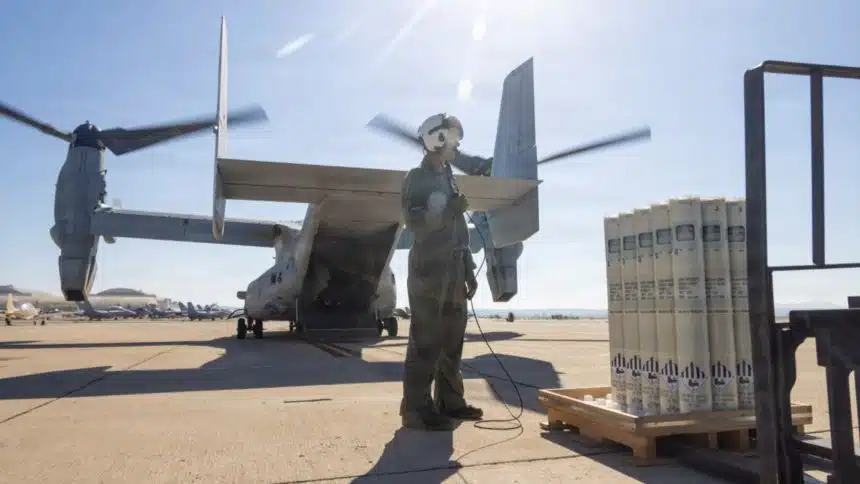
The test validated the MV-22B’s as an alternative platform to the P-3C Orion for the Navy’s Sonobuoy Quality Assurance Program, while laying the groundwork for expanded tactical employment of the Osprey.
Building upon an ongoing effort to repurpose the MV-22B Osprey for Anti-Submarine Warfare (ASW) by rapidly distributing sonobuoys over water, the U.S. Navy has conducted its first production lot acceptance test of new sonobuoys using the tilt-rotor aircraft. The Sonobuoy Quality Assurance Program (SQAP) test took place on Aug. 19, 2026, off the coast of San Clemente Island, California, and was announced by the Anti-Submarine Warfare Systems Program Office (PMA-264) on Sep. 22, 2026.
The demonstration marked a departure from the use of the Air Test and Evaluation Squadron 30’s (VX-30) P-3C Orions, with the Osprey being used both as a substitute SQAP platform and helping to reduce the testing backlog. The test validated “the tiltrotor aircraft as an alternative platform for the Navy’s SQAP, boosting operational readiness and laying the groundwork for expanded tactical employment across the fleet,” the PMA-264 said in the release.
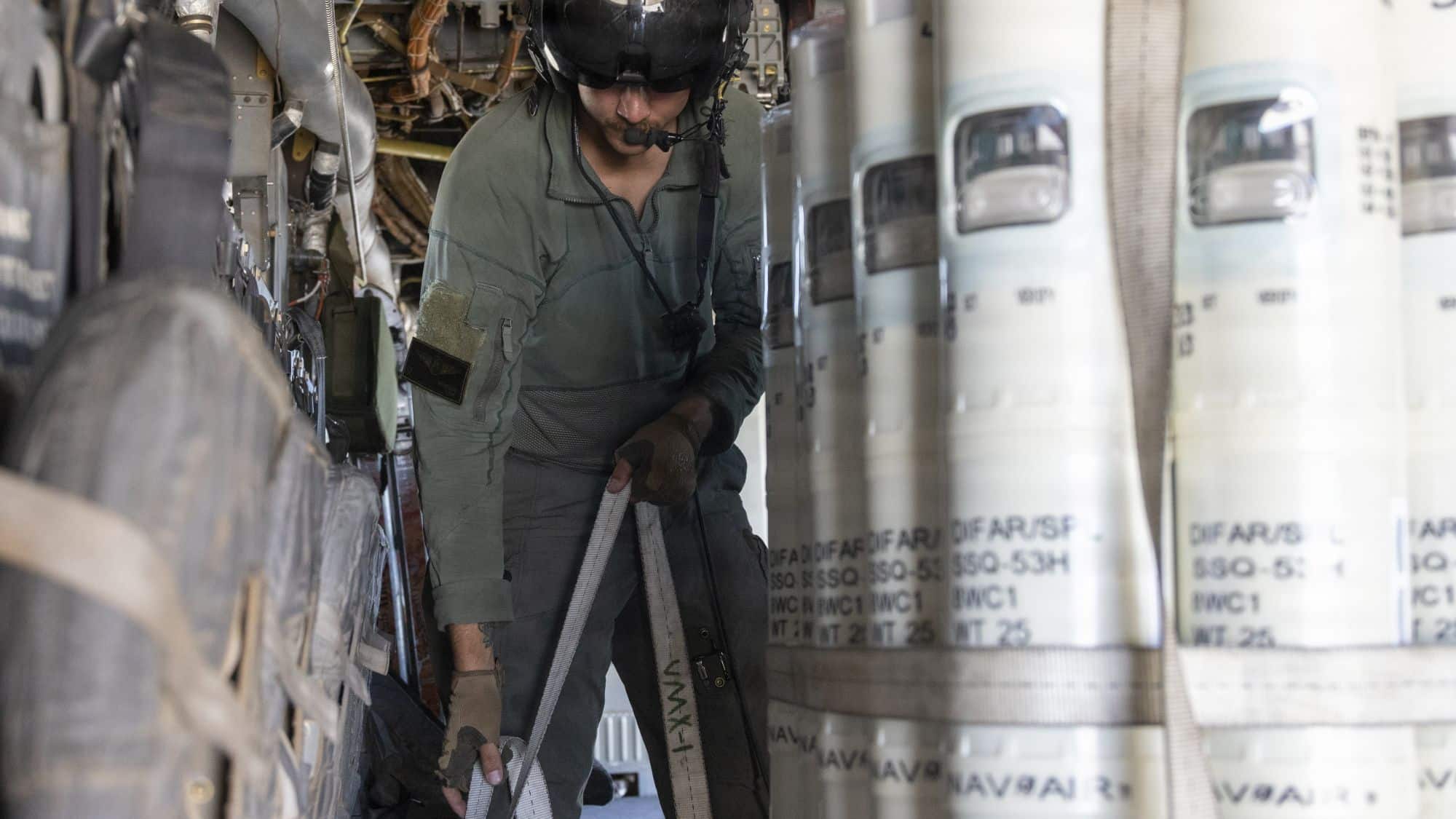
Images from the Aug. 19 test, posted on the DVIDS network on Sept. 2, showed sonobuoys being loaded onto a MV-22B from the Marine Operational Test and Evaluation Squadron 1 (VMX-1) at the Marine Corps Air Station (MCAS) Miramar, California.
Consistent with the Osprey’s emerging ASW role
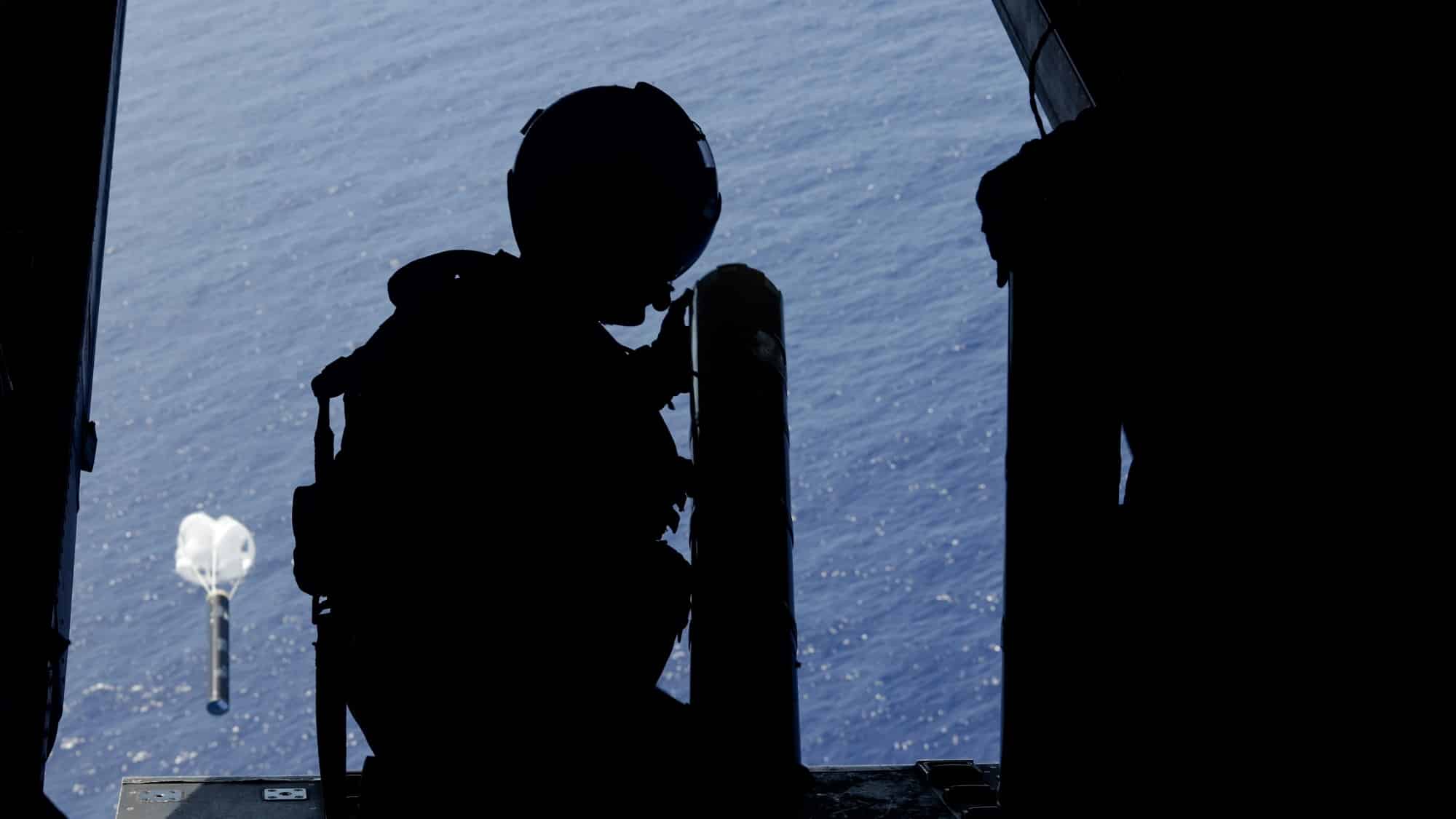
Both the caption and the release mentioned that the demonstration tested hand-launching sonobuoys by opening the Osprey’s rear ramp. The release also provided details about the mechanics of that manual method and how the crew adopted suitable piloting procedures and flight profiles.
It must be noted that sonobuoys have already been hand-launched from the MV-22B Osprey during tests that took place last year, as The Aviationist had reported. Ospreys from the Marine Medium Tiltrotor Squadron 162 (VMM-162) and VMM-265 had seen crews release A-size sonobuoys during the Atlantic Alliance 2025 exercise in July and a dedicated ASW test with crewed P-8A Poseidon and MH-60R Seahawks in August.
The significance of the August 2026 event, therefore, was not the first deployment of sonobuoys from an Osprey, but the first time the aircraft was used for the Navy’s SQAP lot acceptance testing. In its press release, PMA-264 said the first SQAP using the Osprey also supports the broader effort to utilize the tiltrotor’s speed for the ASW mission by generating performance data and laying down varied operational procedures.
“In addition to meeting test criteria, the mission also provided operational experience that will help VMX-1 refine tactics, techniques, and procedures for future tiltrotor anti-submarine warfare support,” said the press release. “PMA-264 and PMA-275 will analyze acoustic and deployment data from the flights to refine procedures for future quality assurance missions and joint fleet operations.”
First Sonobuoy Lot Acceptance test using the Osprey
PMA-264 said that the SQAP involves subjecting “random production samples to over-water testing to evaluate reliability and acoustic performance before delivering vendor inventory to operational squadrons.” PMA-264 Program Manager Capt. Greg Hinkle explained the goal is to ensure that “the sonobuoys delivered to the fleet perform exactly as expected.”
The U.S. Navy operates a range of sonobuoys, some of which are: the AN/SSQ-125 Multi-Static Active Coherent (MAC) sonobuoys; the AN/SSQ-36 Bathythermal sonobuoys; the passive AN/SSQ-53G Directional Frequency Analysis and Recording (DIFAR) sonobuoys; and the active AN/SSQ-62F Directional Command Activated Sonobuoy System (DICASS). Images show SSQ-53H written on the sonobuoys being loaded onto the Marine Osprey.
Historically, the SQAP has relied on VX-30’s P-3C Orions, which “performs quality assurance drops using automated launchers.” The August test “proved the MV-22B Osprey can serve as a dependable substitute if primary test platforms are unavailable, helping prevent testing backlogs and keeping delivery schedules on track.”
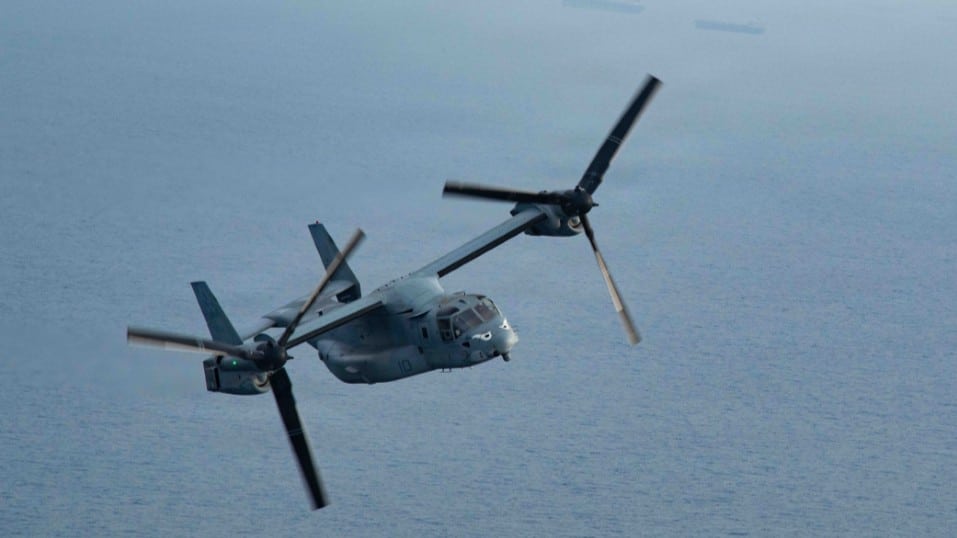
Hinkle said utilizing the MV-22 for a role like conducting sonobuoy acceptance trials helps “reinforce our supply chain and ensures frontline aircrews have the mission-ready stores they need to detect and track undersea threats.”
The official information does not specify how many trials took place and how many Ospreys were employed, but the framing suggests a single event and Osprey may have been used. One image appears to show a batch of 15 sonobuoys prepared to be loaded on the MV-22B through the rear ramp.
Hand-launching sonobuoys
Unlike the P-3, which uses automated launch containers triggered from the cockpit, the MV-22B required aircrew to manually launch the buoys from the open rear cargo ramp. Crew chiefs removed container caps and inverted launch tubes to release the sonobuoys into the slipstream.
Because manual sonobuoy deployments are slower – creating longer gaps between drops compared to automated launchers – VMX-1 aircrew “adjusted by reducing flight speed, matching the precise target pattern and spacing needed for acoustic testing,” the release said.
The hand-launch process also requires tight coordination between the pilots and crew chiefs. “The pilot holds steady flight parameters while the co-pilot manages navigation, timing, and communications, queuing crew chiefs in the cargo bay to program and release the buoys on schedule,” the release explained.
For the first time @USMC #MV22B‘s deploy a screen of SSQ-53G sonobuoys. MAG-39 has been working with @USNavy HSM Weapons School Pacific to develop tactics emphasizing the speed, range, and expeditionary nature of MV-22’s to support the Navy in their anti-submarine warfare mission pic.twitter.com/Yfk9YMiD5n
— 3rd Marine Aircraft Wing (@3rdmaw) February 25, 2022
V-22 pilot and VMX-1 advanced projects lead Lt. Col. Brandon Pope said the event served as “an invaluable opportunity for our pilots and crew chiefs to build proficiency” for the intricate synergy between the load crew and the pilots during cargo release from the rear ramp.
Pope added: “Hand-launching from an open ramp requires split-second coordination; the crew must be deliberate with timing, airspeed control, and internal communication. This test demonstrated how the V-22’s range, speed, and versatility can support broader maritime domain awareness and distributed fleet operations.”