The company says the first pod was assembled using production systems, as Viper Shield orders grow to 233 units across eight allied nations.
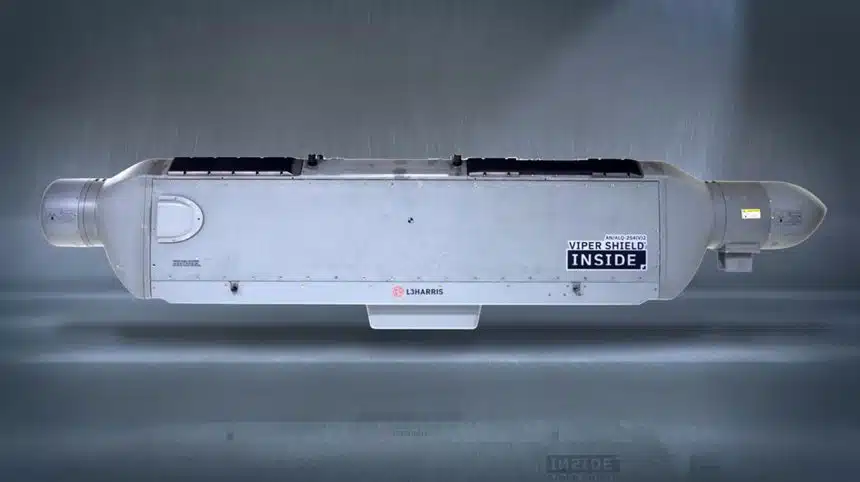
According to a statement released on Sept. 3, 2026, L3Harris Technologies has assembled its first podded Viper Shield electronic warfare system using production-standard hardware. This is a significant step forward for the external configuration first unveiled in 2025. The company has also completed production of the first 35 Viper Shield systems and is ramping toward full-rate production for 233 units currently on order.
The company describes Viper Shield as the only F-16 electronic warfare system currently in production with orders from eight allied nations.
Viper Shield detects, identifies and counters electronic threats by providing digital armor around the aircraft. The technology can support the pilot as an integrated internal system or as an external pod. L3Harris also assembled its first pod leveraging production systems.
Viper Shield is the only F-16 electronic warfare system currently in production with orders from eight allied nations. L3Harris is ramping up to full-rate production for the 233 systems currently on order. Additional partner nations that select Viper Shield will benefit from an active production line with quality assurance and a supply chain capable of meeting the demands of large-scale manufacturing.
Developed by L3Harris in partnership with Lockheed Martin and the U.S. Air Force, Viper Shield can be installed internally on new-build F-16 Block 70/72 aircraft or carried externally in podded form, allowing operators of earlier F-16 variants to access the same core electronic warfare capability without requiring the same level of internal integration.
The pod shown in L3Harris renderings bears a significant resemblance to the Northrop Grumman’s AN/ALQ-131(V) ECM (Electronic Countermeasure) pod already in use on the global F-16 fleet, but also on other platforms such as the A-10 and F-15, as well as F-4 and F-111.

When we reported on the system in September 2025, L3Harris had unveiled the podded version of the AN/ALQ-254(V)1 Viper Shield system, saying seven international partners had selected the suite for 168 F-16s. Since then, the program has moved deeper into production: the customer base has grown to eight allied nations, with the orders increased to 233 systems. The first 35 units have been completed along with the first external pod.
Interestingly, according to the manufacturer, around $1 billion in shared investment by foreign F-16 operators has already funded development, laboratory testing, flight testing and current production, potentially reducing the cost of any future U.S. Air Force or Air National Guard entry into the program.
“The $1 billion shared investment by countries operating F-16s means the U.S. Air Force and National Guard could benefit from joining the program,” said Chris Aebli, President, Communications & Spectrum Dominance at L3Harris. “The foreign investment is funding development, lab testing, flight testing and current production of Viper Shield systems, which presents the United States with a savings opportunity to avoid upfront costs.”
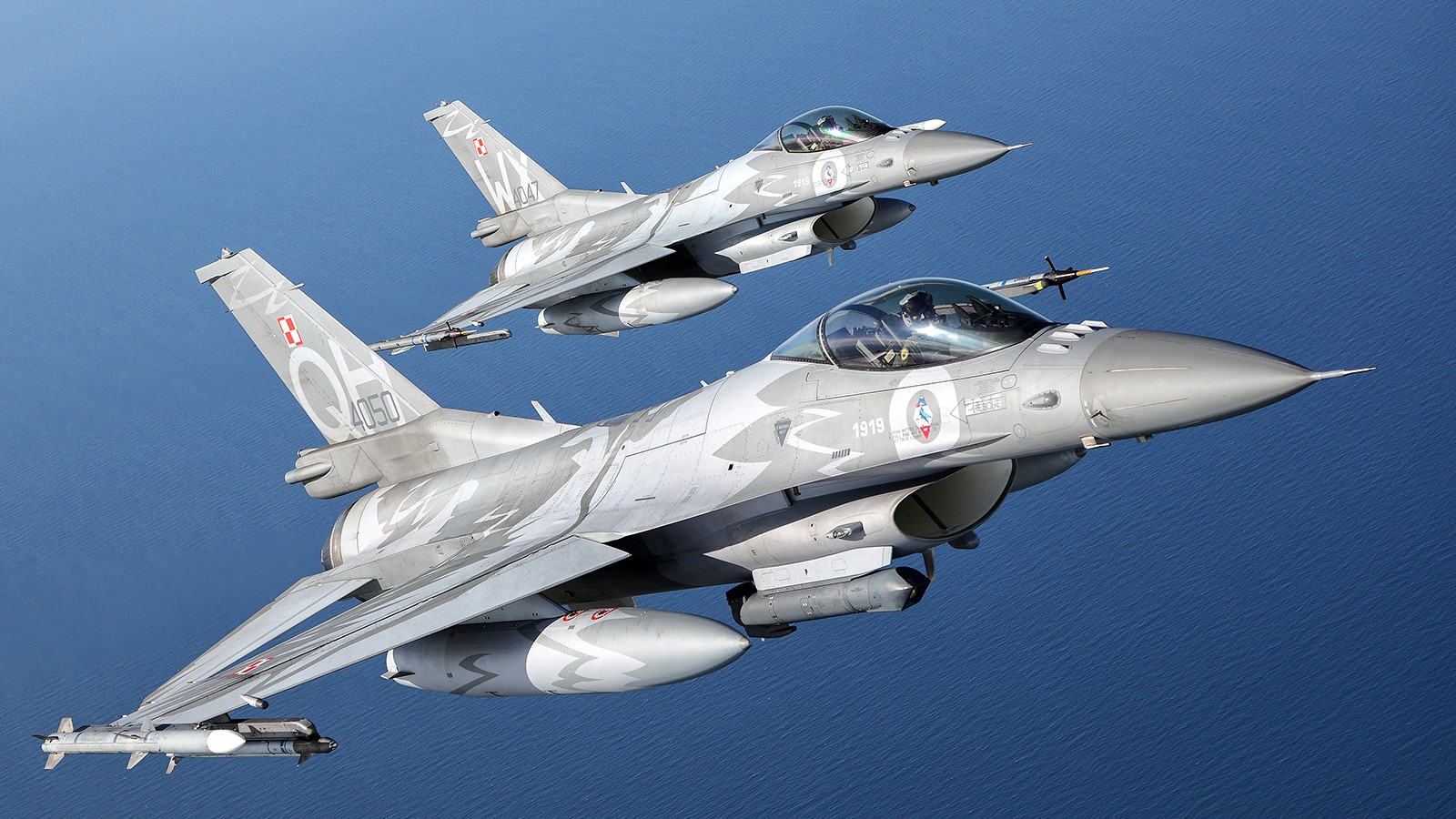
Viper Shield is designed for the F-16 Block 70/72 and its digital radar warning receiver (DRWR) technology integrates seamlessly with the aircraft’s new APG-83 active electronically scanned array (AESA) radar, to deliver greater situational awareness, while remaining compatible with earlier F-16 blocks. The system also includes a digital radio frequency memory (DRFM)-based jamming system, which provides enhanced capability against advanced threats.
The manufacturer says it designed Viper Shield with fewer critical components than previous generation EW systems not only to obtain a smaller form factor and reduced weight, but also a higher mean time between failure and lower lifecycle costs. The modular design, which supports swapping LRUs in the field, together with the COTS (Commercial Off The Shelf) technology and software-defined architecture, allows to simplify future upgrades as technology and threats evolve.
The goal of the system is to provide a virtual electronic shield around the aircraft, with state-of-the-art capability, to address emerging and future threats with a fully integrated, internally mounted system. In the most modern F-16s, the integrated system eliminates the need to employ external EW pods usually installed on the centerline station, freeing it for other payloads such an external fuel tank.
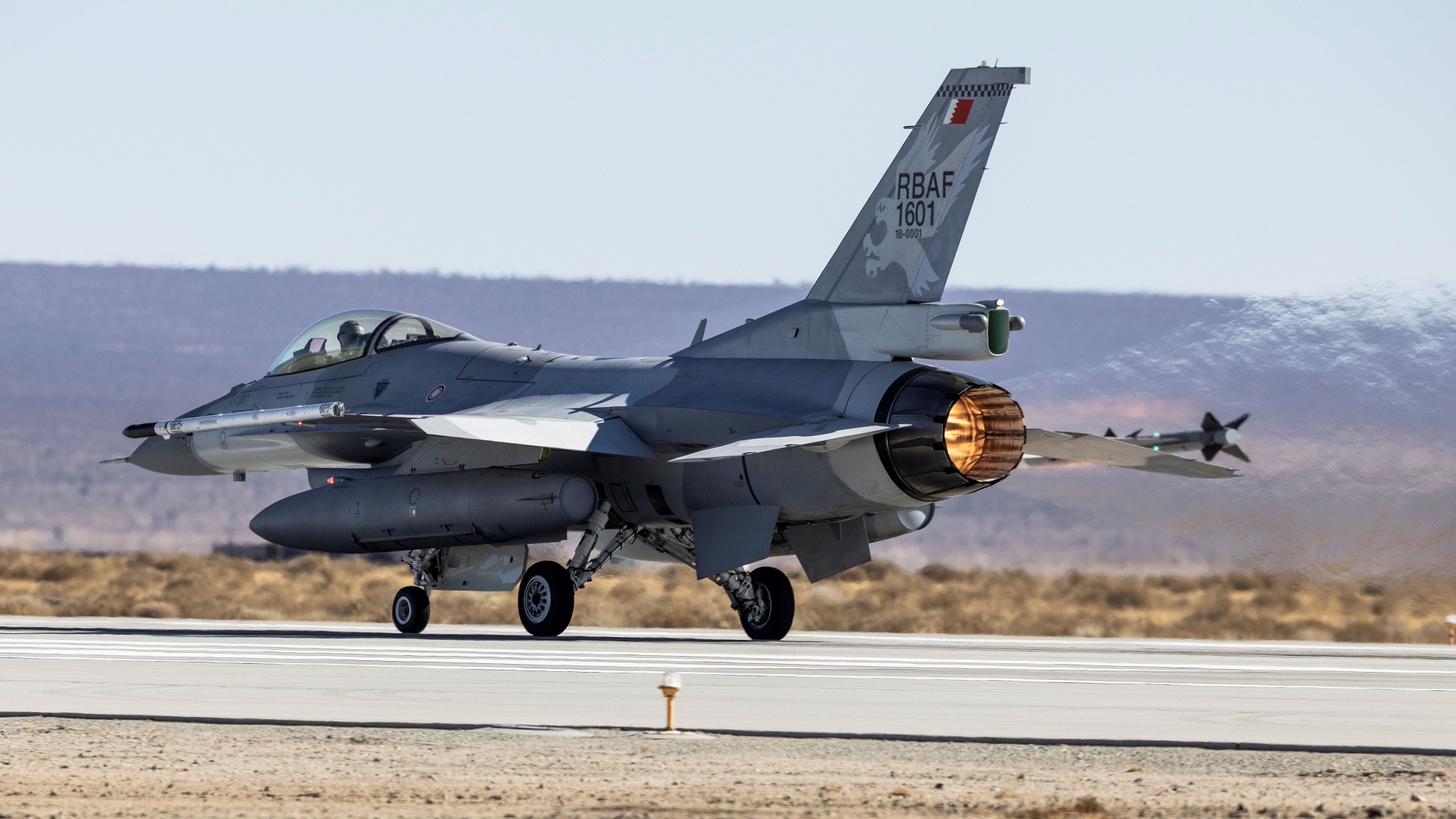
The internal variant of the system first flew on an F-16C Block 70 of the Royal Bahraini Air Force in February 2025 at Edwards AFB, California, conducted by a pilot of the 416th Flight Test Squadron, Airpower Foundations Combined Test Force.
The internal and podded variants of the system use the same physical component hardware, a versatile design that enables 100% hardware commonality between internal and pod configurations and reduces overall maintenance, support and lifecycle cost, particularly where the end user deploys a combination of new and upgraded F-16s. Beyond that, the external pod remains particularly useful to those operators that need to integrate the system on previous generation F-16s.