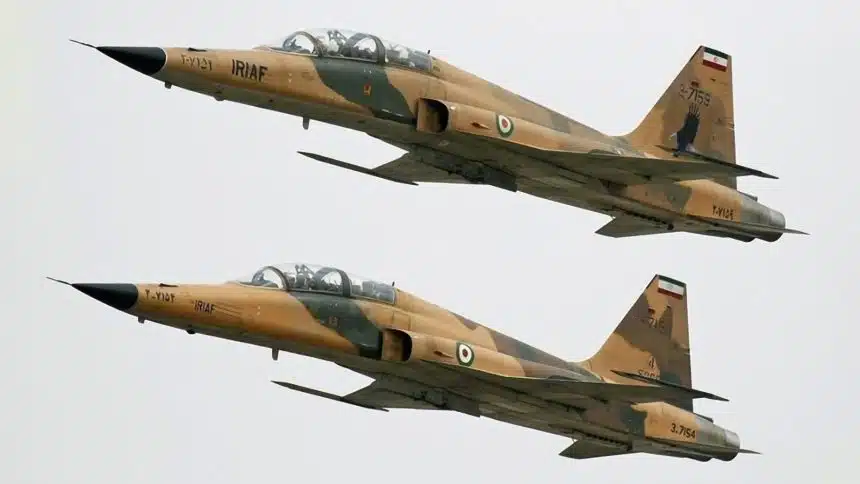
NBC News says over 100 U.S. targets across 7 countries were hit by Iran, including Camp Buehring in Kuwait which was allegedly struck by an F-5.
U.S military bases across the Persian Gulf region appear to have sustained far more extensive damage from recent Iranian strikes than publicly acknowledged, according to a report by NBC News. While some of the strikes were confirmed either by official statements or media coverage, many of the ones mentioned in the new report were not previously acknowledged, including an alleged strike by an Iranian F-5 fighter jet.
Citing multiple U.S. officials, congressional aides and an assessment by the American Enterprise Institute (AEI), NBC News describes a widespread Iranian campaign targeting U.S. military infrastructure across multiple countries. These strikes affected operational facilities, logistics hubs, and critical enablers such as communications and radar systems.
“In the initial days of the war, an Iranian F-5 fighter jet bombed the U.S. base Camp Buehring in Kuwait, despite the base having air defenses, a rare breach that marked the first time an enemy fixed-wing aircraft has struck an American military base in years, according to two of…
— Michael Weiss (@michaeldweiss) April 25, 2026
The cost of the repairs to infrastructure may reach well over $5 billion, according to the report. At this time, we cannot independently verify these reports, and the Department of War has not issued any statement to deny them.
Strikes Across Seven Countries
According to the assessment by the AEI, Iran conducted strikes against more than 100 targets across 11 bases in seven countries, including Qatar, the United Arab Emirates, Bahrain, Jordan, Kuwait, Iraq, and Saudi Arabia. The attacks, according to AEI and the unnamed officials, reportedly struck hangars and warehouses, command buildings, airport infrastructure, communication systems and radar systems.
Among the targets were also “dozens of aircraft,” mentioned the reports, likely including the E-3G AWACS destroyed at Prince Sultan Air Base, Saudi Arabia, and the KC-135 tankers damaged on the ground, such as the one that transited through RAF Mildenhall while returning to the U.S. sporting visible patches.
The officials described the damage as “extensive.” Some of the most significant reported targets included:
- U.S. Navy 5th Fleet Headquarters in Bahrain: serious damage to the headquarters building, as well as significant damage to other parts of the base, but deemed repairable.
- Al Udeid Air Base in Qatar: A runway was reportedly destroyed, although many of the assets were dispersed to other locations before the start of Operation Epic Fury.
- Ali Al Salem Air Base in Kuwait: Multiple hangars and warehouses were hit.
- Erbil Air Base in Iraq: A munitions storage facility was damaged.
- Al Dhafra Air Base in the UAE: Damage included fuel storage, hangars, barracks, and a medical clinic.
Additional strikes affected bases in Jordan and Saudi Arabia, primarily damaging administrative buildings and support infrastructure. The reports align with previous reporting which highlighted damage to radar infrastructure at several locations, suggesting that air defense and surveillance capabilities may have been at least partially degraded during the strikes.
F-5 Strike and Contested Airspace
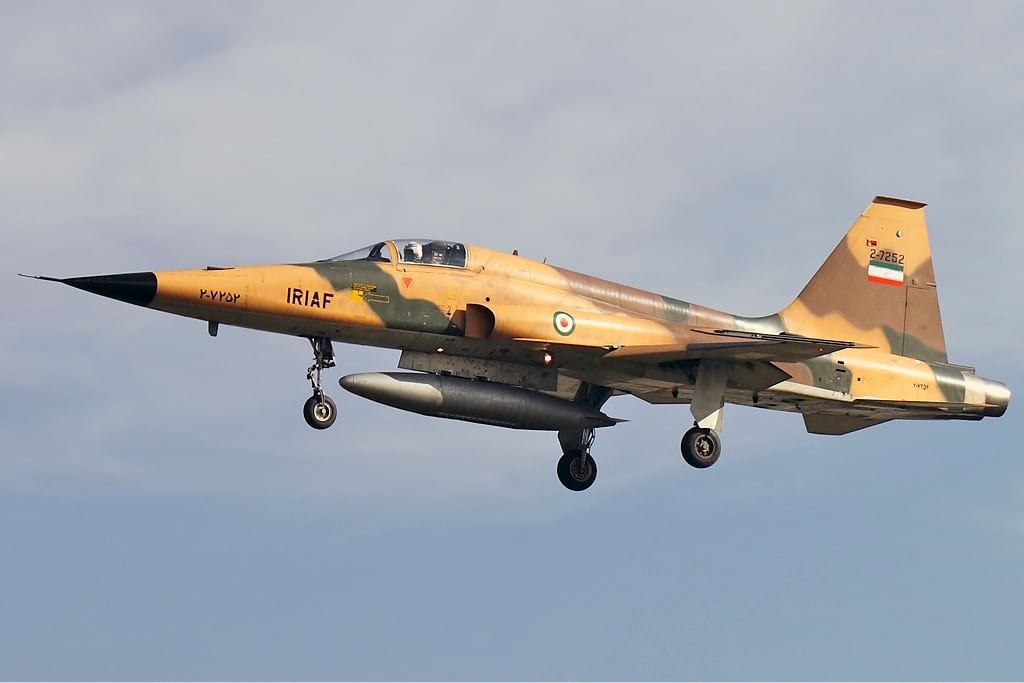
One of the most unusual elements in the report immediately caught our eye: the claim that an Iranian Northrop F-5 fighter carried out a strike on Camp Buehring in Kuwait. If confirmed, this would represent the first time in many years an enemy fighter aircraft directly attacked a U.S. installation protected by layered air defenses.
Originally developed in the 1960s, the F-5 remains in service with Iran in locally upgraded forms, including derivatives such as the HESA Saeqeh. These aircraft are generally not considered survivable in a modern, high-threat air defense environment, although their small size still poses a problem as it complicates their targeting by air defenses.
It must be noted that the aircraft type might also be wrong. The F-5E’s range without external fuel tanks is reported to be approximately 480 nautical miles. Camp Buehring is located in northern Kuwait, only a few hundred kilometers from western and southwestern Iran, but this would put it almost out of reach of F-5s operating from known Iranian bases in the area, unless external fuel tanks were used or the strike was planned as a one-way mission.
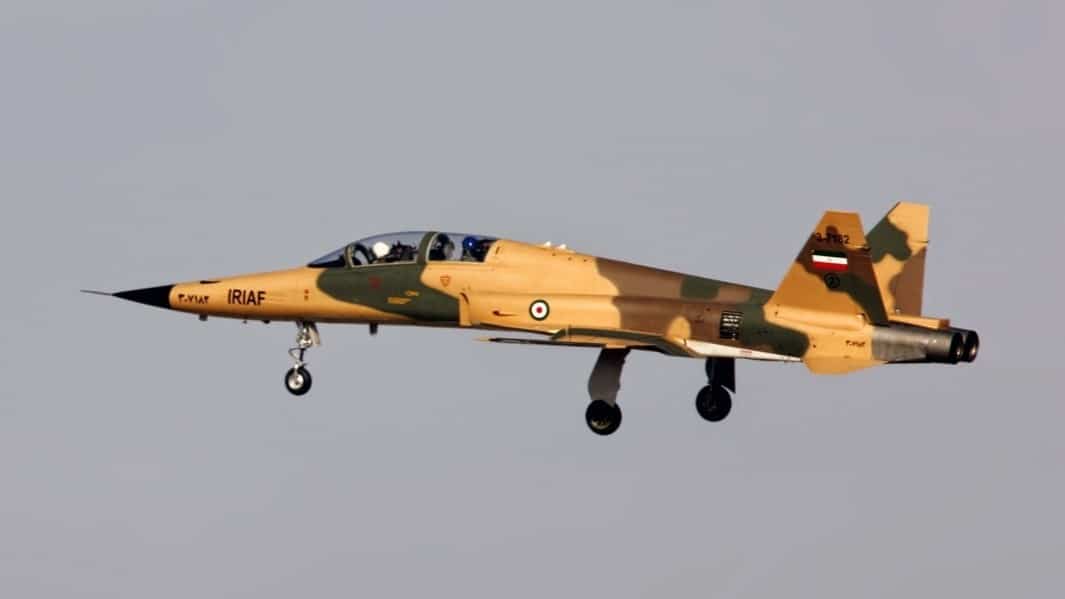
It is unclear how an Iranian fighter aircraft could be able to successfully reach its target without being detected and stopped. The strike likely occurred under highly specific conditions, possibly exploiting the saturation of air defenses by missile and drone attacks in the initial days of the war.
The reported F-5 strike, however, can’t be immediately dismissed, as it could have occurred alongside other similar incidents in the same timeframe. Among these, the case of the two Iranian Sukhoi Su-24s shot down by Qatar “two minutes” away from Al Udeid Air Base and Ras Laffan, as well as a friendly fire incident involving U.S. F-15E Strike Eagles shot down in Kuwait.
Iran claimed that multiple of its fighter aircraft were used to attack U.S. targets in the early days of Operation Epic Fury, although without providing any proof. Among the aircraft mentioned by Iranian media were also F-4E Phantom II fighters.
The only statement by CENTCOM which mentioned Iranian aircraft involved in the combat operations was the one regarding the friendly fire incident: “During active combat – that included attacks from Iranian aircraft, ballistic missiles, and drones – the U.S. Air Force fighter jets were mistakenly shot down by Kuwaiti air defenses.”