Speaking before Parliament after the controversy sparked by the denied landing of a U.S. aircraft at Sigonella, Defense Minister Guido Crosetto said Italy continues to apply long-standing agreements governing U.S. military activity.
On Mar. 31, 2026, the news spread that Italy had refused to allow the U.S. to use Sigonella Air Base, Sicily, a strategic hub and forward operating base to many U.S assets. The news was first published by Corriere della Sera and later by other news outlets including La Repubblica. The Government sources later confirmed the episode, saying it happened overnight on Mar. 27, 2026.
The refusal is said to have been ordered by Defense Minister Guido Crosetto after Italian authorities learned that several U.S. aircraft (in some cases referred to as “bombers”) were planning to land at Sigonella before heading on to the Middle East to support Operation Epic Fury.
The issue was that no prior clearance had been requested and Italian military authorities had not been consulted. ANSA news agency reported that Italy was informed only after the aircraft were already in the air, and checks later determined the flights were neither routine nor logistical, so they were not covered by existing agreements between Rome and Washington. This means that clearance should have been granted only upon Parliamentary approval.
Later on the same day, Crosetto said:
Someone is trying to push the narrative that Italy has decided to suspend the use of its bases by U.S. assets.
That is simply false, because the bases are active, in use, and nothing has changed.
The Government continues to do what all Italian governments have always done, in full compliance with the commitments made in Parliament and with the line reiterated in the Supreme Defense Council, in continuity with all previous Councils over the decades.
International agreements clearly regulate and distinguish between what requires specific authorization from the Government, for which it has been decided that Parliament should always be involved, and without which nothing can be granted, and what is instead considered technically authorized because it falls within the scope of those agreements.
A minister’s only duty is to ensure that those rules are respected.
There is no third option.
Lastly, I want to reiterate that there is no cooling of relations or tension with the United States, because they know the rules governing their presence in Italy since 1954 just as well as we do.
The type of aircraft whose landing in Italy was denied has never been disclosed, and this has contributed to the confusion, with some speculation pointing to assets that had deployed to the Middle East days before the “diplomatic incident” took place, and other claims allegedly involving flights whose details did not match the official date confirmed by the Italian MOD.
Anyway, the episode sparked considerable domestic controversy, which Crosetto had to address during a briefing before Italy’s lower house, the Chamber of Deputies, on Apr. 7, 2026. During the hearing, the Italian MOD provided some details about the policy regulating the use of Italian air bases by U.S. aircraft, as well as some interesting figures.
First of all, the Italian government has not changed its policy on the use of U.S. military bases in Italy, and no administration has done so over the past 75 years, Crosetto explained, who also said the decision to deny the landing clearance to the U.S. assets did not mark a political shift, but reflected the continued application of the legal and treaty framework governing the U.S. military presence in Italy.
“No government of any political color has ever failed to honor or questioned the international and bilateral treaties between Italy and the United States” he said.
Crosetto also explained that Italy is not an exception in Europe, since countries such as the Germany, Spain, Greece, Poland and the UK have similar bilateral arrangements that allow the use of U.S. military facilities on their territory. In his view, compliance with those agreements does not automatically imply involvement in conflicts, but simply respect for obligations within the limits set by Italian law and the Constitution.
“Rispettare gli accordi sulle basi Usa in Italia non significa essere coinvolti in una guerra, ma adempiere con responsabilità a impegni previsti dalla legge. L’Italia non è in guerra, ma è parte della NATO e agisce nel pieno rispetto della Costituzione e dei trattati… pic.twitter.com/Q2dqmvP71B
— Ministero Difesa (@MinisteroDifesa) April 7, 2026
Interestingly, to support his argument, Crosetto cited statistics concerning U.S. military activity at Aviano AB, in northeastern Italy, and Sigonella, in southern Italy, he obtained by the Italian military in response to the question whether the activity had increased at the two bases. The statistics, according to the Italian MOD prove that the current Meloni government has not altered the long-standing framework regulating access to American bases in Italy.
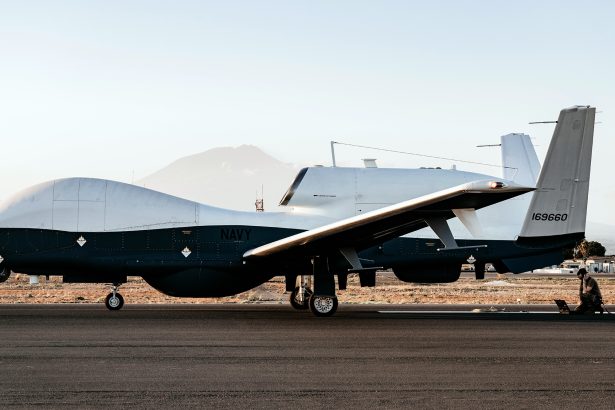
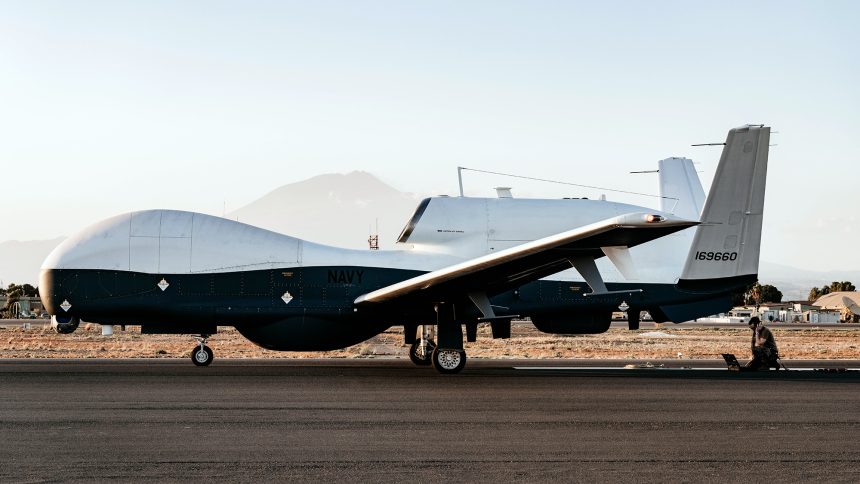
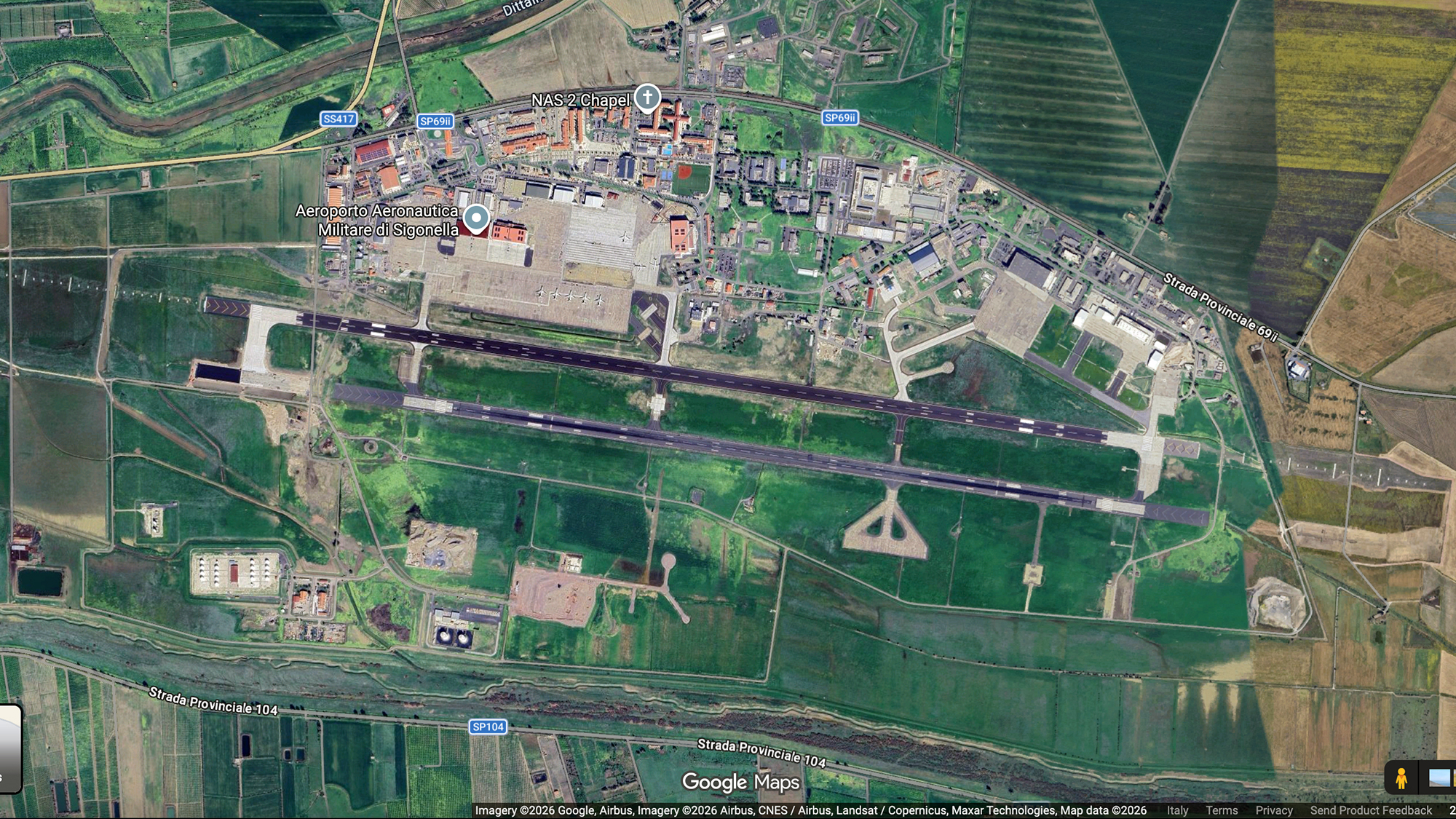
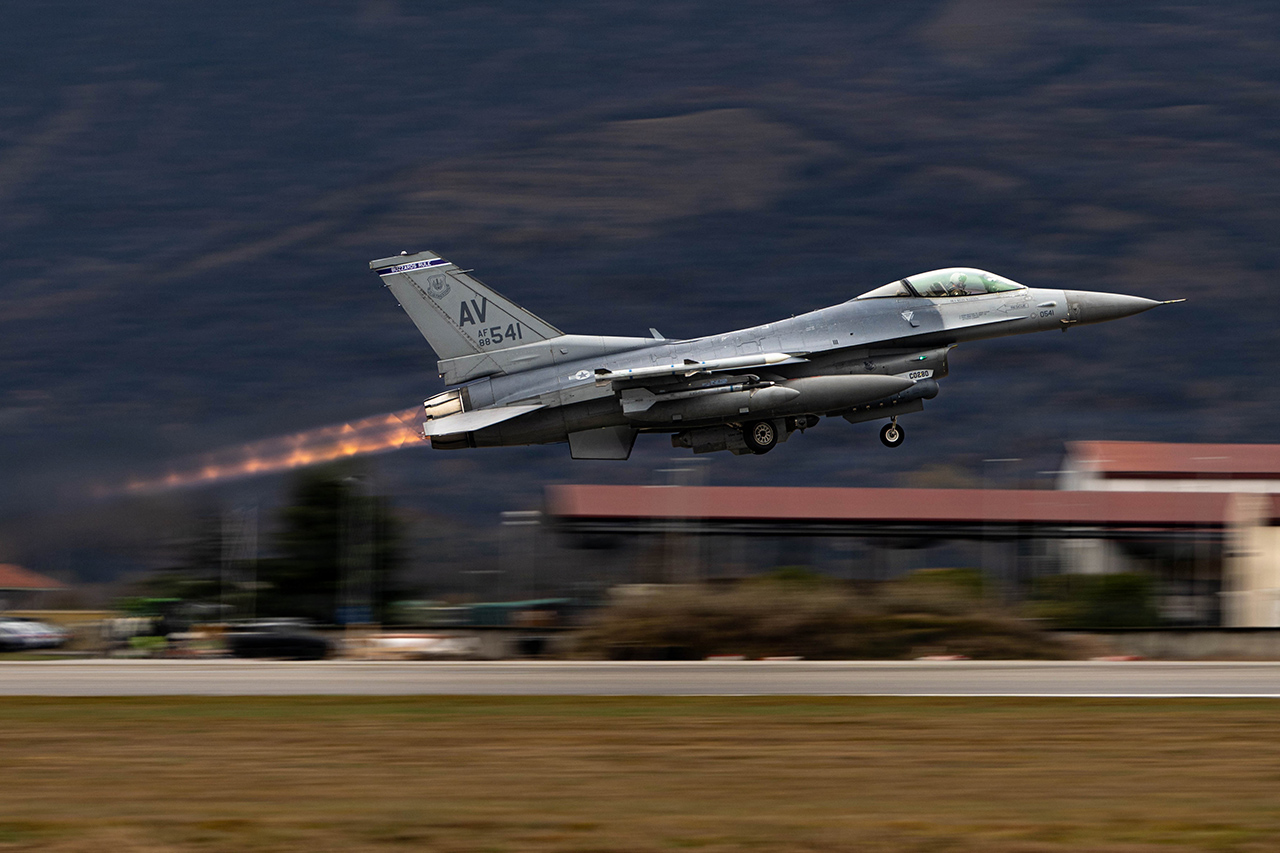
Naval Air Station Sigonella, as the U.S. section of the base is called, hosts rotational detachments of P-8 Poseidons and MQ-4Cs from Unmanned Patrol Squadron (VUP) 19 “Big Red,” along with many other manned and unmanned aircraft that regularly deploy to the base or stop there in the middle of the Mediterranean. The base has served as a forward operating locations for missions flown in Northern Africa as well as the Black Sea region. Aviano Air Base is home to the 31st Fighter Wing, including the 510th and 555th Fighter Squadrons, which fly the F-16 Fighting Falcon, as well as the 56th Rescue Squadron, which operates the HH-60W Jolly Green II.
At Aviano, in 2018 there were 525 cargo aircraft landings, including 43 classified as “hot cargo,” meaning flights carrying sensitive cargo or munitions, as well as 120 U.S. transits of tactical aircraft and 35 helicopter transits. In 2019, the number of landings rose to 628, including 52 hot cargo flights, along with 44 fighter aircraft in transit and 107 helicopter movements. In 2020, Aviano recorded 528 landings, 51 hot cargo flights, 28 aircraft in transit and 32 helicopter movements. In 2021, Crosetto cited 505 landings, 43 hot cargo flights, 59 fighter transits and 24 helicopters. In 2022, the total rose again to 609 landings, including 62 hot cargo flights and 172 transits. It’s not clear why he didn’t continue with the data about 2023, 2024 and 2025.
Sigonella airbase saw significantly higher U.S. traffic. According to the figures cited by Crosetto, the base recorded 2,547 landings and transits in 2019, including 271 hot cargo movements, as well as 18 aircraft, 28 helicopters and 898 remotely piloted aircraft flights. In 2020, the total stood at 2,081 landings, with 178 hot cargo cases and 755 UAS (Unmanned Aircraft System) flights. In 2021, the figures were 1,954 landings, 195 hot cargo movements and 805 UAS flights. In 2022, activity rose sharply again, with 2,919 landings, 273 hot cargo cases, 15 aircraft, 177 helicopter movements and 1,293 remotely piloted aircraft flights. Crosetto also cited more recent drone activity figures for Sigonella, with 246 UAS flights in 2023, 466 in 2024 and 338 in 2025.
Perhaps the most clear trend in the dataset is Sigonella’s UAS activity: after remaining very high between 2019 and 2022 and peaking sharply in 2022, it dropped dramatically in 2023, recovered only partially in 2024, and declined again in 2025. Compared with 2019, 2025 drones activity is down 62.4%.
The figures were presented to show that the Italian government does not politically redefine the tempo of operations at those bases, but rather verifies whether such activities fall within the legal and treaty framework already in place.
“We say yes when they are possible and no when they are not,” he explained, also rejecting the idea that the government could claim credit for any reduction in activity (that was probably due to the relocation of some assets to other bases in the region).
Italy, he said, will continue to act within the framework of its Constitution and laws, honoring the international agreements it has signed while continuing to respect Parliament and state institutions.
That being said, it is also worth noting that P-8A Poseidon and MQ-4C Triton aircraft based at Sigonella regularly operate in the Persian Gulf area, as extensively reported by the ItaMilRadar account on X.
Double strategic US Navy movement this morning: both a P-8A patrol aircraft and an MQ-4C Triton drone took off from Sigonella heading east. The P-8A is on a transfer flight to the Middle East, while the Triton operated over the Persian Gulf.https://t.co/hnVwZMHDpN
— itamilradar (@ItaMilRadar) March 14, 2026
As the world questions whether President Trump will actually follow through on his threats, today a Triton departing from Sigonella orbited for an extended period off the strategic Khark Island.https://t.co/XFFA0ZzT85
— itamilradar (@ItaMilRadar) April 7, 2026