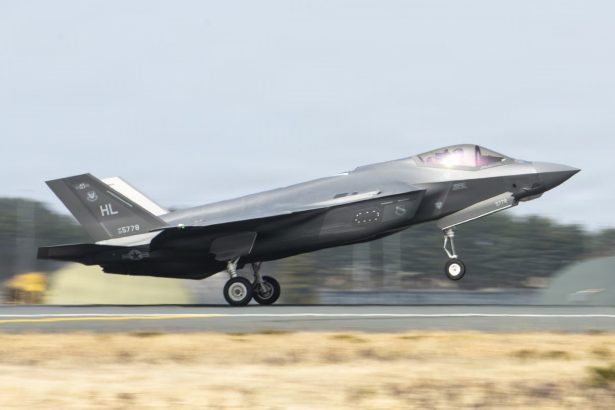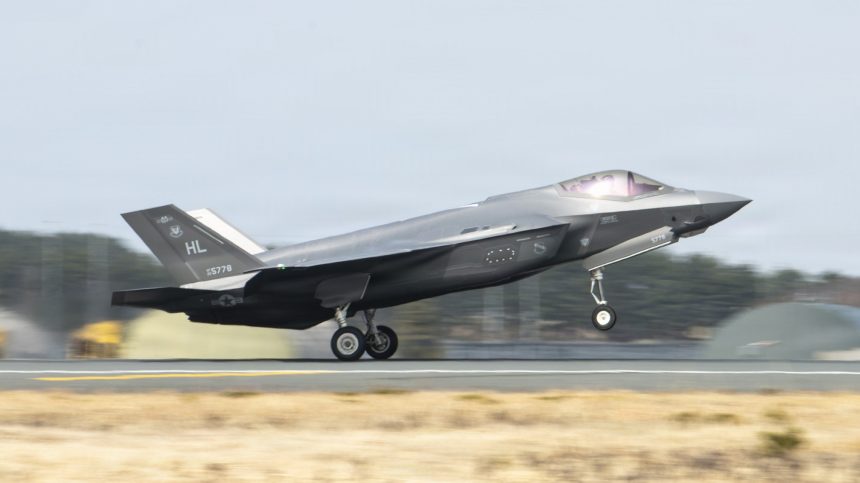
Misawa Air Base has received the U.S. Air Force’s first F-35A Lightning II fighters to be permanently based in Japan, beginning the transition from the F-16 to the fifth-gen aircraft.
Misawa Air Base, home of the U.S. Air Force’s 35th Fighter Wing, has received its first four F-35A Lightning II fighter jets. The aircraft landed there on Mar. 28, 2026, marking the arrival of the service’s first F-35s to be permanently based there as the 35th FW transitions from the F-16 Fighting Falcon to the fifth-generation fighter.
First USAF F-35s Permanently in Japan
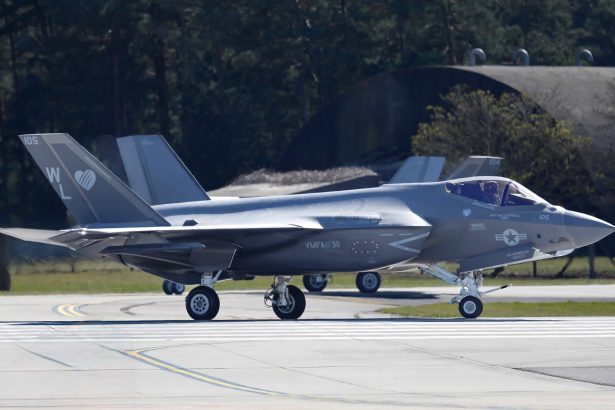
The arrival of the new aircraft is part of the modernization plan announced by Department of Defense in 2024 to deter a Chinese aggression in the region and strengthen U.S. forces in Japan. The F-35As would join the U.S. Marine Corps’ F-35Bs and U.S. Navy’s F-35Cs already based in the country at Marine Corps Air Station (MCAS) Iwakuni.
“Bringing the F-35 to Misawa underscores our long-standing commitment to Japan and the region,” said U.S. Air Force Col. Paul Davidson, 35th Fighter Wing commander. “It strengthens our ability to respond quickly and operate seamlessly with our Japanese partners.”
As part of the modernization plan, Misawa’s 13th and 14th Fighter Squadrons will replace their 36 F-16C/Ds with 48 F-35As, which they will use to continue flying the Suppression of Enemy Air Defenses (SEAD) mission. Notably, Misawa’s “WW” tail flash is derived from the mission’s Wild Weasel name which, since the Vietnam War, has been given to units and aircraft used to hunt enemy air defenses.
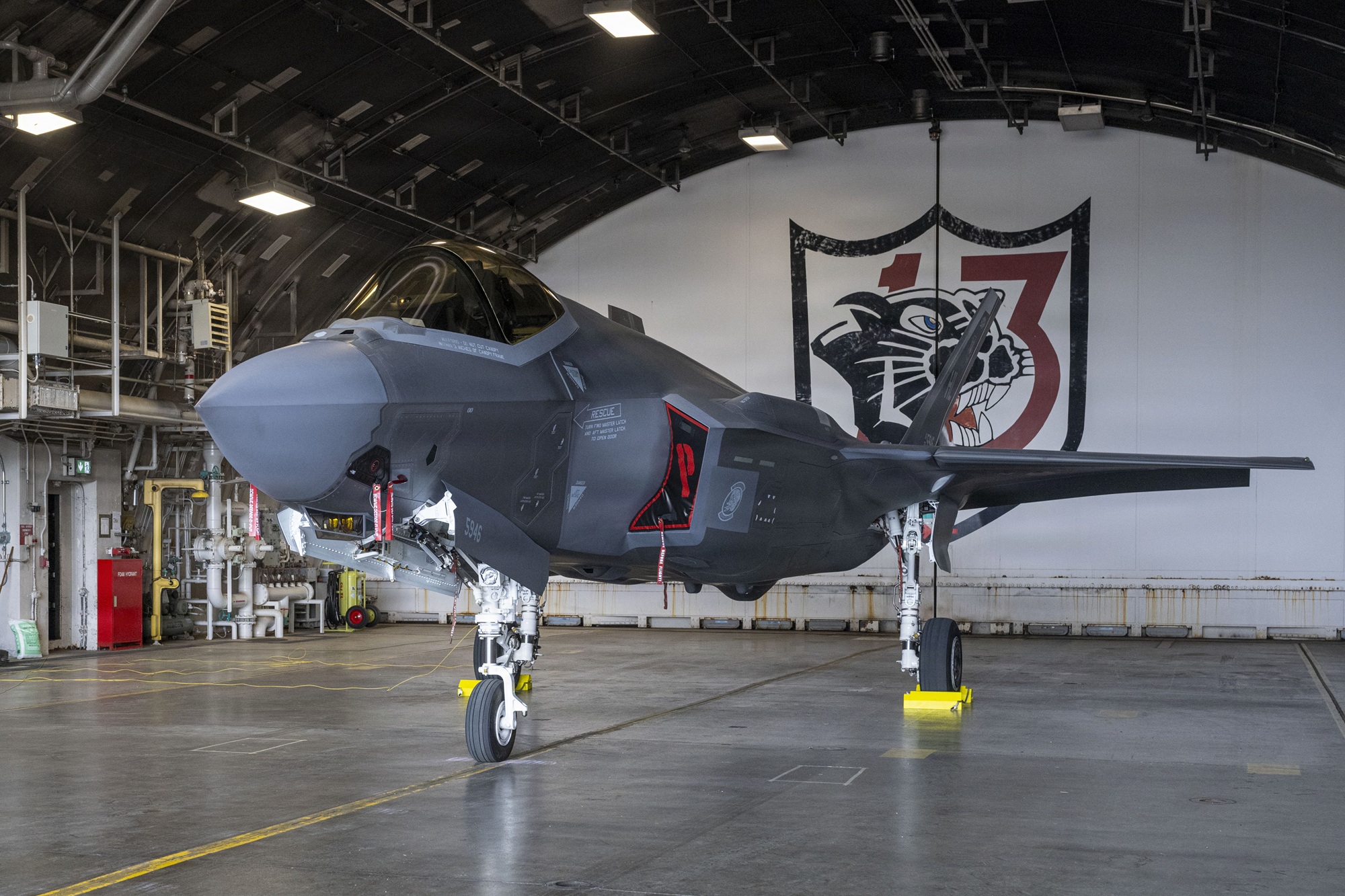
“The Wild Weasels stand ready to defeat any threat in our area of responsibility and beyond,” said Col. Jeromy Guinther, 35th Operations Group commander, welcoming the new aircraft and pilots. “As you lay the foundation for Misawa’s upgrade to a fighter integration wing, remember your Wild Weasel legacy, stay ready and lethal, and continue to contribute to the Panther’s many generations of excellence. Cave Putorium!”
Notably, the first four aircraft, which arrived from the U.S. after a stop at Hickam Air Force Base, Hawaii, are not newly built. In fact, three F-35s have been transferred from Hill Air Force Base, Utah, while the fourth previously belonged to RAF Lakenheath, UK.
Yesterdays flt of PINE11-14 were 4x F-35A en route Misawa AB (RJSM) where they will be reassigned to the 13th FS as they transition from the F-16CJ to the F-35A.
The 35th FW based at RJSM will operate a fleet of 48x F-35A once all acquisitions are complete for both 13th and… https://t.co/OQLVFFkDbs pic.twitter.com/pUxg0m3Yo8
— Aux OSINT (@AUX_OSINT) March 28, 2026
These four F-35s will be assigned to the 13th Fighter Squadron, which since 2025 has been transferring its F-16s to other bases, including Osan Air Base in South Korea. Osan has recently transitioned to become an F-16-only base, after the 25th Fighter Squadron started a phased withdrawal of its 24 A-10 Thunderbolt II attack aircraft.
“The F-35 was tailor made to be a weasel platform,” said Lt. Col. John Widmer, 13th Fighter Squadron commander. “Where legacy platforms performed the Wild Weasel mission with bolted-on sensors or weapons, the F-35 was built from the ground up as a sensor platform with the sensor fusion and quarterback capability we bring to the fight.”
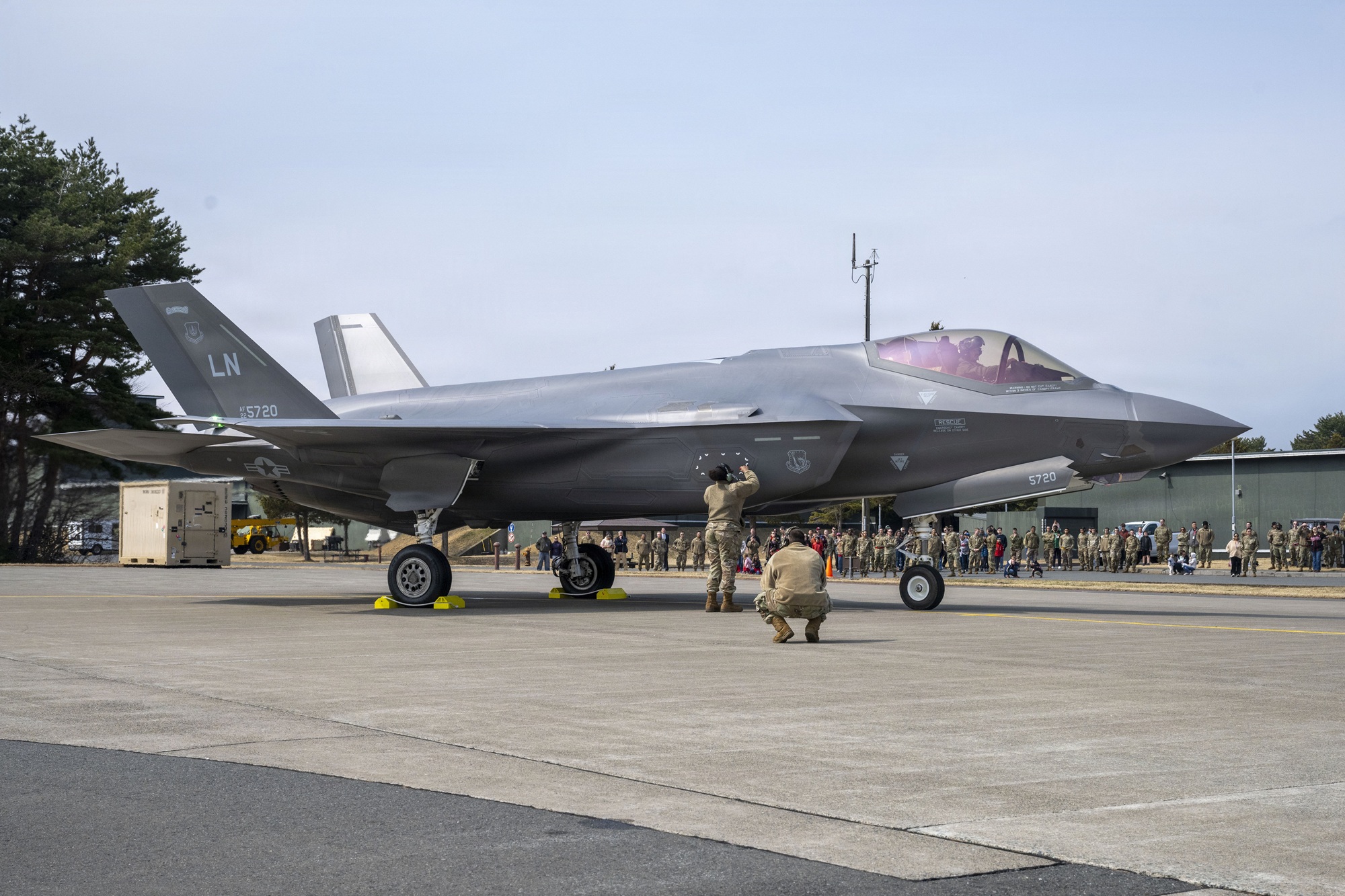
“As far as transitioning from the F-16 to the F-35, the stealth capability is obviously one of the biggest things,” further added Widmer. “The sensor package we bring to the fight allows us to sense the threat and manage the entire spectrum of what the enemy is fielding at us right now. It’s constantly updating, constantly getting upgraded, and as we continue forward, it’s the place I want to be if I need to go to war.”
Misawa’s forward position makes it a critical hub for maintaining regional stability in what has been described as the U.S. military’s largest area of responsibility. Months of preparation were required before the arrival of the first aircraft, with formal training and infrastructure updates being among the focal points to ensure the squadron can generate and sustain combat-ready aircraft.
The Modernization
The Department of Defense first announced its modernization plan for the tactical aircraft based in Japan on July 3, 2024. The plan featured over $10 billion of capability investments to enhance the U.S.-Japan Alliance, bolster regional deterrence, and strengthen peace and stability in the Indo-Pacific region.
The statement also added that work was done “in close coordination with the Government of Japan,” demonstrating “the ironclad U.S. commitment to the defense of Japan and both countries’ shared vision of a free and open Indo-Pacific region.” Japanese officials similarly stated that the government and officials in involved prefectures were well briefed about the plans.
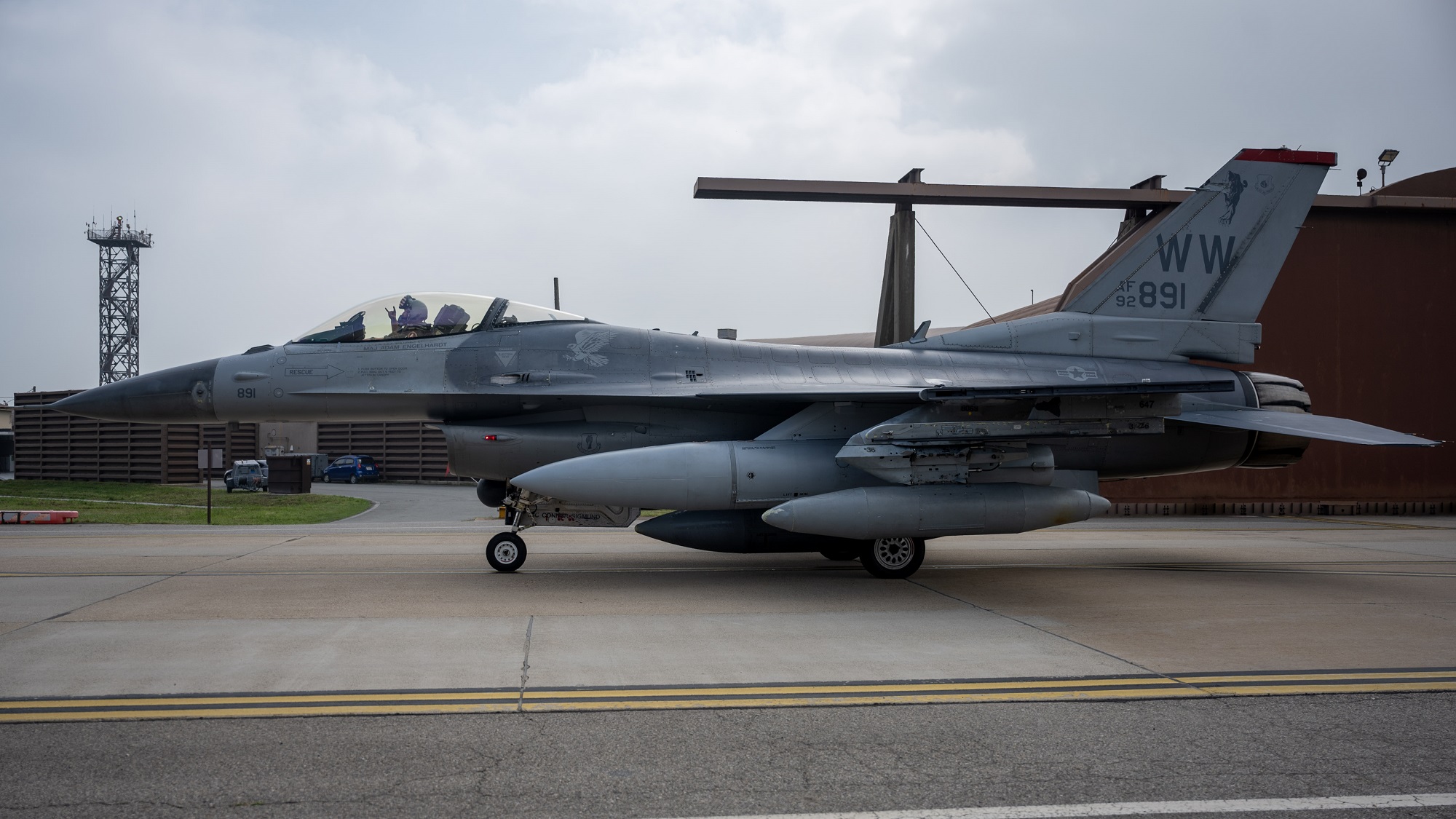
On of the biggest points in the plan is the replacement of Misawa’s 36 F-16C/Ds with 48 F-35As. The F-35As were indeed expected to arrive at the base in the spring of 2026, while the F-16s are being gradually phased out starting summer in summer of 2025.
Misawa is not the only base involved in the modernization. Kadena Air Base, home of the 18th Wing’s 44th and 67th Fighter Squadrons, will similarly replace its now retired 48 F-15C/D Eagles with 36 new F-15EX Eagle II jets.
The DoD further said it would “modify the number of F-35B aircraft to support the… modernization implementation” at MCAS Iwakuni. The base is currently home to both VMFA-121 and VMFA-242, equipped with the F-35B Lightning II, and a U.S. Navy F-35C squadron, VFA-147.