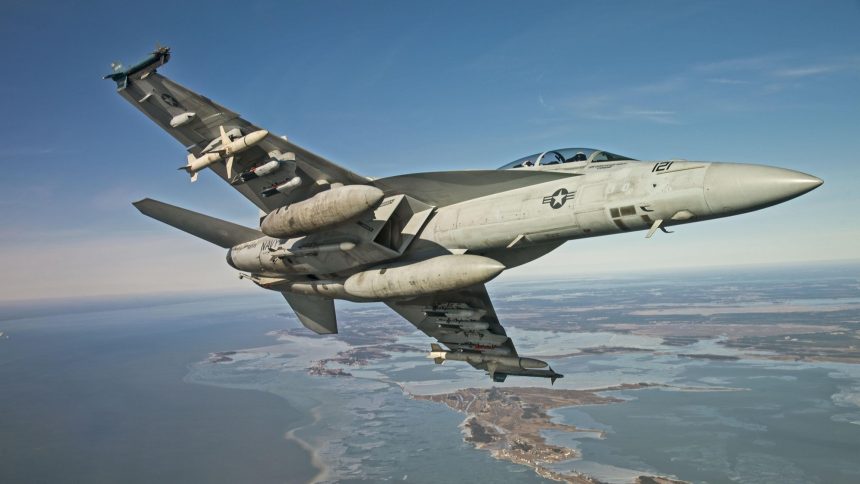
The GBU-53/B SDB II, also known as StormBreaker, has reached the Initial Operational Capability on the F/A-18E/F Super Hornet, following its first operational use in 2025.
The Naval Air Systems Command (NAVAIR) and RTX announced that the U.S. Navy has reached the Initial Operational Capability (IOC) for the GBU-53 Small Diameter Bomb (SDB) II, also known as StormBreaker, on the F/A-18E/F Super Hornet. The service has already used the weapon operationally in 2025, as we previously reported.
The employment in combat was part a limited Early Operational Capability (EOC), which was declared in October 2023. The service says this provided real-world validation of the bomb’s performance on the platform.
“Bringing SDB II to the fleet gives our air crews a reliable way to hit targets in adverse weather conditions,” said Tyler Alt, Navy SDB II program manager. “This isn’t just about a new weapon; it lays the foundation for future Super Hornet weapon capabilities to provide the flexibility to update a mission in real time, even after the bomb has been released.”
The ability to accurately hit targets even in adverse weather is an aspect which has been also highlighted by RTX. The company further said the weapon “has had exceptional performance in combat on the aircraft.”
“The Super Hornet plays a critical role in the Navy’s air combat strategy and equipping it with StormBreaker increases the aircraft’s lethality by enabling precision strike in all weather conditions,” said Sam Deneke, president of Air & Space Defense Systems at Raytheon. “StormBreaker’s accuracy and versatility gives operators the upper hand in the most degraded environments, ensuring they can complete the mission and return home safely.”
The GBU-53 StormBreaker
The GBU-53/B StormBreaker, also known as Small Diameter Bomb Increment II, is one of most recent additions to the U.S. arsenal. The StormBreaker is a small 250 lb class weapon with a 105 lb shaped charge warhead, which allows for an aircraft to carry more bombs compared to other munitions due to the compact nature.
The weapon is designed to improve the capabilities provided by the GBU-39 Small Diameter Bomb, produced by Boeing. The GBU-53, on the other hand, is built by Raytheon, now part of RTX, which describes it as a network enabled weapon, saying this is one of the key benefits of StormBreaker.
This capability is intended to give an aircraft the possibility to drop the weapon and then hand off its controls to another aircraft connected to the same network. Notably, in 2025 this was demonstrated in a test where Norwegian soldiers assumed control of a GBU-53 released by a U.S. F-15E and guided it on target.

The same network capability also allows the GBU-53 to receive in-flight target updates from air or ground controllers, providing increased flexibility during dynamic missions. Taken together, these capabilities are considered critical for a JADC2 (Joint All Domain Command and Control) battlespace environment as the military aims to connect sensors, platforms and weapon systems for multi-domain operations.
Further versatility is added by the multi-effects warhead, which is equipped with shaped charge jets, fragmentation and blast charge effects, and an option for a delayed smart fuse. The total weight of the weapon is just over 200 pounds, with half of it being the warhead alone.
Another key feature of the GBU-53/B is its tri-mode seeker that employs imaging infrared, semi-active laser and millimeter wave radar to see through fog, smoke and rain as the weapon glides over 45 miles to strike both fixed or moving targets on land or at sea. The other mode available for target acquisition is the more common GPS/INS guidance.
Using folding wings which deploy once the weapon is dropped, the StormBreaker can reach a reported range of 69 miles, matching the GBU-39’s maximum range. This value drops to 46 miles for moving targets, as the gliding weapon expends energy while maneuvering to continually correct its trajectory.
The U.S. Air Force cleared the weapon on the F-15E Strike Eagle in 2020, making it the first aircraft able to carry the weapon. The aircraft uses the GBU-53 in conjunction with the same BRU-61/A suspension units used with the GBU-39 Small Diameter Bomb, which allows the carriage of four weapons.
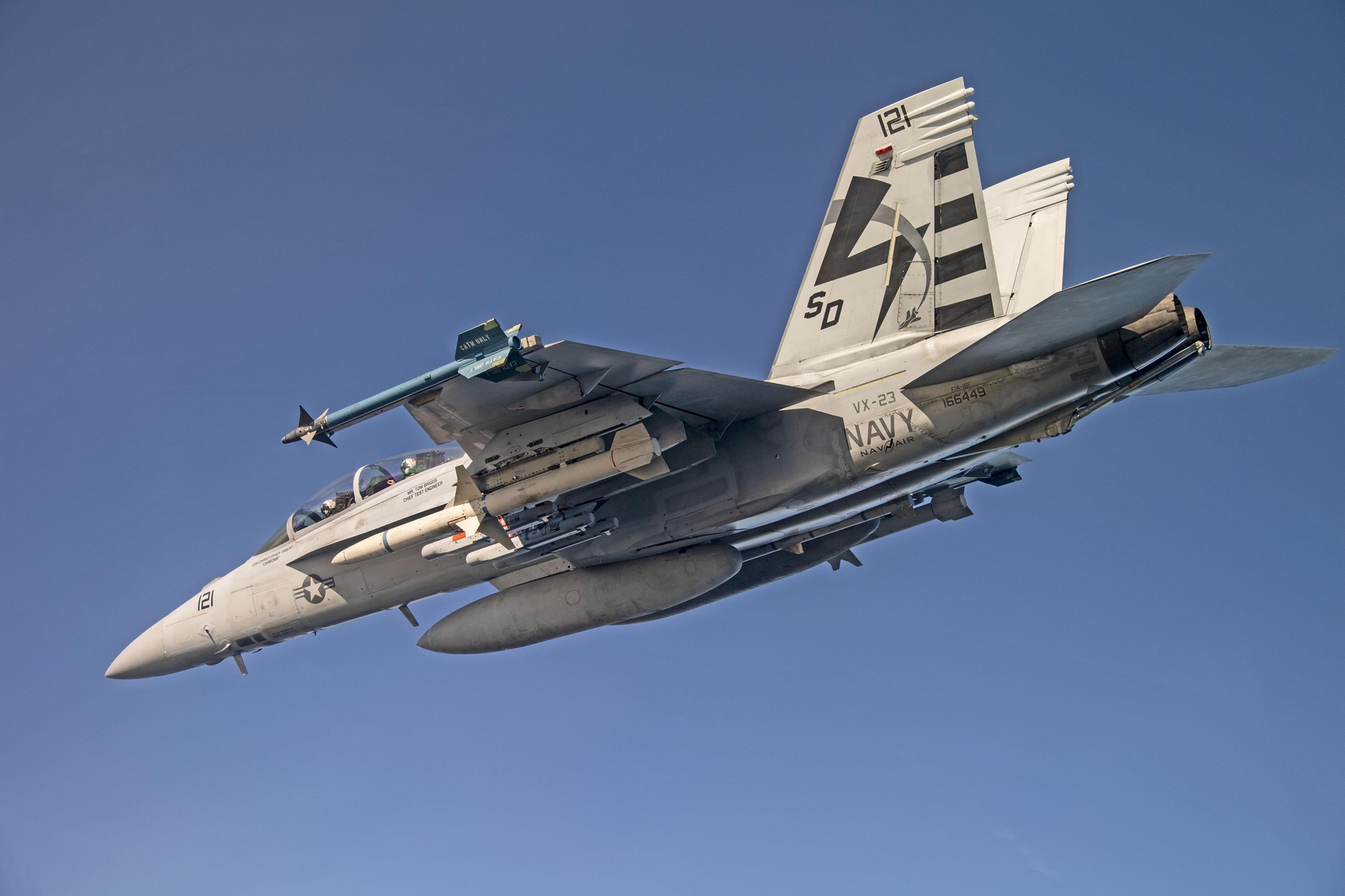
The F/A-18E/F Super Hornet has received the clearance to carry the weapon as part of a limited Early Operational Capability (EOC) in 2023. The weapon is carried using the BRU-55/A Smart Rack, which can accommodate two StormBreakers per pylon.
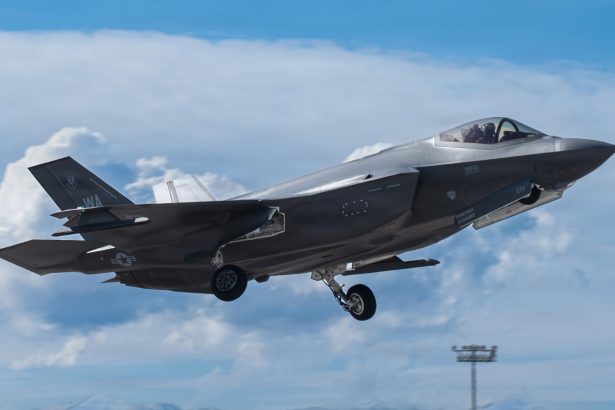
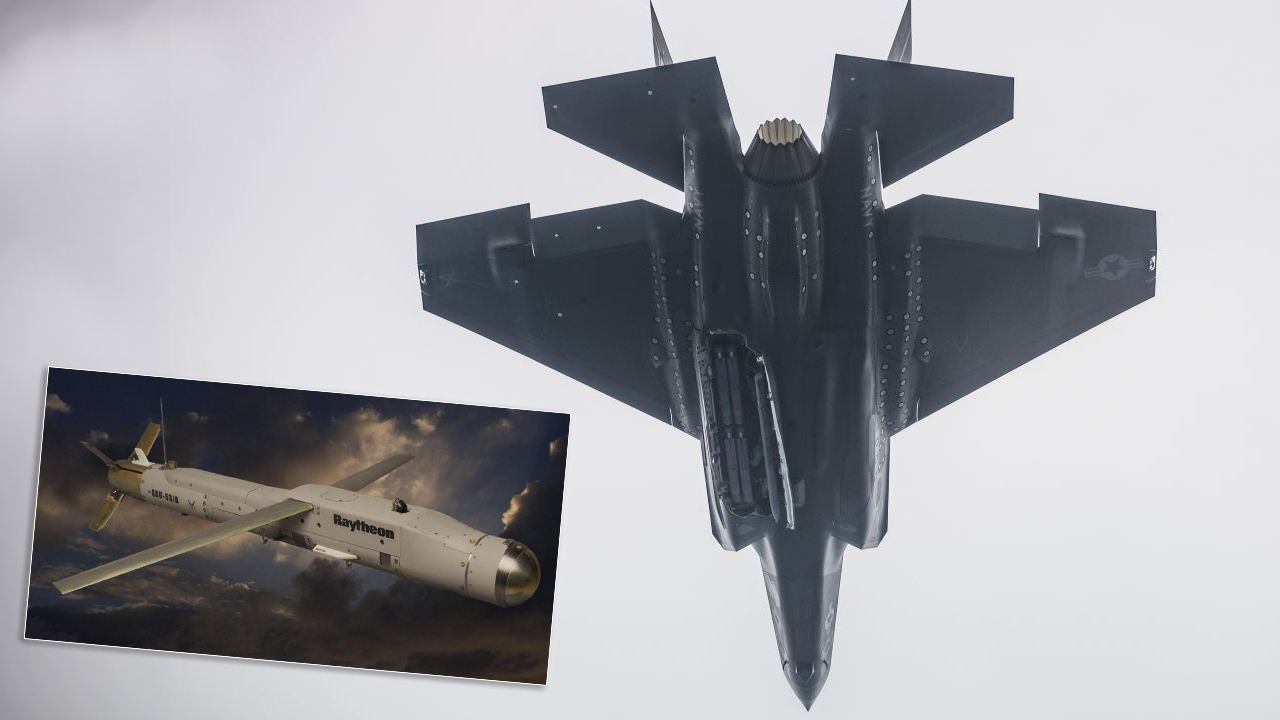
The F-35 will be able to carry eight StormBreaker weapons internally and eight externally, providing the 5th gen aircraft with the capability to hit moving targets in adverse weather, addressing a wide range of threats and scenarios.
Operational Use
As we reported in March 2025 here at The Aviationist, the GBU-53 was among the weapons that were prominently used by F/A-18E/F Super Hornets during operations against targets in Yemen suspected to be linked to the Houthi group responsible for attacking shipping in the Red Sea. The occasion represented the first known use of the weapon, or at least the first publicly acknowledged in official media.
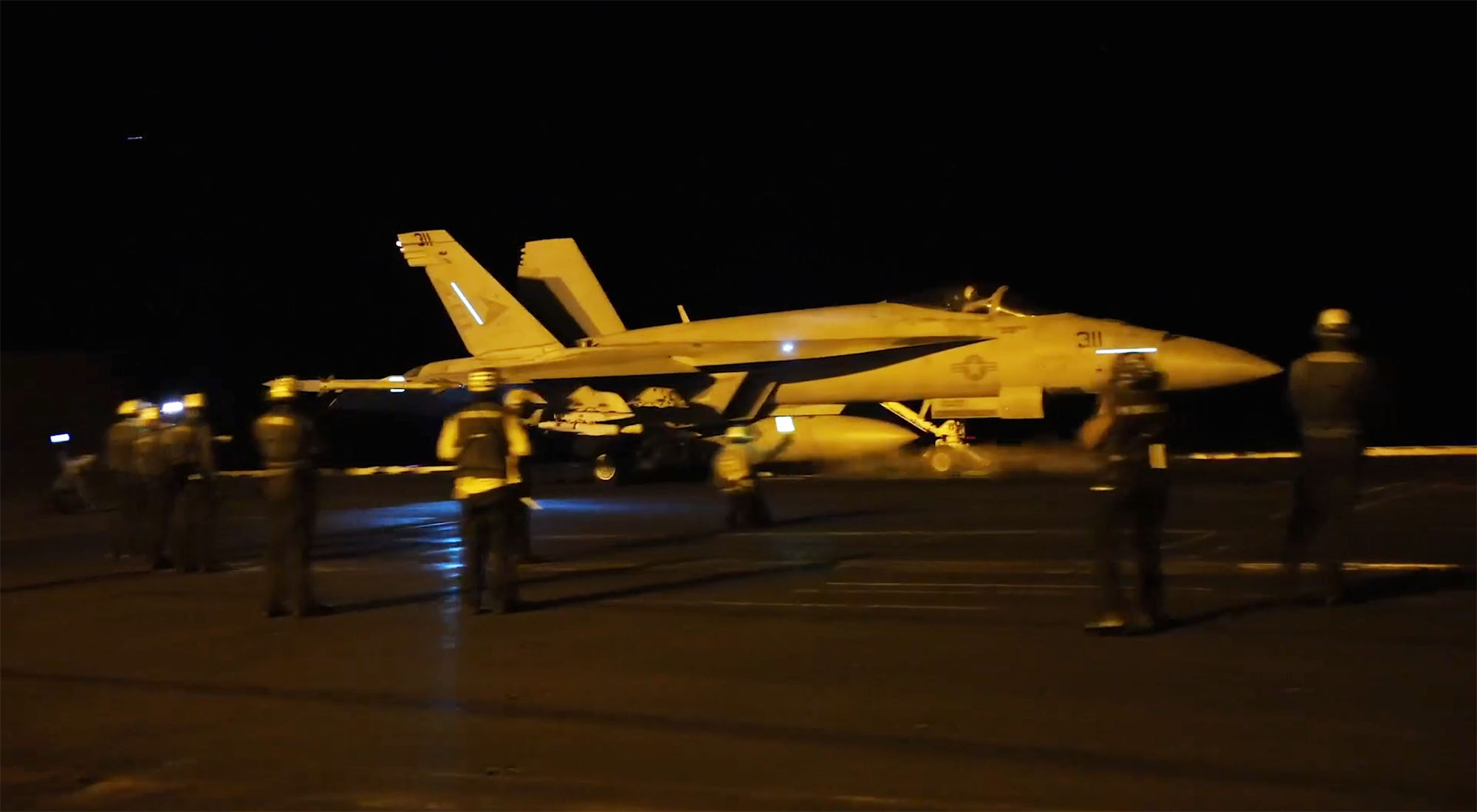
The revelation came as part of videos and images released by the U.S. Central Command (CENTCOM) which showed the Super Hornets launching from the USS Harry S. Truman aircraft carrier. Notably, the payloads also included the AGM-154 JSOW glide weapon and the AGM-84 SLAM-ER missile.
While the “classic” Joint Direct Attack Munitions (JDAM) were also included in the loadouts, the wide use of standoff weapons reflects the threat still posed by the Houthis. Together, the SDB II, JSOW and SLAM-ER allowed the U.S. Navy to strike different targets, from mobile launchers to reinforced positions, at varied distances, either on the coast or well inside Yemen.