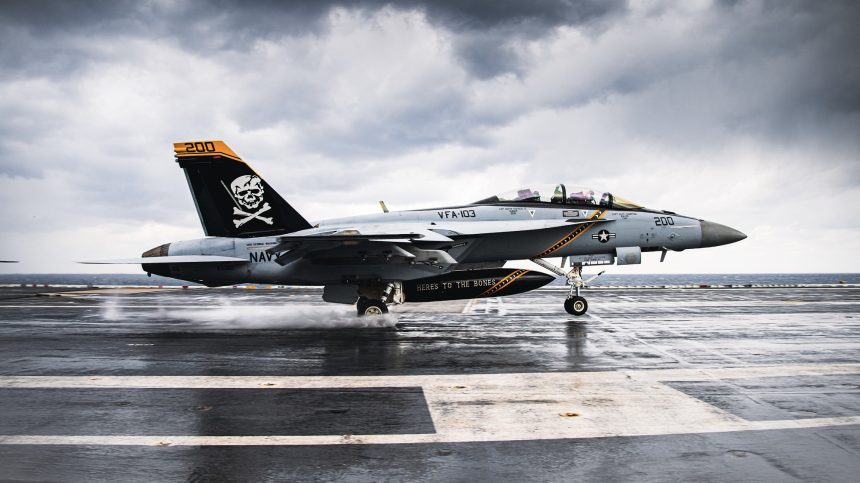
Dating back to the days of sailing vessels and piracy on the high seas, the intimidating black flag with a white skull and crossbones logo has adorned U.S. Navy aircraft since 1943.
Flying some of history’s most feared and well-known aircraft, squadrons bearing the Jolly Rogers name have carried a tradition of U.S. Naval aviation excellence through many conflicts, beginning with the Chance-Vought F4U Corsair and continuing to this day in the Boeing F/A-18 E and F model Super Hornet. Their motto of ‘Fear the Bones’ has always been supported by the best aircraft and pilots the Navy has to offer.
Pacific Beginnings
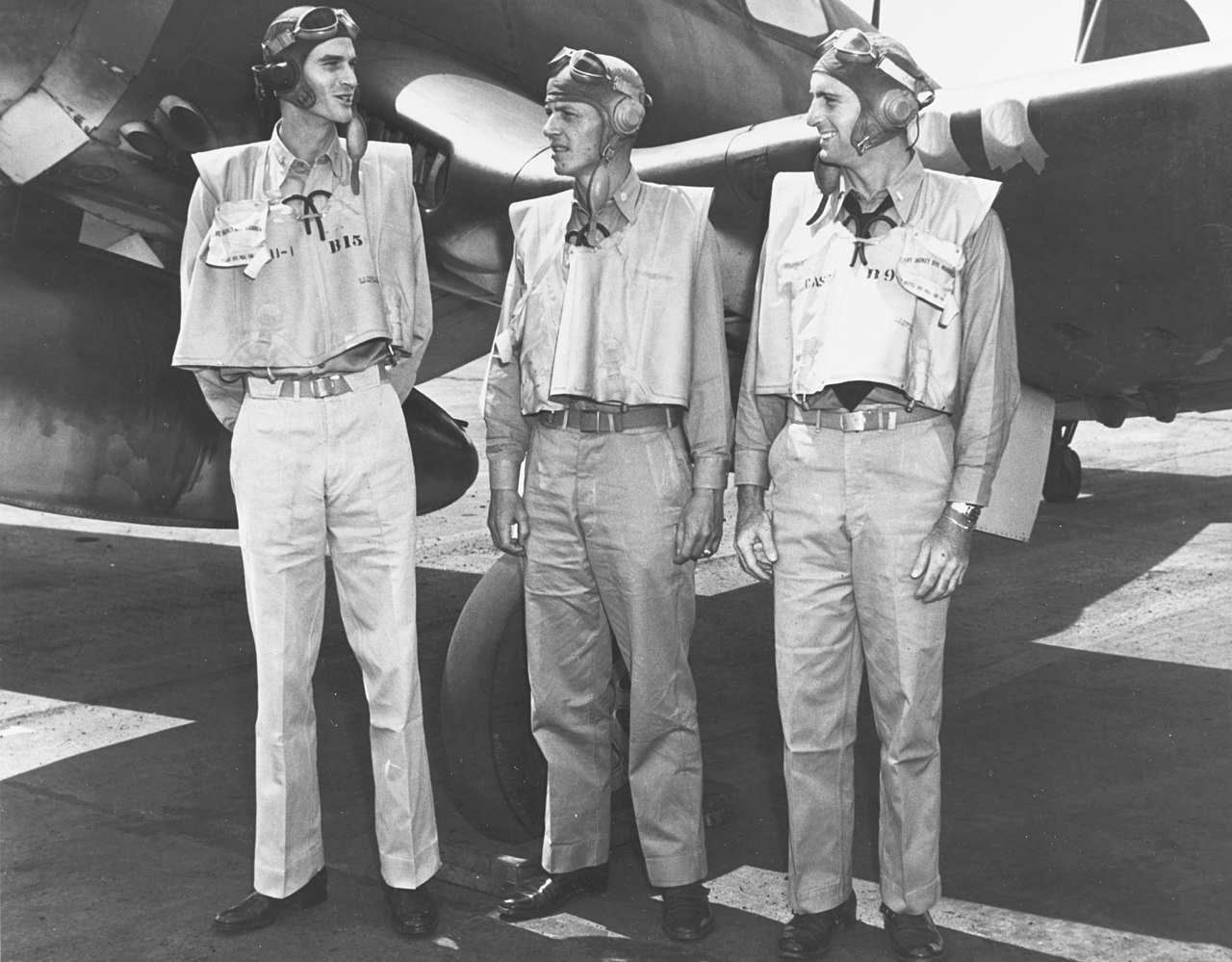
When Fighter Squadron 17 (VF-17) was formed in January 1943 at Norfolk, Virginia, Lt. Commander Tom Blackburn placed several combat veterans in key positions of the unit. These included combat veterans Lt. Halford and Lt. Kleinman who fought at Guadalcanal. Blackburn was an experienced, hard-driving and tough combat pilot himself, credited with downing several enemy aircraft.
Outside of a handful of experienced pilots, Blackburn would have 37 rookie pilots straight from flight school with no combat experience. Most had only spent time in training aircraft and not fighters. Blackburn would train these men hard in both SNJ and F4F Wildcat aircraft, shaping the pilots into a team with high standards and high morale.
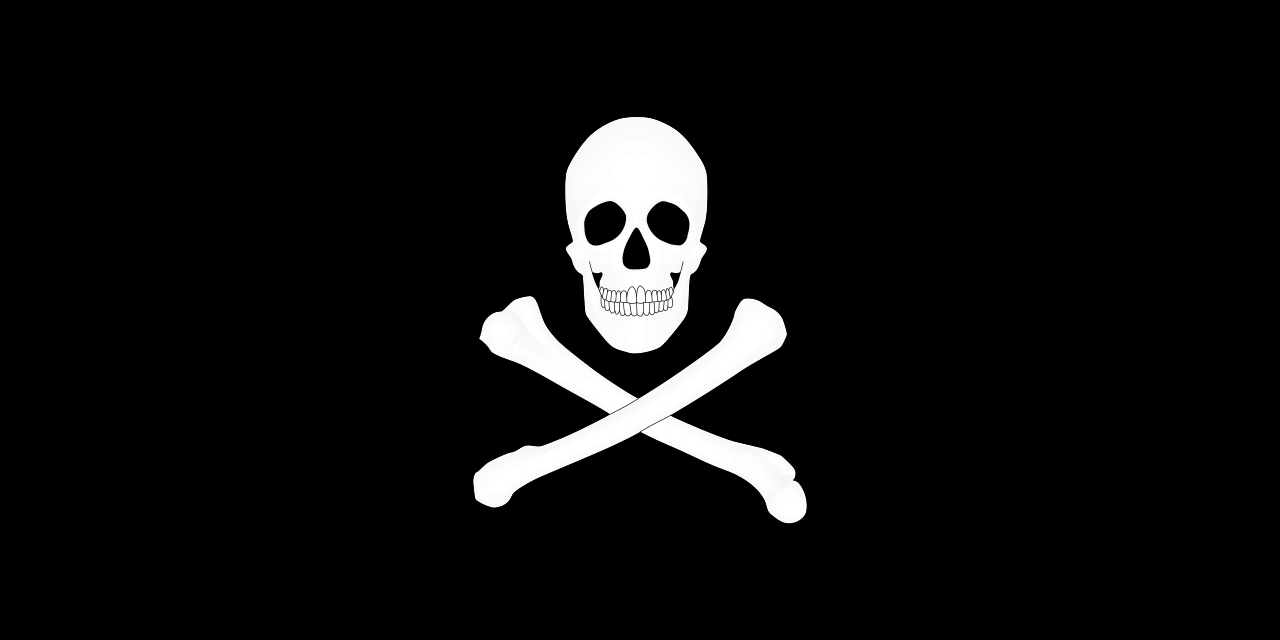
Blackburn decided his unit needed a unit name that was intimidating and showed an attitude. Since they were flying F4U-1 Corsairs (another name for pirate), the name Jolly Rogers was chosen for the unit and the familiar pirate flag consisting of a black background with white skull and crossbones was adopted as the unit insignia.
VF-17 was the second unit to receive the Corsair. First assigned to the new aircraft carrier, the USS Bunker Hill (CV-17), the unit soon found themselves a land-based unit in October 1943 near New Georgia. Partaking in Operation Cartwheel, VF-17 fought Japanese forces at Bougainville, Papua New Guinea in the Solomon Islands. VF-17 would be the first U.S. Navy unit to see action in an attempt to wrestle control of the area back from the Japanese. The unit would go on to participate in The Battle of the Solomon Seas, downing 18 Japanese aircraft and damaging others. In November 1943, the Jolly Rogers participated in the attack on Rabaul, with the battle raging until March 1944 before overcoming the Japanese forces there.
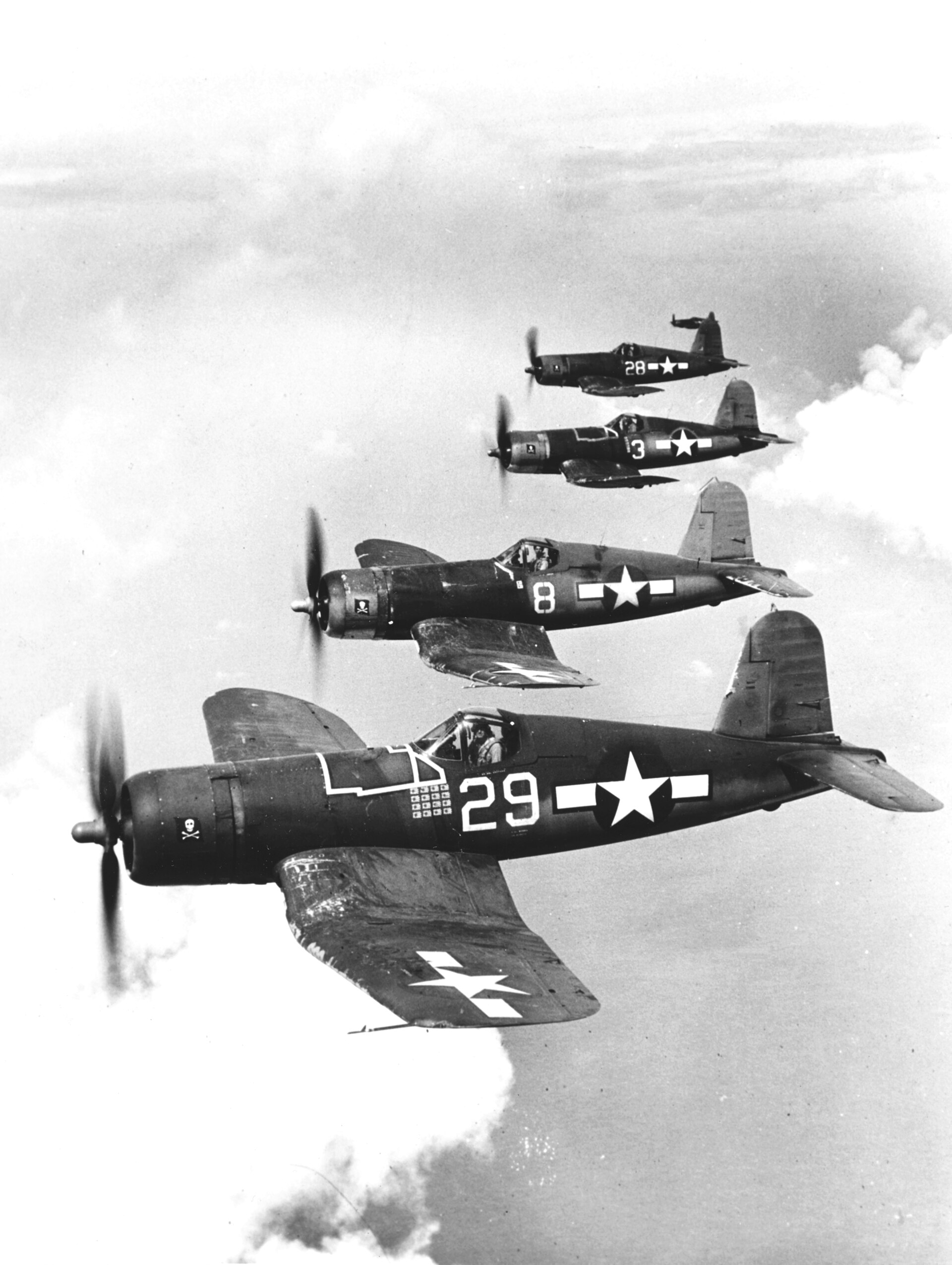
VF-17 ended the campaign as the highest scoring Corsair squadron in the Pacific Theater, producing between 11 and 13 confirmed aces and sources indicate a total of between 152 and 154.5 kills for the unit by the end of the campaign. This was more than any naval unit at the time, and Blackburn, himself an ace with 11 aerial combat victories, was awarded the Distinguished Cross as well as the Navy Cross for his efforts in the Pacific.
VF-17 would be reformed on the U.S. West Coast with new personnel under Lt. Commander Marsh Beebe. The new VF-17 now sported Grumman F6F Hellcat aircraft but still carried the Jolly Rogers trademark pirate flag insignia. The unit first entered combat flying from the USS Hornet (CV-12) during the strikes on Tokyo, beginning to score victories again on Feb. 16, 1945.
The new VF-17 was credited with 161 victories and produced 12 more aces during operations from the Hornet, bringing the Jolly Rogers total for the war to 313 aerial victories, narrowly edging out VF-15’s 310.
After the War
VF-17 was re-designated VF-5B on Nov. 15, 1946. In July 1948, the unit became VF-61. During this time period, the unit flew the F8F-2 Bearcat, the F9F-2 Panther, the F9F-8 Cougar, and the F3H-2M Demon. It was disestablished in 1959.
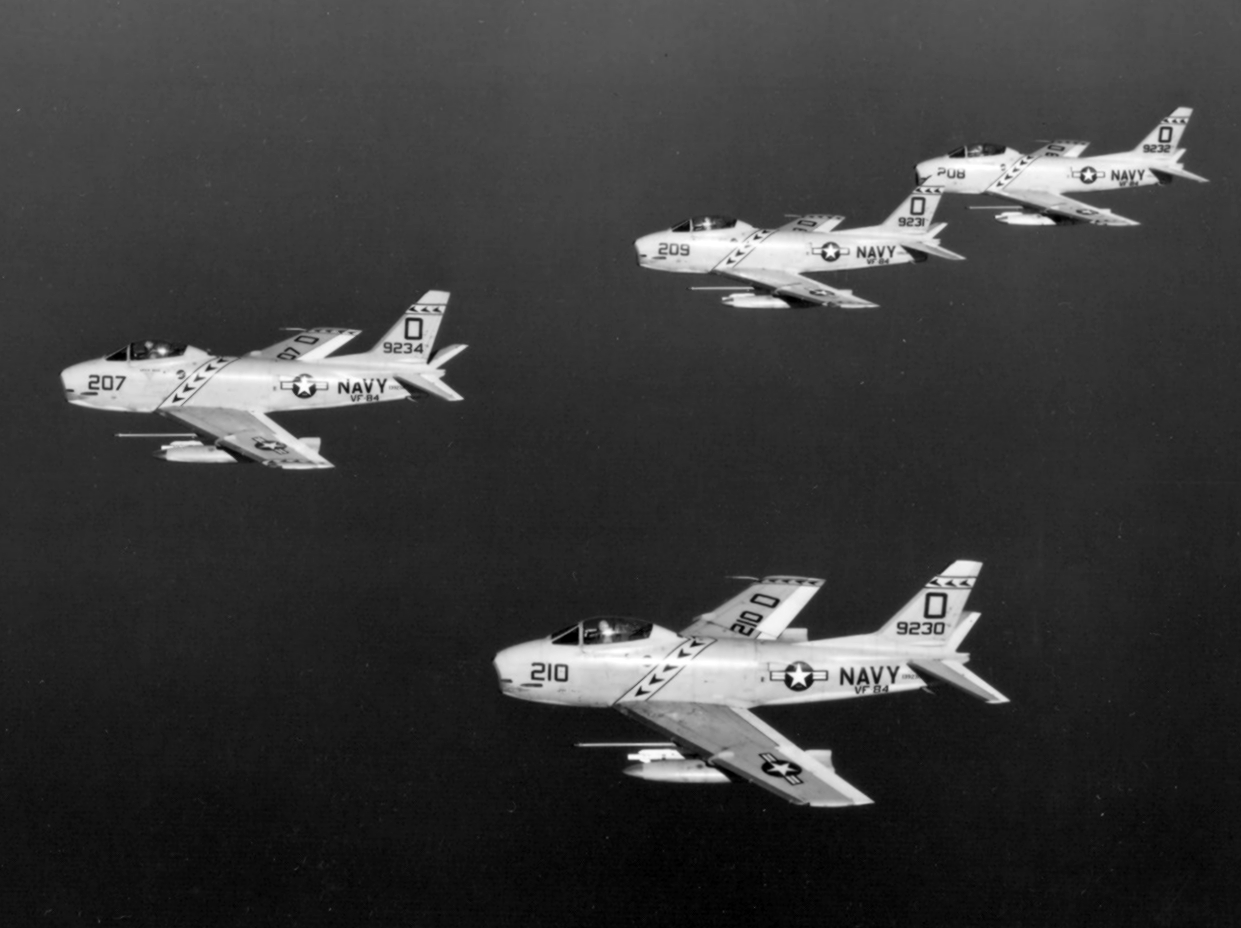
VF-84, once known as the Vagabonds based at Naval Air Station (NAS) Oceana, Virginia, took on the Jolly Roger name in June 1959 to preserve the tradition. Originally flying the FJ-3 Fury, the unit went on to fly the F-8C Crusader, F-4 Phantom, and the F-14 Tomcat. VF-84 was decommissioned in 1995.
VF-103
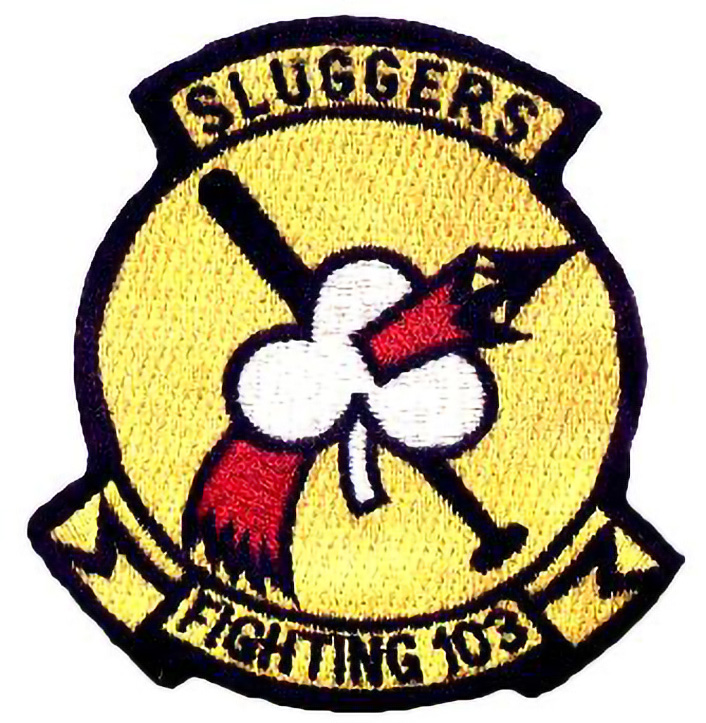
Beginning life in May 1952 at NAS Oceana, VF-103 would be known as the Sluggers, sporting a Club and Cloverleaf insignia.
Before taking on the Jolly Rogers name, VF-103 would fly over the dangerous night skies of Vietnam during the war and achieve the first and only nocturnal kill of a MiG-21, flying the F-4J Phantom using an AIM-7 Sparrow missile. VF-103 operated from the carrier USS Saratoga (CV-60) during the Vietnam War.
In October 1985, VF-103 flying F-14s would participate in the interception of the Boeing 737 carrying the hijackers of the Achille Lauro cruise ship, forcing the Egyptian airliner down at NAS Sigonella, Sicily. Italian forces took the terrorists into custody where they were tried and sentenced.
VF-103 also participated in Operations Attain Document and El Dorado Canyon in the spring of 1986 during actions against Libya.
VF-103 conducted fighter escort and bomb damage assessment (BDA) missions as well as reconnaissance and combat air patrol missions during the Gulf War in 1991. One VF-103 F-14A+ was lost to what is believed to be an Iraqi SA-2 ‘Guideline’ surface-to-air missile (SAM), with the Radar Intercept Officer (RIO) Lt. Larry Slade being taken captive as a prisoner of war (POW) and the pilot Lt. Devon Jones evading Iraqi forces and eventually rescued by United States Air Force (USAF) Special Operation Forces.
When VF-84 was decommissioned in October 1995, VF-103 retired the Slugger name and logo and took the Jolly Rogers name and sinister insignia, keeping the tradition alive. 1995 also saw VF-103 conduct fleet feasibility testing of the USAF’s LANTIRN (Low Altitude Navigation and Targeting Infrared for Night) targeting pod.
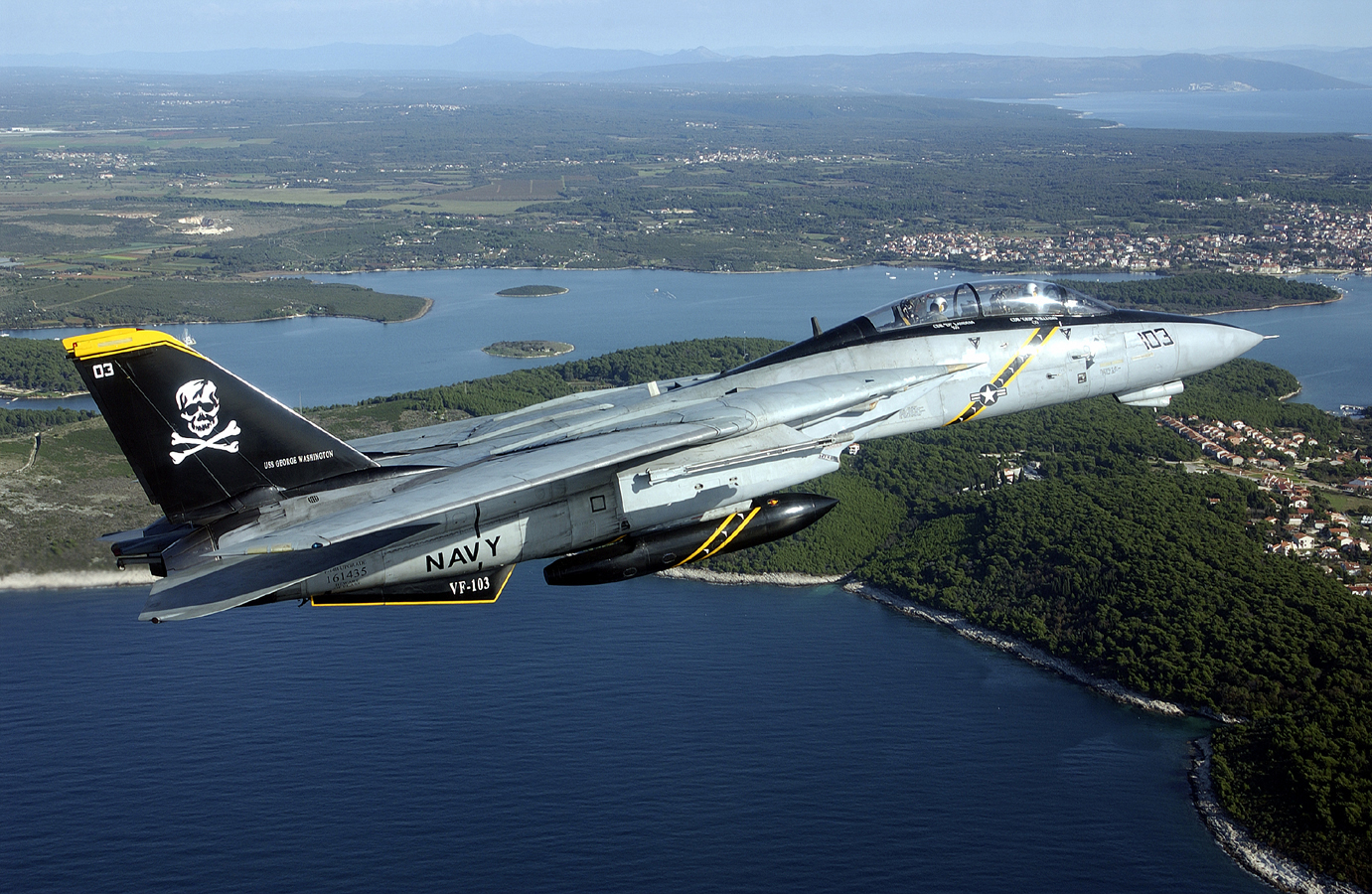
In June of 1998, VF-103 flew in support of NATO operations in Kosovo operating from the carrier USS Dwight D. Eisenhower.
VF-103 would participate in Operation Enduring Freedom and Operation Southern Watch in 2002, supporting Coalition forces in Afghanistan. In early 2003, the squadron was on the way home when Operation Iraqi Freedom began.
VF-103 would make its last deployment in 2004 aboard the USS John F. Kennedy (CV-67) in support of Operation Iraqi Freedom while flying F-14B Tomcats. Operation Phantom Fury saw VF-103 provide aerial support over Fallujah in October 2004, in which an F-14 provided laser designation to an AH-1W Super Cobra helicopter’s AGM-114 Hellfire missile in order to destroy building housing insurgents. The first time this had been attempted with a Hellfire led to succeeding in destroying the target and neutralizing the enemy fire. The F-14 then finished off the remains of the target with a pair of GBU-12 guided munitions.
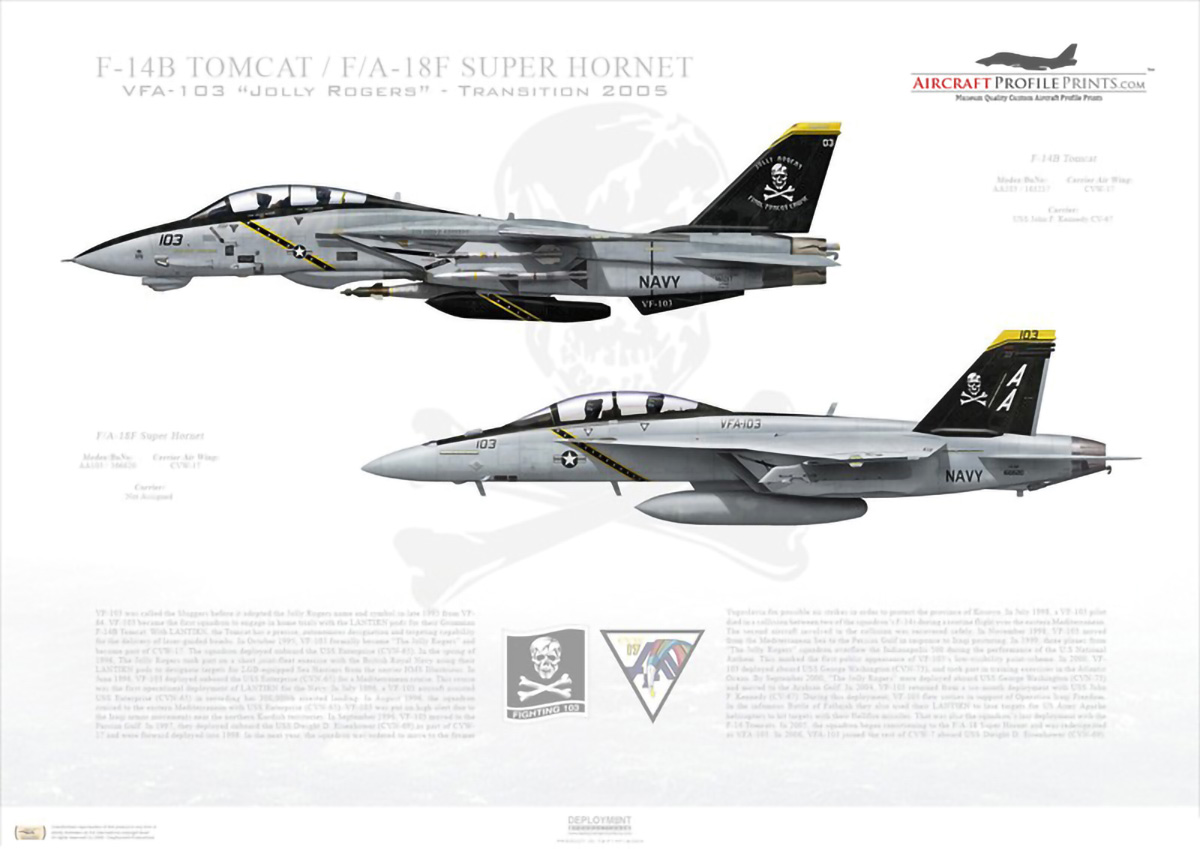
In February 2005, the squadron transitioned to F/A-18 Super Hornets after the retirement of their F-14s in December 2004, and the unit was re-designated as VFA-103 (Strike Fighter Squadron).
VFA-103
In 2006-2007, VFA-103 flew in support of both Operation Iraqi Freedom and Enduring Freedom, and participated in operations near the Somali coastline. They were awarded the AIRLANT (Naval Air Force Atlantic) Battle ‘E’ (Battle Efficiency/Battle Effectiveness Award) for both 2006 and 2007 along with the Wade McClusky Award for the best US Navy attack squadron in 2007.
February 2009 saw VFA-103 deployed once more supporting ground forces during Operation Enduring Freedom, during which the unit let the air wing in kinetic effects.
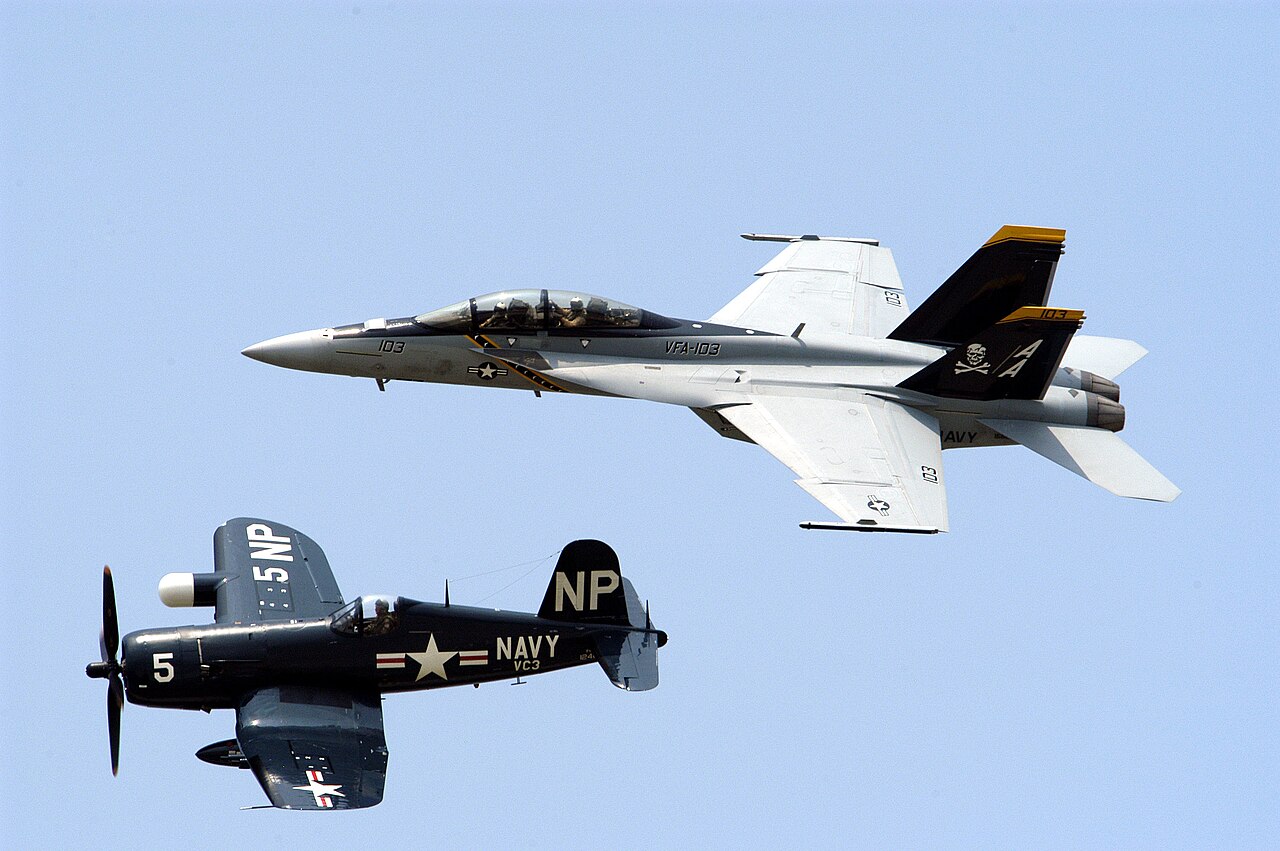
In January 2010, VFA-103 returned to sea operating from the USS Dwight D. Eisenhower (CVN-69) in support of Operations Enduring Freedom and Iraqi Freedom as Carrier Air Wing Seven’s (CVW-7) chosen squadron for demanding combat and combat support missions. The Jolly Rogers flew over 1,850 sorties and 5,900 hours, leading the air wing in combat operations.
More recently in 2016, VFA-103 flew from the decks of the USS Harry S. Truman (CVN-75) in support of Operation Inherent Resolve, once again proving to be the most lethal squadron in CVW-7, deploying more than 490 pieces of precision guided ordinance. This was more than any single squadron in naval history, leading to the noses of multiple aircraft being covered with air strike kill markings.
In the Spotlight
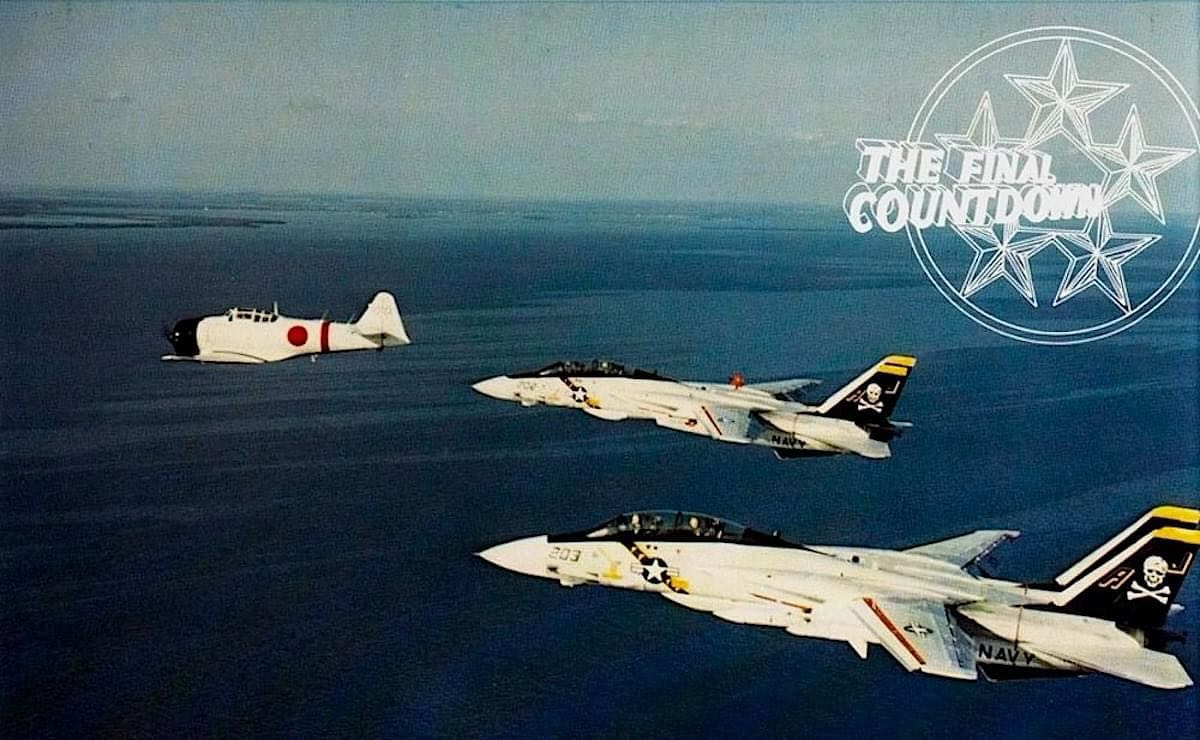
The Jolly Rogers also played a prominent role in the 1980 motion picture The Final Countdown, propelling the unit and the F-14 Tomcat to international notoriety. The movie depicts a time-traveling nuclear-powered USS Nimitz carrier going through a strange electro-magnetic storm and winding up in the Pacific in December 1941, just before the Japanese attack on Pearl Harbor. The film contains some stunning shots of a variety of period aircraft, and scenes show F-14s sporting the skull and crossbones tangling with Japanese Zeros (converted North American T-6 Texans).
Disney presented a fictional version of the squadron in the 2013 movie Planes, dubbing them the ‘Jolly Wrenches’ and substituting the skull and crossbones with a piston head and crossed wrenches. In 2024 the Navy Midshipmen football team wore uniforms inspired by the Jolly Rogers during the Army-Navy game.
The legend of the sinister pirate flag sporting Jolly Rogers squadron lives on, leading all who cross their paths to ‘fear the bones’.