Saudi Arabia is attracting industry’s interest at the World Defense Show, with a continued push for the F-35, a proposed F-15 upgrade, and rumors about Kaan and JF-17.
The modernization of Saudi Arabia’s military is in the spotlight at the ongoing World Defense Show, which is be held from Feb. 8 to 12, 2026, in Riyadh. The industry is working to secure major deals for the procurement of new advanced systems as the country is gearing up to face the renewed threats in the region.
F-35 Lightning II
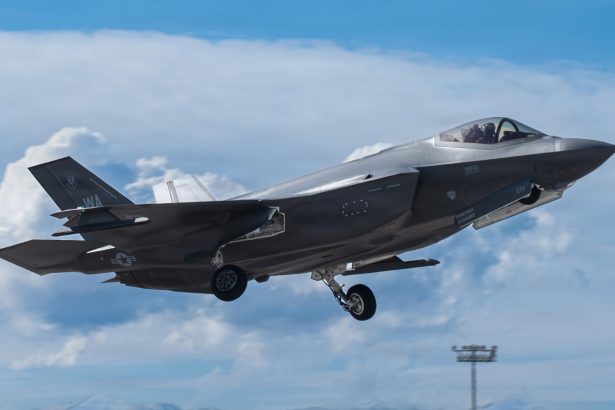
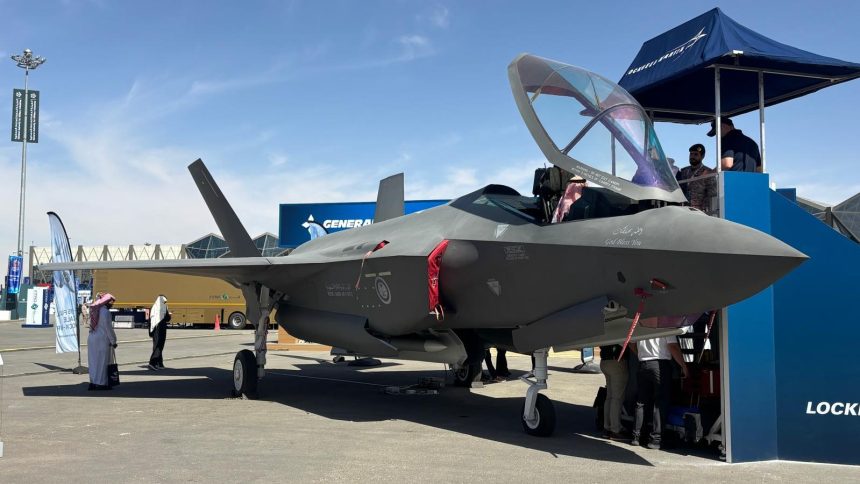
The F-35 Lightning II took center stage, with a real scale mockup of an F-35A in Royal Saudi Air Force markings. Interestingly, the mockup is the only F-35 on the ground at the World Defense Show, while two F-35Cs assigned to the USS Abraham Lincoln aircraft carrier conducted a flyby for the opening of the event.
F-35 mock-up with Saudi flag showcased at World Defense Show 2026 in Riyadh.
Saudi Arabia plans to purchase up to 48 F-35s.
Demo flyovers of F-35s with Saudi flag are also being performed. pic.twitter.com/Ds9yvdgFiO
— Clash Report (@clashreport) February 8, 2026
The company told media that there are ongoing government-to-government discussions regarding the F-35. As we reported in November 2025 here at The Aviationist, the prospect of Saudi Arabia becoming the next Middle Eastern operator of the F-35 Lightning II appears to have accelerated sharply following a series of high-profile statements from U.S. President Donald Trump and the signing of a new U.S.–Saudi Strategic Defense Agreement (SDA).
The country has pursued the F-35 for years, although the acquisition never became reality because of various reasons, including the highs and lows in the relations between the two countries in recent years. Trump said in November he expects the sale of F-35s to Saudi Arabia to proceed rapidly: “We will be doing that, we’ll be selling F-35s. They want to buy them, they’ve been a great ally.”
F-35 fighter jets fly over Riyadh during the World Defense Show 2026, as Saudi Arabia prepares to receive 48 aircraft under a landmark deal with the United States. pic.twitter.com/oFsqqgxOuD
— Al Arabiya English (@AlArabiya_Eng) February 9, 2026
The SDA signed by the U.S. and Saudi Arabia included U.S. authorization for both the F-35 sale and the purchase of nearly 300 M1 Abrams tanks. While the number of F-35s was not formally disclosed, multiple sources indicate that Saudi Arabia is seeking a fleet of up to 48 aircraft.
The potential deal, however, still faces some hurdles. One is the U.S. legal obligation to preserve Israel’s qualitative military edge (QME) in the region, part of the 2008 Arms Export Control Act, which requires that any Middle Eastern arms sale not erode Israel’s ability to maintain a technological and operational advantage.
A display model of the F-35 aircraft bearing the logo of the Royal Saudi Air Force is showcased at the World Defense Show in Riyadh.#SaudiArabia pic.twitter.com/Nt6AeSYQgj
— Al Arabiya English (@AlArabiya_Eng) February 8, 2026
Israel has historically opposed the export of the F-35 to Arab states, one of them being Qatar. Israeli media reported that the Israeli Air Force has already raised concerns, producing a white paper warning that Saudi Arabia’s acquisition could “erode or significantly degrade” its QME.
F-15SA Upgrade
Boeing has proposed to the RSAF an upgrade to bring its F-15 Eagle fleet to the same standard of the U.S. Air Force’s F-15EX Eagle II. According to World Air Forces 2026, as of December 2025, the inventory included 232 F-15s, of which 84 are the new F-15SAs, around 68 are F-15SRs and 80 are the earlier F-15C/D models.
The F-15s are the backbone of the Saudi fleet, serving alongside 72 Eurofighter Typhoons and 81 Tornado IDS jets, the latter about to be phased out. An upgrade already saw the F-15S being brought to the F-15SR configuration in parallel with the acquisition of the F-15SA.
A Saudi Royal Air Force pilot thrilled crowds at the World Defense Show in Riyadh with a breathtaking aerial display featuring F-15SA fighter jets, showcasing Saudi Arabia’s advanced combat aircraft and aviation capabilities. pic.twitter.com/F486ZipVsZ
— Al Arabiya English (@AlArabiya_Eng) February 9, 2026
“We currently [are] talking right now with the Royal Saudi Air Force on F-15EX,” said Vince Logsdon, Boeing’ vice president for International Business Development, according to Aviation Week. “The F-15 is 52 years old, and the F-15EX is the latest and greatest [version] of that … and we are looking at potential upgrades to the SA aircraft and potential new buys as well.”
In 1992, Saudi Arabia procured 72 F-15S, a derivative of the F-15E Strike Eagle, with deliveries going from 1995 to 1999. In 2010, the country was granted a Foreign Military Sale (FMS) for 84 new-built F-15SA jets, whose deliveries started in December 2016, and the upgrade of the F-15S.
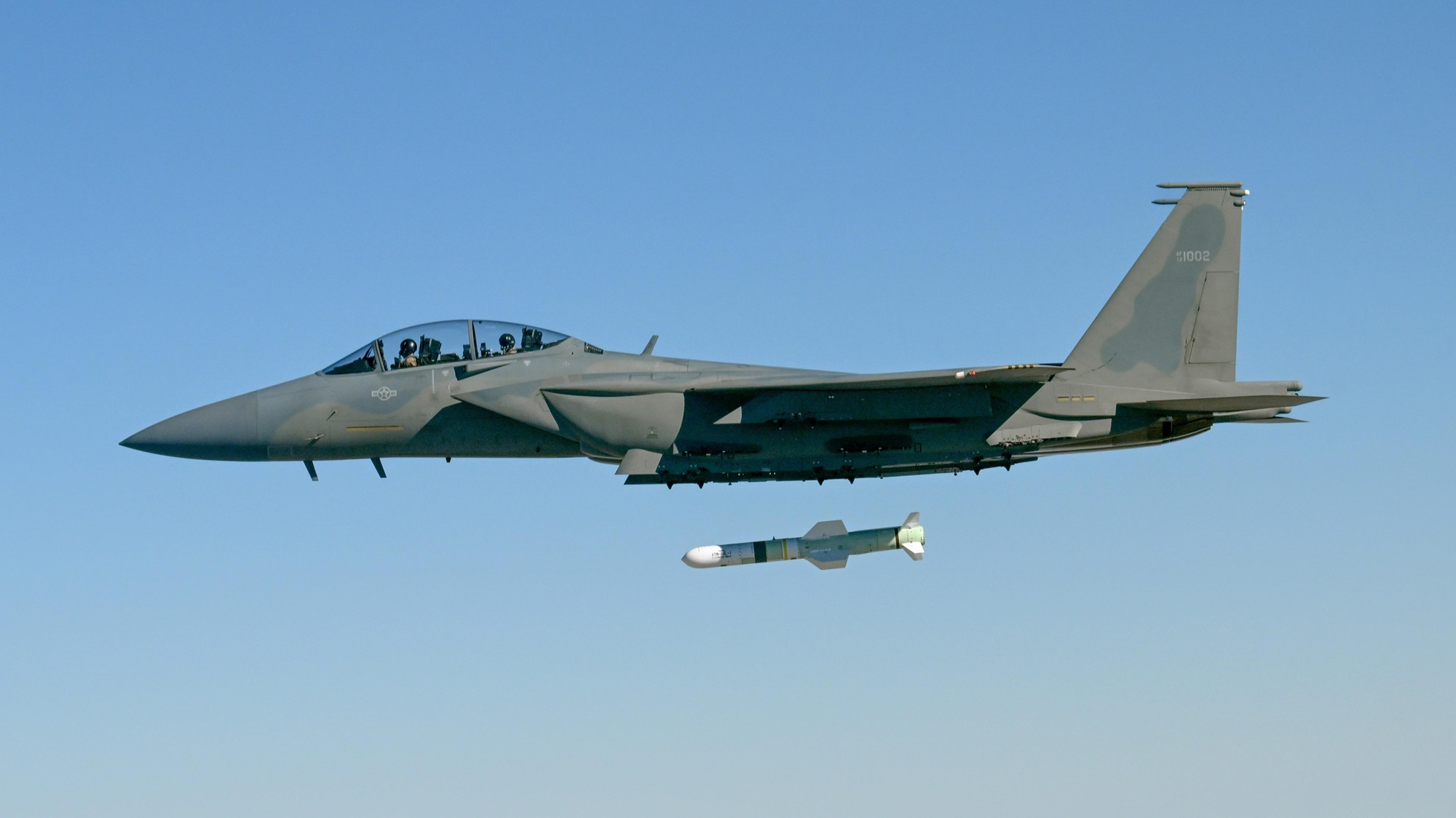
As part of the new upgrade, according to Aviation Week, Boeing is proposing the replacement of the APG-63v3 active electronically scanned array (AESA) with the new APG-82 and the replacement of the AN/ALQ-239 Digital Electronic Warfare System (DEWS) with the AN/ALQ-250 Eagle Passive Active Warning and Survivability System (EPAWSS), as well as the introduction of a new cockpit based on large area displays.
Notably, the F-15SA was recently used for the Harpoon Block II Update (HIIU) test campaign which involved three flight tests of the weapon between 2025 and 2026, as we reported here at The Aviationist. In fact, the Saudi F-15SA is one of the two variants (the other being the South Korean F-15K) that can employ the AGM-84 Harpoon anti-ship missile and its derivative AGM-84H/K Standoff Land Attack Missile-Extended Range (SLAM-ER).
A long walk getting my steps in the run up to the World Defense Show here in the desert near Riyadh revealed this rather lovely and colourfully-ish marked Royal Saudi Air Force (RSAF) F-15SA #WDS2026 pic.twitter.com/onasZoCfQP
— Tony Osborne (@Rotorfocus) February 6, 2026
Kaan
In January 2025, we reported about Turkish media mentioning Saudi Arabia might be interested in acquiring over 100 TAI (Turkish Aerospace Industries) Kaan fighter jets, the advanced fighter aircraft developed by Turkey under its TFX (Turkish Fighter-X) program. However, no official confirmation was provided from either of the parties involved about the possible acquisition.
Earlier this month, Turkish President Recep Tayyip Erdoğan has again hinted that Saudi Arabia might join the Kaan program, mentioning “a possibility of joint investment with Saudi Arabia in this area.” According to Aviation Week, TAI is also showing a scale model of the Kaan with a Saudi flag at the World Defense Show.
Saudi flag painted on the tail of a scale model of the @TUSAS_TR #Kaan here at #WDS2026, a possible hint maybe of what President Erdogan mentioned following his visits to KSA and Egypt earlier this week? Note: This is a model of the most up-to-date Kaan configuration. pic.twitter.com/3EMhiAbb6K
— Tony Osborne (@Rotorfocus) February 6, 2026
The aircraft, unveiled in 2019, was rolled out in March 2023 and flew for the first time back in February 2024, but it is still under development. A second prototype is set to fly soon, with a third one reportedly in construction and also set to fly this year.
The first deliveries are scheduled to the Turkish Air Force by 2028, with the jets using General Electric F-110-GE129 engines which would be replaced by indigenous engines in the future. Meanwhile, the aircraft also scored its first export customer, with Indonesia planning to buy 48 aircraft, for a total estimated value of $10 billion, following the agreement announced in 2025.
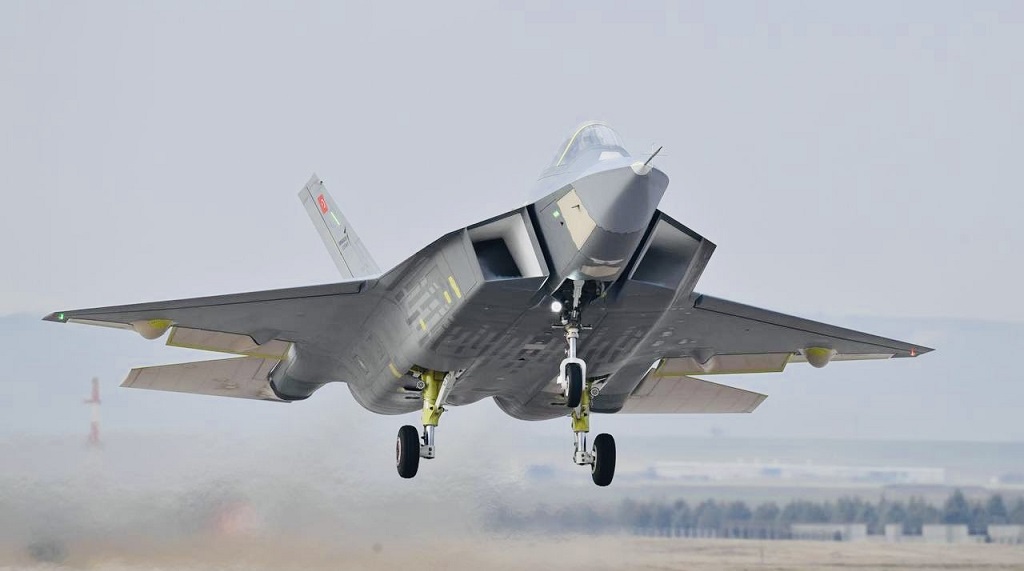
Notably, the RSAF has also ordered Turkish Bayraktar Akinci MALE (Medium Altitude Long Endurance) drones back in 2023, with Baykar saying the deal was “the biggest defense and aviation export contract in the history of the Republic of Turkey.” The purchase of the Kaans would further consolidate the two nations’ military collaboration.
JF-17C Block III
Saudi Arabia is also said to be interested in the JF-17C Thunder Block III, as part of a defense pact with Pakistan signed in September 2025. The aircraft is also on display at the World Defense Show in Riyahd.
At the World Defense Exhibition in Riyadh, the Pakistan Air Force’s JF-17 Thunder has attracted strong interest from visitors and defence experts, standing out among fighter jets displayed by the US, Saudi Arabia and other countries.
— Waseem Abbasi (@Wabbasi007) February 9, 2026
According to Reuters, following the pact, Pakistan and Saudi Arabia are in talks to convert about $2 billion of Saudi loans into a JF-17 fighter jet deal. Reports mention that the RSAF might acquire between 16 and 40 JF-17Cs in a deal valued up to $4 billion, with $2 more billion reserved for weapons, training and support.
The JF-17 Block III is the latest and most capable evolution of the aircraft jointly developed by Pakistan and China. Key upgrades include an Active Electronically Scanned Array (AESA) radar, reportedly the KLJ-7A, a wide-angle holographic Head-Up Display, a helmet-mounted display and sight system, an upgraded electronic warfare suite, and a new glass cockpit.

The type is also compatible with a range of beyond-visual-range air-to-air missiles, including the PL-15, and a variety of air-to-surface munitions. With these enhancements, the Block III variant brings the JF-17 closer to 4.5-generation performance standards.
The RSAF recently had a chance to see the JF-17’s capabilities up close, as the fighter took part in the Spears of Victory 2025 exercise in Saudi Arabia. On that occasion, the Pakistani Air Force executed a non-stop deployment flight from Pakistan to Saudi Arabia and back utilizing air-to-air refueling.
Collaborative Combat Aircraft
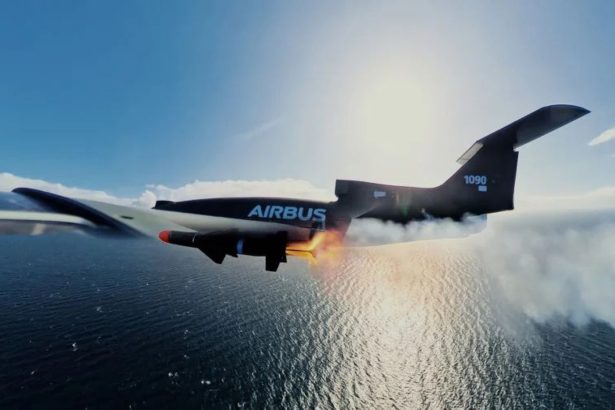
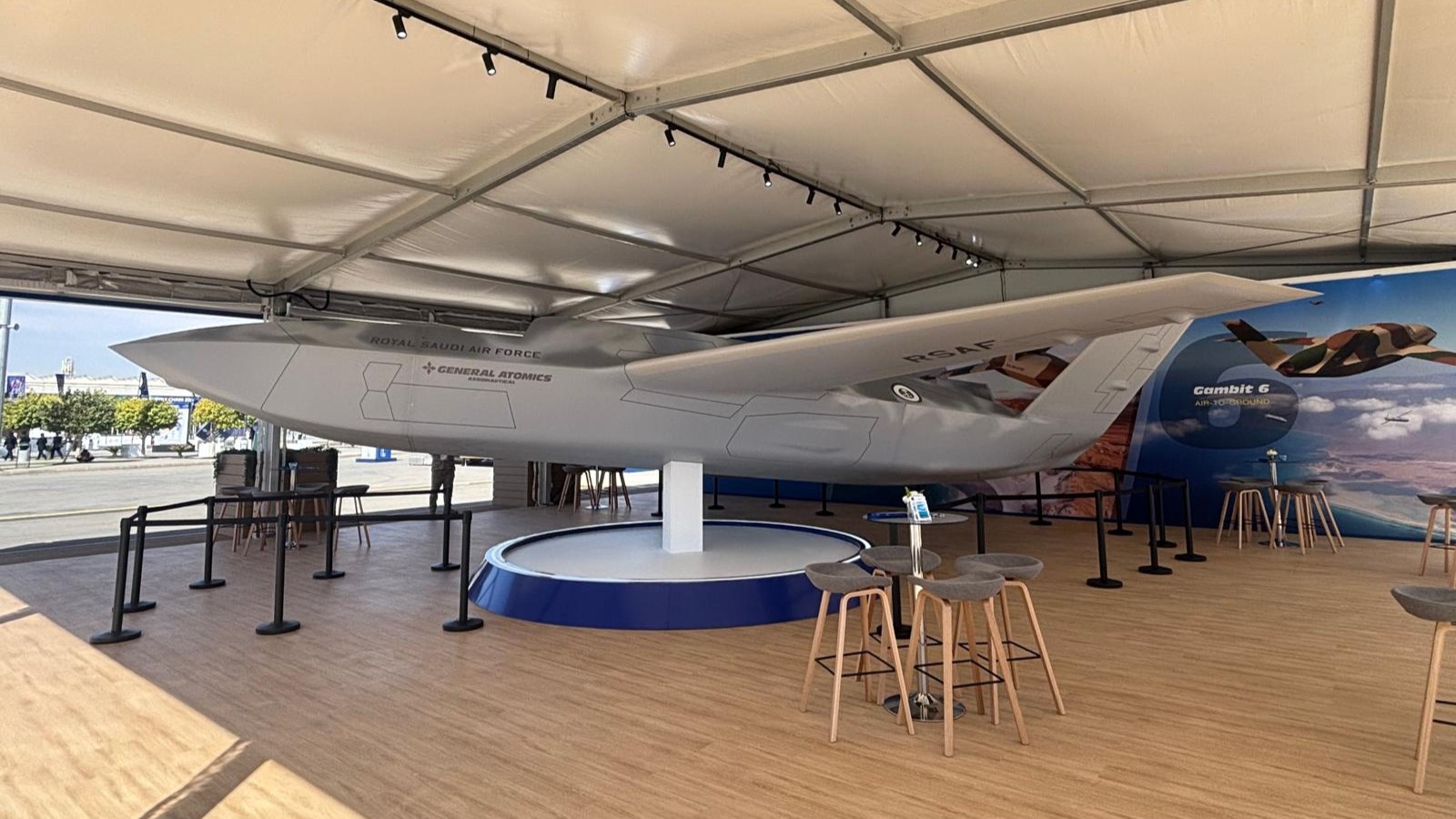
General Atomics Aeronautical Systems might expand its relations in the Middle East, as the company expects to supply up to 200 Collaborative Combat Aircraft (CCA) to Saudi Arabia. GA-ASI’s president David Alexander said during the Dubai Airshow 2025 that the company is in talks for a deal regarding up to 130 MQ-9Bs in the Short Take-Off and Landing (STOL) variant and up to 200 of the Gambit series.
This is how all CCAs should be painted! We already know Saudi Arabia is interested in collaborative combat aircraft, could we see a similar deal to the Calidus/GA-ASI tie-up we saw in Abu Dhabi last month. #WDS2026 pic.twitter.com/uzLaA0IPw2
— Tony Osborne (@Rotorfocus) February 6, 2026
At the ongoing World Defense Show, the company has shown a rendering and a full size mockup of the YFQ-42 in Royal Saudi Air Force livery. The aircraft is GA-ASI’s entry for the U.S. Air Force’s CCA program and is also part of the Gambit series.
Saudi Hawks
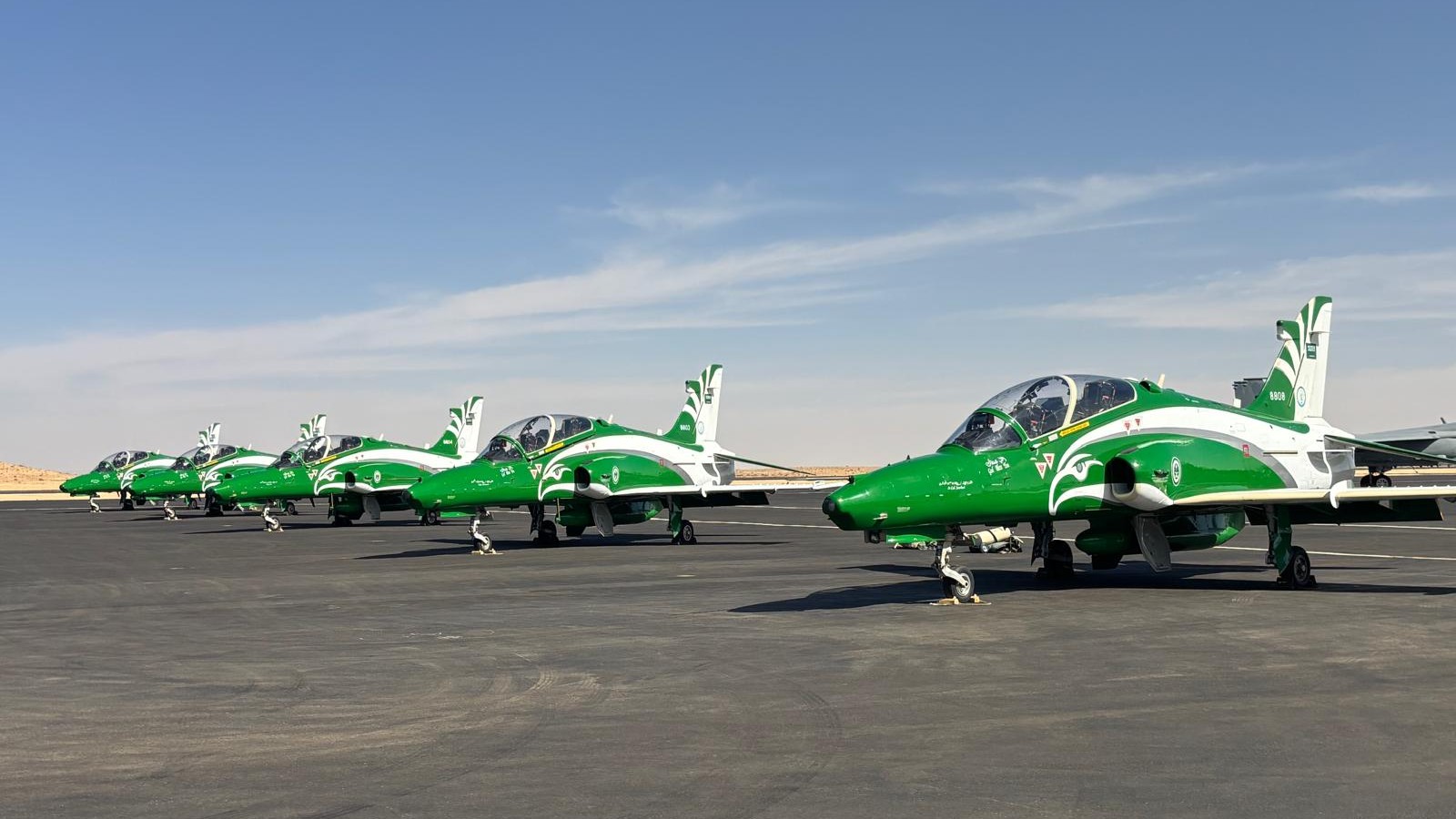
The World Defense Show was also the occasion for the first appearance of the Saudi Hawks aerobatic team since the move to the BAE Systems Hawk 165 advanced jet trainers. The aircraft replaced the Hawk 65s that the team used from 1999 to 2024.
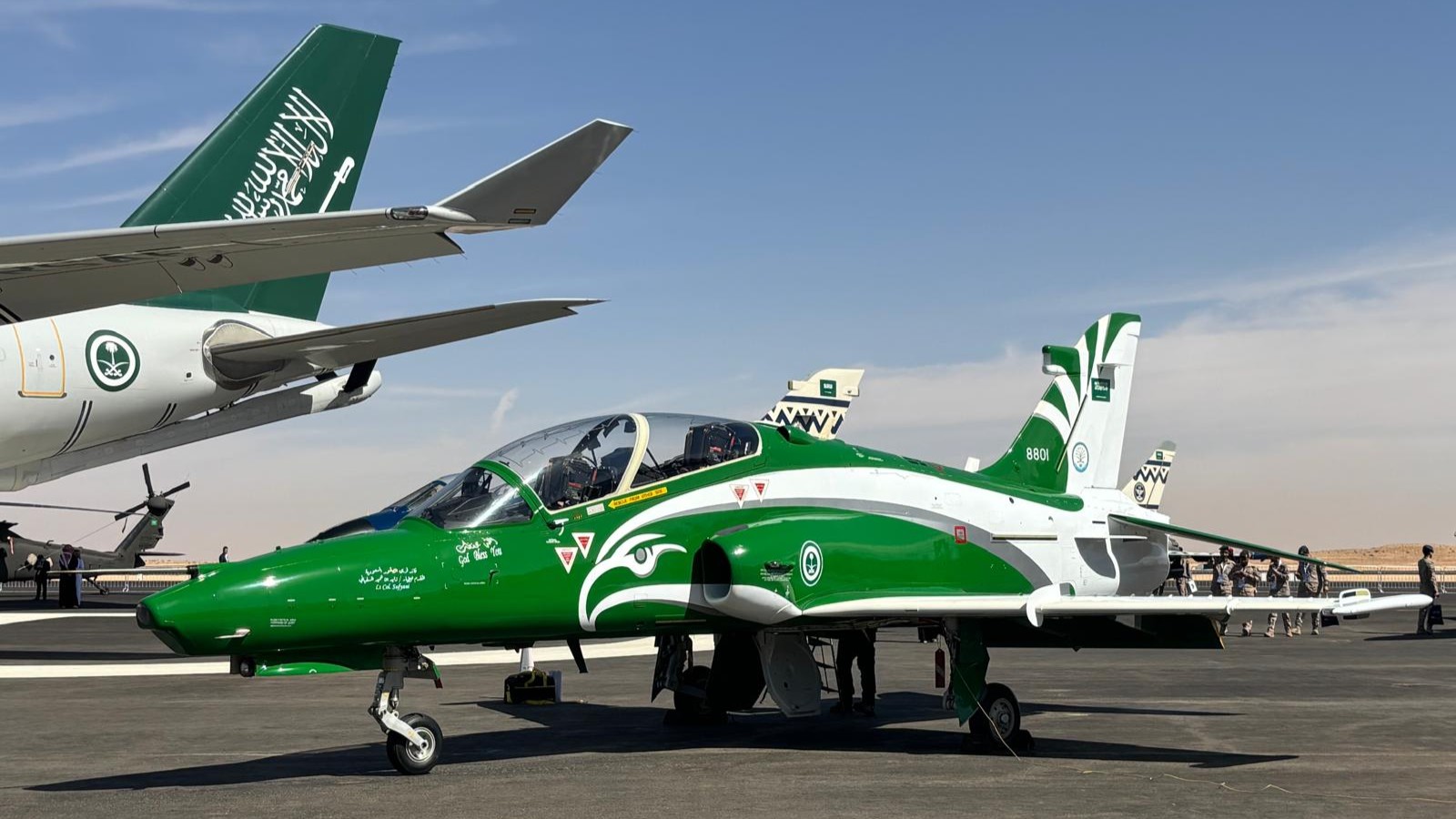
According to World Air Forces 2026, the RSAF has a total of 81 Hawks in service, of which 44 are the newer Hawk 165s. As part of the agreement for the procurement, Saudi companies also took part in the manufacture of parts, and 22 of the jets were assembled locally.
The last of these 22 aircraft was completed in 2024, and ten were destined to the Saudi Hawks team. The Hawk 165, derived from the Hawk 128 also used by the UK’s Royal Air Force under the Hawk T2 designation, is expected to replace the older Hawks operated by the RSAF, first ordered in 1985.