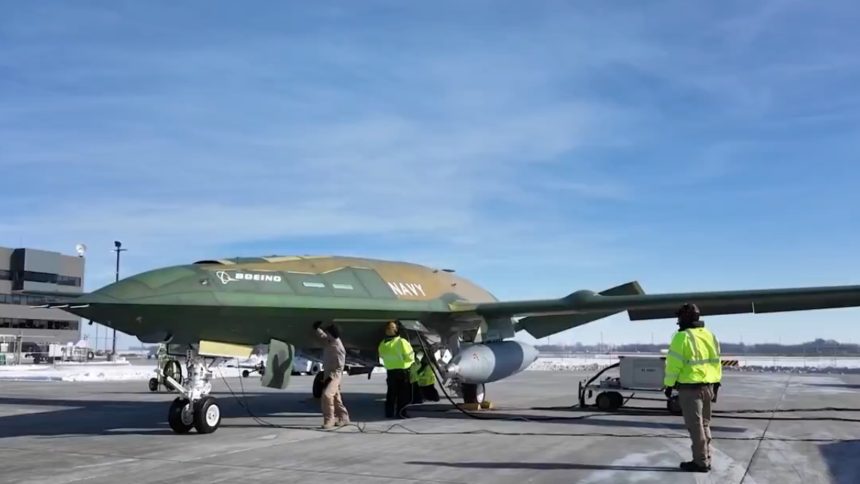
The first production representative MQ-25 taxied under its own power at Boeing’s facilities, following a series of rigorous ground trials over several months.
Boeing and the U.S. Navy’s Naval Air Systems Command (NAVAIR) announced on Jan. 30, 2026, that the production representative prototype of the MQ-25 Stingray unmanned refueling tanker has started taxi trials at MidAmerica Airport near St. Louis, Missouri, home of Boeing’s production facility. This is one of nine Stingrays that Boeing is building for the Navy “to be put through static, fatigue and flight tests to ensure durability and airworthiness,” said the company on Sep. 14, 2023, when the first airframe was moved out of the production line.
The Stingray’s first flight slipped into early 2026, delaying the Navy’s original late-2025 timeline. It is safe to assume systems integration and certification trials were presumably completed before the start of the taxi trials.
One Step Closer to the Sky – The MQ-25A Stingray™ successfully completed its first low-speed taxi test. Under the control of #VX23, #UX24 pilots monitored the Stingray as it taxied from Boeing’s production facility to the taxiway at MidAmerica St. Louis. Video Courtesy of Boeing pic.twitter.com/0CWjGglOop
— NAVAIR (@NAVAIRNews) January 30, 2026
The drone’s primary mission will be to relieve the F/A-18E/F Super Hornet fleet from tanker duty, as that role accounts for up to a third of the type’s sorties, according to Navy figures. The MQ-25 will also have a secondary intelligence-gathering mission.
Taxi trials
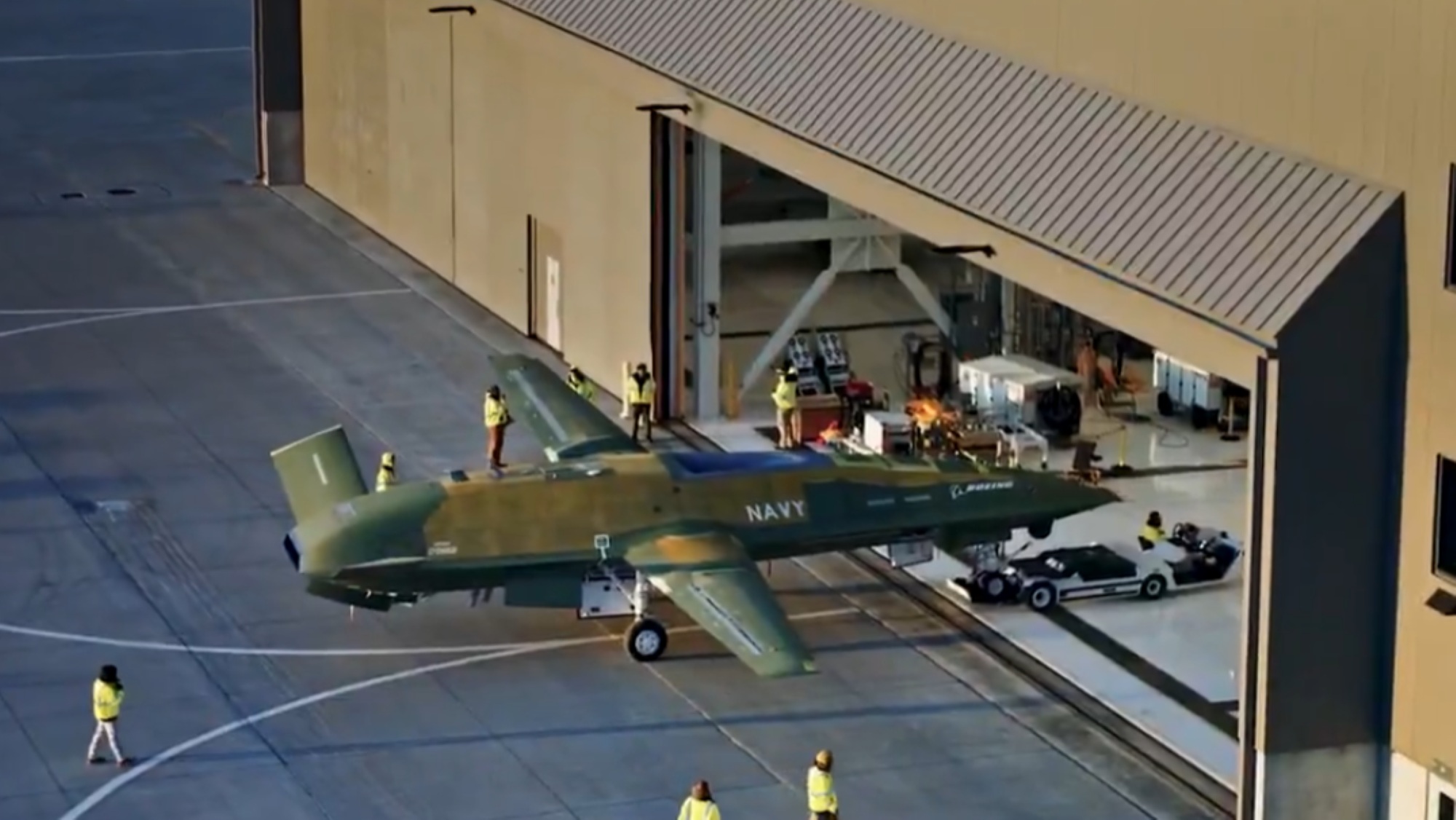
The low-speed taxi trial was conducted by the Navy’s Air Test and Evaluation Squadron 23 (VX-23) and the UX-24, with the latter specializing in the developmental testing of unmanned aerial systems. The drone was towed from the hangar to the taxi line, and conducted the taxiing on its own power, which is a critical milestone.
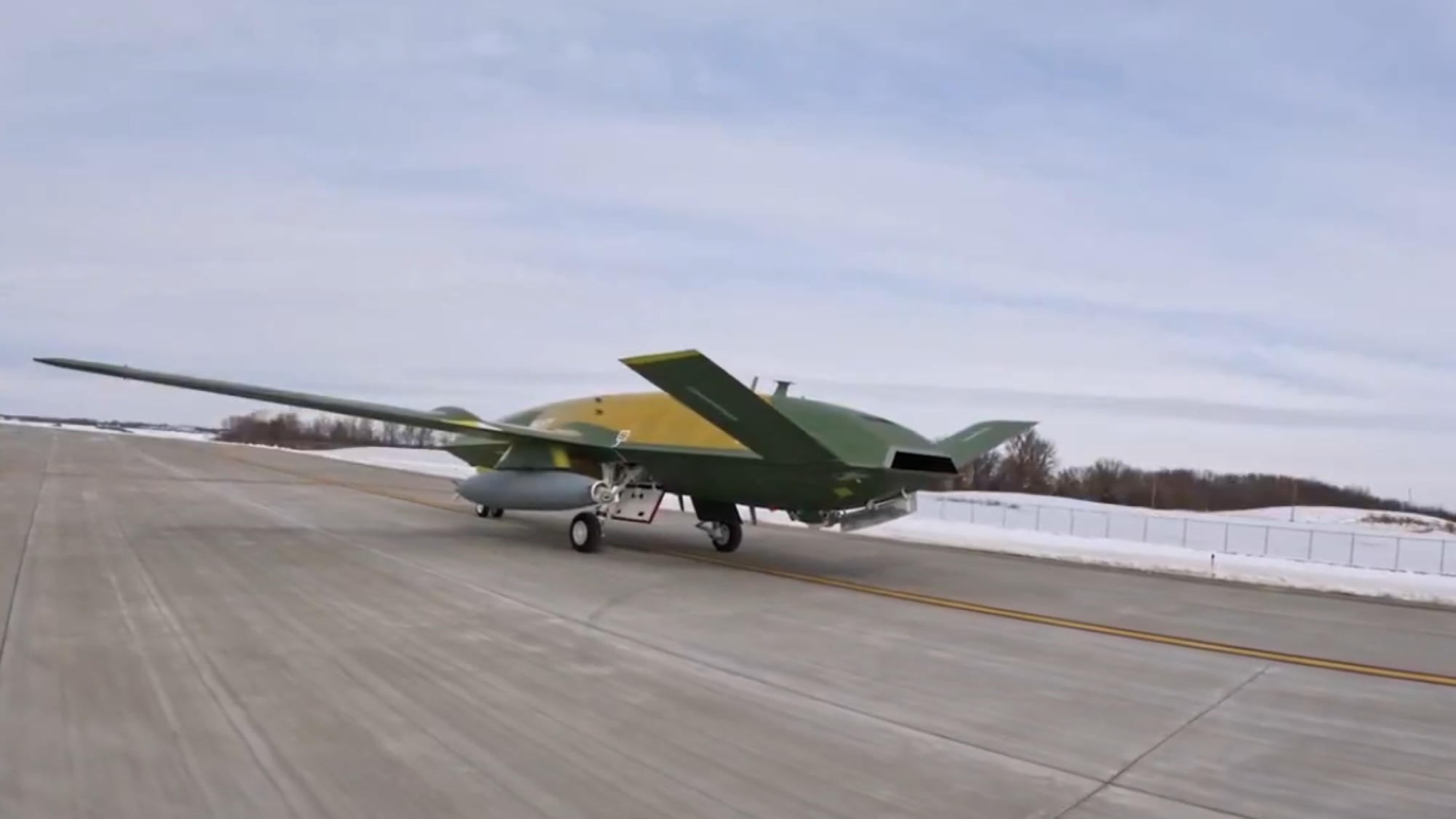
“At the push of a button from Air Vehicle Pilots the Stingray autonomously taxied and executed a series of maneuvers to validate its functionality,” Boeing said in its statement.
#MQ25 on the move!
The first @USNavy MQ-25 Stingray recently moved off the production line to our static test facility. This is the first of nine Stingrays to be put through static, fatigue and flight tests to ensure durability and airworthiness. pic.twitter.com/2UvYoKnK7G
— Boeing Defense (@BoeingDefense) September 14, 2023
In the latest footage, we see an electro-optical ball turret in the retracted position under the chin, confirming the uncrewed tanker would have secondary Intelligence, Surveillance and Reconnaissance (ISR) capability. EO turrets usually have a mix of a CCD/TV camera, thermal vision, night vision, laser range finder, laser designator and a laser tracker – the latter two used for guiding semi-active and active laser guided weapons onto targets.
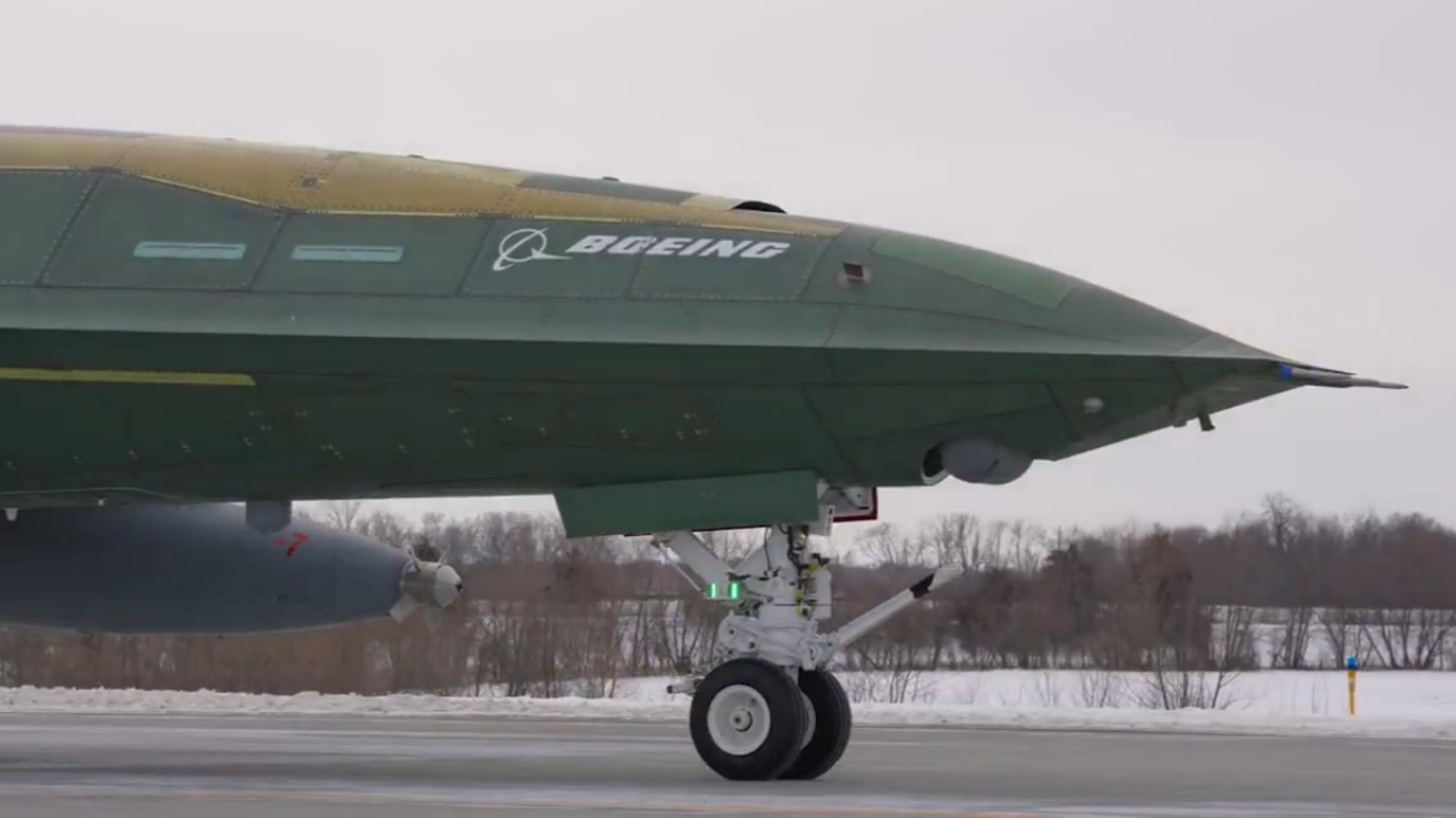
Any system with a secondary ISR function always acts as a force multiplier in extending the naval air arm’s patrol missions, unburdening the larger manned platforms.
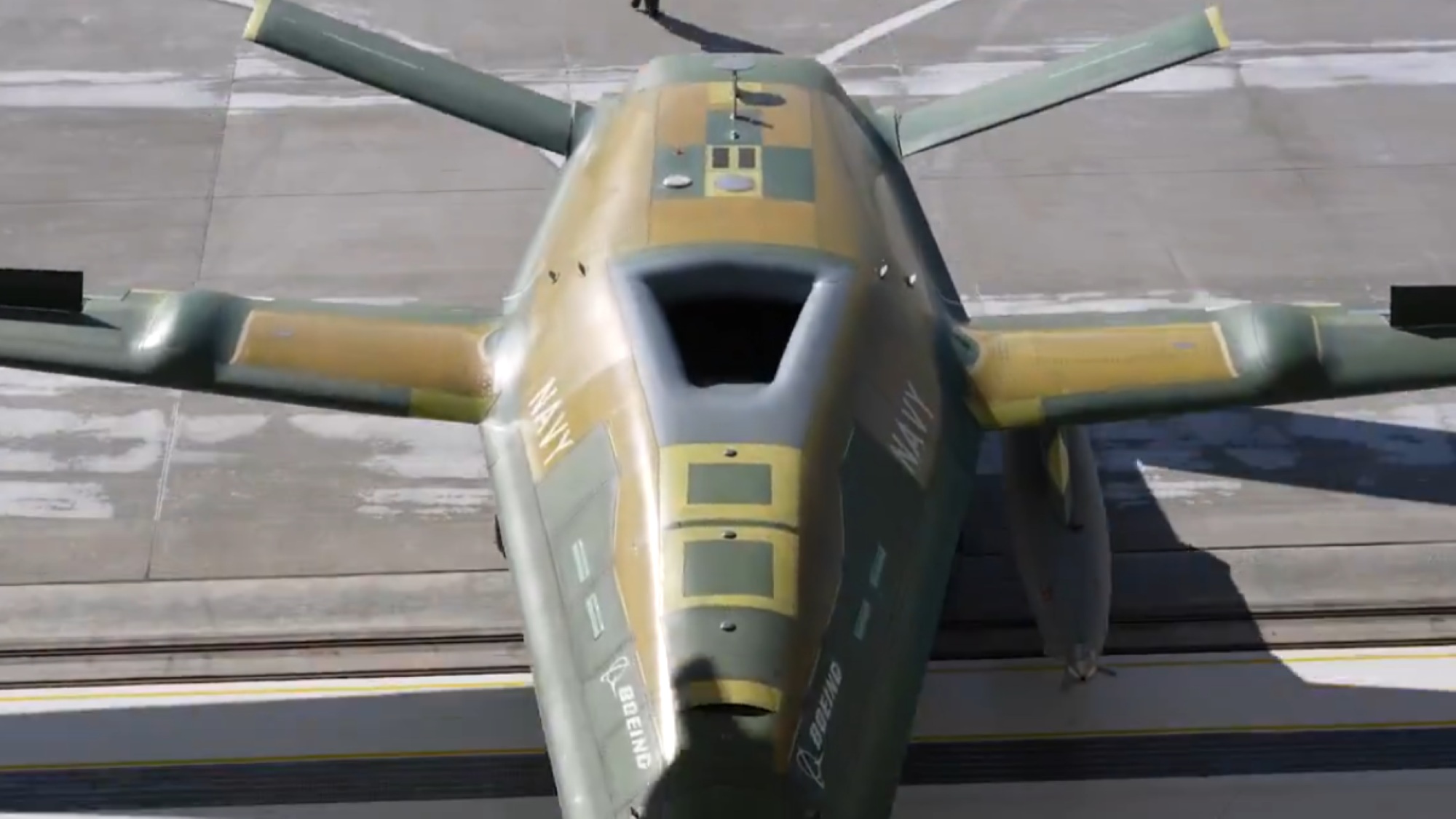
We also see the completely ‘flush’ dorsal air intake, with no protruding parts, suggesting how the inlet might feed the air-breathing jet engine through a serpentine duct.
A host of logistical and training protocols would meanwhile be streamlined, and also inform some of those procedures for Boeing submission to the Navy’s own Collaborative Combat Aircraft (CCA) program. Other companies the Navy has awarded contracts to develop CCA designs include Anduril, General Atomics, Lockheed Martin, and Northrop Grumman.
Future
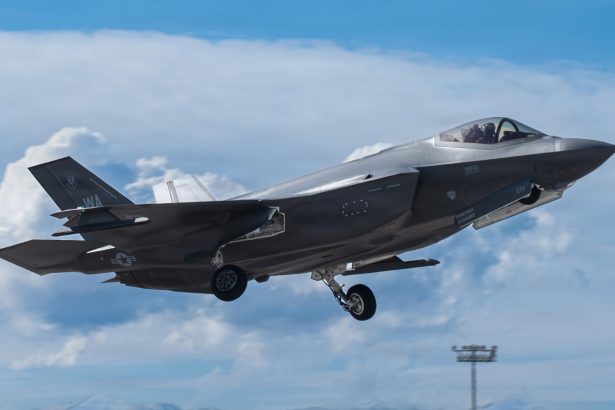
The earlier T1 test article has already conducted multiple flights and demonstrated unmanned aerial refueling with the F/A-18F, F-35C and E-2D. The production-representative aircraft includes major structural, avionics, and systems differences intended to meet long-term fleet requirements.
We’ve delivered the first U.S. Navy MQ-25 Stingray for testing. The unmanned carrier-based refueler will now undergo a rigorous airframe integrity evaluation.
Once operational, #MQ25 will extend the range and capability of the @USNavy’s air wing. pic.twitter.com/vbzySkoCRb
— Boeing Defense (@BoeingDefense) February 21, 2024
The Navy had previously stated a goal of making 60% of its carrier air wing uncrewed, complementing both actual platforms and, in future, the F/A-XX. The MQ-25 Stingray unmanned tanker will serve as a foundational system for future manned-unmanned teaming (MUM-T) operations.
As The Aviationist had reported on Jan. 29, the Chief of Naval Operations (CNO) Adm. Daryl Caudle called for the F/A-XX program to be launched soon without delays to meet future threats from peer and near-peer adversaries. In his remarks, he also mentioned a relation between the new fighter and the MQ-25: “The next-generation airframe, F/A-XX is so vital. It’s vital because of, one, the CCAs it will command and control. Its penetration – the Growlers won’t last forever, so it’ll be our electronic attack airplane as well. Its range will be coupled with the MQ-25 for clandestine refueling and organic refueling from the carrier.”