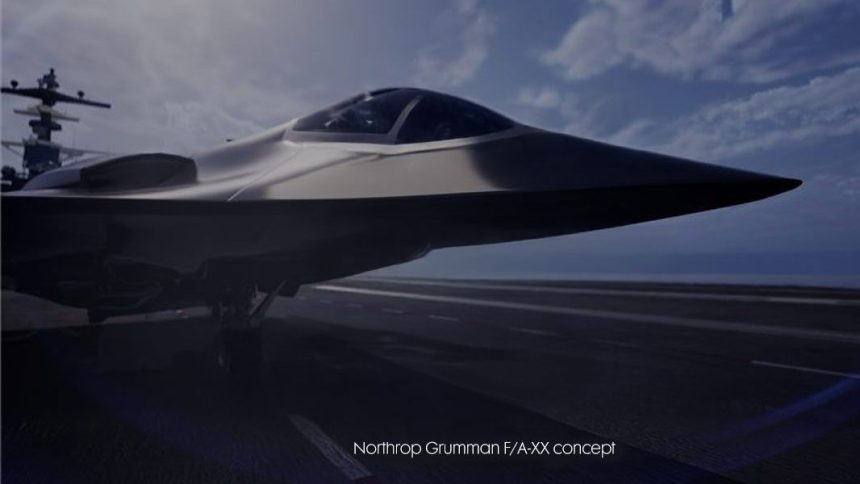
Chief of Naval Operations Adm. Daryl Caudle warns F/A-XX must launch now as Iran and other adversaries field advanced air defenses, ending the era of flying with impunity.
The U.S. Navy’s next-generation carrier-based fighter, known as F/A-XX, appears to be still stuck in a limbo, almost a year after Boeing was selected to start building the Air Force’s Next-Generation Air Dominance (NGAD) aircraft, the F-47. The Navy, however, said time is running out and the program must launch now without further delays.
Speaking at the Apex Defense conference in Washington, D.C., Chief of Naval Operations (CNO) Adm. Daryl Caudle warned that the Navy must accelerate development of F/A-XX to ensure it can penetrate future air defense environments over the next decade. Notably, the service is pointing to regional adversaries such as Iran and non-state actors as evidence that the ability to operate non-stealth aircraft with relative freedom is rapidly eroding.
“Our ability to fly with impunity with our existing airframes is fleeting,” Caudle said. “If I don’t start building that immediately, you’re not going to get it for some time.”
The remarks also come as Congress moves to revive the program that was put on the back burner amid Pentagon efforts to prioritize the F-47 fighter. In the recent Fiscal Year 2026 Defense Appropriations Act, the F/A-XX program received an increase of $897 million, while calling out the Pentagon for wasting time.
A Global Threat Picture
For years, next-generation programs such as F/A-XX and NGAD have been considered essential for high-end conflict against peer competitors such as China and Russia. Caudle, however, broadened that argument to include non-peer adversaries like Iran and even non-state threats such as the Iranian-backed Houthi movement in Yemen.
“When things heated up in Iran, guess who steamed over there? It was the United States Navy and the Abraham Lincoln strike group,” Caudle said. “Imagine what that looks like 10 years from now, with a different Iran, with different capability that can go against F-18 capabilities of today.”
Recent operations in the Middle East have already demonstrated how relatively modest air defense systems can threaten U.S. aircraft and unmanned platforms, with assets being targeted and some even fired upon. For instance, Houthi forces have reportedly shot down around 20 MQ-9 Reaper drones by using mobile air defense systems that combine infrared sensors with radar cueing, complicating detection and suppression efforts.
These trends reflect a broader pattern of technology sharing between adversaries, such the arms shipments from Iran to the Houthis, and rapid improvements in commercial off-the shelf (COTS) electronics combined with ingenuity. According to Caudle, “the ever-lowering cost of entry” into advanced air defense capabilities means that actors once considered low-risk, such as the Houthis, “will gain capability that the F-18 will not match against.”
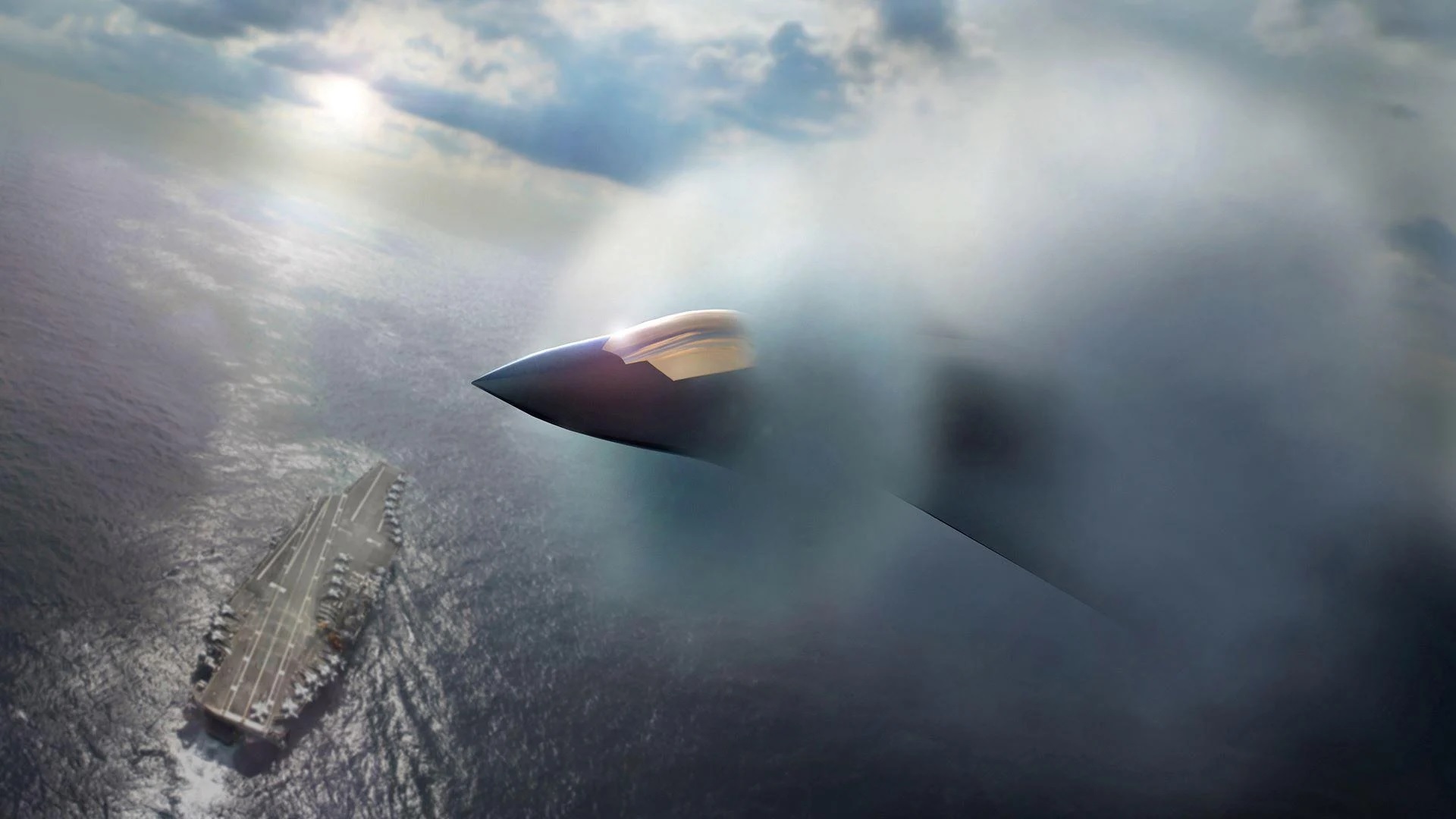
Because of these reasons, the service can’t afford to wait anymore. The Admiral stated that he is well aware of the current situation with finances and industry, but a solution must be found.
“I know these things are expensive, and I know the defense industrial base is compressed, but we have got to figure out how to walk and chew gum here with aircraft,” Caudle said.
What F/A-XX Is Expected to Deliver
The Navy envisions F/A-XX as more than a simple replacement for the F/A-18E/F Super Hornet and the EA-18G Growler. The new aircraft is expected to combine stealth, extended range, electronic warfare, and command-and-control functions into a single next-generation platform.
The US Navy’s Next Generation Air Dominance (F/A-XX) program office, PMA-230, appears to have a new logo.
New (left) old (right) pic.twitter.com/AoRi0eA4G7
— Brian Everstine (@beverstine) January 23, 2026
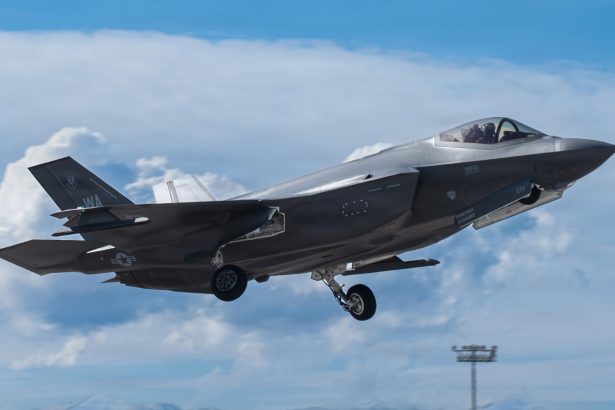
Navy officials previously said F/A-XX is expected to have approximately 25% more range than the F-35C, as well as more advanced jamming capabilities than the Growler. Moreover, it is also designed from the outset to control multiple Collaborative Combat Aircraft (CCA), as noted by the CNO.
“The next-generation airframe, F/A-XX is so vital,” Caudle said. “It’s vital because of, one, the CCAs it will command and control. Its penetration – the Growlers won’t last forever, so it’ll be our electronic attack airplane as well. Its range will be coupled with the MQ-25 for clandestine refueling and organic refueling from the carrier.”
The aircraft is therefore central to the Navy’s future carrier air wing concept to maintain the service’s ability to project power in high-threat environments. In this mix of crewed and uncrewed platforms, the F/A-XX will be the quarterback, often said the Navy.
Congress Pushes the Program Forward
The renewed urgency around F/A-XX coincides with congressional action to fund the program, despite earlier Pentagon plans to delay it. The reason for the delay was primarily attributed to concern about the industry’s ability to sustain two sixth-gen fighter aircraft programs at once.
Lawmakers agreed on the recent Fiscal Year 2026 Defense Appropriations Act to allocate $897 million specifically to F/A-XX, mandating the Pentagon to award a development contract aimed at accelerating initial operational capability. The wording used called out the Department of Defense for the slow pace of the program.
Here is the full text regarding F/A-XX in the bill:
“The agreement supports the Navy’s efforts to develop the F/A-XX sixth generation fighter and understands the program’s unique capability in delivering air superiority to the fleet, including greater operational range, speed, stealth, and enhanced survivability.
The agreement notes the Full-Year Continuing Appropriations and Extensions Act, 2025 provided $453,828,000 to align to the program’s acquisition schedule which assumed a March 2025 award for engineering and manufacturing development (EMD). However, rather than proceeding with a Milestone B award, the Department expended nearly all fiscal year 2025 funding on contract extensions with minimal demonstrated value to the program.
The agreement provides $897,260,000 above the fiscal year 2026 President’s budget request to continue F/A-XX development and directs the Secretary of Defense to obligate these and any prior funds for the purposes of awarding the EMD contract limited to one performer in accordance with the acquisition strategy to achieve an accelerated Initial Operational Capability (IOC).
Further, the Secretary of the Navy is directed, not later than 45 days after the enactment of this Act, to submit a report to the congressional defense committees that details: (1) the current acquisition strategy and updated schedule for awarding the EMD contract; (2) a revised development and fielding timeline for the F/A-XX program to meet IOC; (3) any programmatic, budgetary, or policy barriers that have delayed execution of prior-year funds; and (4) a spend plan for the active year additional funds that have been appropriated to the Department of Defense for this program.”
In October 2024, it was reported the U.S. Navy was reviewing proposals submitted for F/A-XX, although the decision might have put on hold waiting for the new U.S. administration. Throughout 2025, following the announcement of NGAD, in multiple instances it was reported an F/A-XX selection could arrive soon, but in the end it never materialized.
Considering the lawmakers’ mandate in the bill regarding the F/A-XX, the next 45 days will be crucial for the definition of the sixth-gen fighter’s future. Following the delivery of the requested report, the time for the Engineering and Manufacturing Development (EMD) contract might finally come, revealing to the world who will build the new aircraft that the Navy is eagerly awaiting.
CCAs and the Broader Unmanned Push
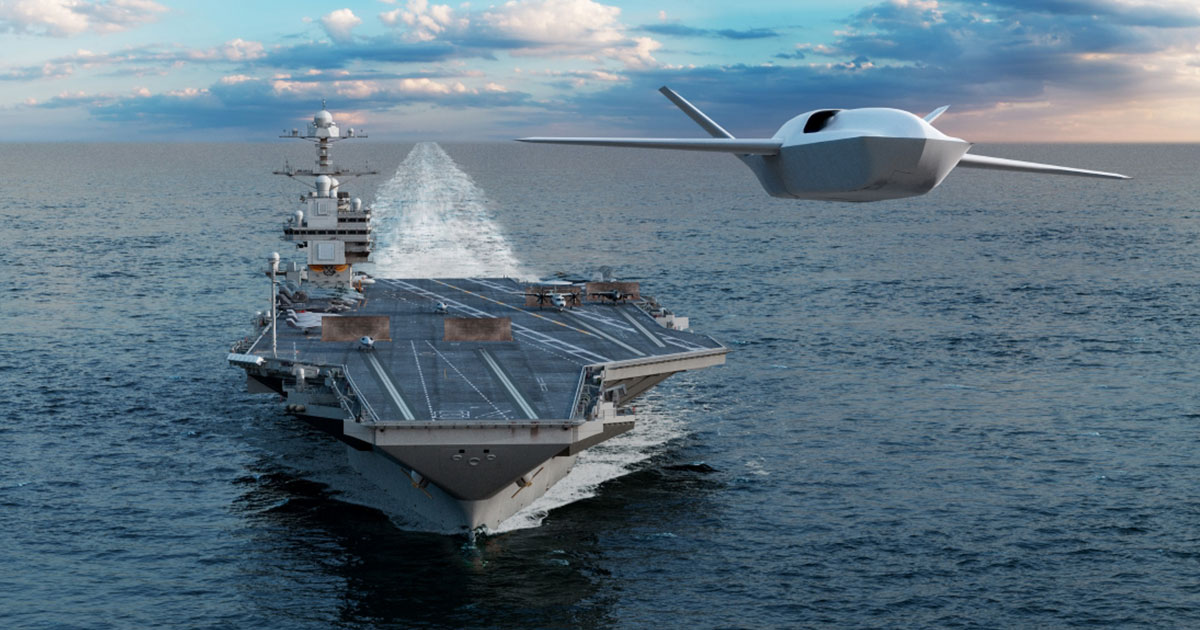
The emphasis on F/A-XX’s ability to control CCAs aligns with broader Navy efforts to expand unmanned aviation across the carrier air wing. The service is steadily moving forward with its plans to develop and field the new platforms.
Aviation Week recently reported that the Navy has established a new program office, PMA-228, under Naval Air Systems Command and its program executive office for unmanned aviation and strike weapons (PEO U&W) to focus specifically on Collaborative Combat Aircraft. “PMA-228 is tasked with advancing the Navy’s strategic objectives and rapidly delivering next-generation capabilities,” said the service.
Contracts have been already awarded to five companies – Anduril, Boeing, General Atomics, Lockheed Martin, and Northrop Grumman – to develop CCA designs. Meanwhile, the service is also working with other platforms, such as modified BQM-177 target drones, towards advancing autonomous capabilities.
Taking #AI to the Skies: The #Navy recently completed a demo validating AI-enabled autonomy for future CCA. Using Shield AI’s “Hivemind” software, BQM-177As successfully defended simulated airspace alongside a virtual F/A-18.
🔗: https://t.co/LLCpOVReKG pic.twitter.com/AX5ibcrsCZ
— NAVAIR (@NAVAIRNews) January 12, 2026
The Navy previously set a goal of making 60 percent of its carrier air wing uncrewed, complementing both actual platforms and, in future, the F/A-XX. The MQ-25 Stingray unmanned tanker will serve as a foundational system for future manned-unmanned teaming (MUM-T) operations.
This effort also fits within what Caudle described as a forthcoming “hedge strategy.” Under this concept, the Navy would rely not only on traditional carrier strike groups but also on smaller, tailored forces built around unmanned and attritable systems for specific regional missions.
“These tailored capabilities will amplify and complement the main battle force,” Caudle said, referring to unmanned surface vessels, underwater vehicles, and drone-based interceptors and specific capabilities which would be integrated depending on the scenario. “We want to remain very flexible, plug and play,” Caudle said.