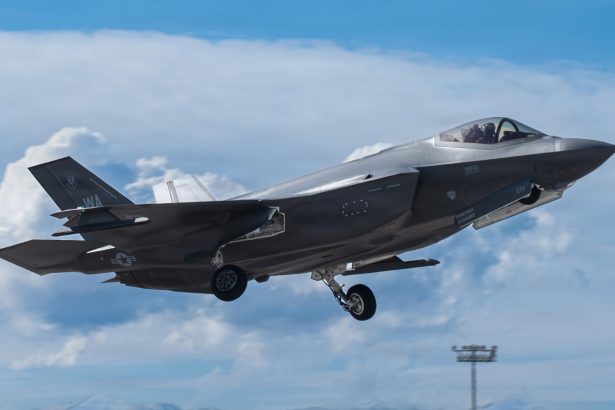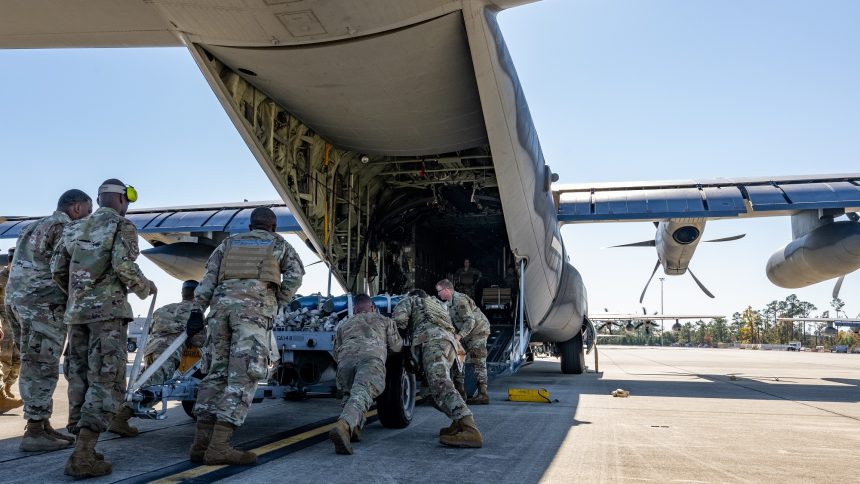
The USAF is introducing an improved version of its deployment construct, called Air Expeditionary Wing 2.0, based on the total force’s inputs and units’ feedback.
The U.S. Air Force has announced on Jan. 23, 2026, that it will introduce a new deployment construct later this year, at the beginning of fiscal year 2027. Called “Air Expeditionary Wing 2.0,” the new wing unit of action has been described as an improved version of the legacy construct meant to “maintain an elevated state of readiness to deter and win in high-end conflict.”
AEW 2.0
The U.S Air Force has now been working for some years to create its new approach to generating and deploying combat airpower. Among the most recent models that have been evaluated are the Expeditionary Air Base (XAB), Air Task Force (ATF), and Deployable Combat Wing (DCW).
These concepts allowed to gather important lessons learned which, together with the feedback from the personnel who took part in the evaluations, allowed to further refine the new deployment model. Thanks to this approach, the service says AEW 2.0 “reflects updated national priorities and more efficiently uses talent and resources.”
“AEW 2.0 allows us to present combat ready forces,” said Air Force Chief of Staff Gen. Ken Wilsbach. “It is the next step in evolving our readiness, and it’s based on input from across the total force and feedback from the major commands and wings. This model allows Airmen to train at home in a manner consistent with how they will operate when they deploy.”
AEW 2.0 is described as a modular and scalable wing-level unit of action that provides a standardized baseline force package. Its structure is designed to be adaptable to different operational environments and mission sets while remaining platform-agnostic.
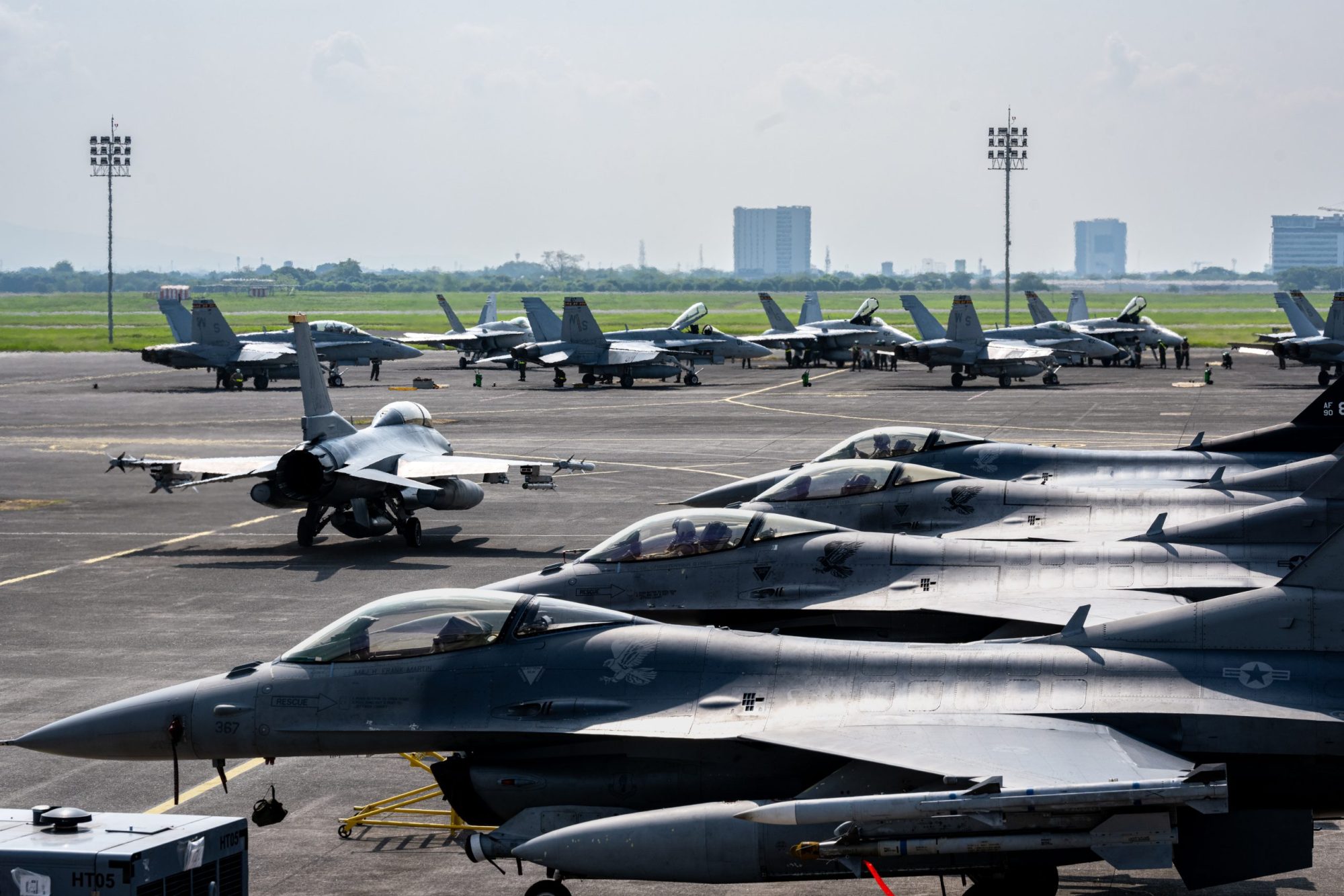
According to the Air Force, this allows combatant commanders to receive a force package capable of airpower projection regardless of theater-specific constraints. The service also emphasized that the new construct preserves key advantages of earlier force presentation models, particularly the deliberate teaming of capabilities-based elements and their alignment with the AFFORGEN (Air Force Force Generation) cycle.
In fact, AEW 2.0 forms approximately 18 months prior to deployment , allowing all its components to train and certify as a cohesive unit. In turn, this avoids “degrading warfighting capability” and preserves “capacity at the host wing to fulfill the in-garrison mission and defend the homeland while the unit of action trains and deploys.”
“AEW 2.0 will help us move faster and stay prepared to fight wherever and whenever we’re needed,” said Lt. Gen. Case Cunningham, the Air Force’s deputy chief of staff for operations. “A key strength of this unit of action model is the deliberate training and teaming that improves collaboration and readiness across the service. It’s imperative we continue empowering wings and commanders with necessary resources and guidance to be the agile, decisive force our nation demands.”
Training to Refine the Concept
Throughout 2025 many exercises featured the Deployable Combat Wing (DCW) and Agile Combat Employment (ACE), which allowed to test the concept and further refine it. According to a description previously released by the Air Force, DCW aims to “organize, generate, deploy, and operate forces under conditions of resource constraint and degraded communications.”
When this model was first introduced, the service said it acknowledged the need for Airmen to train together and build team cohesion, as they are expected to “operate in environments that will likely be more contested than those of the past two decades.” This would allow them to “deliver decisive airpower from day one,” said the then- Air Force Chief of Staff Gen. David W. Allvin.
One of the most recent exercises which allowed to refine AEW 2.0 was exercise Mosaic Tiger 26-1, held Nov. 12–21, 2025, across multiple locations in Florida and Georgia. This exercise offered one of the clearest looks yet at how the U.S. Air Force expects its units to operate under a future high-end conflict.
The event brought different specialties from Moody AFB’s 23rd Wing for a ten-day evaluation of their ability to generate, defend and sustain airpower while dispersed, resource-limited and, in some cases, cut off from higher headquarters. One of the unit at the center of the exercise was the 23rd Combat Air Base Squadron (CABS).
“The Combat Air Base Squadron represents a complete shift in how the Air Force prepares for deployments,” said Lt. Col. Justin L. May, 23rd CABS commander. “Instead of piecemeal teams thrown together, this squadron has trained together for the better part of a year, building trust and refining processes so we can operate at high tempo from day one.”
May’s words echo the unit’s cohesion concept mentioned by AEW 2.0 and DCW. This is a notable aspect as more than 60 Air Force specialty codes were consolidated into one cohesive unit responsible for base operations and sustainment in deployed environments.
Another element tested during Mosaic Tiger and mentioned as part of AEW 2.0 is the deployable Wing Operations Center (WOC). This is a critical aspect of the new deployment concept which allows the unit to continue delivering combat-ready airpower even if the communication space becomes contested.
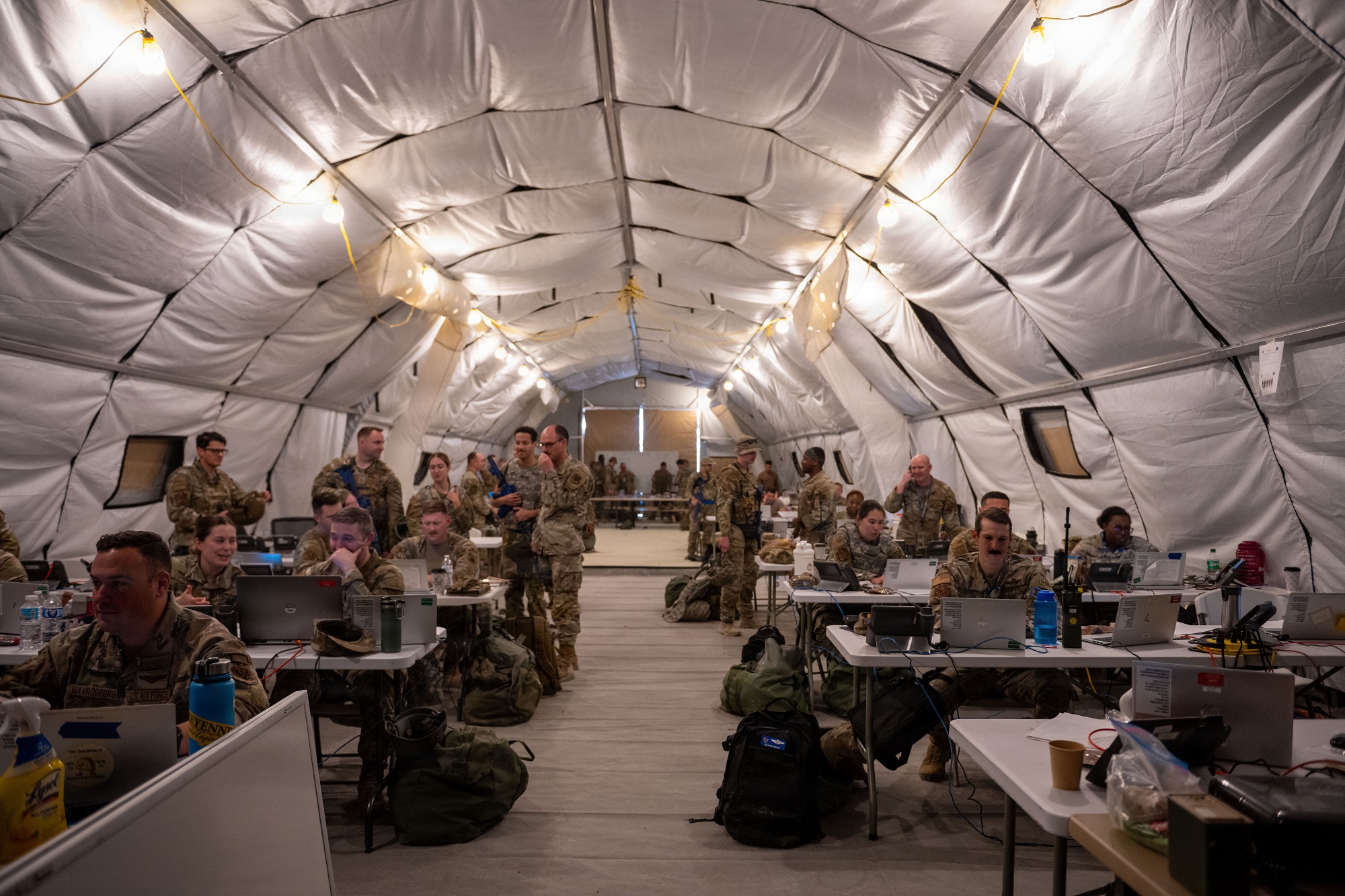
Units typically operate from a 72-hour Air Tasking Order (ATO). However, should a communication blackout happen and persists over the 72 hours, units transition to a different planning logic, instead relying on the commander’s last known intent, pre-briefed mission sets, and direct coordination with adjacent units.