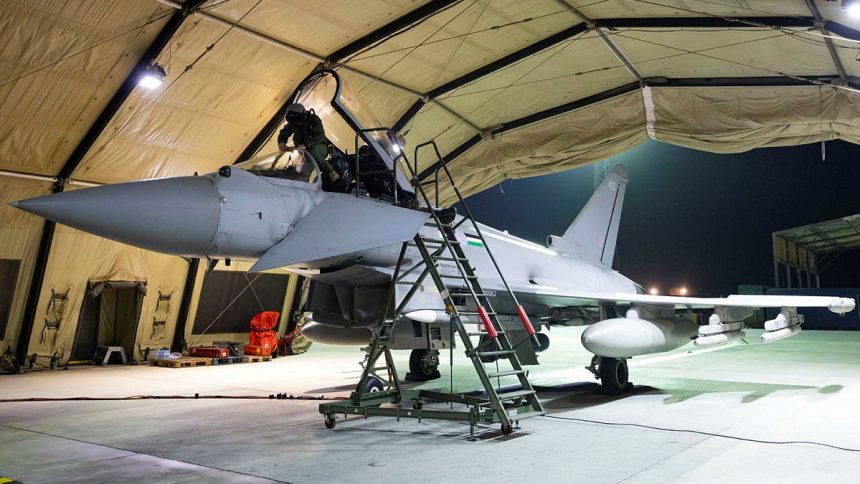
Four RAF Typhoons from the joint UK-Qatar No. 12 Squadron have been deployed at the request of the Qatari government, citing increasing regional tensions.
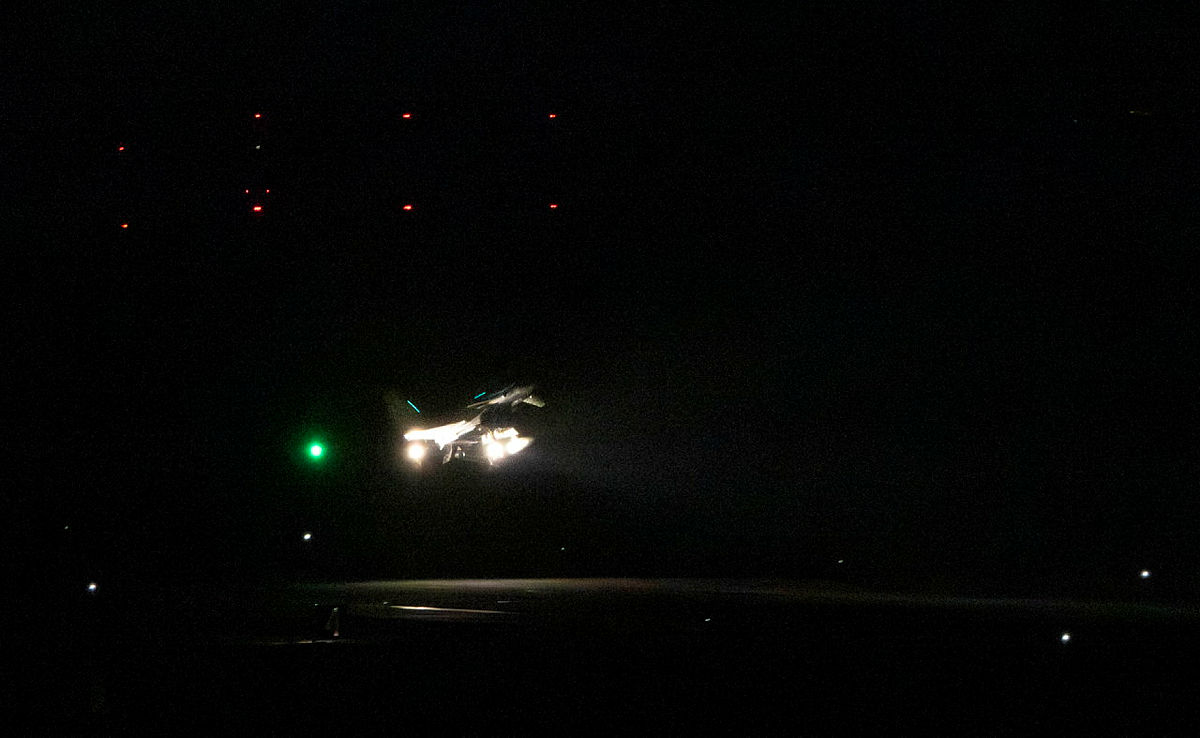
Four RAF Typhoons assigned to the joint UK-Qatar-manned No. 12 Squadron have been deployed to Qatar for “defensive purposes” at the express request of the Qatari government, citing increasing regional tensions as the reason. The deployment also comes amid a build up of U.S. forces in the Middle East.
No. 12 Squadron regularly deploys to Qatar, where they engage in training exercises with the Qatar Emiri Air Force (QEAF) and other middle eastern partner states such as Bahrain and Oman. Exercises such as EPIC SKIES and SOARING FALCON help to enable the smooth integration of RAF aircraft into allied operations reinforcing the relationship of the UK with its partner states in the Gulf.
UK Defence Secretary, John Healey MP stated:
“Qatar and the UK are close partners with historic defence ties going back decades. This partnership bolsters the national security of both our nations and supports stability in the Gulf region.
Today’s deployment builds on those shared aims as Typhoon jets from our joint squadron deploy to support its defence.”
The current deployment of four heavily armed Typhoons takes place under the UK-Qatar Defence Assurance Agreement signed last year in Doha by Healey, which commits the UK and Qatar to closer defence collaboration and joint planning on threats that both nations face, in this case namely Iran.
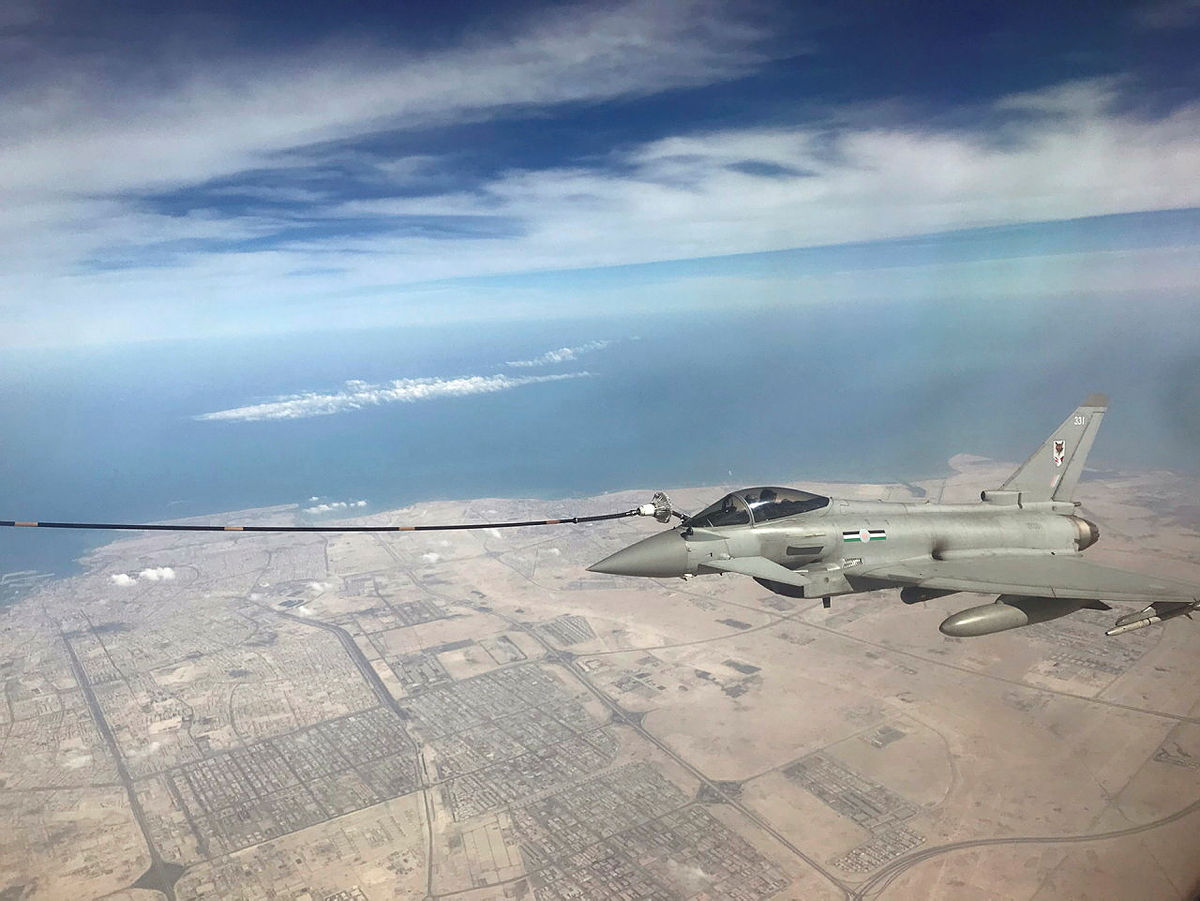
The UK and Qatar have a long history of defence partnership, with both nations establishing joint squadrons together for the purposes of flight training and defence experience. No. 12 Squadron RAF, flying Typhoons, and No. 11 Squadron QEAF, flying Hawk 167s, were established in 2018 and 2021, respectively, to help prepare Qatar for the arrival of its own Typhoon aircraft. Together the squadrons represent a tight defence bond, which could now see RAF aircraft flying over Qatar in the defence of the nation.
#USAF United States Air Force / #RAF Royal Air Force – Middle East Activity
22 January 2026 – 2300z
In the past few hours there has been confirmation from the British Ministry of Defence that No. 12 Squadron RAF has deployed to Al Udeid Air Base in Qatar. Additionally, a third… https://t.co/v35uGtP70N pic.twitter.com/0boNmZRhdW
— Armchair Admiral 🇬🇧 (@ArmchairAdml) January 23, 2026
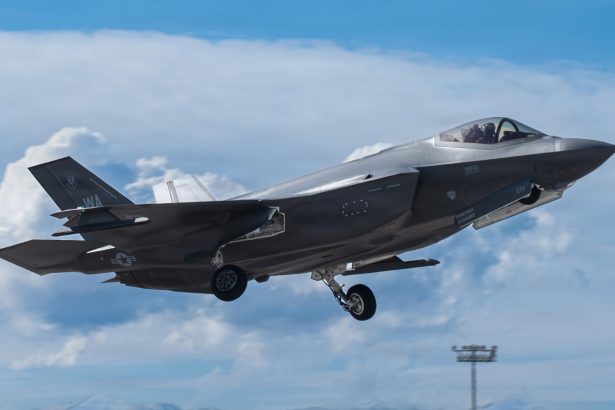
Tensions in the Gulf appear to be escalating following recent protests against the Iranian government that have been heavily suppressed by its security forces, with the U.S. threatening to intervene as a result. Recent events have seen the U.S. deploy the USS Abraham Lincoln Carrier Strike Group (CSG) and F-15E Strike Eagles from the UK, along with multiple supporting elements such as air-to-air tankers and transport aircraft, suggesting that the U.S. may still decide on intervention and regime change.
Recent Escalations
Small scale protests began in December 2025, following the collapse of the Iranian currency and the general poor state of Iran’s economy as result from decades of economic mismanagement and conflict, but they escalated dramatically with millions of Iranians taking to the streets in early January. The Iranian government and security forces heavily cracked down on the protests, leaving tens of thousands dead and an even higher number of wounded, sparking international outrage and calls for regime change from opponents of the regime.
Twelve USAF F-15E Strike Eagles deployed from England to the Middle East. pic.twitter.com/hH1b3YdYBo
— HACKTORIA || OSINT 🏴 (@hacktoria) January 23, 2026
In response to the crisis and the significant number of dead, President of the United States Donald J. Trump threatened military action against Iran on Jan. 13, which were reportedly only narrowly held off after Iran declared its intention not to execute captured protestors. According to The War Zone, military action might have been delayed to allow for a build up of forces in the Gulf, to better prepare for what would be the inevitable Iranian retaliation.
A U.S. Air Force F-15E Strike Eagle assigned to the 494th Expeditionary Fighter Squadron lands at a base in the Middle East, Jan. 18. The F-15’s presence enhances combat readiness and promotes regional security and stability. pic.twitter.com/QTXgOsOozV
— U.S. Central Command (@CENTCOM) January 20, 2026
In response to Trump’s threats, the Iranian government warned of retaliatory strikes against the U.S. and its allies in the Gulf if the U.S. were to aid the protestors with military force. This pushed the U.S. and UK to withdraw a number of personnel from Al-Udeid air base in Qatar, which may have prompted Qatar’s government to consider asking for military assistance from the UK, in case Iran were to follow up on its warnings.
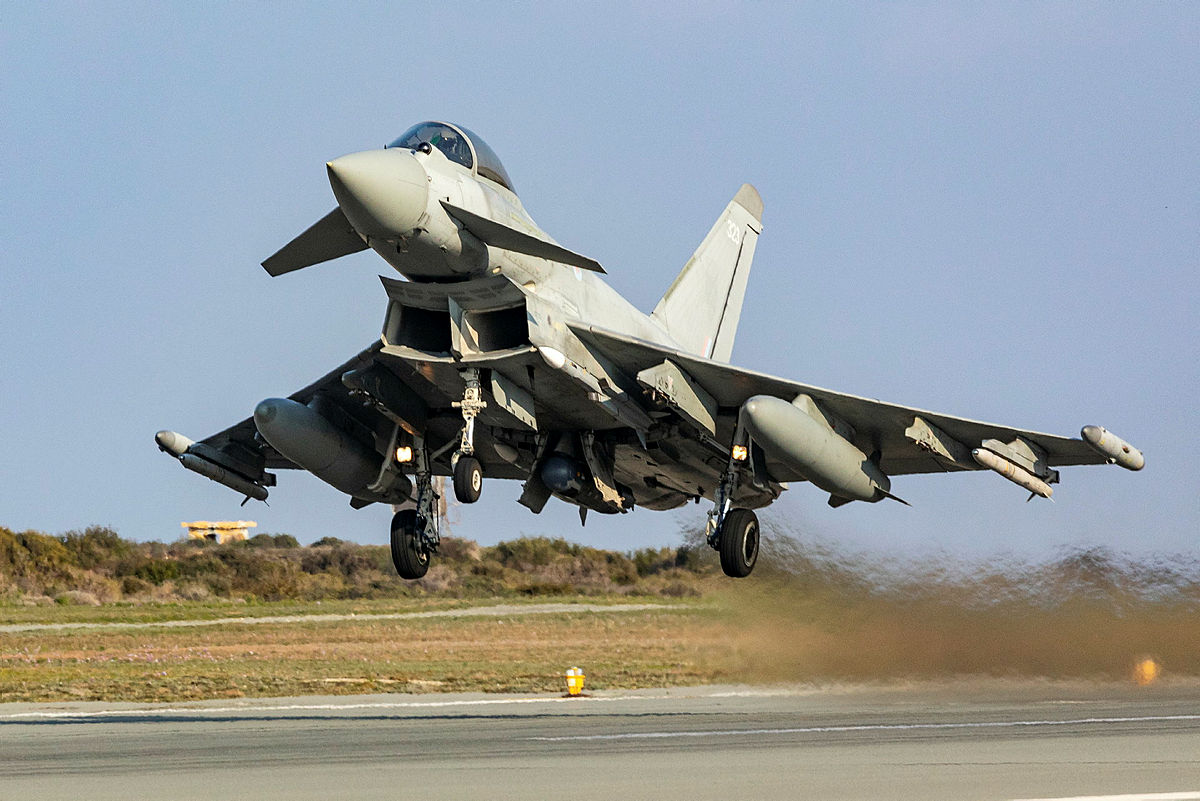
The arrival of four Typhoons armed with eight air-to-air missiles in total, including four Meteors and four ASRAAMs, is a stark warning that future military action may be likely. The loadout seen on the Typhoons deployed to Qatar was previously used also by the Typhoons flying QRA missions, but it was changed in recent years.
In fact, Quick Reaction Alert (QRA) missions and air policing missions in the UK and abroad, usually feature Typhoons armed with two beyond visual range missiles, either AMRAAM or Meteor, as well as two shorter range ASRAAM for within visual range engagements. Although no official reason has been found, this is likely due to a combination of a lower threat assessment of Russian aircraft near NATO airspace, a small number of targets per each QRA sortie, fuel efficiency where the reduced drag caused by a smaller number of missiles allows to keep the Typhoon on station for longer, as well as the conservation of flight hours per each missile.
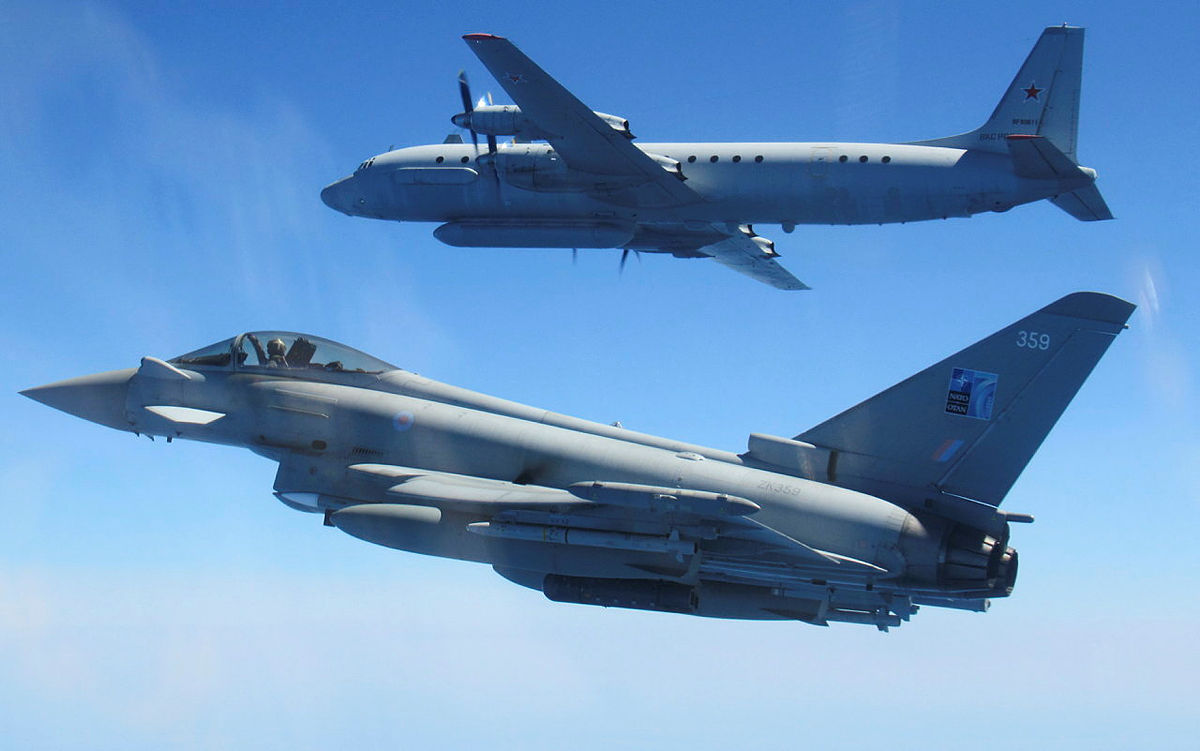
Given the likely threat environment of a massed missile and drone attack from Iran, it is likely the RAF wanted to maximise its firepower in the region, hence the full air-to-air combat load seen in the cover image.
It is certain that Qatar is concerned with possible drone and cruise missile attacks by Iran in response to any U.S. intervention in the country, as Qatar is separated from Iran by only the Persian Gulf. This puts the nation well within range of drone and cruise missile attacks which, as demonstrated by the War in Ukraine, can be extremely damaging to a nation’s people and its economy. Luckily, the UK has some experience shooting down Iranian drones, with a number downed by RAF Typhoons over Iraq and Syria in April 2024, during Iran’s first direct attacks on Israel.
The RAF did not participate in strikes on Iran during the previous conflict and it is likely that, if attacks were seen against Qatar, the RAF would similarly act in a defensive role owing to the limited scale of the deployed forces to the country. This said, the RAF also reportedly has a number of Typhoons stationed in Saudi Arabia for the Spears of Victory annual exercises, which will last from Jan. 18 to Feb. 5, as well as a number of Typhoons still stationed in Cyprus for Operation Shader. In all, the RAF will be well placed to intervene should conflict erupt in the Gulf once more.