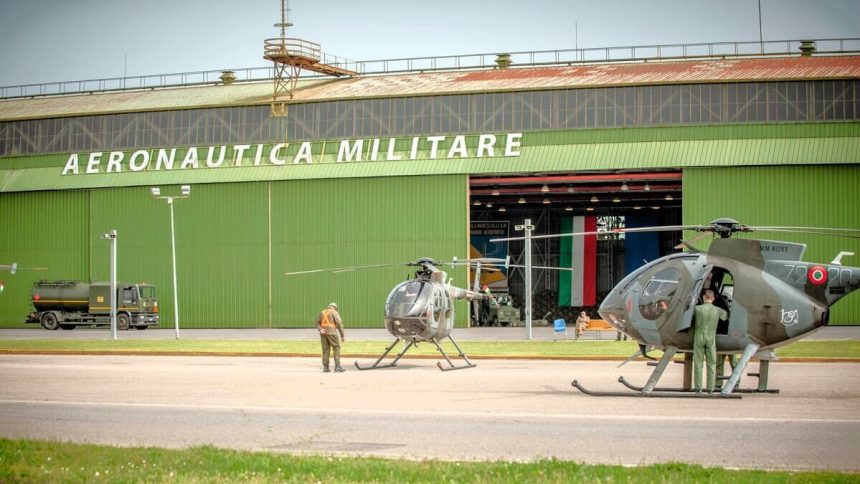
The Italian Air Force has officially activated its New Helicopter School at Viterbo airport, relocating the 72° Stormo and creating a joint national rotary-wing training hub.
The Italian Air Force (Aeronautica Militare) has officially established a new national helicopter training hub at Viterbo Air Base, part of the reorganization of the rotary-wing flight training system. The move sees the 72° Stormo (Wing) formally installed in Viterbo, which already is home of the Army’s (Esercito) flight training.
The 72° Stormo was previously based in Frosinone. As part of the modernization, it was decided to consolidate helicopter pilot training activities in a single location, laying the foundations for a centralized, inter-service training system.
The inauguration ceremony took place on Jan. 15, 2026, in the presence of senior military leadership and local authorities, formally confirming the Viterbo’s new role as the core of the Nuova Scuola Elicotteri (New Helicopter School) of the Aeronautica Militare. According to official statements, the school is intended to become a national reference point for rotary-wing pilot training, with an explicitly joint vocation.
Strategic Relocation
For decades, the 72° Stormo and the Italian Air Force’s helicopter training mission were closely associated with Frosinone Air Base, which served as the historical home of basic and advanced rotary-wing flight instruction. The decision to relocate the school to Viterbo is the result of a long-planned restructuring aimed at improving efficiency, infrastructure availability, and long-term growth potential.
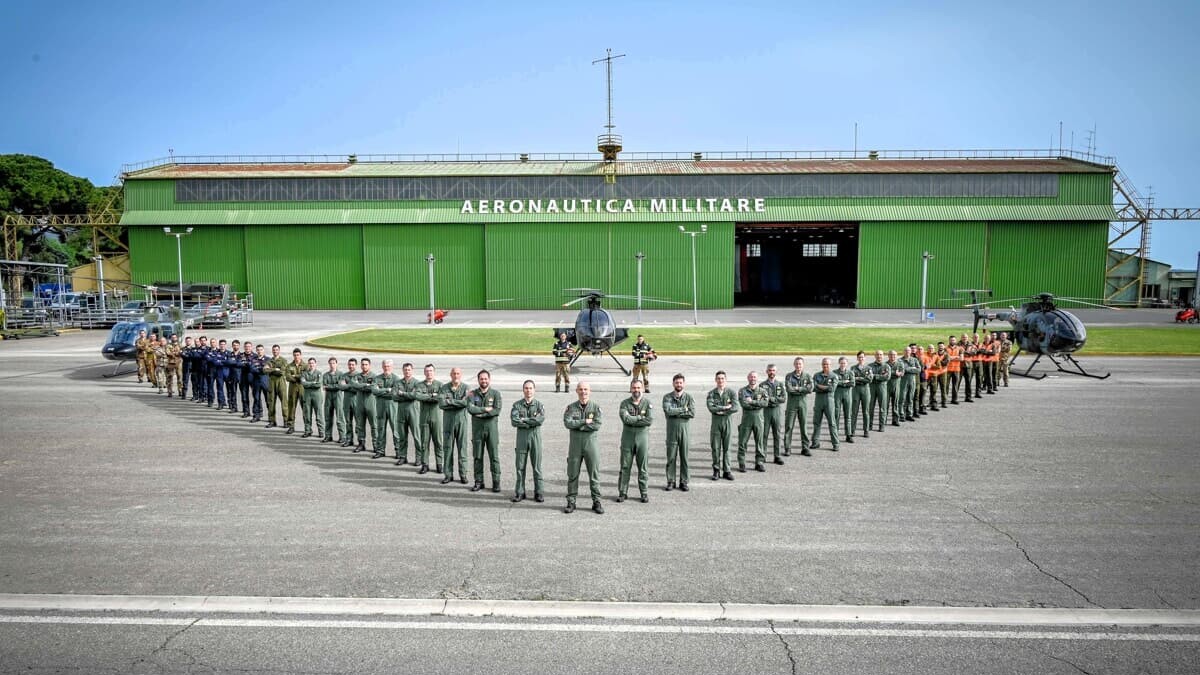
The transfer to Viterbo is being carried out progressively, ensuring continuity in training activities while new facilities and organizational structures are phased in. The move is planned to be complete by the end of 2028.
Local and national media outlets emphasized that the relocation also reflects broader defense infrastructure planning, with Viterbo increasingly positioned as a center of excellence for military education and training. In fact, the airport already hosts the Italian Air Force’s and Army’s NCO Schools and Army Aviation (Aviazione dell’Esercito) units.
The Role of the 72° Stormo
The 72° Stormo remains the sole Italian Air Force unit dedicated entirely to helicopter flight training, a role it continues to fulfill at Viterbo. Its mission includes training student pilots from the Aeronautica Militare, as well as personnel from other Italian Armed Forces and law enforcement agencies and foreign students.
As part of its mission, the unit trains the Air Force’s students assigned to the “Helicopter Track” (MPLH – Helicopter Military Pilot License Phase 3A and 3B), and the equivalent licenses of the other armed forces. Moreover, among the training courses are the ones for the instructors and other crewmembers.
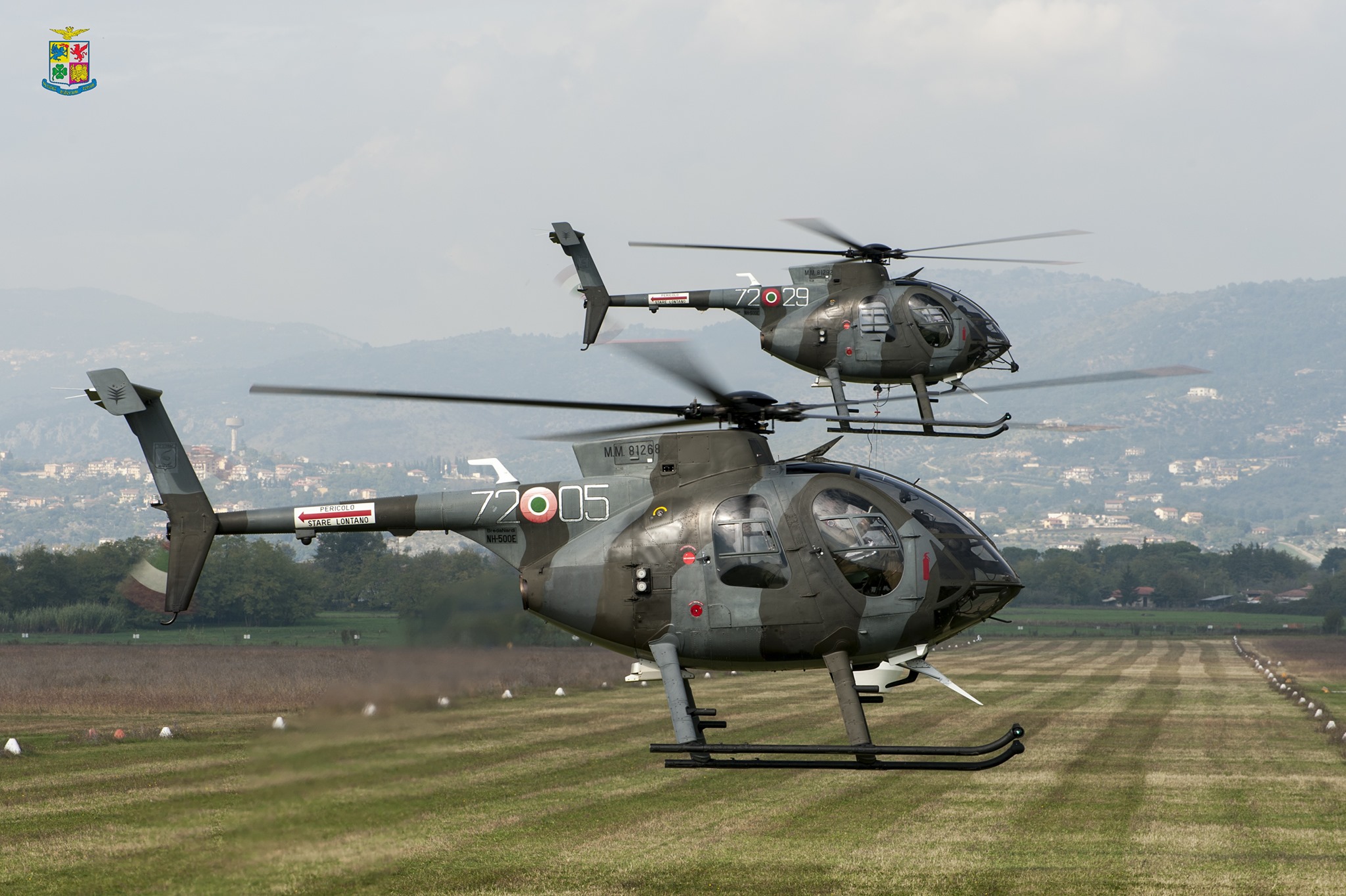
As stressed by the Italian Air Force, the New Helicopter School is designed from the outset as an inter-service training structure, capable of supporting joint requirements and fostering common standards across different organizations operating rotary-wing aircraft. At the same time, this approach allows to optimize resources without sacrificing training’s quality.
“The Wing’s relocation to Viterbo Airport, with ongoing maintenance assured at Frosinone Airport, represents a strategic step in the Air Force’s reorganization and modernization. Thanks to its extensive training and development capacity, the Wing will serve as the hub of a true ‘federation of training centers,’ each with its own autonomy and organizational structure. These centers operate through coordinated and shared governance processes, offering a comprehensive training program for the benefit of the entire sector. The 72nd Wing’s joint nature, based on a common structure and a shared, modular syllabus, will also enable significant economies of scale, ensuring tangible benefits in terms of training, logistics, and maintenance efficiency, in line with the military’s current and future operational needs.”
— Colonel Alessandro Fiorini, Commander of 72° Stormo
Infrastructure and Training Environment
Viterbo Air Base offers several advantages for helicopter training operations. The surrounding area provides a diverse operating environment, suitable for basic flight instruction, navigation training, and advanced mission profiles. The base also benefits from existing military infrastructure and available space for future expansion.
The Italian Air Force has confirmed that the school will rely on a modern training approach, integrating flight hours with classroom instruction and synthetic training tools. Similar to the service’s other schools, the new school in Viterbo will include a Ground-Based Training System (GBTS) as well as the flying segment.
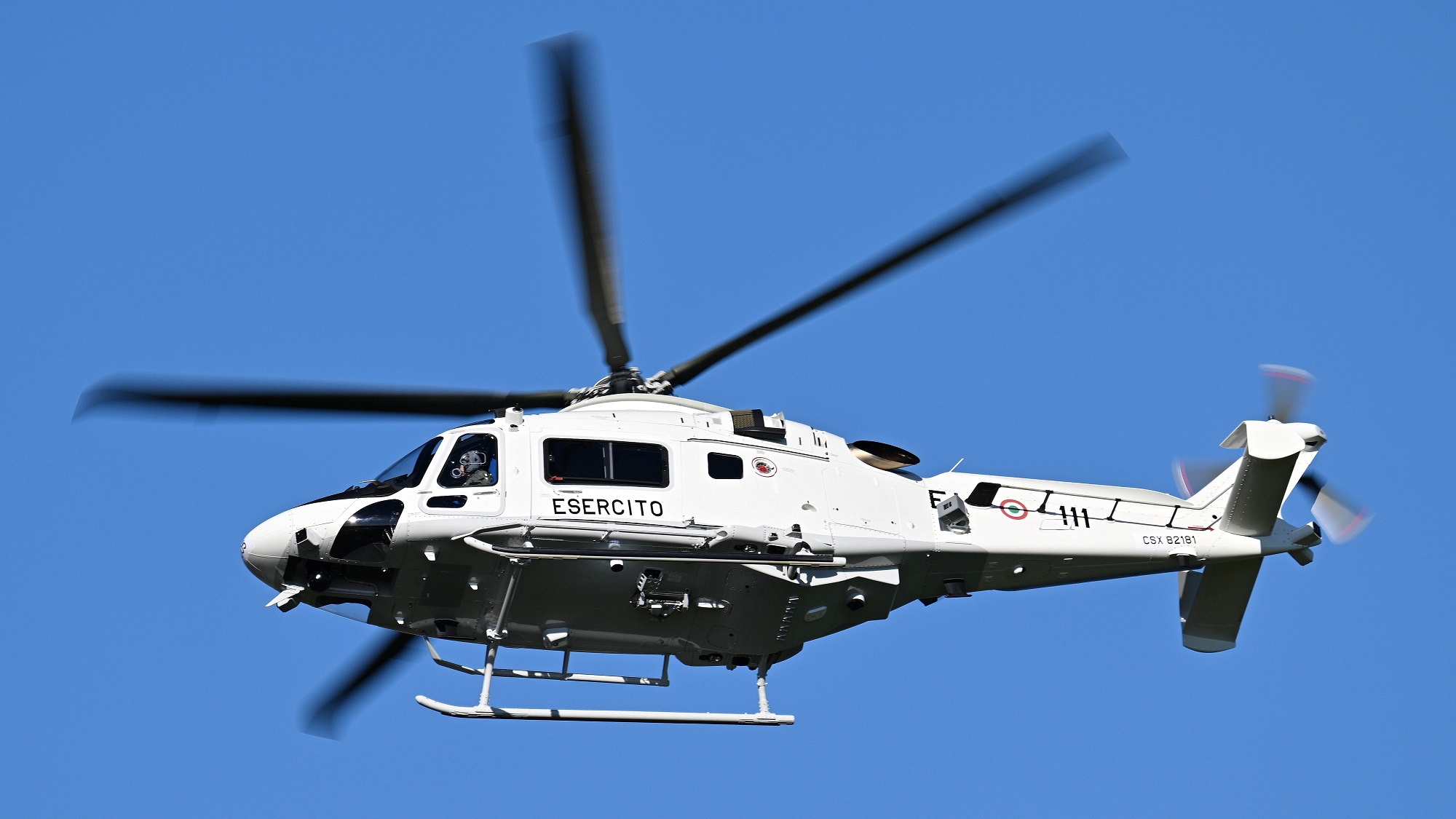
According to Parliamentary documents, in future the school is planned to receive 30 AW-169 helicopters in the Light Utility Helicopter (LUH) configuration, possibly the same delivered last year to the Army under the UH-169D designation. The new helicopters will replace the current training helicopter fleets.
The Army’s flight instructors will be an active part of the school, working alongside their Air Force counterparts. For the initial phase of the transfer, the Army’s flight school will also share its helicopters with the 72° Stormo.
Official statements also leave the door open to international cooperation. Italy already plays a prominent role in international pilot training through other programs such as the International Flight Training School (IFTS), and the helicopter school could, in the future, host foreign students.