Thanks to official imagery slowly trickling out, and new sightings by UK aviation enthusiasts, we now know some more about the assets involved in the seizure of the Bella 1/Marinera.
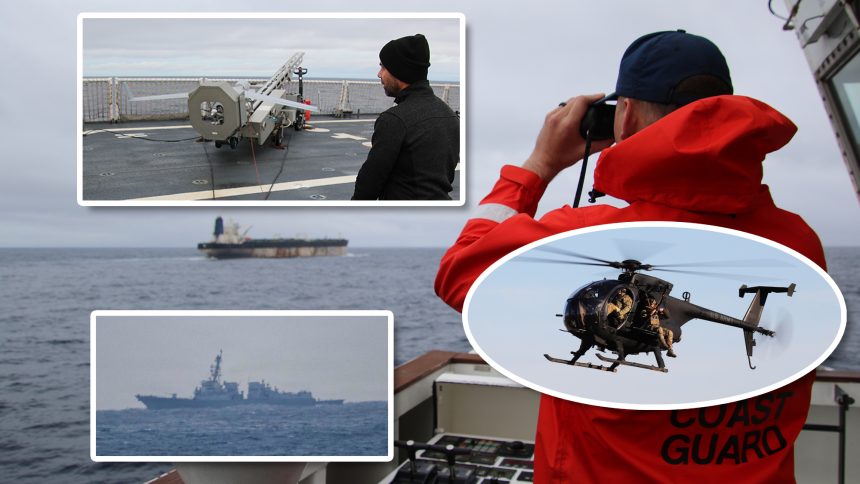
We immediately became aware, as the operation to seize the Marinera, or Bella 1, oil tanker got underway, that the helicopter of choice for the mission was the MH-6M Little Bird. At least one of these helicopters was pictured by crew members on board the ship and subsequently released via Russian state media. We couldn’t confirm the number of aircraft involved at the time, though it was expected to be more than one.
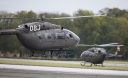
It is now clear at least six Little Bird helicopters from the 160th Special Operation Aviation Regiment had been somehow discreetly deployed to the North Atlantic. The first four helicopters arrived in formation at Glasgow Prestwick Airport in Scotland on the morning of Jan. 10, 2026, and were subsequently loaded into the back of a U.S. Air Force C-17A Globemaster III. The identity of the four Little Birds, as confirmed by spotters at the fenceline, were 81-23648, 81-23650, 90-25359, and 90-25363. The second group of two, 85-25348 and one marked 25381 which we are still trying to fully identify, arrived on Jan. 11. Whether all flew during the mission, or if some were held in reserve as spares, is not confirmed.
4 x MH-6 Little Birds landed this morning at Prestwick waiting to be picked up by the C17 flying up from Fairford pic.twitter.com/Gs2NZjMRsO
— Isabelle (@Swisscheese80) January 10, 2026
First little bird pushed onto the C17 pic.twitter.com/7eQMuSMjbb
— Isabelle (@Swisscheese80) January 10, 2026
On Jan. 11, the last two Little Birds were loaded onto the C-17, serial 10-0214, which subsequently departed towards RAF Fairford. Upon arrival, one aircraft was unloaded and moved into a hangar. All aircraft are configured as the troop-carrying MH-6 variant rather than the attack helicopter AH-6 variant – the helicopters can be swapped between roles as required.
As a sidenote, it is worth pointing out that two of these aircraft – 23648 and 25359 – were involved in the 1993 Battle of Mogadishu, immortalized in the film Black Hawk Down. 23648 flew as STAR 41 and was the first unit able to respond to the downing of SUPER 61, landing nearby and recovering the two Delta snipers who had survived the crash. One would later succumb to his injuries.
Like we explained in our coverage of the seizure, unlike the MH-60M Black Hawks and MH-47G Chinooks of the same unit which had been deployed to RAF Fairford, the Little Birds cannot be refueled in mid air. Their small size also carries with it an inherently shorter range, meaning it is very likely they had taken off from a ship for the mission. How and when they got to the ship, or ships, remains unclear – as does the identity of the vessel(s) that they deployed from.
ScanEagle
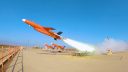
One potential candidate, which we had already become aware of thanks to footage taken by the tanker’s crew, is the U.S. Coast Guard Cutter (USCGC) Munro, which tailed the oil tanker as it made a break across the Atlantic allegedly for Murmansk, Russia. New images released from on board the Munro show crew members either launching or recovering the ship’s onboard boat, as well as preparing to launch a Boeing Insitu MQ-27 ScanEagle unmanned aerial vehicle (UAV) – adding another aircraft type to the list of those involved.
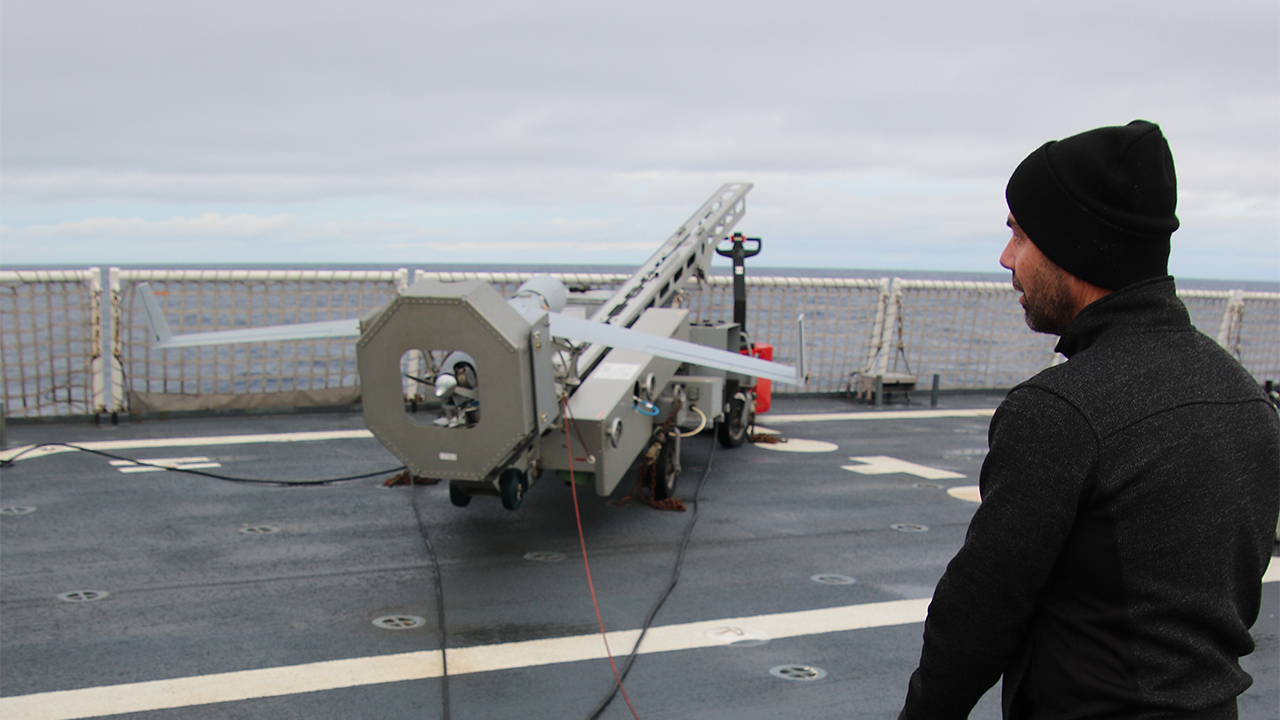
The ScanEagle was developed from a commercial product intended for use in the fishing industry, and has become one of the most widely deployed surveillance UAVs in the maritime domain (with some users also using it ashore). Launched by catapult and recovered using a hook system, the drone is most commonly equipped with a high resolution camera allowing the capture of visible light imagery and thermal imagery.
Arleigh Burke presence
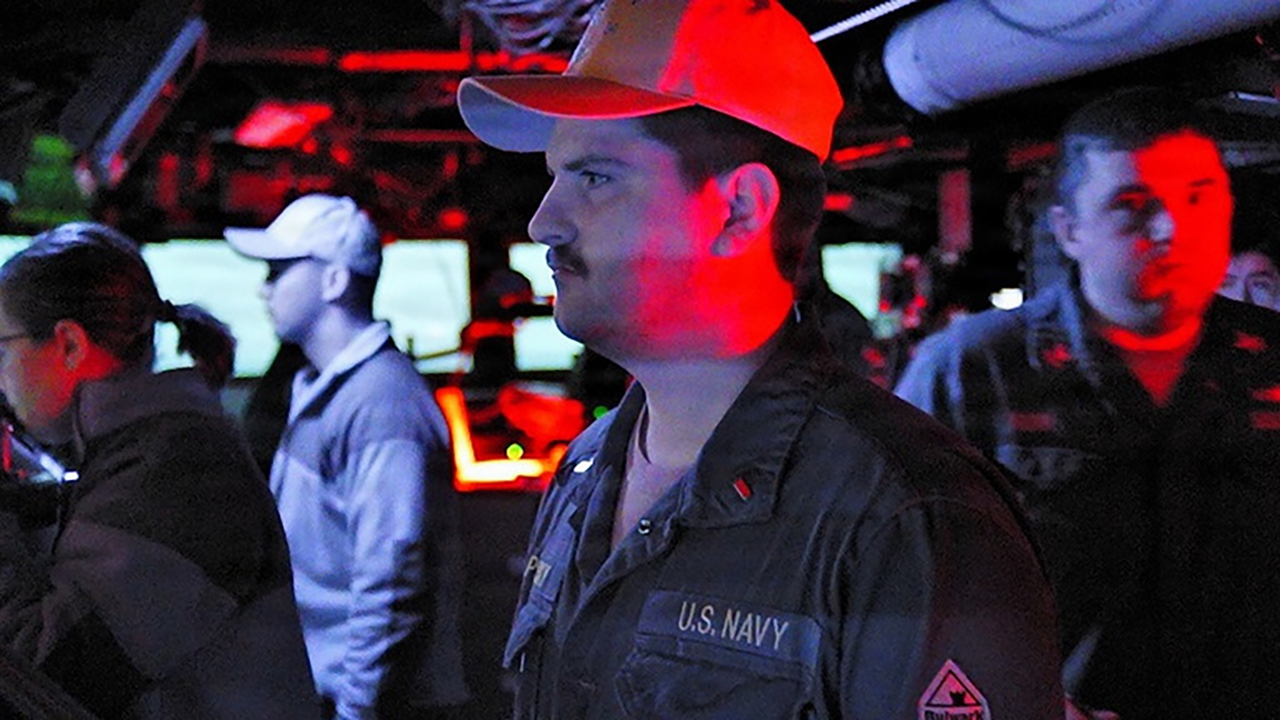
Images released from the Munro also depict, for the first time, an Arleigh Burke class destroyer taking part in the operation to interdict the tanker. The USS Bulkeley (DDG 84) was photographed in the distance from the Munro, and additional images were later released from onboard the destroyer itself. As with the images from the Munro, they leave us with no indication as to whether it directly launched the Little Bird helicopters or simply acted in a support capacity. We speculated that there were likely more U.S. assets at sea in the surrounding area alongside the Munro, and there may well have been more in addition to the Bulkeley.
On Jan. 10, the USS Paul Ignatius (DDG 117) began a port visit in Scotland, not too far to the southeast of where the tanker was seized. It seems very likely that this destroyer had also been involved, though rather than a close escort like the Bulkeley it may have instead been tasked with monitoring Russian naval activity in the wider area. Newer reports indicate that Russian naval vessels were present in the vicinity of the tanker while the seizure took place, though that doesn’t rule out the possibility of more ships at greater distances. The rumors of a Russian submarine deployment would also have warranted additional long range screening.
🇺🇸USS Paul Ignatius arrived at Hunterston Jetty on the Clyde yesterday after involvement in the operation to board tanker MV Marinera.
Laying a smokescreen…🙂
Via @wolfie250 pic.twitter.com/RejBvGAWGV
— Navy Lookout (@NavyLookout) January 10, 2026
Some have speculated that the launch platform for the Little Birds could have been the British auxiliary tanker RFA Tideforce, which the UK Ministry of Defence confirmed had been part of its support for the U.S. operation. Tideforce, with a flight deck capable of handling helicopters up to the size of a Chinook and hangarage comfortably able to accommodate a Merlin, would be more than capable of supporting multiple Little Birds, though as with the U.S. ships at this time we have absolutely no solid evidence to support it having been used for this. Most likely, Tideforce did assist the U.S. ships with fuel and logistics, as it is designed to do.
N478GS
The CIA-linked Gulfstream IV we mentioned had made a run into Bristol Airport while the buildup at Fairford was taking place has reappeared once again in UK skies.
An innocuous looking Gulfstream IV #N478GS slips quietly out of Prestwick almost unnoticed ahead of the big USAF move of the day. Nothing to see here. 👀 pic.twitter.com/BWBJj6G2eC
— Bee 🐝 (@BloodyPolitics) January 11, 2026
The business jet left Fayetteville on Jan. 10 and flew to Bournemouth Airport, UK before departing the following day for a short hop to Glasgow Prestwick. From Prestwick, the jet then flew to Boston Logan Airport, USA for a brief stop, then going on to Norfolk International Airport, Virginia.
N478GS is officially registered to L-3 IS LLC. In theory a subsidiary of L3 Technologies, now part of L3Harris, this specific company is thought to be used a shell for U.S. Government agencies to register aircraft. N748GS has been alleged before the European Court of Human Rights to be involved in detainee rendition flights operated by the U.S. Central Intelligence Agency (CIA). Via its ACARS messages, we can see that the aircraft still identifies itself as an L-3 Communications aircraft.
While it cannot conclusively be linked to the events that have transpired over the previous few days, its flights to/from related airport does seem too convenient to be a pure coincidence.
Video Footage
In recent days, video footage of the Bella 1/Marinera seizure itself was released. Though it shows several angles, apparently at different times, it reveals little about the operation. One notable depiction is of the very hastily painted ‘Marinera’ marking written on the tanker’s stern, almost certainly applied while at sea evading U.S. capture after a failed attempt to dock in Venezuela.
— OSINTtechnical (@Osinttechnical) January 10, 2026
Footage released on the day of the seizure was shared widely, with some claiming it to be from the Bella 1. This would have been important as this video showed Black Hawk type helicopters taking part. However, the footage actually depicted the seizure of the M Sophia in the Caribbean which took place on the same day. It is easily distinguishable from the Bella 1 due to the vertical support beams for its extended bridge wings, the Bella 1 instead featuring diagonal supports.
Once again, as has been written in our previous coverage, none of the 160th SOAR aircraft which were noted at RAF Fairford in the leadup to this mission actively took part in the raid. Not only were aviation enthusiasts at the fenceline throughout the day of the operation, but mainstream international media outlets also attended with their photographers. No flying by either the Black Hawks or Chinooks was recorded on this date, though one MH-60M Black Hawk made a short test flight the previous evening.
Whether they were deployed as a distraction, a reserve, or whether the plans had simply evolved to not require them, perhaps we may never truly know for sure. While the helicopters remain at the base at the time of writing, due to the continued lack of any significant activity in recent days the idea of this being a coincidental exercise deployment is growing more and more unlikely.
As may be apparent, there are still many pieces of information yet to be uncovered, and many uncertainties we still await clarification for. Whenever new details become available, we will be sure to keep you up to date.