Bell, M1 and Lockheed Martin have been selected for the next phase of the U.S. Army’s Flight School Next competition. Let’s see what each proposal brings to the competition.
Bell Textron announced on Jan. 5, 2026, that it has been selected to advance to the next phase of the U.S. Army’s Flight School Next competition, which will select a replacement for the UH-72 Lakota helicopter. On Jan. 8, Breaking Defense reported that M1 and Lockheed Martin are also advancing to the next phase.
The U.S. Army directly notified the companies involved, but no public announcement was made. Bell’s solution is based on the B-505 and M1’s is based on the Robinson R66, while Lockheed Martin has not yet announced its solution.
Leonardo (in partnership with Boeing), Airbus, MD Helicopters and Enstrom Helicopters were also in the run, however no statement has been published by the companies. Leonardo and Boeing proposed a solution based on the TH-73, Airbus on the UH-72, MD on the MD-530F and Enstrom on the 480B.
Flight School Next
The U.S. Army released a final call for solutions for the Flight School Next (FSN) program in December 2025, as part of the Army Aviation Training Commercial Solutions Opening (CSO). FSN will shape the future of the Initial Entry Rotary Wing (IERW) Training Program at Fort Rucker, Alabama, where all Army’s helicopter pilots are trained.
In the notice, the service said it is seeking for the first time “a Contractor-Owned, Contractor-Operated (COCO) solution using commercially available services and equipment on a single contract to provide annual training for 900 -1500 rotary wing pilots.” Notably, the contractor will be required “to train pilots to a U.S. Army standard equivalent to the Federal Aviation Administration’s (FAA) commercial helicopter pilot certification, including single engine aircraft, parts, maintenance, instructors (both academic and flight), and simulation (if required).”
The request is not casual, as the service intends “to increase the proficiency of U.S. Army aviators using commercially available equipment and instruction practices.” The pilots, upon graduation, will need to “be proficient with terrain flight, terrain flight navigation, and tactical flight mission planning, and familiar with multi-aircraft operations and night operations,” and “prepared for advanced aircraft training in the AH-64E, UH-60M, CH-47F, C-12U and the MV-75.”
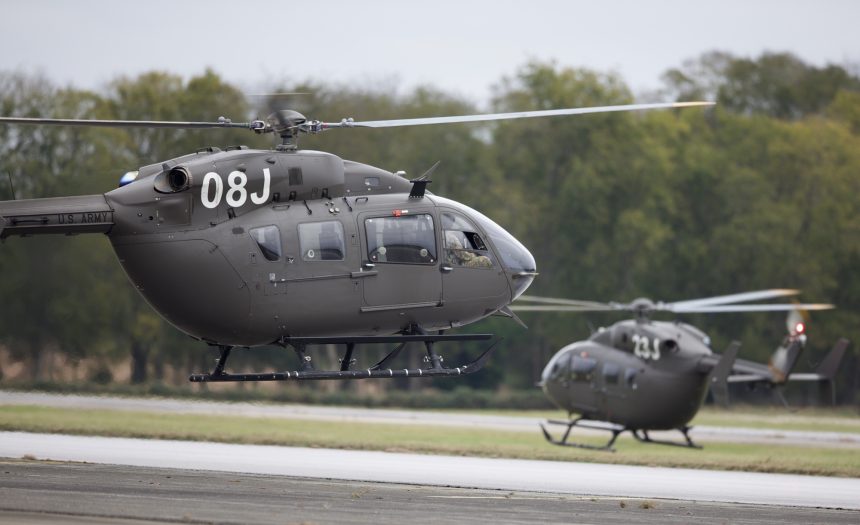
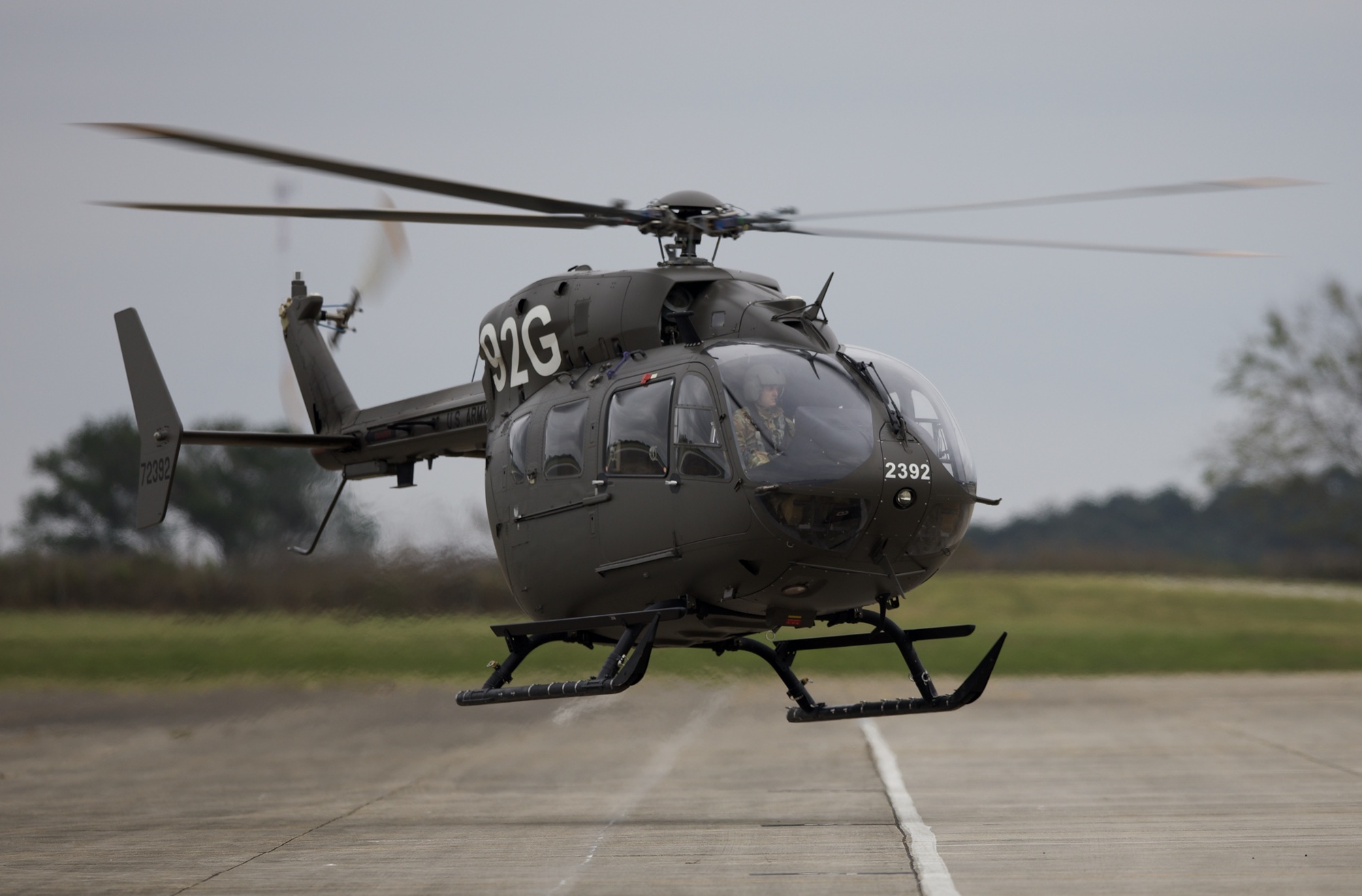
The new helicopter will replace the Airbus UH-72 Lakota, which became the primary training aircraft at Fort Rucker in 2015 and in December 2025 surpassed one million flight hours supporting the IERW training program. Initially, the Army decided to move from a single-engine trainer – the Bell TH-67 Creek – to a modern, twin-engine aircraft that more closely resembles the flight characteristics of an operational aircraft.
Now, Army officials said the Lakota is too advanced and too expensive for the training role, attributing this in part to its dual-engine design. Airbus however refuted the Army’s comments.
Anyway, the call for solutions now mentions among the first requirements that the new helicopter needs to be a single engine design. The helicopter will need to accommodate a flying student pilot, an observing student pilot and an instructor, as well as be able to support night operations, with Night Vision Google (NVG) being a desired but not mandatory requirement.
Among the requirements are also with Mode S Transponder and Automatic Dependent Surveillance-Broadcast (ADS-B) In and Out, and UHF and VHF radios.
Bell Textron
Bell was the first to announce the selection to advance to the second phase of the Flight School Next competition. The company has a 70-year history in training Army pilots, going from the H-13 Sioux – the Army’s first primary trainer – in 1946, to the UH-1H Huey and the TH-67 Creek.
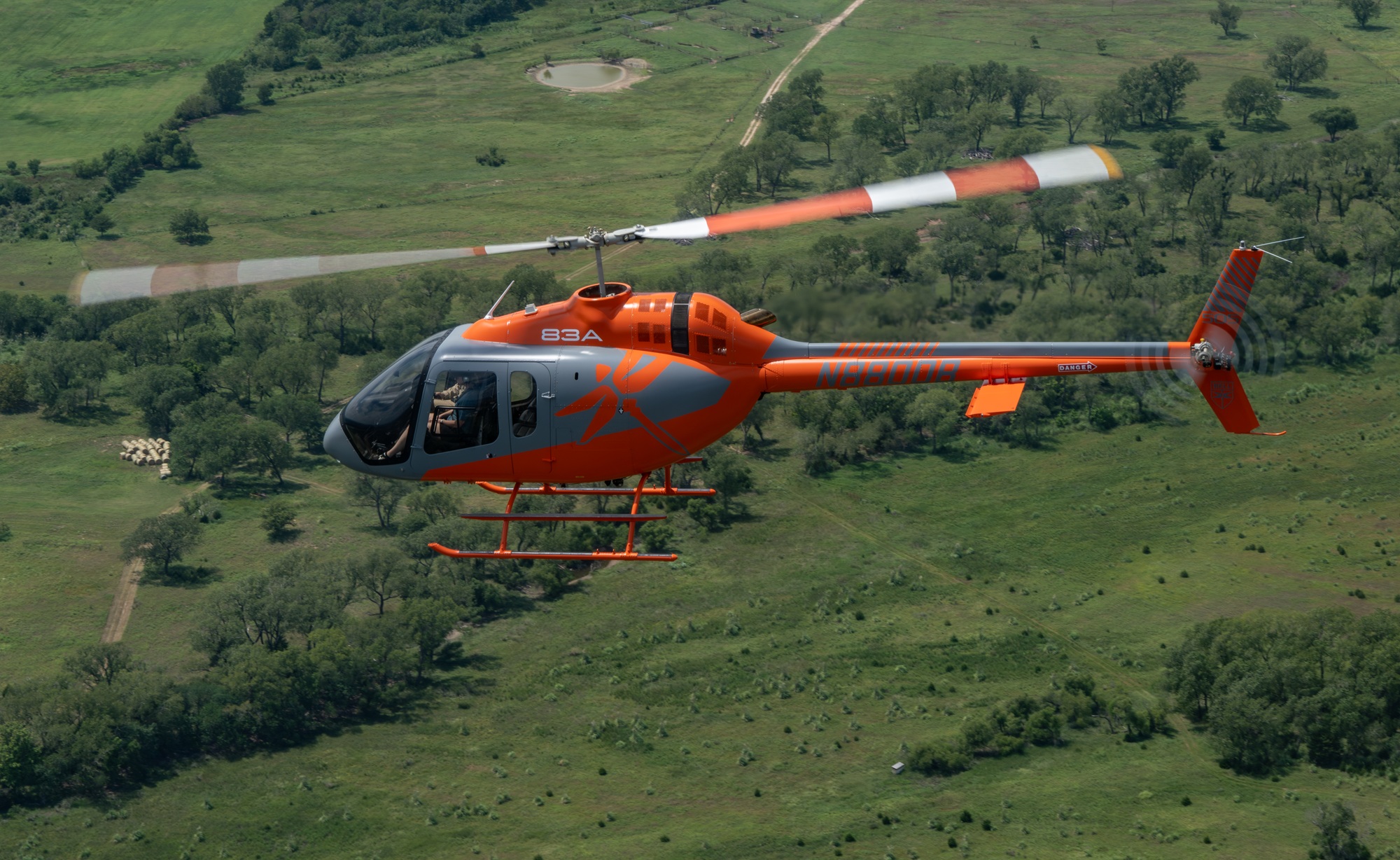
The solution proposed for FSN is based on the Bell 505 and the Bell Training Academy (BTA). The company describes it as a “turnkey solution,” which “will effectively enable the Army to transform their student pilots into the next generation of Aviation Warfighters.”
“We are honored to move forward in the Army’s Flight School Next program,” said Jeffrey Schloesser, senior vice president of strategic pursuits at Bell. “With Bell’s extensive history in military flight training, the proven Bell 505, and the expertise of our teammates, we are confident that our turnkey solution will support the Army in developing the next generation of Aviation Warfighters.”
The Bell 505 global fleet, since its introduction in 2017, counts over 500 helicopters which surpassed 300,000 flight hours. The type is already used by several civilian flight schools and features an high inertia rotor system – which provides additional reaction time and improved characteristics during autorotation, advanced avionics and a versatile open cabin design.
M1 Support Services
M1 Support Services it taking part in the competition as prime contractor in partnership with Robinson Helicopters. M1 is already working within the Army’s training, as it provides flight training, simulation and maintenance for AH-64, UH-60, CH-47 and UH-72 helicopters, as well as the Air Force’s TH-1s.
Their solution for Flight School Next is based on the Robinson R66 helicopter, the company’s first turbine helicopter based upon the piston-engined R44. In production since 2011, the helicopter saw wide success with over 1,500 R66s in service worldwide.
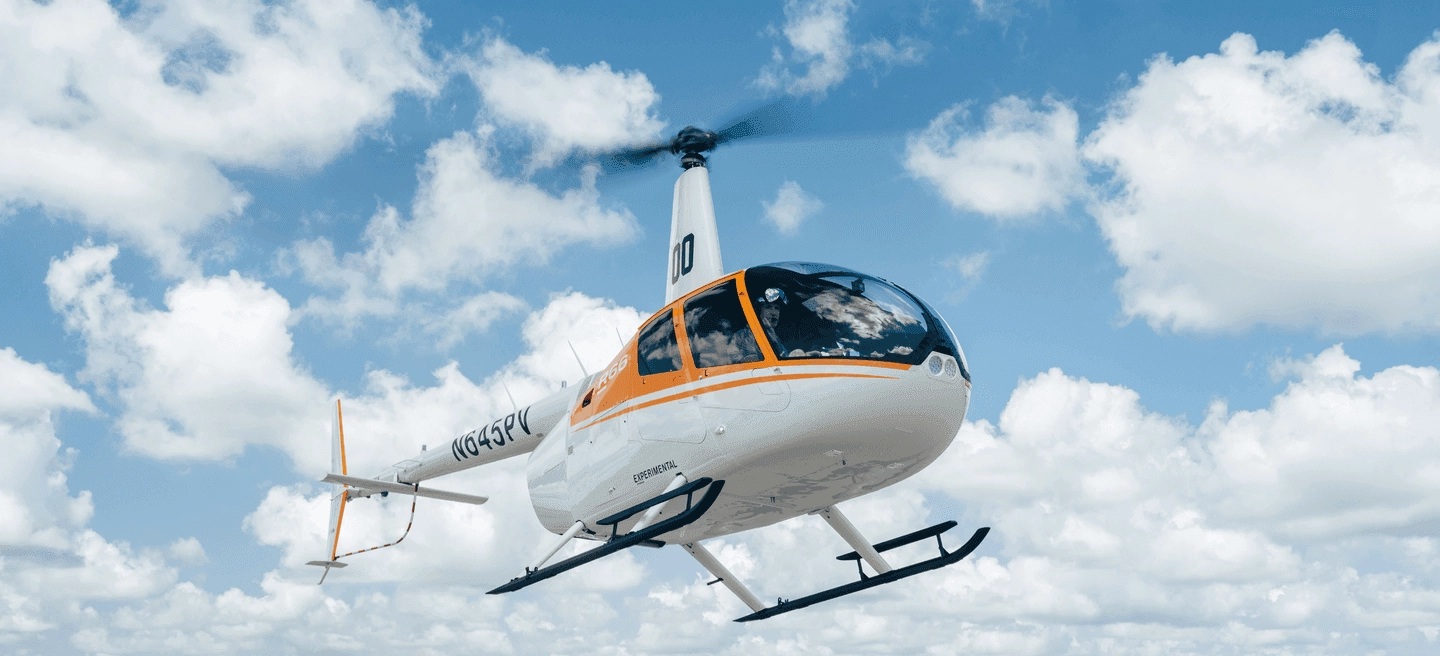
“More than 1,900 Robinson helicopters are used for civil and military flight training programs worldwide,” said Lt. Gen. Doug Gabram, U.S. Army (Retired), M1 Strategic Advisor. “Safe, rugged, and reliable, it’s the perfect training aircraft for the Army and offers lower operating costs than any competitor.”
“In addition to R66 helicopters, our holistic solution for Flight School Next features innovative training and simulation technologies that are truly transformative,” added George Krivo, CEO of M1 Support Services. “M1 will provide high-quality pilot training at a more affordable cost for our partners.”
M1 and Robinson highlight an “ideal balance of safety, performance, and affordability” with this helicopter. Among the features are a full glass cockpit with NVG compatibility and integrated 4k cockpit camera for debriefing students.
Lockheed Martin
Lockheed Martin is the third prime contractor to be selected for the second phase of Flight School Next, however it has yet to announce its proposed solution. According to reports, the announcement might arrive by the end of the month, and would involve a third-party helicopter.
Separately, the company said that its solution will build on the experience with the Australia AIR5428 Pilot Training System, the Singapore Basic Wings Course, and the United Kingdom Military Flying Training System (UKMFTS). This will allow to optimize performance, improve training quality and increase safety, says Lockheed Martin.
Little is known, however, about what the company might propose. A statement also highlight the experience with similar Commercial Solutions Opening frameworks like the UKMFTS, which would be passed on the Army’s new training system.
“We understand the complex training operations are highly dependent upon sustainment and supply chain,” says Lockheed Martin. “Our solution will include a U.S. designed, built and manufactured training aircraft that is supported by a resilient U.S. supply chain. We will also bring the latest proven technologies in aviation training to the student learning experience in our Flight School Next solution.”
Leonardo and Boeing
Leonardo has partnered with Boeing, which will act as prime contractor, to propose to the U.S. Army a solution based on the AW119T training helicopter. Notably, the helicopter is the same upon which is based the U.S. Navy’s TH-73 Thrasher operated at Naval Air Station (NAS) Whiting Field, Florida, only 75 nautical miles away from Fort Rucker.
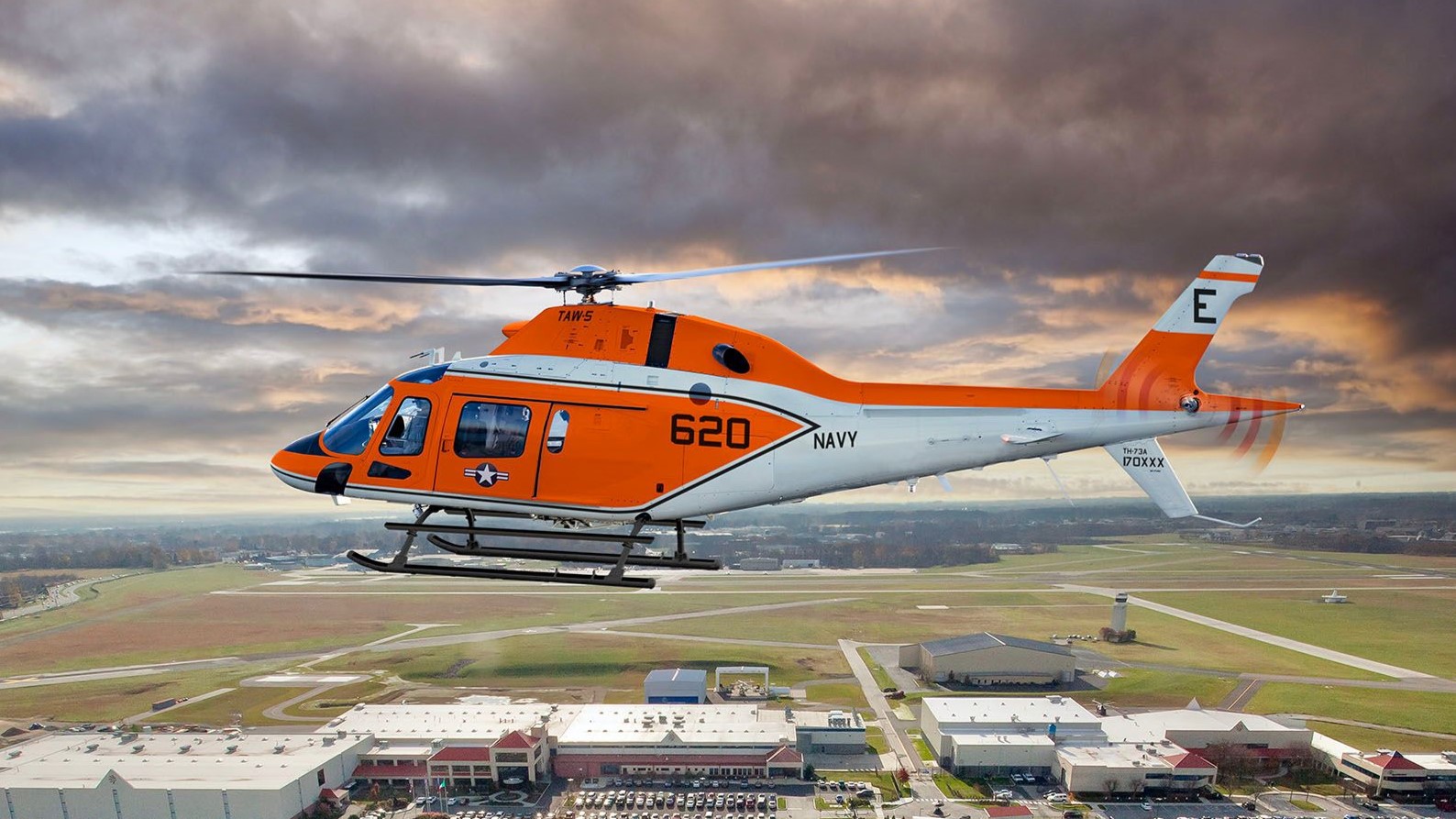
According to the companies, the program will be structured around a proficiency-based, phase-driven model that blends in-aircraft training with advanced simulation and virtual instructor pilot technologies. Furthermore, cloud-based progress tracking would enable adaptive training tailored to each student’s pace, maximizing flight hours and improving the training output.
Boeing Global Services provides worldwide training and mission system support for the AH-64 Apache fleet, including live, virtual, and constructive simulation, cockpit procedure trainers, and instructor development programs. Leonardo, meanwhile, has extensive production and sustainment infrastructure for the AW119T and its variants in the U.S., including a fully operational support facility and production capacity to meet future Army demand.
“We are bringing together two industry leaders to offer the Army a turnkey, innovative approach to rotary-wing training with an integrated, long-term training solution that increases aviator readiness, operational and sustainment efficiencies and will deliver measurable value throughout the life of the program,” said John Chicoli, senior director, U.S. Army/Marines & Special Operations/Missions, Boeing Global Services. “The AW119T is a proven platform that already supports U.S. military training every day. With more than 100,000 flight hours accumulated and a sustainment network in place in Florida, Leonardo and Boeing are uniquely positioned to deliver immediate capability and long-term value to the Army through Flight School Next,” said Clyde Woltman, CEO, Leonardo Helicopters U.S.
Airbus
Airbus is the manufacturer of the current primary trainer, the UH-72 Lakota. The type was first introduced as utility helicopter by the U.S. Army, before being adopted also for the new role.
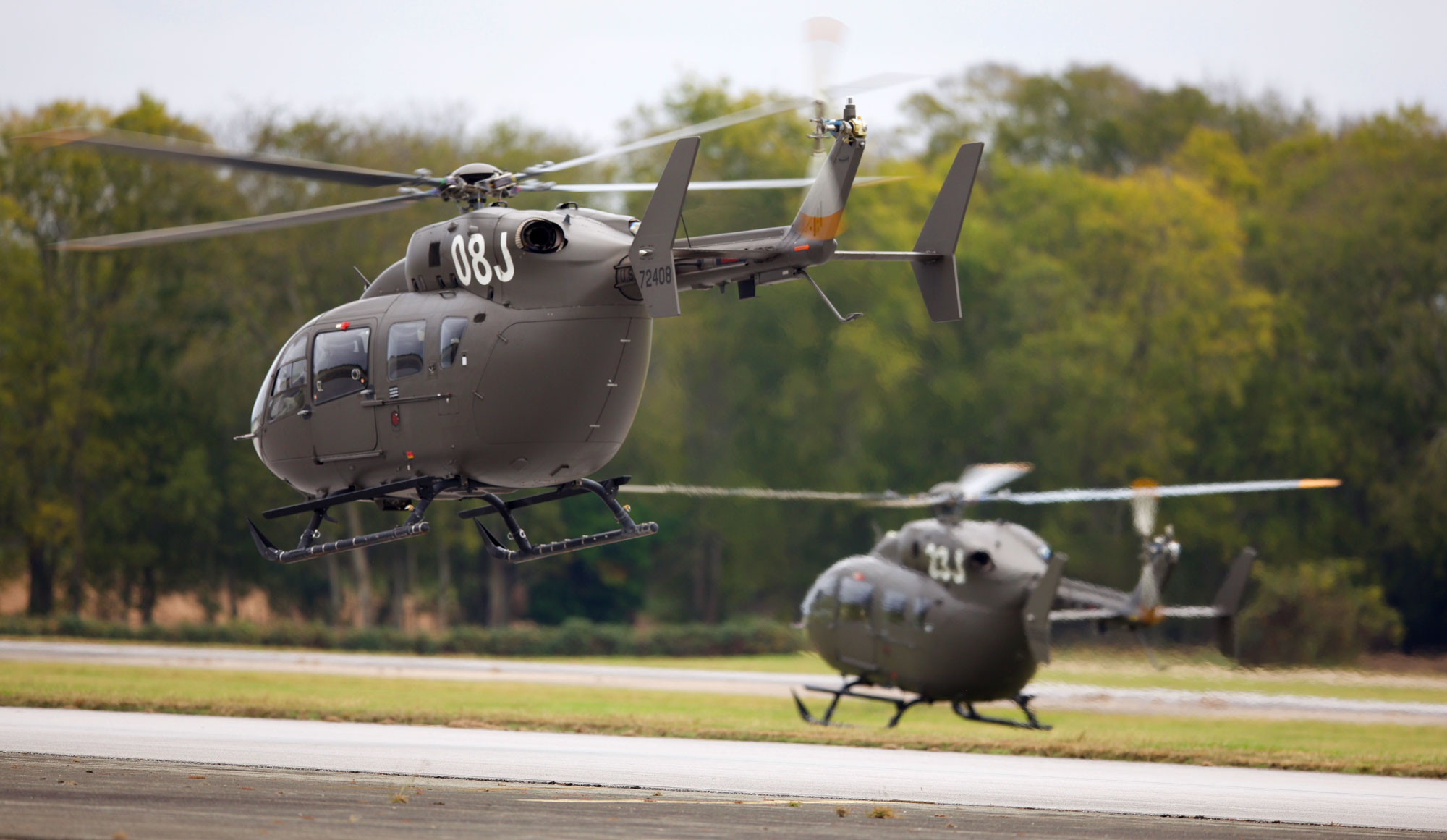
The company is now proposing again the UH-72 as the primary trainer, although its dual-engine design is in contrast with the requirements set in the call for solutions, which mentions a single engine requirement. With the experience accumulated in the training role since 2015, Airbus believes it can continue to provide rotary wing student aviators with the necessary fundamentals to progress to more advanced helicopters.
It is unclear if the company has received a notification by the Army for the second phase of Flight School Next, and no official statement is currently available. Airbus previously said that over 8,000 students have been trained on the Lakota.
MD Helicopters
MD Helicopters pitched its MD 530F as the new primary trainer. The company describes it as “a purpose-built, combat-relevant training aircraft that directly reflects the mission demands of Army Aviation.”
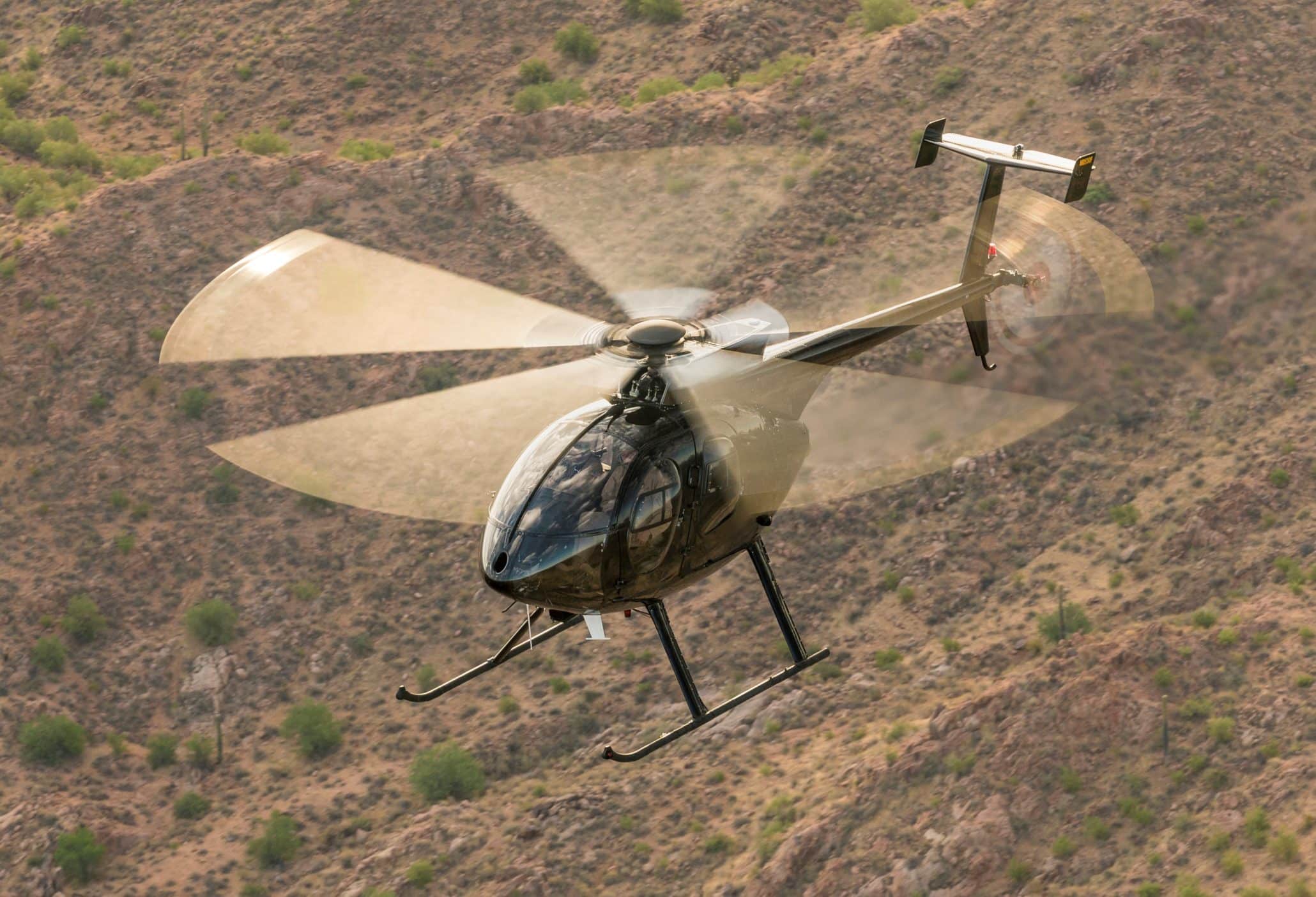
MD highlights the 530F’s fully articulated, five-bladed rotor system, which “provides handling characteristics that closely replicate those of the UH-60M Black Hawk, AH-64E Apache, and CH-47F Chinook – allowing students to train in a platform that feels like the real thing from the start.” The helicopter is based on the enduring 500 series airframe, which was also built by Boeing to equip the 160th SOAR (Special Operations Aviation Regiment) “Night Stalkers” with the AH-6 and MH-6.
“The Army is investing in its future warfighters, and that means delivering training tools that truly reflect operational reality,” said Ryan Weeks, President & CEO at MD Helicopters. “The MD 530F is not just ready for that mission – it was built for it.”
Enstrom Helicopters
Enstrom Helicopters has good experience in the civilian and military training, as its helicopters have seen a widespread distribution thanks to their reliability, safety, and low operating costs. For Flight School Next, Enstrom is proposing the 480B, which was designed to meet the demanding specifications of the U.S. Army.
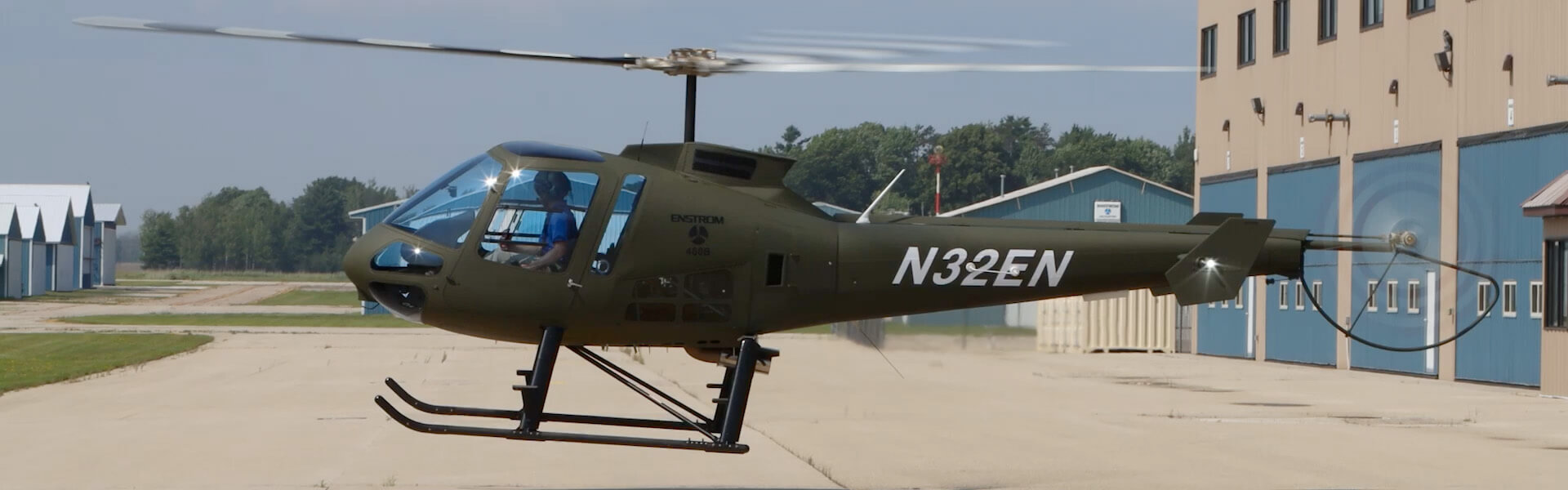
The company says its goal was to provide “an extremely safe aircraft enabling the students to focus on flying.” Among its features are an all mechanical control system, wide robust landing skids, unrestricted tail rotor system, glass cockpit and fully duplicated controls.