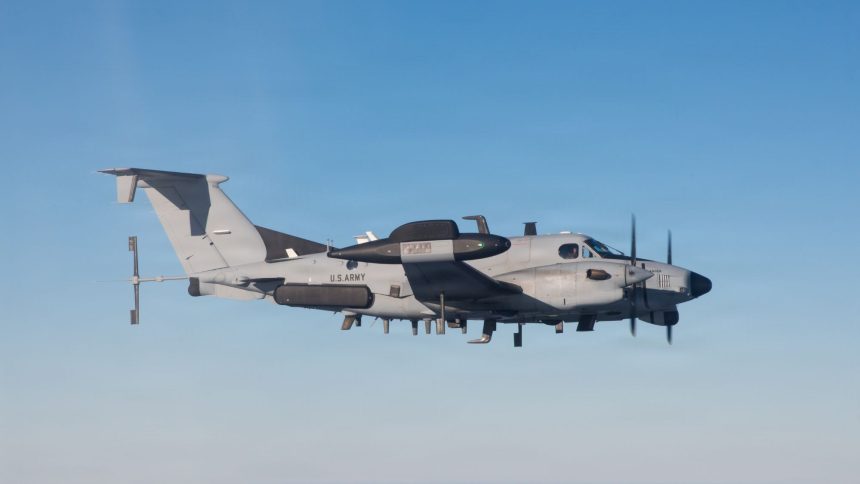
The legacy ISR fleet of RC-12X Guardrail, MC-12S EMARSS and the EO-5C ARL-M turboprops will be replaced by the jet-powered High Accuracy Detection and Exploitation System (HADES).
The U.S. Army has completed the divestment of its three A-ISR (Aerial-Intelligence, Surveillance and Reconnaissance) aircraft types, including the RC-12X Guardrail, MC-12S EMARSS-M (Enhanced Medium Altitude Reconnaissance and Surveillance System-Multiple Intelligence) and the EO-5C ARL-M (Airborne Reconnaissance Low-Multifunction), the service announced on Dec. 11, 2025.
While the ARL-M and Guardrail conducted their last flight missions in Korea in July, the last of the EMARSS-M aircraft conducted its final mission in September, “bringing the fleet’s historical journey to an end,” said the press release from the Capability Program Executive – Intelligence, Electronic Warfare and Sensors.
The retirement of these legacy aircraft comes as the Army’s High Accuracy Detection and Exploitation System (HADES), part of the Multi-Domain Sensing System (MDSS) program, has been shaping up since 2020. Four different Company-Owned Company-Operated (COCO) demonstrator aircraft, providing ISR, targeting and ELINT/SIGINT (Electronic/Signals Intelligence) capabilities have been contracted. These will validate technologies, meet interim operational needs, and also inform the performance parameters for the HADES project.
The US Army looks to retire its turboprop A-ISR fleet by end of 2025, transitioning to the jet-powered HADES (ME-11B) based on the Global 6500. With 70 ISR turboprops in service, the shift raises concerns over a looming capability gap.
📸 Ian Harding / Bombardier pic.twitter.com/tJUPCOvnw6
— AeroResource (@AeroResource) May 31, 2025
ARL-M, Guardrail and EMARSS
The press release said that in July the ARL-M, the Guardrail and the EMARSS marked 54 years of the Army’s A-ISR turboprop support on the Korean Peninsula, although it was not the only theatre where they operated. The Army deployed the first Guardrail beginning 1971 to the 1st Military Intelligence (MI) Battalion in Germany to monitor the Soviet military in East Germany and Czechoslovakia, maintaining this role for nearly three decades.
Following the Cold War, three Guardrail platforms assigned to the 224th MI Battalion and 15th MI Battalion were used during Operation Desert Shield/Desert Storm, surveilling Iraqi Republican Guard military movements for coalition forces, and directly supporting Marine Corps’ advance along the coast into Kuwait City.
Additionally, Guardrails from the 3rd MI Battalion continued to operate in Korea monitoring the demilitarized zone since the mid-1970s. In 1996, ARL-M joined Guardrail in response to a U.S. Forces Korea and U.S. Pacific Command requirement to replace the retiring OV-1D Mohawk aircraft.
For the first time ever, the ARL-M provided a crucial moving target indicator/synthetic aperture radar (MTI/SAR) subsystem. The advanced surveillance, imagery reconnaissance, target identification, and communications intercept capabilities were a significant improvement over the aging OV-1D Mohawk.
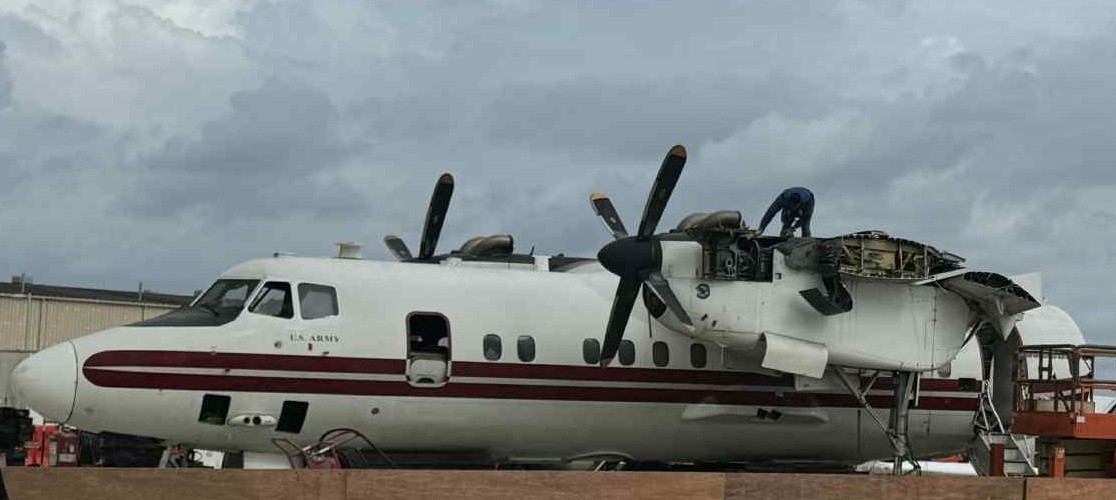
The final aircraft to join the Army’s A-ISR turboprop fleet was the EMARSS. Based upon the Beechcraft King Air 350ER platform, the first prototype flew in 2013 and was operational by 2016, with deployments to regions including Africa, Latin America, Iraq, and Afghanistan.
“The EMARSS program used common architecture with five different variants allowing EMARSS aircraft to respond to diverse operational demands and technological advancements, resulting in EMARSS remaining at the technological edge of ISR collection,” the Army explained.
In 2006, Project Director Sensors-Aerial Intelligence (PD SAI) led the Guardrail Modernization Program, upgrading the Army’s RC-12 fleet to the RC-12X standard, commonly known as the Guardrail Common Sensor (GRCS). This replaced aging sensors and introduced modern payloads that extended the life of the fleet by nearly 20 years.
The enhancements significantly increased the frequency range and types of signals collected, capturing and characterizing signals within a fraction of a second “while simultaneously processing different emitters and signal types.”
Divestment
In 2022, the Army prioritized A-ISR funding towards “deep sensing capabilities” by making sensors fly higher. “The higher the platforms fly, the further they can collect intelligence for many sensors. The legacy turboprop fleet has limited speed, range, altitude, power, and payload carrying capacity […] for near-peer competition,” the Army’s press release explained.
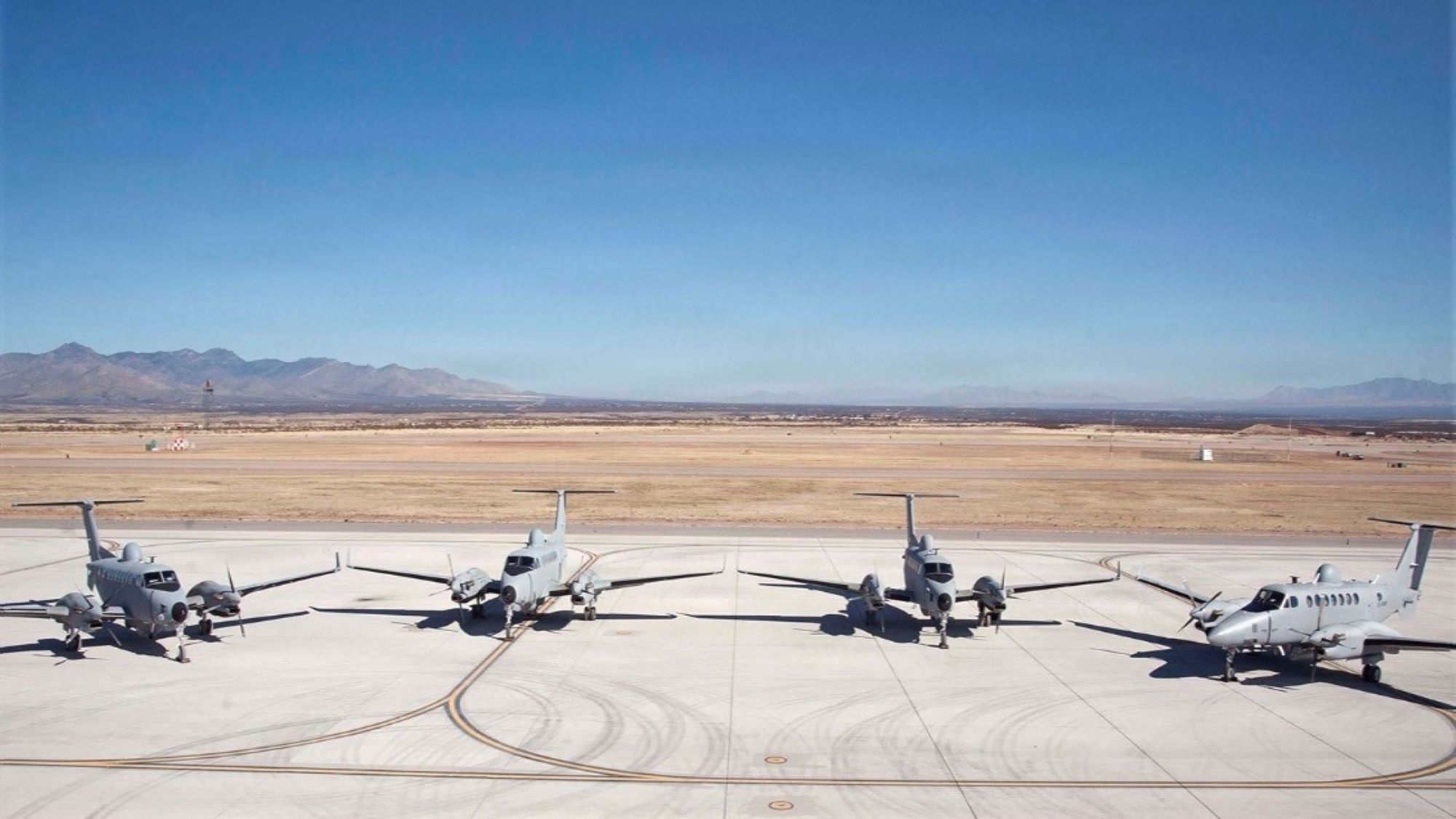
The divestment of all three systems – ARL-M, Guardrail, and EMARSS – began in fiscal year 2023. PD SAI divested all mission equipment packages (MEP) from the legacy aircraft, while the Fixed Wing Project Office (FWPO) completed the strategic divestment of the legacy turboprop fleet in FY25. PD SAI, FWPO and the Headquarters Department of the Army (HQDA) G2 also staggered the divestment process to ensure soldiers still remained supported.
Several enduring airframes were divested, while some were maintained in the current configuration for operational use. The future HADES fleet would be a “keystone” of the “deep sensing of adversary forces and greater range” mission.
Army’s HADES program
The Army began shaping the Multi-Domain Sensing System (MDSS) High Accuracy Detection and Exploitation System (HADES) program in 2020. This was intended to replace the four-decade old legacy turboprop aircraft fleet of RC-12X Guardrail, MC-12S EMARSS and EO-5C ARL-M aircraft.

These would be represented by the Airborne Reconnaissance and Targeting Multi-Mission System (ARTEMIS), Aerial Reconnaissance and Electronic Warfare System (ARES), Army Theater level High Altitude Expeditionary Next Airborne ISR-Radar (ATHENA-R), and ATHENA-S (Signals) jet platforms programs.
All of these collectively are preparatory programs and “bridging” strategies that operationally deploy jet-based ISR sensing on contractor-owned and contractor-operated (COCO) aircraft until HADES is fielded. They also help assess “how the sensors operate on the demonstrator jets at the altitudes, speed, and ranges that HADES is expected to perform,” according to Product Manager for the MDSS, Eric Hughes.
As HADES program-of-record capabilities are fielded, these bridging systems will be retired.
Company-Owned Company Operated aircraft
In 2023, the Army selected L3Harris and MAG Aerospace for ATHENA-R and SNC (Sierra Nevada Corporation) for ATHENA-S. In May 2025, SNC announced successfully completing the initial Flight Performance Handling & Qualification test of the Bombardier Global 6500 business jet in the RAPCON-X (Rapidly Configurable to Any Mission-X) airframe for the ATHENA-S.
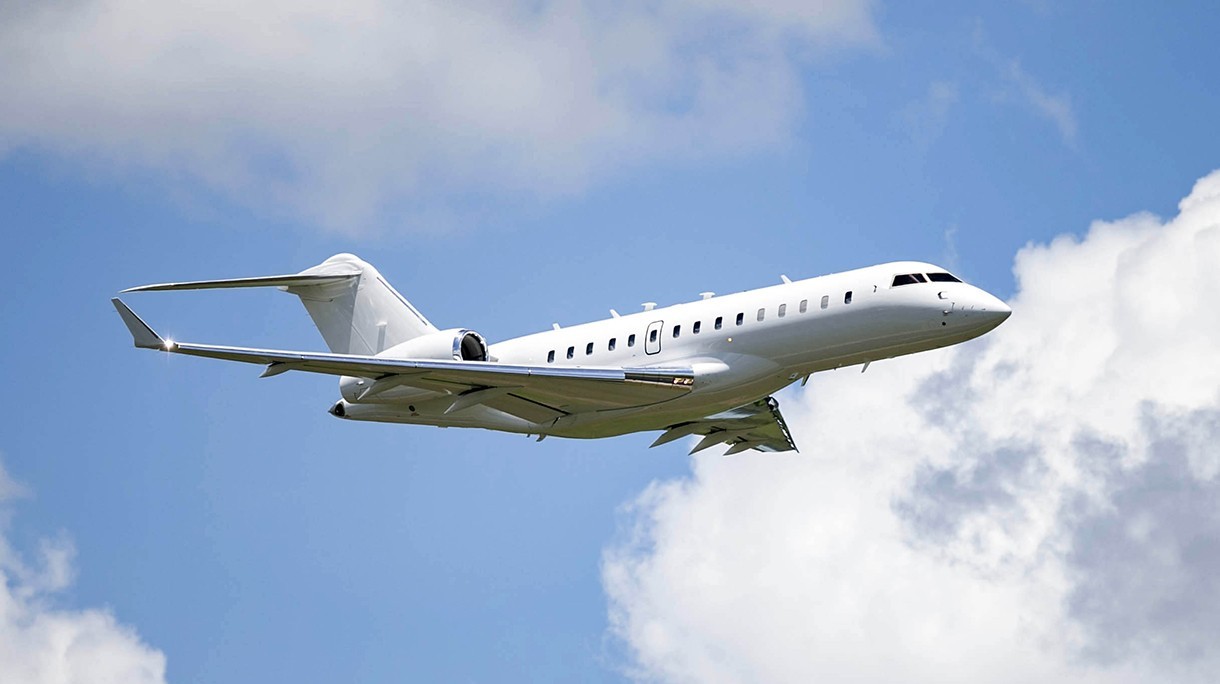
ARTEMIS has been operational since 2020, with deployments both in the Indo-Pacific and Europe. The Army valued the faster deployment capability of the platform, based on the Challenger 650, and the ability to travel anywhere in the world within 24 hours, in addition to the higher performance compared to a turboprop.

ARES, also based on the Global 6500, was deployed to the Indo-Pacific in 2022. The Army said that, in addition to a performance increase, ARES is closer to the HADES project’s long-term goals.
The ATHENA-R meanwhile had also deployed to South Korea in February 2025 for a four-month operational assessment of the aircraft’s readiness, possible fixes, as well as supporting the United States’ long-standing commitment to South Korea.
The ATHENA jet indeed landed at Camp Humphreys, South Korea.
This (highly likely) marks the start of the first-ever ATHENA deployment. Of the four ISR bizjets, two are planned to be deployed in South Korea while the other two will be deployed to the European theatre. https://t.co/kTEmSG0rYp pic.twitter.com/01wDCe7edh
— Bizjets of War (@bizjetsofwar) February 13, 2025
Final HADES aircraft
The final HADES prototypes, also RAPCON-X configured Bombardier Global 6500s, will be the Army-owned large-cabin business jets utilized for aerial ISR platforms. These HADES aircraft will have SIGINT/ELINT (Signals/Electronic Intelligence), SAR/MTI (Synthetic Aperture Radar/Moving Target Indicator) and additional capabilities, the Army had said.
We completed flight performance testing of our RAPCON-X Bombardier Global 6500 jet! This Flight Performance Handling Qualification is a key milestone in proving the jet’s airworthiness with consistent performance for the full flight envelope. Learn more: https://t.co/15Ex7QhebH. pic.twitter.com/F92eu3rAd2
— Sierra Nevada Corporation (@SierraNevCorp) May 8, 2025
The first Bombardier Global 6500 for the HADES mission, designated ME-11B, was delivered to FWPO in November 2024, followed by a second in July. “The first fully developed HADES prototype system is expected to be delivered in FY26 followed by a second prototype in FY27,” the release further said.
The Army has however halved its future upcoming HADES fleet from 12 to six airframes, Breaking Defense reported in May.