The Navy confirms Boeing’s MQ-25 will not fly in 2025 as expected, shifting the pivotal test to early 2026 while ground checks and certification continue.
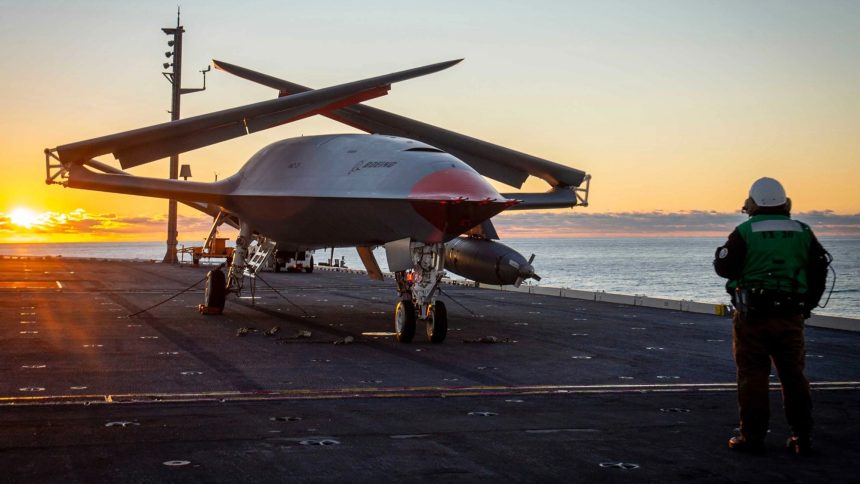
The first flight of the U.S. Navy’s Boeing MQ-25 Stingray has slipped into early 2026, delaying earlier plans to achieve by the end of 2025 what senior service officials have repeatedly described as a pivotal milestone for the future of unmanned carrier aviation. The aircraft is now completing an extended series of ground tests and systems certification before it can fly, according to Aviation Week.
“The team is finalizing systems testing and flight clearance, with the first flight planned once certification is complete and weather permits,” the service said in a statement quoted by Aviation Week. Boeing echoed this position, emphasizing that, together with the Navy, they “are taking additional time to complete deliberate systems-level testing and review and approve the final airworthiness artifacts needed for a flight clearance.”
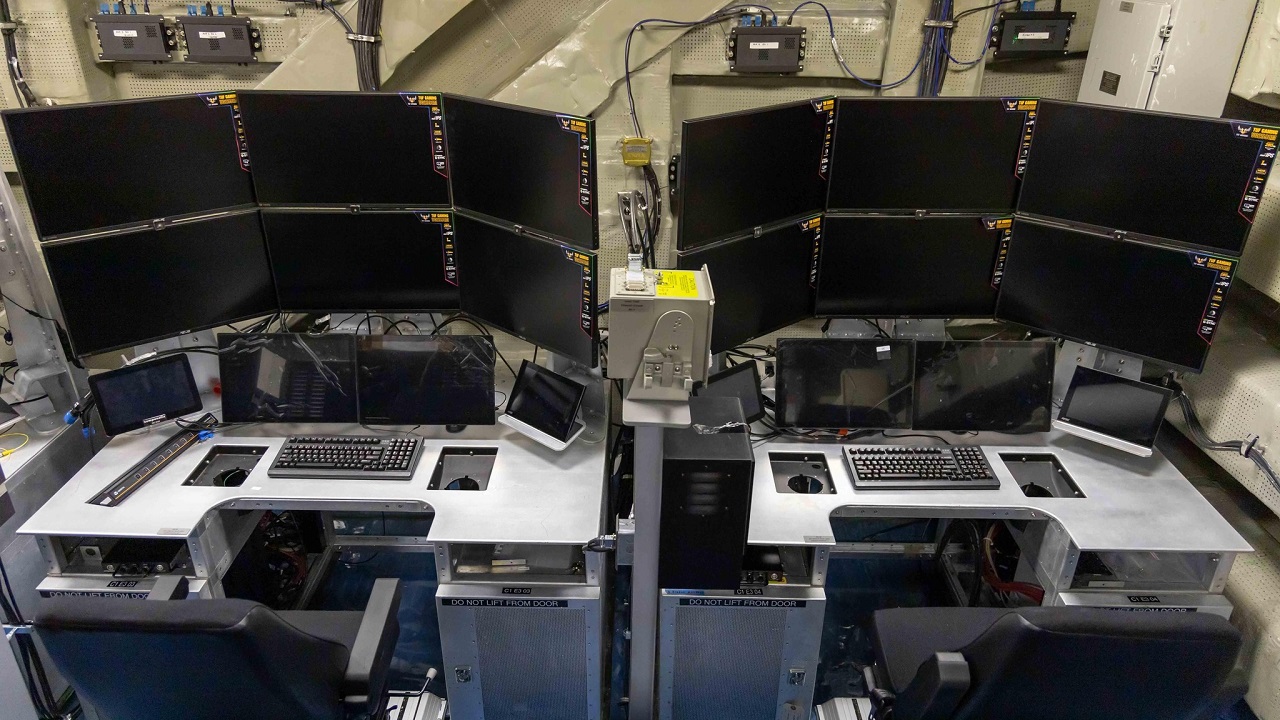
The service also detailed the recent activities of the MQ-25 program: “Over the last several months, the team has completed MQ-25A Stingray structural testing on a static aircraft, conducted initial engine runs, completed its flight-certified software, and commanded the vehicle from the Unmanned Carrier Aviation Mission Control System (UMCS).” Boeing highlighted the engine runs and the UMCS testing as key steps.
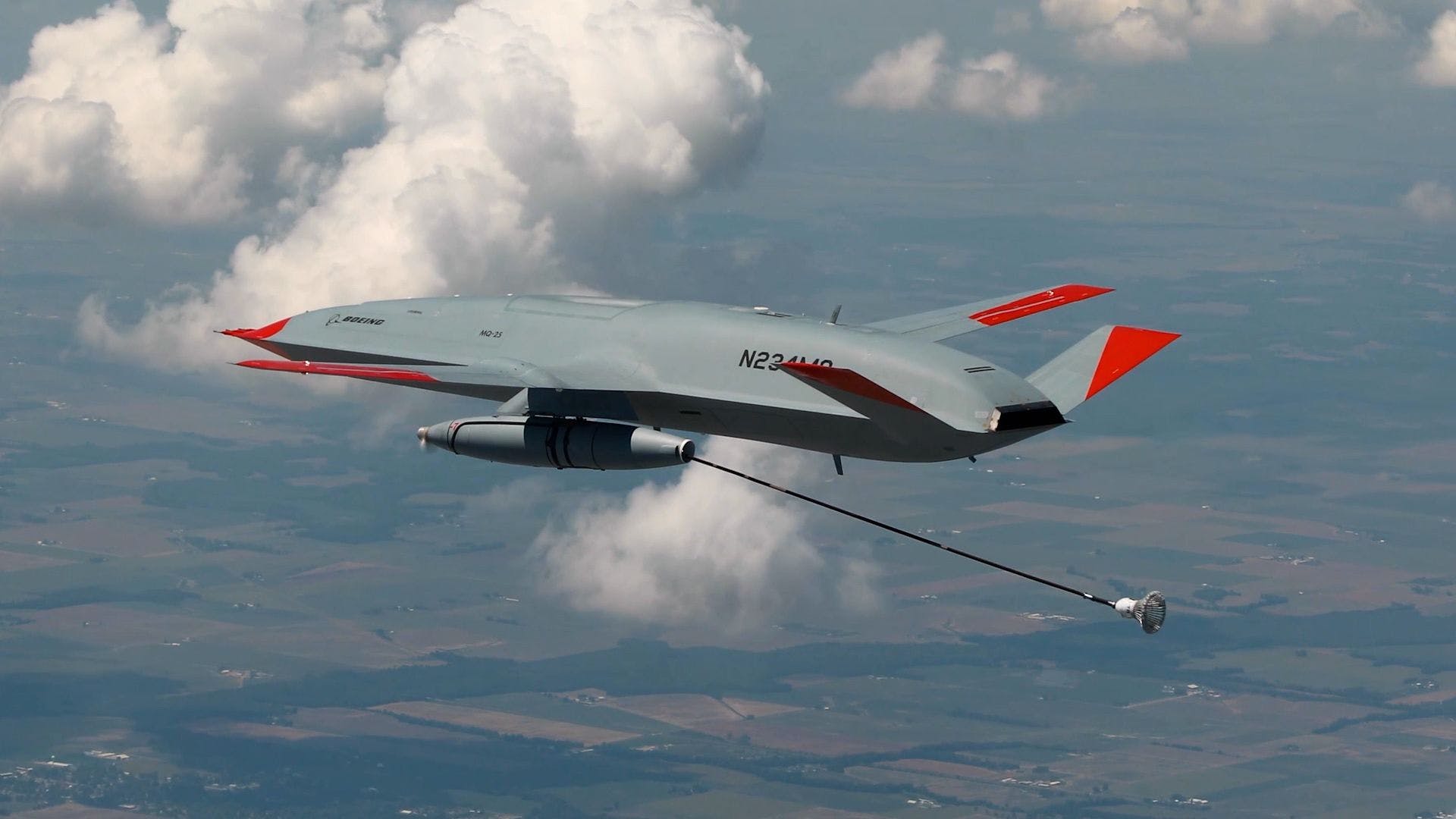
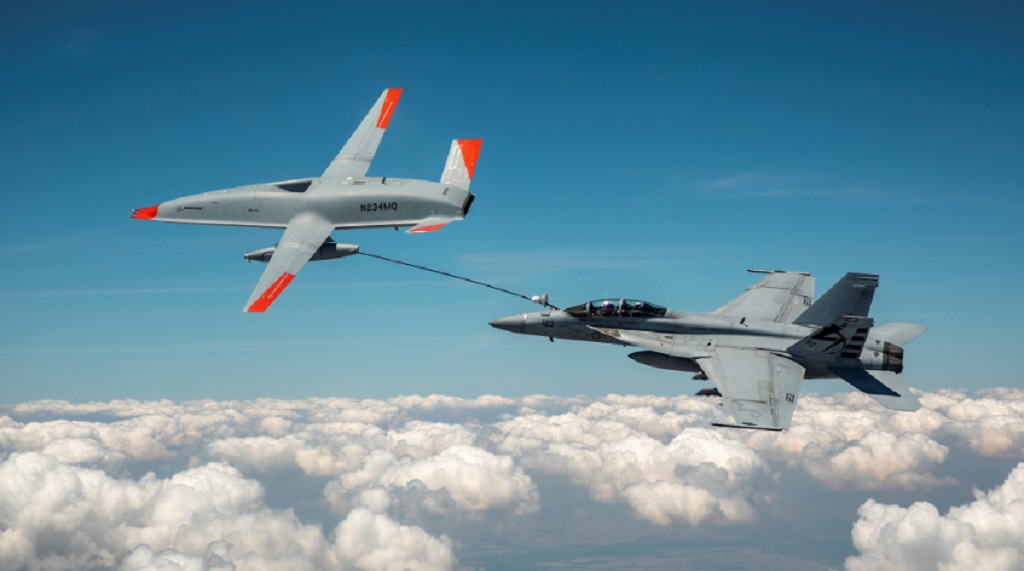
This flight will be an important milestone as it will involve the first production-representative aircraft built for the Navy, rather than the earlier T1 test article that has already conducted multiple flights and demonstrated unmanned aerial refueling with the F/A-18F, F-35C, and E-2D. The production-representative aircraft includes major structural, avionics, and systems differences intended to meet long-term fleet requirements.
Confident 2025 Expectation
The shift to 2026 follows both a government shutdown and labor strikes at Boeing’s MidAmerica and St. Louis facilities, though neither the Navy nor Boeing directly linked the delay to these events. Throughout 2024 and early 2025, Navy and Boeing officials consistently projected a first flight before the end of 2025.
In fact, earlier this year, Vice Adm. Daniel Cheever, commander of Naval Air Forces, said he was confident the service would fly the MQ-25 in 2025 and start the integration aboard aircraft carriers in 2026. “We will fly MQ-25 in 25. You can quote me on that. We will fly that platform in 25 and get that thing on a carrier in 26 and start integrating [it],” said Cheever at the WEST 2025 conference in San Diego.
As reported by Aviation Week, Boeing executive Dan Gillian further stated in April that “the airplane, the system and the team are all saying this is going to happen this year.” Breaking Defense also reported that NAVAIR leadership saw the 2025 milestone as achievable but highly demanding.
Vice Adm. Carl Chebi, head of Naval Air Systems Command, said in April 2025 that flying this year would require “a ton of work.” He cited discussions over required vs deferrable features, the need to quickly resolve issues to avoid delaying pre-flight testing and the need to speed up decisions among the problems.
Cheever, however, expressed growing optimism, telling Breaking Defense he was “getting more and more excited” as the team accelerated test progress. He also praised how the team was working quickly to achieve the milestone, solving issues within days to avoid delays.
Carrier-Based Manned-Unmanned Teaming
The significance of the MQ-25’s first flight extends far beyond the flight itself. Navy officials have long described the Stingray as a “trailblazer” for integrating unmanned aircraft into carrier operations at scale.
Cheever has repeatedly emphasized that the MQ-25 is the system that “unlocks the future for manned-unmanned teaming on the aircraft carrier,” enabling a future carrier air wing built around collaborative combat aircraft (CCA) concepts, as we reported earlier this year here at The Aviationist. In fact, the Navy is positioning the MQ-25 as both an operational asset and a developmental stepping stone toward sixth-generation naval aviation.
The Stingray’s primary mission is aerial refueling, relieving the F/A-18E/F Super Hornet fleet from tanker duty. This is expected to be the drone’s most urgent task, as that accounts for up to a third of Super Hornet sorties, according to Navy figures.
By carrying the same Cobham ARS pod already used by the F/A-18, the MQ-25 is expected to deliver up to 14,000–16,000 lb of fuel at 500 nautical miles, the Navy told Congress in an August 2025 report. This will increase both the range and availability of strike fighters aboard Nimitz- and Ford-class carriers.
Secondary Intelligence, Surveillance and Reconnaissance (ISR) roles are also planned, with the Stingray providing organic surveillance and recovery tanking during carrier operations. In the early days of the MQ-25 program, the aircraft was described as capable of performing ISR via the installation of SIGINT (Signals Intelligence), AIS (Automatic Identification System), and EO/IR (Electro-Optical/InfraRed) equipment.
Persistent Schedule Pressure
The MQ-25 has already faced multiple schedule adjustments. According to the Pentagon’s Selected Acquisition Reports and GAO assessments cited in this summer’s report to the U.S. Congress, major program milestones – including the first EMD aircraft flight and initial operational capability (IOC) – have slipped by approximately two years over the past development cycles.
GAO also warned of cost risks if low-rate initial production begins before sufficient testing is completed. The Navy’s FY2026 budget request includes $1.04B for procurement and RDT&E, covering the first three LRIP aircraft and continued development of the UMCS.

Current planning envisions IOC as late as FY2027. To stay on schedule, Boeing opened a $200-million production facility at MidAmerica Airport, Illinois, in 2024 to support future low-rate production, and Congress has been closely monitoring program costs and risk assessments.
Additionally, the Navy has been working with Lockheed Martin to continue the maturation of the UMCS. In 2024 and 2025, UMCS installations were completed aboard USS George H.W. Bush (CVN 77) and at shore sites, and Navy Air Vehicle Pilots demonstrated the system’s ability to command not only the MQ-25 but also unmanned aircraft such as the MQ-20 Avenger.
As we previously reported here at The Aviationist, Boeing also demonstrated manned-unmanned teaming technologies allowing F/A-18 pilots to control an MQ-25 during refueling operations.