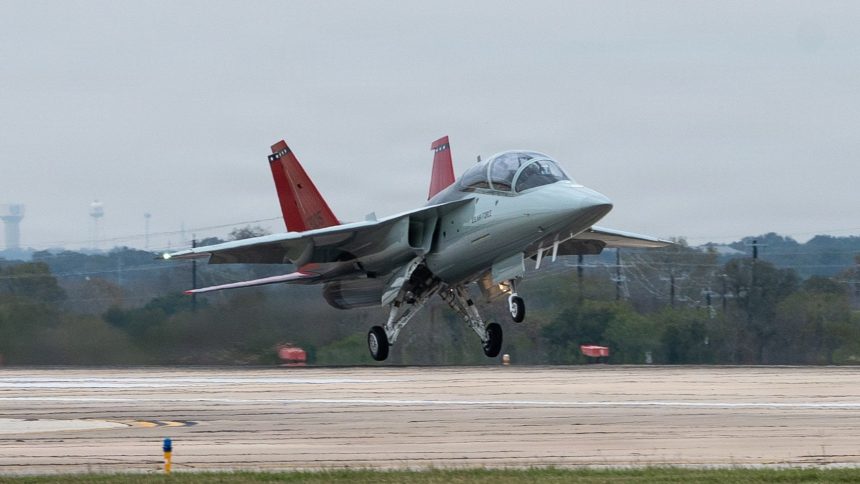
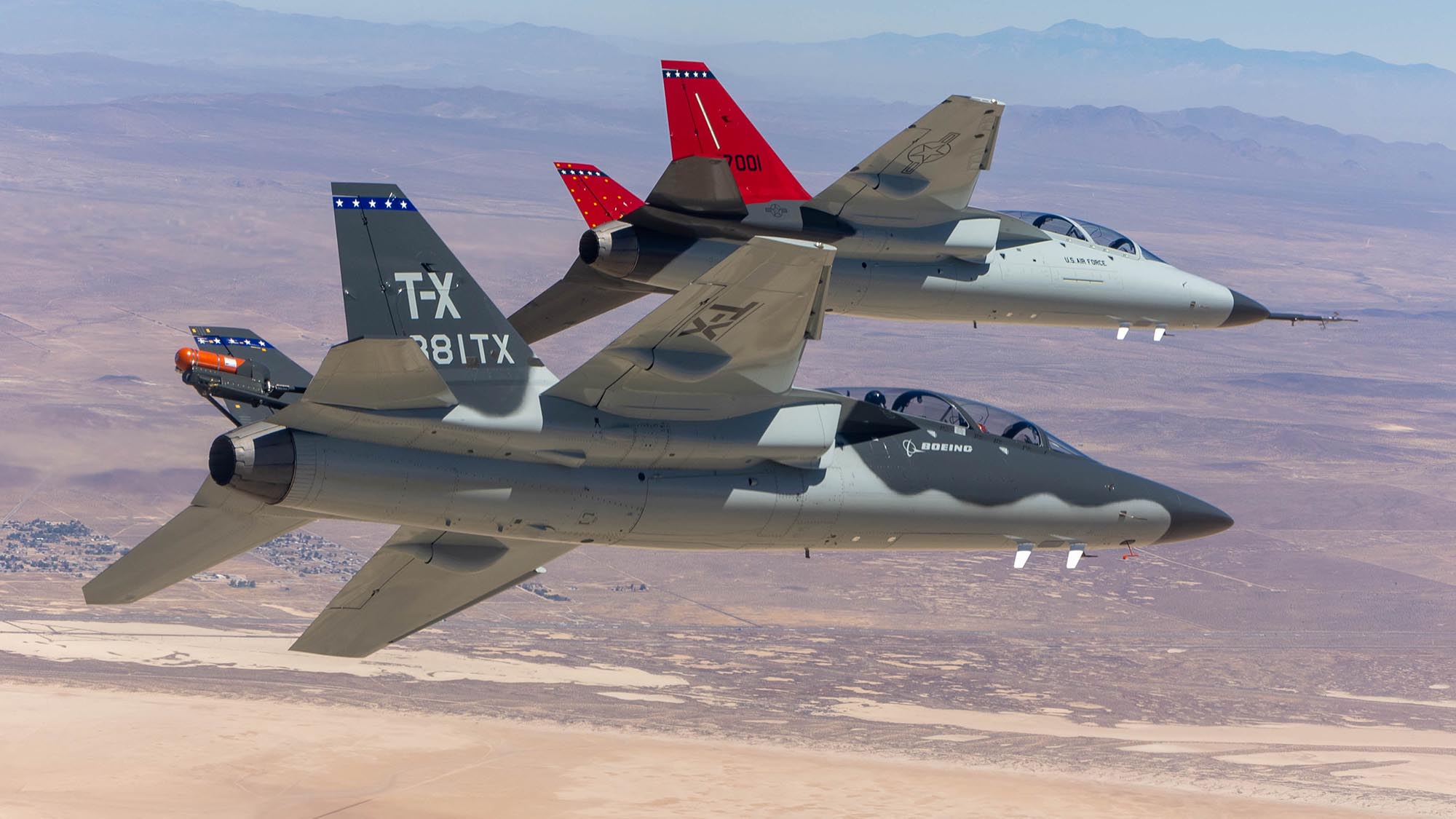
The U.S. Air Force’s Air Education and Training Command received its first T-7 Red Hawk trainer at Joint Base San Antonio – Randolph, marking a milestone in the replacement of the T-38 Talon.
The first T-7A Red Hawk training aircraft has finally been delivered to Joint Base San Antonio – Randolph, Texas, on Dec. 5, 2025. The aircraft is the first to be assigned to the U.S. Air Force’s Air Education and Training Command and, specifically, the 12th Flying Training Wing assigned to the Texan base.
“The aircraft delivery is the first physical representation of progress within the program,” said Brig. Gen. Matthew Leard, director of AETC Plans, Program, Requirements and International Affairs, ahead of the delivery.
The Delivery of the Red Hawk
The delivery marks a milestone in the modernization of the service’s pilot training and the replacement of the aging T-38 Talon. The delivery to Randolph also comes two years after the first T-7 arrived at Edwards AFB, California, for developmental flight testing.
The choice of this base for the first delivery is not casual. As already reported, the T-7 was named Red Hawk in honor of the Tuskegee Airmen, and at Randolph it will be assigned to the 99th Flying Training Squadron “Red Tails.”
“We intend to continue the legacy of breaking barriers and challenging assumptions by utilizing the advanced capabilities of the T-7 training system,” said Lt. Col. Michael Trott, 99th FTS commander. “The 99th will re-write what pilot production looks like and shape the future of pilot training for the next generation of warfighters in America.”
The service noted that, while the T-7 will change advanced training, the T-6 Texan II continues to play a crucial role in Undergraduate Pilot Training. However, the press release also mentioned “AETC has plans to expand the T-7A program and eventually replace the Texan.”
Red Hawk over the Alamo!
The first T-7A #RedHawk advanced trainer has arrived at @JBSA_Official in Texas to start training future @USAirForce fighter and bomber pilots. The new advanced trainer brings safe, leading-edge capabilities to the @AETCommand. pic.twitter.com/PgwlburK81
— Boeing Defense (@BoeingDefense) December 5, 2025
This is a reference to the undergraduate flying training program Small Group Tryout that the U.S. Air Force is conducting in cooperation with the Italian Air Force at Decimomannu Air Base, Italy. The effort will test modernized syllabi and streamlined training timelines with the goal of reducing pilot certification to less than one year.
The students first attended civilian flight school-led Initial Pilot Training in the U.S. While in Italy, they are attending a 133-day Basic Jet Training course in the T-346A Master jet trainer will allow them to earn their U.S. Air Force pilot wings.
Col. Corey Hogue, AETC’s Capability Requirements Division Chief, Air Education and Training Command, said this effort will help validate the feasibility of sending student pilots straight from IPT to fast-jet training in the T-7, instead of a first phase on the turboprop T-6 Texan II and then the T-38 or T-7.
The T-7A Red Hawk has landed at the 12th Flying Training Wing, JBSA-Randolph. Timing is everything and today the skies opened to bring the jet home. The formal ceremony was postponed due to the forecast but don’t worry a new date is coming soon. #Everysecondcounts #T7ARedHawk pic.twitter.com/LEKjkpPouK
— AETC – First Command (@AETCommand) December 5, 2025
The Evolution of Training
The press release stressed that the T-7A represents a fundamental shift in how aviators are trained, compared to what was possible with the aging T-38C Talon.
“From day one, students won’t just be learning to fly; they’ll be learning to manage information, interpret data from advanced sensors, and make critical decisions in a complex environment, all from within the trainer,” said Maj. Gen. Gregory Kreuder, 19th Air Force commander. “This aircraft enables us to close the gap between basic pilot training and the realities of fifth generation plus warfare, producing more capable, intuitive warfighters right out of the gate.”
In fact, the most recent fighter aircraft, such as the F-35 Lightning II and the F-15EX Eagle II, require a different approach to training because of the different mindset required by pilots. As mentioned by Kreuder, pilots will not only be asked to fly the aircraft and conduct a simple mission, but they will also have to manage and interpret large amounts of data and make critical decisions to achieve the mission’s objectives.
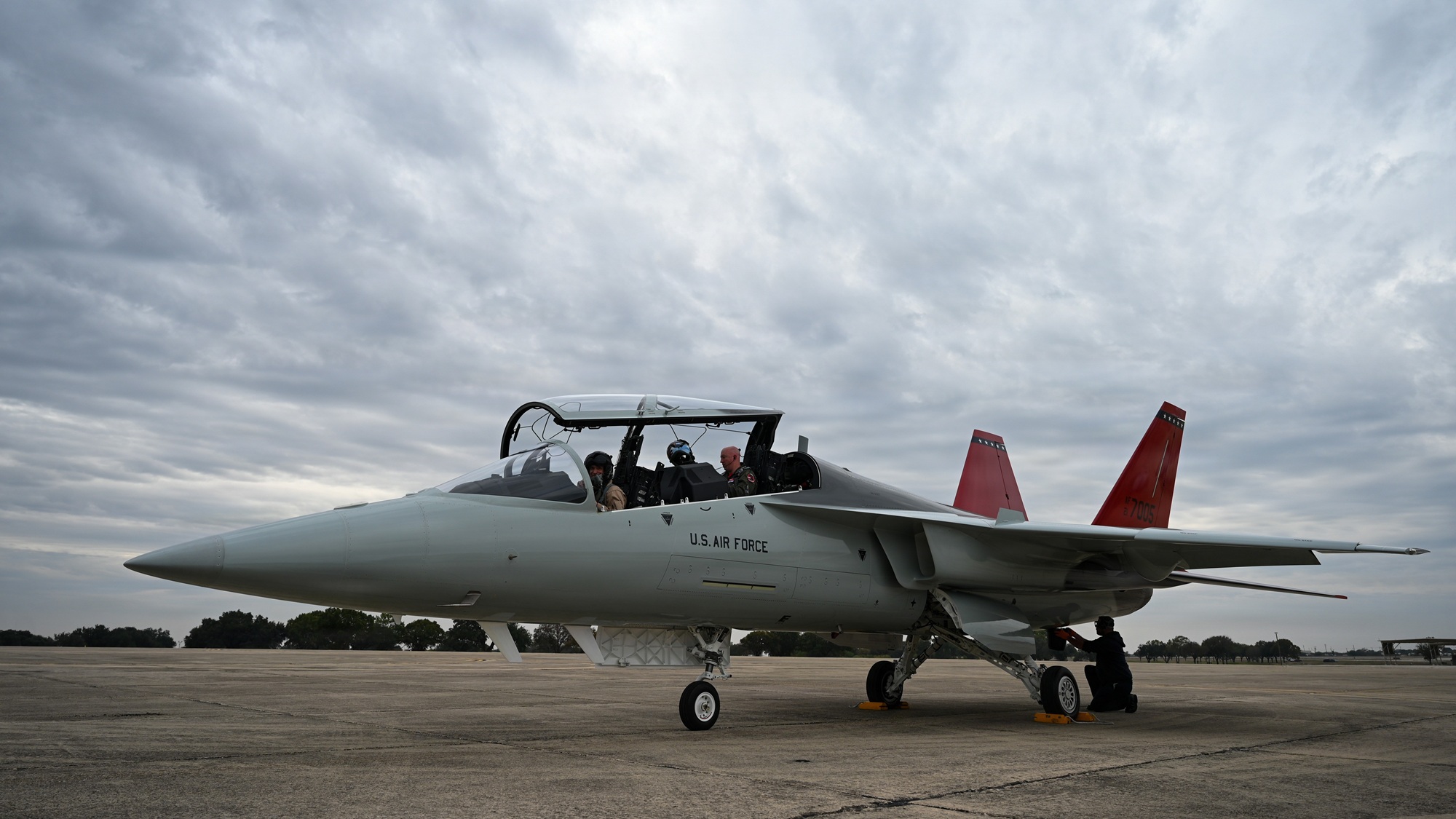
“We will employ the T-7 in complex, multi-domain scenarios that were previously impossible in our training aircraft,” Kreuder said. “The challenge, then, is to adapt our training syllabi to leverage that new capability. We must avoid plugging our new jet into an old model. Therefore, we are actively developing our new curriculum from the ground up with a focus on data-driven and individualized learning paths.”
This is a fundamental change compared to the training with the T-38C, which was described by the service as the “traditional seat-of-the-pants flying” in the press release. “Our legacy T-38 built incredible ‘stick and rudder’ aviators and served us well for many decades; however, it is ill-suited to prepare our pilots for the aircraft we have today and are acquiring in the near future,” Kreuder stated.
The press release notably mentioned that Brig. Gen. Leard Formal Training Units like Luke Air Force Base, which is the FTU for the F-35A Lightning II, “often must retrain graduates to operate in advanced digital cockpits.” Maj. Gen. Kreuder further said the pilots need to build cognitive foundations, and the T-7 will help them develop skills that include “rapid decision-making, cognitive offloading to technology and managing complex systems under pressure.”
“We will forge tactical problem-solvers who are not just great aviators but are also comfortable multi-tasking as critical nodes in a data-rich environment by preparing students to manage sensor fusion, process large amounts of information and make rapid, data-driven decisions,” he said. “Skills central to the future fight.”
The goal is to let pilots in UPT build consistent habits, “ingesting large amounts of information” in the T-7, that translate directly to modern fighter aircraft.
T-7 Integration
The aircraft delivered on Dec. 5 is the first of 14 to be assigned to the 99th FTS. The unit will also build out the Type 1 maintenance training and initial pilot training.
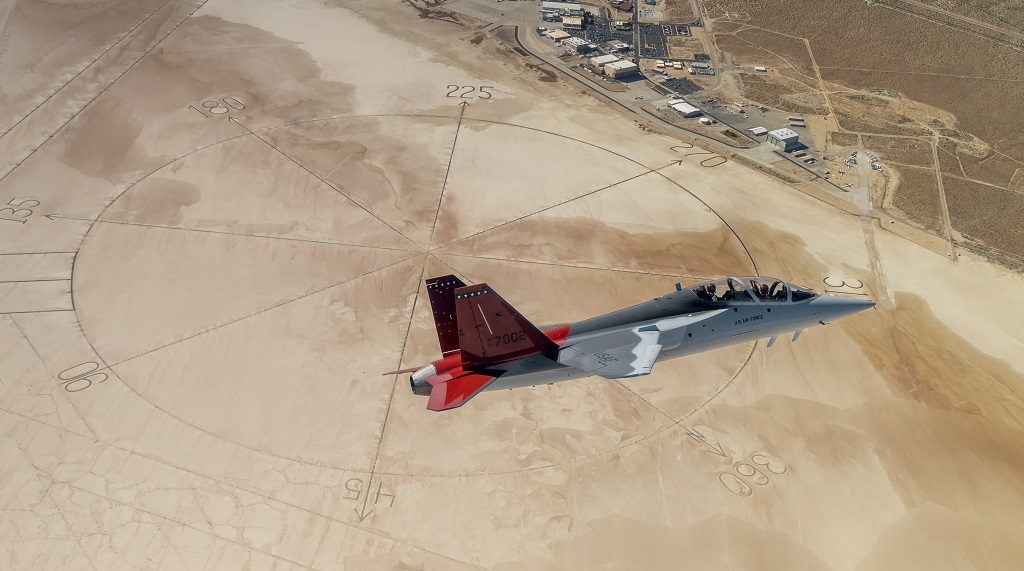
“The initial flying will be done to get the initial cadre qualified, and then we are going to be putting the aircraft through its Initial Operational Test and Evaluation, or IOT&E, phase to make sure it performs the way we intend it to perform in the missionized setting we want to use it in,” said Lt. Col. Trott, according to Air and Space Forces Magazine.
Trott also said the first students on the Red Hawk are currently “projected in the fall of 2027, when we will be asked to start producing Pilot Instructor Training students to be instructors in the T-7.” In the press release, the service mentioned the Initial Operational Capability is still planned in August 2027.
The Program of Record currently includes 351 T-7As, 46 simulators and associated ground-based training systems. The service says it foresees 40-60 aircraft purchased per year, ramping up by 2033 with the final procurement around 2035-36.
The T-38 will remain in service until enough T-7As are in place, although the Air Force did not provide a timeline. However, the service noted once again “the program will eventually extend to include replacing the T-6 Texan.”
Other than Randolph, deliveries of the T-7 are planned for Columbus AFB, Mississippi, in Fiscal 2027, Laughlin AFB, Texas, in Fiscal 2032, Vance AFB, Oklahoma, in Fiscal 2034 and Sheppard AFB, Texas, in Fiscal 2035.