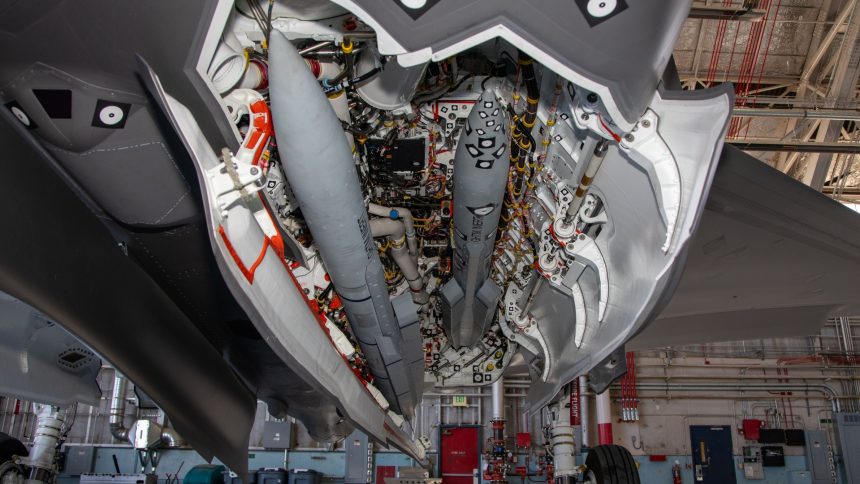
The F-35A completed ground vibration testing and fit checks at Edwards Air Force Base ahead of the beginning of flight testing.
The F-35 Joint Program Office (JPO) has announced the completion of a series of critical ground-based integration tests with the Meteor missile and F-35A Lightning II in cooperation with MBDA and Lockheed Martin, the manufacturers of the weapon and the jet, respectively. These tests pave the way for the beginning of flight testing, few months after flight testing of the variant also started with the F-35B variant.
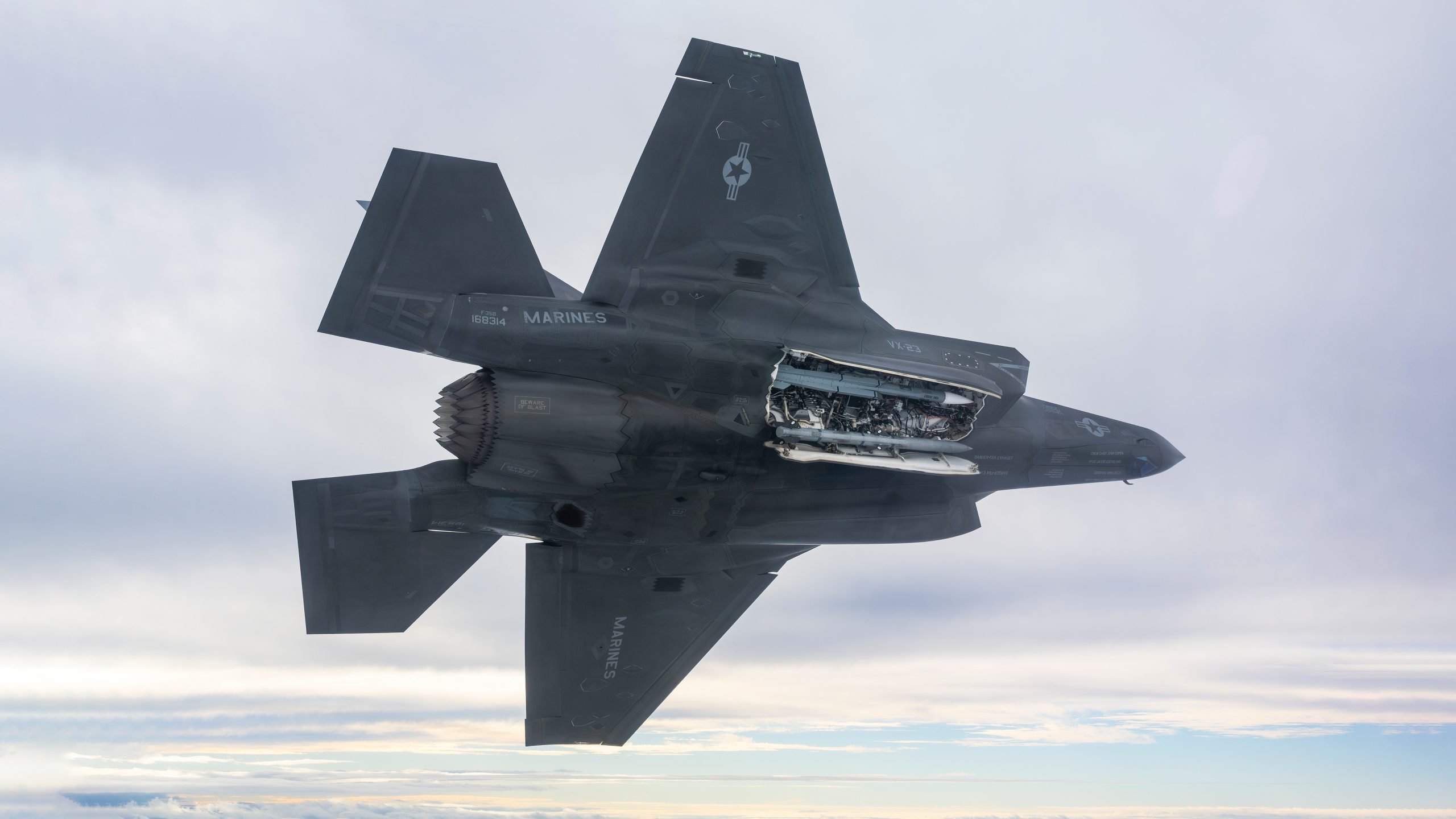
Meteor Integration on F-35A
An Italian-sponsored effort, the integration of the Meteor Beyond Visual Range air-to-air missile aboard the Conventional Take-Off and Landing (CTOL) variant of the F-35 will be advantage of both Italy’s and Germany’s F-35As, according to Janes’ Gareth Jennings. However, Germany has not been mentioned in the statements by the JPO and MBDA.
The JPO announces successful ground trials of the @MBDAGroup #Meteor aboard the @LockheedMartin F-35A. An Italian-led effort that will see the missile carried by #Italy and #Germany, and dare I say the #UK when the @RoyalAirForce gets the F-35As it plans on ordering beyond its… pic.twitter.com/dDo44H3Ckk
— Gareth Jennings (@GarethJennings3) December 4, 2025
The UK, which is sponsoring the integration of the weapon aboard the Short Take-Off and Vertical Landing (STOVL) F-35B variant, might also follow suit and employ it also on its future F-35As. Similarly, the integration on the F-35B is also benefiting the Italian F-35B fleet.
According to the F-35 JPO, the ground tests were conducted at Edwards Air Force Base, California, and included vibration testing and fit checks to validate key hardware responses between the aircraft and missile. This phase of testing has been defined as a pivotal step before airborne tests begin.
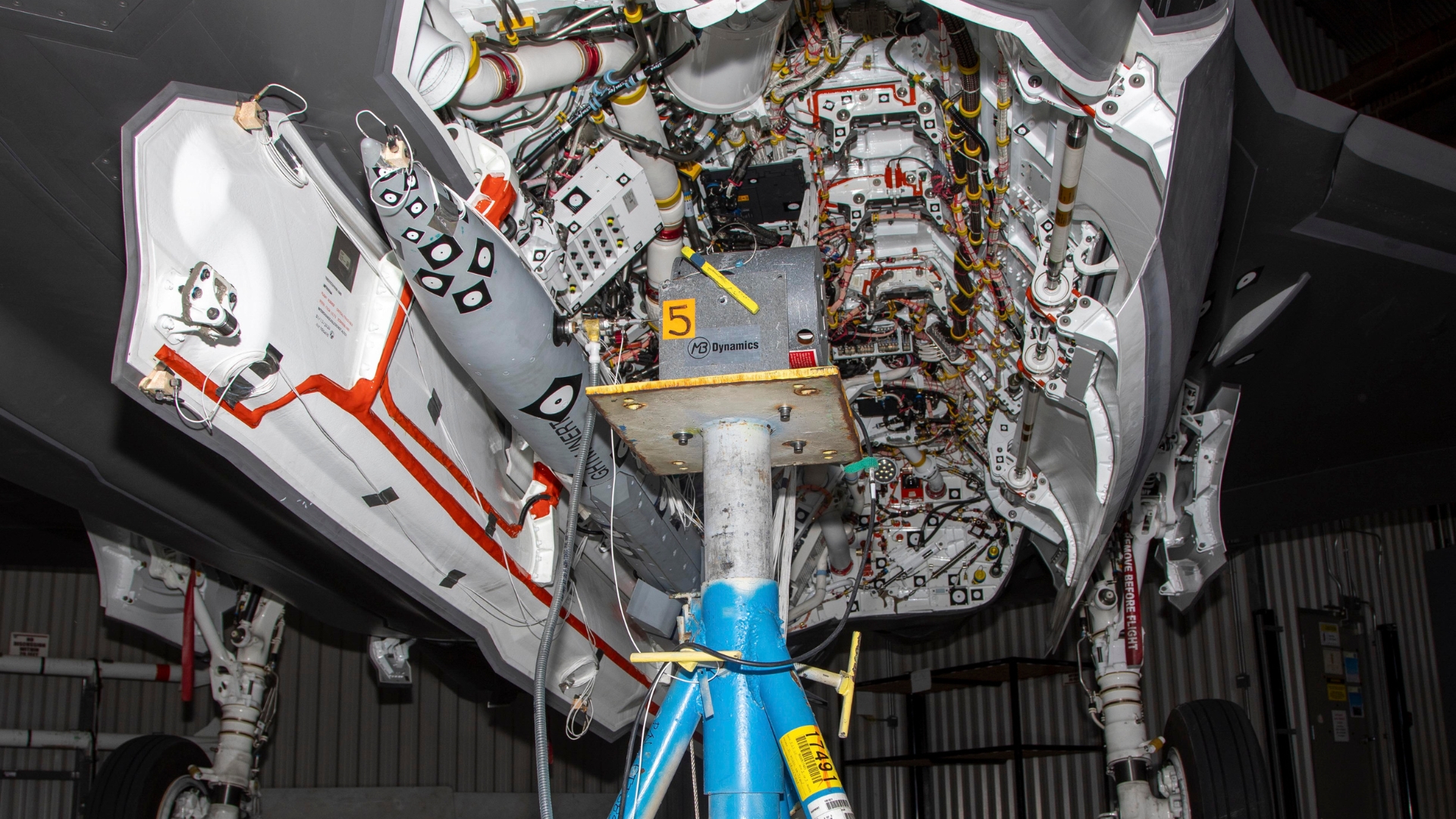
The JPO added that engineers meticulously evaluated the data collected from the trials to confirm that the missile can be safely stowed and deployed from the F-35A’s internal weapons bay. The photos released showed that testing was conducted with both a single- and two-missile payload.
The statement further added that one ground test remains before clearance to start flight testing, without divulging into details. Meteor is being integrated as part of the Block 4 upgrade, with fielding expected in the early 2030s, according to the UK’s Ministry of Defense.
European Weapons on the F-35
In 2019, BAE Systems, Lockheed Martin and MBDA launched the development works to upgrade the UK’s F-35 weapon systems with the Meteor air-to-air missile and the SPEAR 3 air-to-surface missile. This was followed in 2021 by another contract to BAE Systems and MBDA to complete the integration of the new weapons on both Italian and British F-35s.
As you may know already, the Italian Air Force operates both the F-35A and F-35B, while the Italian Navy, the Royal Air Force and the Royal Navy operate the F-35B only. The RAF recently announced the intention to also acquire the F-35A variant.
Both countries decided to integrate on their F-35s the same European weapons used on the Typhoon. In fact, the UK already operates the Meteor as its primary air-to-air missile on the Typhoon, with Italy set to follow suit soon after the recent completion of the test campaign and the first operational deployment.
Similarly, both countries are acquiring the SPEAR 3 (Selective Precision Effects at Range Capability 3) air-to-surface missile, currently being tested on the Typhoon, which has been selected as the primary air-to-ground weapon of the British F-35Bs. The UK also uses two other weapons on its F-35s, the AIM-132 ASRAAM (Advanced Short-Range Air-to-Air Missile) and the Paveway IV dual mode GPS/INS and laser-guided bomb, both manufactured locally.
Both weapons are exclusive to British F-35s, as Italy has not adopted them. Italy, in fact, will rely instead on the recently acquired AIM-9X Sidewinder and the GBU-12 Paveway II, in addition to the GBU-32 JDAM bombs and the GBU-39 SDB (Small Diameter Bombs) already in service and, in future, the GBU-53 SDB II, GBU-38 JDAM and GBU-54 Laser JDAM , which have not been acquired by the UK.
The Meteor BVRAAM
The missile was developed by a group of European partners led by MBDA to meet the needs of the UK, Germany, Italy, France, Spain and Sweden. Considered one of the most lethal BVR missiles available today, Meteor is powered by a ramjet propulsion system, a solid fuel, variable flow, ducted rocket.
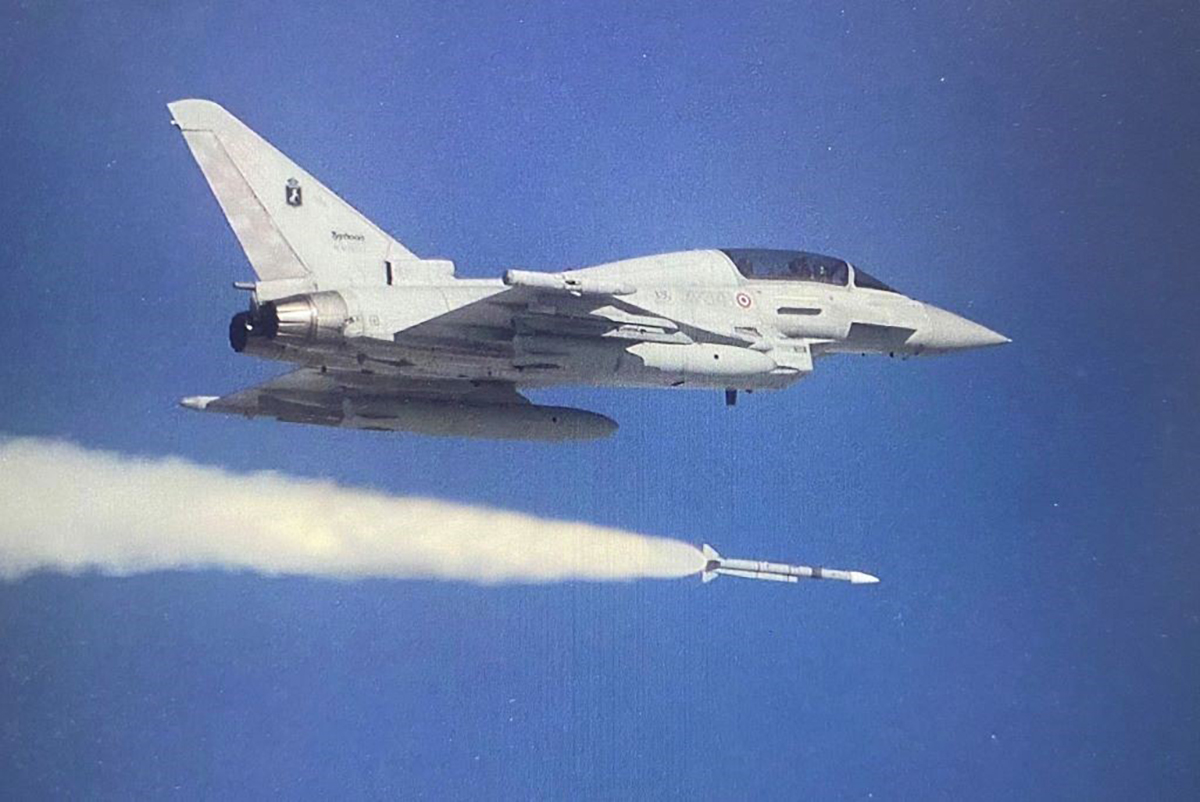
The advantage over a standard rocket motor, like the one used by the AIM-120 AMRAAM, is that the ramjet is throttleable, meaning that the missile can throttle back its engine during cruise and then throttle up at close distance from the target to obtain the highest possible energy state during the terminal attack.
This way, Meteor can provide a larger No-Escape Zone without losing precious energy while countering the target’s defensive maneuvers. A datalink provides mid-course updates about the target sent by the launcher aircraft to increase the Probability of Kill (Pk).
The missile is equipped with both impact and proximity fuses and a fragmentation warhead to maximize the lethality. Meteor has currently been integrated on the Typhoon, Gripen and Rafale and is scheduled to be integrated on the F-35.