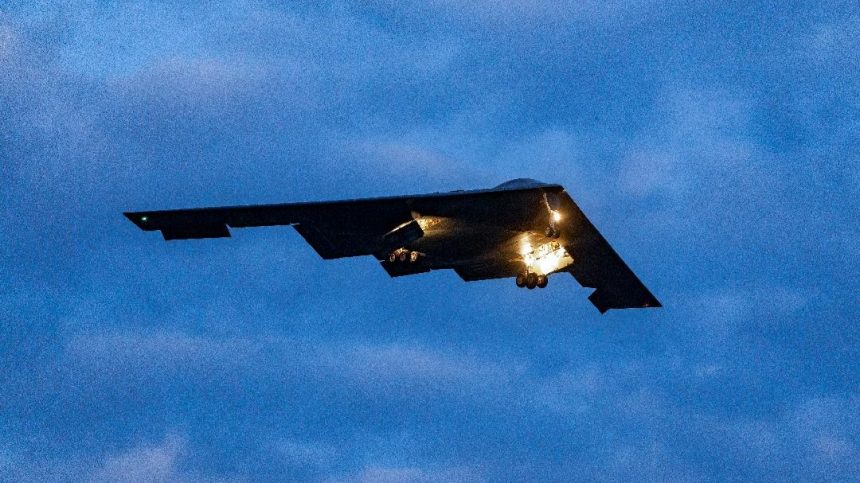
The aircraft suffered a landing gear collapse at Whiteman AFB on Sep. 14, 2021, and was put through an extensive Programmed Depot Maintenance at Plant 42 to return to operational service.
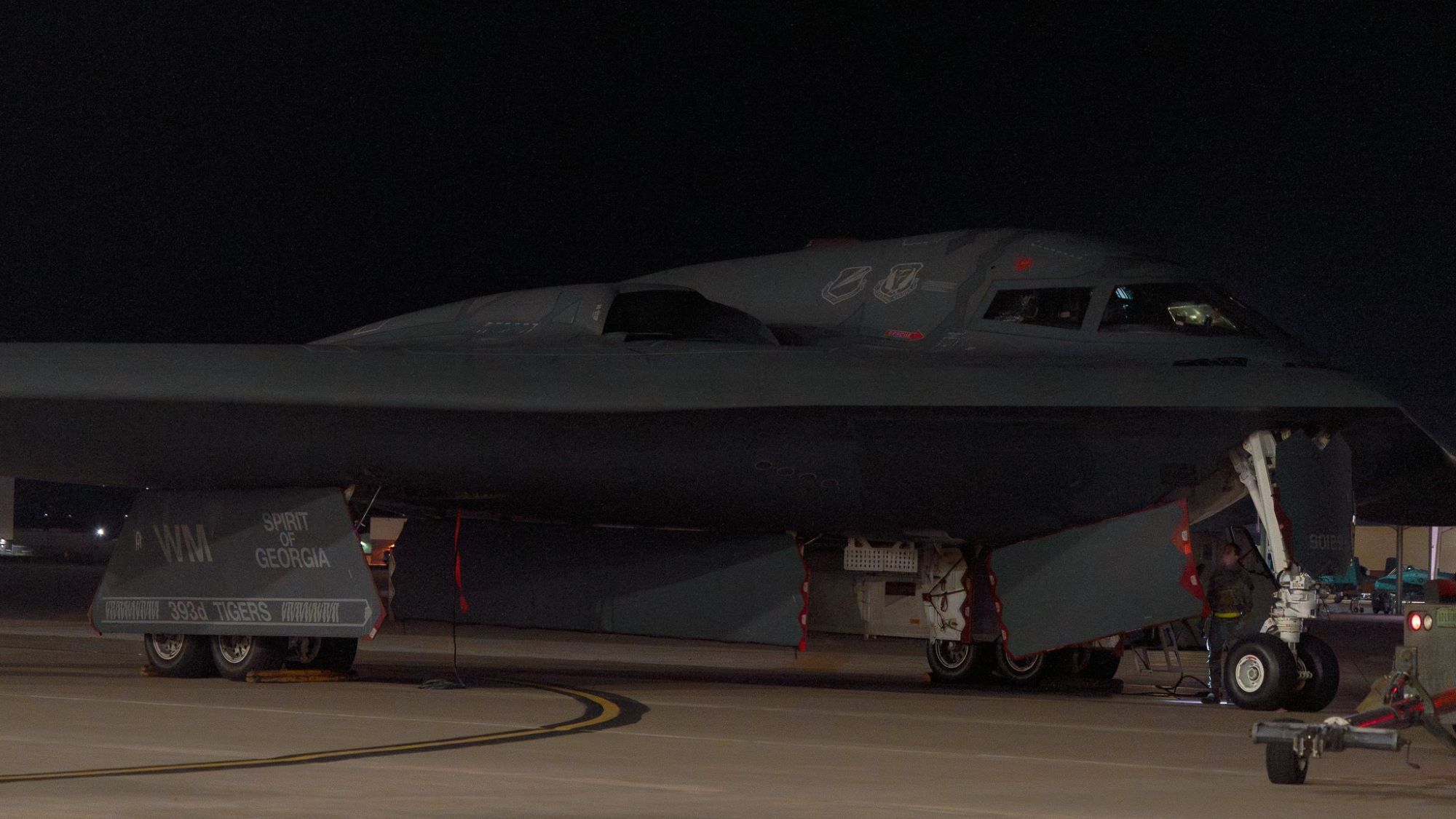
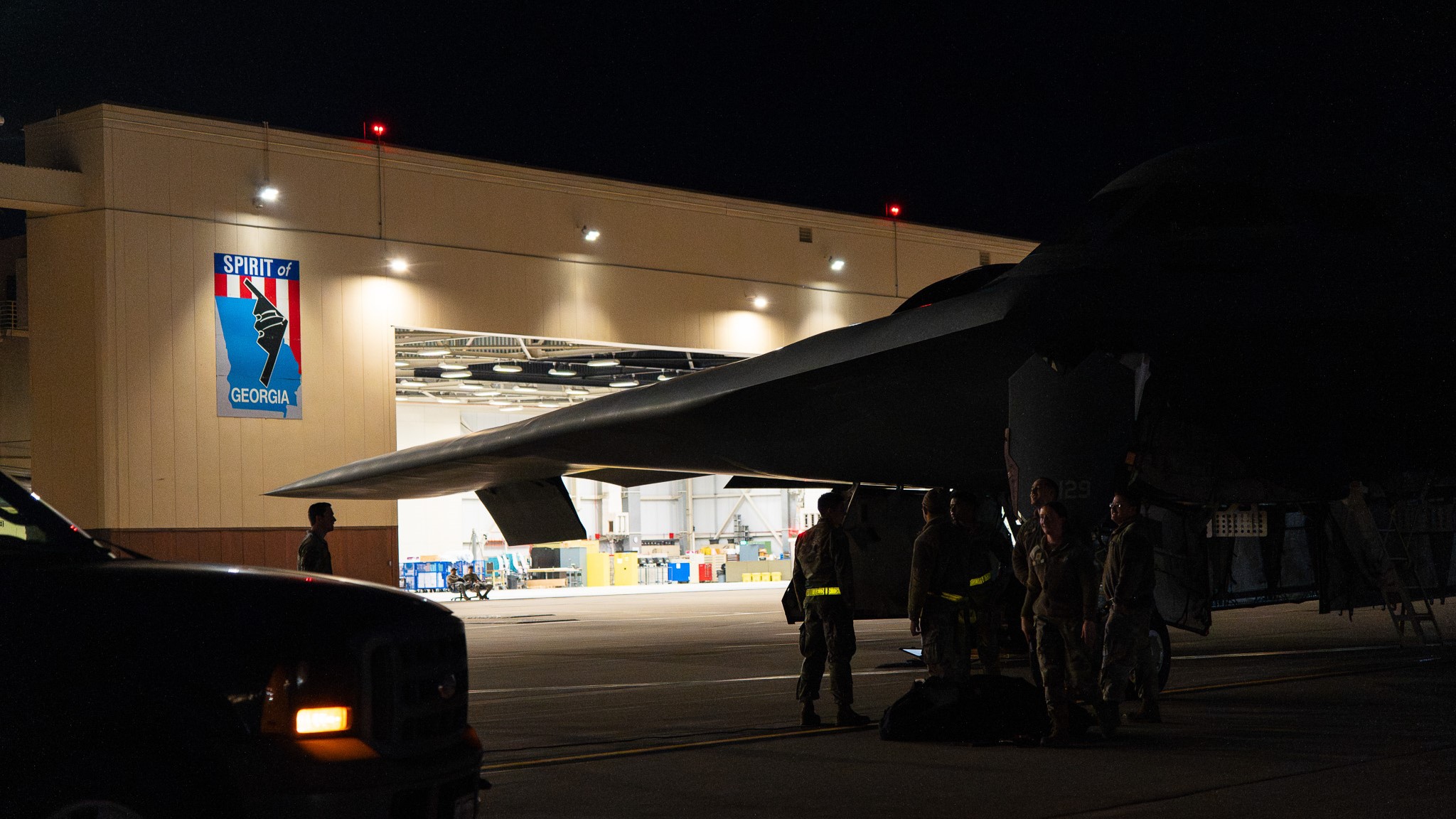
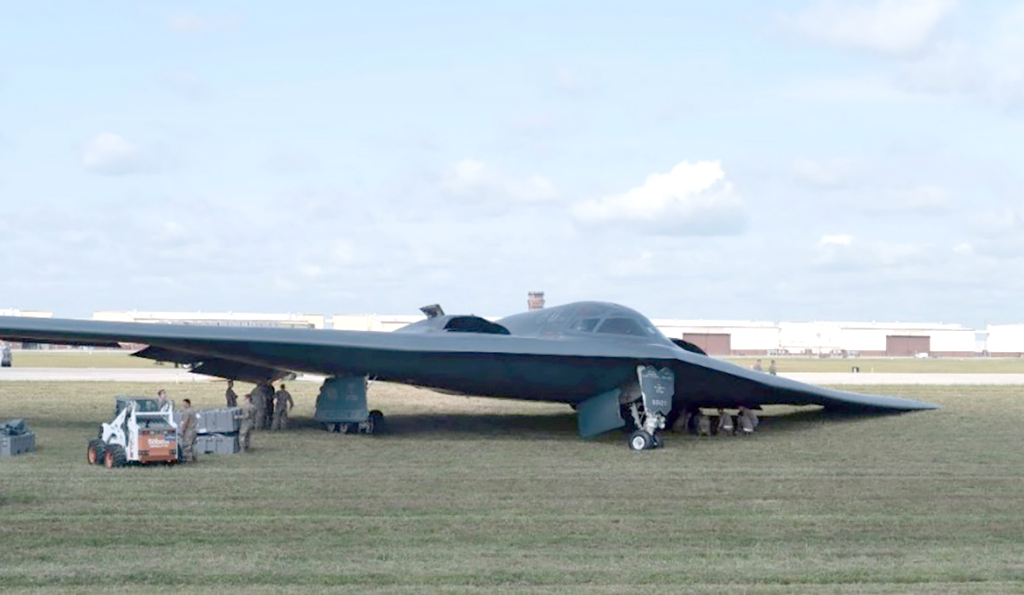
The U.S. Air Force has returned a B-2 Spirit bomber, 89-0129 “Spirit of Georgia,” to operational service, according to images captured on Nov. 6, 2025, and shared on the DVIDS network on Dec. 2. The images show the aircraft being parked at Whiteman AFB, Missouri, after suffering heavy damage in 2021.
The caption accompanying the photos says: “The ‘Spirit of Georgia’ was damaged in an aircraft incident in September of 2021 and has recently returned to the fleet.” A Dec. 3 press release by the AFLCMC (Air Force Life Cycle Management Center) detailed the repair, restoration, examination, testing, parts procurement and an exhaustive PDM (Programmed Depot Maintenance) at Northrop Grumman’s facility at Air Force Plant 42 in Palmdale, California, which allowed to restore the bomber to operational status.
The B-2 Spirit is the mainstay of the service’s long-range strategic conventional and non-conventional strike roles, as demonstrated in Operation Midnight Hammer against Iran’s nuclear facilities. The stealth bomber is planned to be replaced by the incoming B-21 Raider in the next few years.
USAF B-2 fleet
The U.S. Air Force is currently left with a fleet of 19 B-2 Spirit stealth bombers, after the service decided to divest the “Spirit of Hawaii”. That aircraft experienced a hydraulic failure, according to the Aircraft Accident Investigation Board (AAIB) report, which caused its left main landing gear to collapse on Dec. 10, 2022 at Whiteman AFB, Missouri. The aircraft skidded off the runway and caught fire and the service eventually assessed the damage as too costly to repair and retire the jet, as The Aviationist reported in May 2024.
The mishap involving 89-0129 “Spirit of Georgia” took place on Sep. 14, 2021, when the aircraft assigned to the 509th Bomb Wing’s (509th BW) 393rd Bomb Squadron (393rd BS) also experienced a left main landing gear (LMLG) collapse on Whiteman AFB’s runway. The aircraft skidded off runway until it came to a stop about one mile from the touchdown point. Preliminary estimates put the cost of repairing the bomber at a minimum of $10.1 million, according to the AAIB report.
The investigation determined that the LMLG “lock link springs failed to provide sufficient pressure to maintain the lock links in the locked position, which resulted in a LMLG collapse” during Spirit of Georgia’s landing. “Further, the AAIB President found, by a preponderance of the evidence, that one factor substantially contributed to the mishap: the failure of a hydraulic CryoFit coupling that drove a rapid a loss of hydraulic fluid in the #1 and #4 hydraulic systems, which isolated the LMLG lock link actuator and prevented its use in assisting the LMLG lock link to remain down and locked,” mentioned the report.
“Spirit of Georgia” is the second B-2 Spirit brought back to life by the USAF, after the service announced in early 2014 the return of the “Spirit of Washington” to operational status, after a four-year repair process. The plane burnt down back in February 2010 during a take-off from Guam’s Andersen AFB, following an engine fire that engulfed the airframe.
Repairs on Spirit of Georgia
Col. Jason Shirley, Senior Materiel Leader, Air Force Life Cycle Management Center’s B-2 System Program Office said in the press release that the “immediate response” by the 509th Maintenance and B-2 System Program Office Engineering team allowed to quickly start recovering the aircraft, “using airbags to lift it enough to manually lock the main gear and tow it into the hangar.” Shirley further added that “Damage assessments and Non-Destructive Inspections followed, revealing damage primarily concentrated around the left main landing gear bay and lower wing area.”
Before the “key early milestone” of a one-time ferry flight from Whiteman AFB to Northrop Grumman’s facility in Palmdale, “extensive inspections and temporary repairs” took place. “Laser dimensional inspections confirmed that critical areas, such as flight control attachment fittings and landing gear bay fittings, remained within acceptable tolerances. Finite Element Method analysis was then used to evaluate potential ultimate load exceedance on the primary structure and to focus the Non-Destructive Inspection efforts on critical areas of the outboard wing spars. These inspections showed no damage to the outboard wing spars,” explained the press release.
The B-2 like you’ve never seen it before at Palmdale, CA. 👀 😎
Big thanks to 📷 Dylan Phelps for sharing! Check out his FB and IG pages: Centerline Images pic.twitter.com/2kTV0Mtw0h
— Thenewarea51 (@thenewarea51) March 27, 2024
The temporary repairs saved an estimated $52 million and shaved nine months off the schedule, with the ferry flight taking place on Sep. 22, 2022. The four-phase permanent repairs, worth $23.7 million, were listed as follows:
- Phase 1: Design the repair and order long-lead materials.
- Phase 2: Conduct test panels to prove the repair concept.
- Phase 3: Repair the aircraft.
- Phase 4: Develop airworthiness artifacts to certify the repairs.
An “innovative” method was the use of an existing 8×4 foot composite skin section from Test Article 0998 as a donor part, saving significant “cost and schedule compared to fabricating a new composite skin.” This repair restored functionality to 89-0129’s lower wing skin carrying wing loads, airstream, and internal fuel tank pressures.
The left-hand wingtip, the outboard wing major mate skin panel, and the left-hand main landing gear door hinges were replaced, while the composite skin that disbonded was repaired and the door was rigged. “All structural repairs were completed by May 12, 2025,” added the AFLCMC.
Engineering challenges
A “significant hurdle” was controlling heat distribution during the composite repair process. According to Matt Powers, Structure Engineer with the B-2 System Program Office, “the distribution of localized heat to the areas needing cure, while maintaining localized control as repair areas were in enclosed, confined spaces and directly adjacent to critical joints and structure was a huge challenge.”
The team utilized “advanced custom-built heating equipment, performing thermal surveys, and adjusting insulation and cooling air throughout the final cure.” For “contamination control” while repairing composites common to fuel tanks, the team managed to return them “to a near lab-grade cleanliness level prior to applying the repair plies.”
New technologies and processes, like a new composite resin from another platform, was used for the first time on the B-2, since it was not possible to conduct the repair in an autoclave, a specialized container commonly used for the curing process of composite materials.
“This new resin was already proven for large composite repairs outside of an autoclave,” said the AFLCMC. “This saved months of schedule and lowered the risk of costly rework.”
“The new materials and equipment will significantly improve sustainment and modernization work for the fleet, allowing for faster and more cost-effective repairs of composite structures in the future, reducing downtime and extending the lifespan of the fleet,” the press release further added.
I find it so interesting narratively that the B-2, all individually named aircraft Spirit of Kansas, Spirit of Georgia, Spirit of Texas, Spirit of America, Spirit of Kitty Hawk, etc, for sneak attack missions are launched out of a place called Whiteman Air Force Base in Missouri https://t.co/m078NxudgZ pic.twitter.com/GKcDqiFUcF
— TheHuntForTomClancy (@HuntClancy) September 24, 2025
Jerry Mcbrearty, vice president and B-2 program manager at Northrop Grumman, said that for “unique repairs,” including reconstruction of the damaged left wing, the team developed and applied a “new scarf repair analysis techniques and processes leveraged from other Northrop Grumman programs.”
Support from AFGSC
The Air Force Global Strike Command’s A4A (Logistics, Engineering and Force Protection) and A5B (Plans and Requirements) divisions facilitated the initial ferry flight and programmed and approved an unfunded request for in-depth scarf repairs during depot maintenance.