Operation Unified Protector (was Odyssey Dawn) explained (Day 55 – 67) May 24, 2011
Posted by David Cenciotti in : Aviation, Italian Air Force, Libyan Uprising, Military Aviation, Operation Odyssey Dawn, Operation Unified Protector , 2commentsPrevious debriefings: Archive
After more than two months of air campaign, Unified Protector seems to be making a slow progress across Libya, even if the air campaign is far from being decisive against Gaddafi and his forces. At least, Misratah is no longer under siege. There’s no shelling on the city centre or on the port, that is open to the humanitarian aids flow. The turning point was reached when NATO started targeting Gaddafi’s capacity to resupply his forces on the front.
Source: NATO website
In the last Press Conference Wing Commander Mike Bracken, spokesperson of Unified Protector, admitted that the situation into the Berber Highlands and the western side of the country is difficult and concerning. He explained:
Here [...] Pro-Qadhafi forces do not control the area, but they are putting the civilian, largely Berber population, under significant pressure from shelling in Yefren, Zintan, Nalut and the Wazin border crossing.
As a consequence many inhabitants have fled over the border to refugee camps in Tunisia and there have been skirmishes between rebel and pro-Qadhafi forces, as well as pro-Qadhafi forces and Tunisian forces along the border. However, in the Berber-controlled areas the rebels have resisted the pro-Qadhafi forces and now appear to be holding their ground.
NATO is focused on decreasing the pressure on the population by striking pro-Qadhafi units, and this strategy is clearly working.
Finally, moving to Tripoli. Here we have increased the pressure by striking military command-and-control centres. This has limited Qadhafi’s ability to give orders to his forces. It has also constrained his freedom of movement. Effectively, he’s gone into hiding.
On May 19, NATO hit 8 Libyan ships in the ports of Tripoli, Al Khums and Sirte. At Khums NATO hit a number of RHIBs (Rigid-Hulled Inflatable Boat) in the maintenance facility. The RHIBs were directly linked to the maritime operations of preceeding days when NATO interdicted a booby-trapped RHIB, leading to the discovery and subsequent destruction of one tonne of explosives at sea. NATO and partners used a number of communications channels to tell the pro-Gaddafi forces to lay down their arms and return to their bases and homes. “We have been stepping up leaflet drops and radio broadcasts to the pro-Qadhafi forces, telling them to move away from their military equipment, military installations and maritime assets” Bracken said. PSYOPS messages sent by the EC-130J using the very well known callsign “Steel 74″ were heard before and after the attack on May 19, meaning that, most probably, there are other Libyan vessels being warned.
Loyalists are finding it harder to lauch attacks and to receive supplies, NATO has attacked an increasing number of Command and Control nodes but the news, announced on May 23, that both France and UK have decided to deploy some attack helicopters in theatre, shows that coalition partners are considering even other options to break the stalemate in the conflict. I’m not sure those being considered are the right options, though.
For sure attack choppers, such as the British AH-64 Apaches or the French Tigers, can be extremely effective if used to hit enemy tanks, convoys and vehicles, but they are also vulnerable to MANPADS, RPG and anti-aircraft fire especially if employed in Urban CAS scenarios. Those advocating the use of attack helicopters in Misrata or, generally speaking, in besieged towns, should not forget the lessons learned by the Apaches of the 11th Regiment during the attack on Karbala. Helicopters are the perfect tool for a certain kind of CAS (Close Air Support) and to support Special Forces, as the recent Osama Bin Laden raid in Pakistan shows. But they are not as effective if employed without the proper support of troops on the ground and when used against adversary forces that are too dispersed, intermixed with civilians and hidden (hence not easily identifiable and targetable).
Flying at low altitude and speed, in spite of their countermeasures and armour, they tend to be subject to every kind of weapon the enemy can still own: from the small arms, to the mobile SAMs, to the MANPADS and also the RPGs. There’s an important difference between Close Air Support and Battlefield Air Interdiction (BAI): the first one requires boots on the ground; the second doesn’t; the first is what helicopters are perfectly suitable to (either as a support/anti-tank platform or as an escort/recon one); the second, is the most common kind of mission flown in Unified Protector.
Anyway, something like 3 or 4 British Apaches and an unknown number of French Tiger attack helos (or obsolete Gazelles), respectively embarked on HMS Ocean and Mistral class assault ship Tonnerre, will at least put some pressure on Gaddafi’s forces that will have to put out their hidden weapon if the want to try to hit them.
Without considering that, flying from ships, they will only be able to patrol the coastal regions and will not be capable to intervene on inland targets.
Other interesting things, information and thoughts:
1) Since the beginning of the NATO operation (31 March 2011, 08.00GMT) a total of 8019 sorties, including 3077 strike sorties, have been conducted. The trend is shown in the graph below. Air strikes represent on average among the 30% and 45% (with a peak at 48%) of the total sorties flown each day.
2) The Italian contingent was quite active during the last weeks. It performed 54 missions between May 13 and 20 with its Tornados (IDS and ECR), Typhoons, F-16s, KC-130Js and, now, also KC-767As and G.222VS. This proves that the war in Libya has been an unbelievable opportunity for many air forces and aircraft manufacturer to test new equipments, weapons and (most probably) tactics. After the Rafale, Gripen, Typhoon in the air-to-ground role (to name but few), the last new product to make its operational debut in Libya has been the recently formally accepted ItAF KC-767A. In fact, the new tanker was involved in air-to-air “refueling missions of Italian assets” involved in Unified Protector alternating in the AAR role with a KC-130J (that has been used since the early stages of Odyssey Dawn). Indeed, the 14° Stormo, based at Pratica di Mare airbase near Rome, has received the first aircraft on Dec. 29, 2010 and Mar. 10, 2011 and so far only Typhoons and Tornados have been qualified for refueling from the two wing stations (the aircraft uses also the boom refueling system used by US aircraft like F-15s, F-16s, B52s, etc.).
Noteworthy, even the only G-222VS in ItAF orbat (flown by air force pilots with mission crew belonging to other armed forces), already flying in the past few weeks for the Libyan crisis under national command, has been handed over to NATO to perform SIGINT activities.
Rendering: courtesy of Ugo Crisponi, AviationGraphic.com
Furthermore, on May 17, 2011, an Italian Air Force C-130J, departed in the morning from Pisa airbase, dropped about 400.000 leaflets over Tripoli, Libya. As reported by ANSA news agency, leaflets contained a message addressed to the Libyan people directly from the NTC (National Transition Council) that had asked Italy to deliver it to counter Gaddafi’s regime propaganda in Libya’s capital city.
The text of the message was:
Libya is one and its capital is Tripoli. Today we ask you to join and to take the right and wise decision. Join our revolution. Let’s build Libya away from Gaddafi. A unified, free, democratic Libya.
The mission was planned by the COI (Comando Operativo di vertice Interforze – Italian Joint Operative Command) and was conducted by personnel belonging to both the 28° Rgmt “Pavia, based in Pesaro and specialized in “operative communication”), the ItAF and the Intelligence Service. The airdrop took place from 7.000 mt (20.000 ft – the crew had to wear oxygen masks to operate at that altitude) from a position that was calculated taking into consideration many factors, among which the air temperature and humidity, the aircraft airspeed, the wind direction and intensity etc. Leaflets took up to 3 hours to touch the ground in Tripoli and surrounding areas.
The PSYOPS sortie was an Italian mission, not part of Unified Protector, even if NATO was obviously informed about the operation and supported it.
Even if Italy has conducted similar missions in Afghanistan using helicopters, this was the first time that the ItAF performed a PSYOPS mission dropping leaflets over a foreign capital since 1918 raid over Wien by Gabriele D’Annunzio (Aug. 9, 1918).
3) The Guardian has tried to understand “how much is each Nato country contributing to operations in Libya with the most comprehensive analysis yet of who is doing what in Unified Protector”. The article, titled “Nato operations in Libya: data journalism breaks down which country does what” is interesting as it provides a lot of data. Unfortunately, it contains also many inaccuracies (one time it provides the number of deployed aircraft, another one it gives a country’s number of aircraft under NATO command; there are errors about the deployment bases of some contingents; the consideration on the efforts are based only on the number of sorties and not on the type and/or number of dropped bombs; etc.). Anyway, it is a good starting point for a more accurate in-depth analysis.
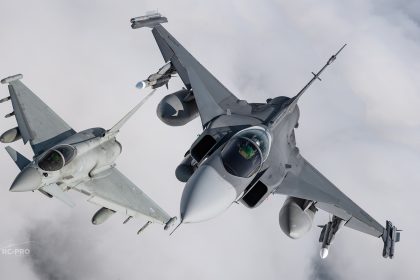
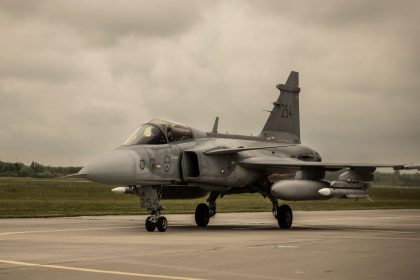
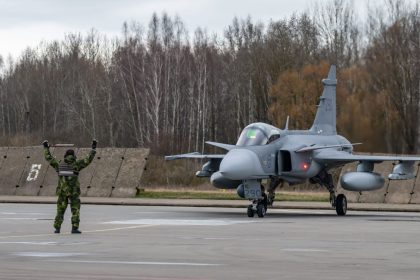
4) Thanks to the interesting pictures published at this website, we know that also UAE AF F-16s are flying air strikes (not only Mirage 2000s) with 2 GBU-12s, 4 AIM-120 AMRAAMs and SNIPER pod, as well as that Swedish Air Force JAS-39 Gripens, most probably, are not only flying reconnaissance missions, but also DCA missions with 3 drop tanks, 2 IRIS-T at tip pylons and 2 AIM-120s.
5) On May 21, a French Navy Super Etendard diverted to Malta Luqa airport for fuel problems while, on May 22, two Mirage F1s almost ran out of fuel on their way back to Solenzara airbase, in Corsica, and were compelled to perform an emergency landing in Olbia Costa Smeralda airport, in northeast Sardinia. These are only the last two episodes of a series of French diversions caused by low fuel. It looks like the French contingent is the only one experiencing such problems so frequently.
Operation Unified Protector (was Odyssey Dawn) explained (Day 43 – 54) May 12, 2011
Posted by David Cenciotti in : Aviation, Italian Air Force, Libyan Uprising, Military Aviation, Operation Odyssey Dawn, Operation Unified Protector , 6commentsPrevious debriefings: Archive
Not so many things have happened on the battlefield during the last days, when media were focused on the Osama Bin Laden raid and the famous Stealth Black Hawk. For sure, the most significant event occurred on May 11, when rebels claimed to have captured the airport in the besieged western city of Misratah, Libya’s third-largest town. The city has been surrounded for weeks from Gaddafi’s forces and split roughly along an east-west road with loyalist controlling the areas south of the road, including the airport, located around 5 Km from the city centre and Tripoli Street, the avenue that has been the scene of heavy street fighting. According to some sources, rebels have not yet taken full control of the military part of the airbase, because pockets of residual fighting were reported in the area.
Credit: Reuters
The achievement is extremely important as it gives the rebels a new outpost from where a new advance towards Tripoli, that is only some 200 km away, can start. For this reason, Gaddafi’s forces have shelled the town with rockets and heavy artillery fire for weeks. Loyalists repeatedly tried to mine the port using small vessels and, on May 6, they used helicopters bearing the Red Cross emblem to drop mines in the harbour (even if this was not confirmed by NATO, read below) while, on the following day, aircraft reported to be a “crop dusters” (small aircraft used for spraying pesticides) dropped bombs on oil storage tanks in Qasr Ahmed neighborhood, in the easter part of the town. Even if it is not clear whether the aircraft involved were actually surviving LARAF (Libyan Arab Republic Air Force) SF-260s from Misratah airport or other type of aircraft, noteworthy, these violations of the No-Fly Zone raise questions about the effectiveness of the NATO combat air patrols in one of the most important towns in Libya. In fact, even if small planes and helos, flying at extremely low level in the ground clutter can be difficult to detect even for an E-3 AWACS orbiting nearby, if fighters are CAPping not far from the airport they will still be able to detect visually detect such “slow movers” visually, at least during daylight. At night it is probably more difficult but, since many interceptors involved in DCA (Defensive Counter Air) role fly with Litening targeting pods as explained many times in previous Debriefs, I assume they use the pod also to look for possible aerial targets of opportunity in the vicinity of airports and urban areas even small planes should be clearly visible by means of the high-resolution, FLIR (Forward-Looking Infrared) sensor of the pod.
Furthermore, on May 5, NATO destroyed two or three helicopters carried by big trucks heading towards Tiji, a small town near Libya’s border with Tunisia. It is not clear if the helos were being moved to be hidden from NATO warplanes or were being relocated for use against rebels in the area of Zintan, however this activity suggests that Gaddafi has some surviving aircraft and he’s willing to use them. Therefore, there are some concerns that he could use them to drop dirty bombs.
How’s NATO performing?
This question is open to debate. In the last days criticism was caused by reports of migrants from Libya dying at sea: Gaddafi is forcing people out of the country by boat using them as a sort of retaliatory attack against European nations supporting Unified Protector, that are now facing a humanitarian crisis. NATO was blamed for not doing enough to prevent several boats filled with migrants from sinking causing hundred deads.
The answer came from NATO Deputy Spokesperson, Carmen Romero on May 10 Press Briefing:
We have also been asked what action NATO is taking to protect such migrant ships at sea. Let me be clear: NATO’s mission is to prevent attacks on civilians and civilian populated areas in Libya. That is what the United Nations Security Council mandated.
But while they are carrying out that mandate, ships under NATO command will always respond to calls from ships in distress. This is their duty under the law of the sea, and to suggest that our ships’ captains would do otherwise is unfair and disrespectful.
For example, on the 26th of March NATO ships responded to information that two migrant ships, with over 500 people on board were in difficulty, who were then provided direct assistance by the Italian authorities. That included a NATO ship using its helicopter to airlift two women and a newborn child to medical help.
Dealing with the air campain, ItAF Brigadier General Claudio Gabellini (Chief Operations Officer, Operation Unified Protector) explained that, in the last week alone, NATO has engaged multiple rocket-launcher systems, command-and-control facilities, anti-aircraft weapons, military bunkers and ammo facilities, tanks and armoured fighting vehicles, undelining once again that the coalition is diminishing Gaddafi’s capacity to issue orders, to field troops and to fly his planes.
For what concerns Misratah port he said:
At sea we have cleared sea mines laid by pro-Gaddafi forces in the approaches to the port of Misrata on April the 29th. Two of the mines were destroyed by NATO mine countermeasures vessels and the third, which has not been found, is no longer considered a serious threat.
We’ve also swept the approaches of Misrata harbour and consider that there is no immediate mine threat for the timing being. Our maritime forces are prepared to respond to any similar threat.
We fully recognize how important the port is to the citizens of Misrata. While the decision to open and close the port rests clearly with Misrata port control, we note that since NATO vessels destroyed the mines and cleared the areas more than 15 vessels have entered the port.
Answering to a question about the use of military helicopters with Red Cross insigna, he explained that:
we have lots of reports talking about helicopters wearing the red cross on them, but we have no, absolutely we have no evidence at all. What I can say it’s been five days since we last had the last report talking about helicopters overflying Libya
Many questions of the Q&A part of the Press Briefing focused on the possibility that NATO is targeting individuals (Gaddafi in particular, who appeared again in TV for the first time in two weeks on May 11 denying rumours/speculations according to which he was killed by an allied raid). Here’s how Brig. Gen. Gabellini answered:
All NATO targets are military targets. Which means that the targets we’ve been hitting, and it happened also last night in Tripoli, are command-and-control bunkers. And again, just to make clear the stuff that NATO is not targeting individuals. It’s not in our mandate. Our mandate is to protect civilian population from attacks or from the threat of attacks by Qadhafi regime forces
[...]
We have no evidence about what Mr. Gaddafi’s doing right now. And I tell you the truth, we’re not really interested in what he is doing. Our mandate is to protect civilians from the attacks and from the threat of attacks so we’re not looking after individuals.
[...]
No individuals are a target for NATO. We only look after command-and-control centre because we want the targets we’re after is to stop Mr. Gaddafi to give orders to his troops to keep slaughtering the civilians and to prevent humanitarian aid to enter the country.
Let’s have a look at Unified Protector’s figures. Since the beginning of the NATO operation (31 March 2011, 08.00GMT) a total of 6232 sorties, including 2460 strike sorties have been conducted.
During the last 24 hours, 141 sorties were flown comprising 46 strike sorties. The key targets were: 4 Ammunition Storages, 4 Command & Control Facilities, 2 SAM Launchers, in the vicinity of Tripoli; 4 SAM Launchers, in the vicinity of Surman; 1 SAM Launcher, in the vicinity of Misratah. I would be curious to know which SAM sites NATO is still targeting (are there remaining mobile launchers?) and which ammunition depots, since there are so many in Libya (according to various sources around 3 and 4.000) that it will take months, if not year, to hit them all….
Here’s the usual sorties breakdown
| Date | Total sorties | Air strikes | air strikes/total |
| 22-mar | 175 | ||
| 24-mar | 130 | 49 | 38% |
| 25-mar | 153 | 91 | 60% |
| 26-mar | 167 | 88 | 53% |
| 27-mar | 178 | 107 | 61% |
| 1-apr | 178 | 74 | 42% |
| 2-apr | 174 | 74 | 43% |
| 3-apr | 184 | 70 | 39% |
| 4-apr | 154 | 58 | 38% |
| 5-apr | 150 | 58 | 39% |
| 6-apr | 155 | 66 | 43% |
| 7-apr | 164 | 73 | 45% |
| 8-apr | 155 | 54 | 35% |
| 9-apr | 156 | 60 | 39% |
| 10-apr | 133 | 56 | 43% |
| 11-apr | 154 | 70 | 46% |
| 12-apr | 158 | 59 | 38% |
| 13-apr | 159 | 60 | 38% |
| 14-apr | 153 | 58 | 38% |
| 15-apr | 146 | 60 | 42% |
| 16-apr | 145 | 58 | 40% |
| 17-apr | 144 | 42 | 30% |
| 18-apr | 145 | 60 | 42% |
| 19-apr | 143 | 53 | 38% |
| 20-apr | 139 | 62 | 45% |
| 21-apr | 132 | 50 | 38% |
| 22-apr | 152 | 62 | 41% |
| 23-apr | 138 | 59 | 43% |
| 24-apr | 144 | 56 | 39% |
| 25-apr | 143 | 62 | 44% |
| 26-apr | 133 | 56 | 43% |
| 27-apr | 123 | 52 | 43% |
| 28-apr | 119 | 41 | 35% |
| 29-apr | 142 | 67 | 48% |
| 30-apr | 165 | 43 | 27% |
| 1-mag | 165 | 60 | 37% |
| 2-mag | 158 | 56 | 36% |
| 3-mag | 161 | 62 | 39% |
| 4-mag | 160 | 49 | 31% |
| 5-mag | 154 | 57 | 38% |
| 6-mag | 149 | 56 | 38% |
| 7-mag | 153 | 58 | 38% |
| 8-mag | 159 | 64 | 41% |
| 9-mag | 146 | 46 | 32% |
| 10-mag | 123 | 42 | 35% |
| 11-mag | 141 | 46 | 33% |
Graphs below, clearly show that the number of air strikes is still slightly decreasing.
Other interesting things, information and thoughts:
1) Some updates from the involved air forces. The last news release by the Italian MoD reports 53 missions flown by the Italian contingent (should be 106 sorties at least). No further words on weapons, targets etc. Aircraft involved in the air strikes are Tornado IDSs and ECRs of the ItAF and AV-8Bs of the Italian Navy from Garibaldi aircraft carrier. Pictures and videos published on the ItAF website show the Tornado IDSs loaded with 3 GBU-32s or 1 or 2 LGBs (GBU-24 or 12). Noteworthy, the enforcement of the NFZ is not only performed with F-2000 Typhoons but once again also by F-16ADFs of the 18° Gruppo.12 aircraft and 4 ships were trasferred under NATO command by Italy.
Dealing with the RDAF, the latest update reports 176 missions flown since Odyssey Dawn began and 376 PGMs dropped.
The Canadian contingent at 23.59 hr UTC on May 11 had flown 248 sorties with the CF-188s; 95 with the CC-150 POLARIS and 39 with the CP-140 AURORA.
RNoAF on May 7, had flown 275 missions with 247 dropped bombs, however its F-16s could return home by the end of June according to Government sources. It is still not clear though whether the aircraft will continue contributing to Unified Protector or will be reduced in numbers or simply replaced by other assets (thanks to Aksel Magdahl for keeping me updated with Norwegian news).
2) Karl-Johan Norén sent me some interesting news about the Swedish Air Force Libyan ops. First of all, on the SweAF website an interesting picture of a crakled canopy of a Gripen was published (see below). Two aircraft were returning from a mission over Libya when the front window of the aircraft was damaged. Even thought investigation is in progress sandstorm or electric discharge may have caused it.
Furthermore, a report from Swedish channel TV4 was aired on May 5. It’s an interview given by flygvapeninspektör (Air Force Inspector, in effect commander of the Swedish AF) Anders Silwer covering the following topics (Karl-Johan provided the following abstract):
- The Swedish mission is going well. Most common mission is tactical reconnaissance to within 100-200 kilometers from the Libyan coast. He estimates the Swedish AF covers about 1/3 to 1/2 of the tactical
reconnaissance resources within Unified Protector. - They do four “flygplansföretag” (sorties) daily, and plans to increase it to six.
- They photograph AA positions, command centrals, etc. They have not been attacked, as far as they can tell. They have been locked by radar a few times. No Swedish aircraft has fired a shot in anger.
- Mentions that they could do more tactically for the situation on the ground, but says that this is a political question, not a military one.
3) One of the most interesting thing of the last weeks is that UAE AF has joined the bombing campaign in Libya along with the other partners involved in the air strikes (US with drones and SEAD assets, Denmark, Norway, Belgium, Italy, UK, France and Canada) even if the news has not been made public yet. The following pictures were taken on May 1, 2011, at 14.06Z by Antonio Di Franco, from his home, located a few kilometres to the south east of Sigonella airbase. The images show two UAE Air Force Mirage 2000s carrying a Damocles targeting pod and an MBDA PGM-500 500lbs guided bomb (“Hakim”) along with two MICA air-to-air missiles.
Below, two more pictures taken on May 7 once again by Antonio Di Franco.
4) On Apr. 30, an attack performed in a bunker in Tripoli killed Gaddafi’s youngest son, Saif al-Arab Gaddafi, with three minor grandchildren. Even if the Guardian immediately suggested that the raid was conducted by the Royal Danish Air Force, there were no proofs (and maybe there are still none) that Denmark was involved in the raid. However, basing on images of an unexploded warhead in the ruins of Gadhafi’s house, it was possible to try to determine which country performed the strike. In fact the bomb shown in the Guardian and also on Al Jazeera English footage is a part of the JDAM: in particular, it is a BLU-109 penetrator warhead. Warhead + GPS guidance kit is known as GBU-31(V)3/B in USAF (RDAF call the bomb using BLU-109 GBU-31B while the one with Mk-84 warhead is known as GBU-31A). Many air forces use the GBU-31 with BLU-109 however, Andreas Lindqvist, a journalist of the Politiken newspaper, with my advices, investigated the facts, contacted the various countries involved in the air strike and one by one virtually eliminated all the other seven countries that drop bombs on Libya coming to the conclusion that, as suggested by the Guardian, the compound was probably hit by a Danish strike.
Images credit: Reuters / AJE
Eight countries were involved in air strikes within Unified Protector at the time of the raid: Denmark, Norway, Italy, Belgium, France, Canada, UK and the US. UAE could be added to the list but there’s no official confirmation and aircraft don’t carry that type of bomb.
- Denmark: did not want to comment.
- Norway: No. They deny that they were involved in the specific raid. Interestingly, RNoAF used BLU-109/GBU-31 on Apr. 25 attack on the Gaddafi compound.
- Italy: Unknown, but most probably not involved since Tornado are flying with GBU-32s and LGBs. Not sure GBU-31 with BLU-109 were ever tested on Tornados.
- Belgium: No. They didn’t fly that day.
- France: No. They deny using that type of bombs in Libya
- Canada: No. They use none of the technologies.
- UK: No. They have the Paveway, but not the GBU-31.
- US: Unknown, but probably no. They have the technology and experience but they were officially not flying as they only fly support missions. They also fly the presdator drones, but the current generation cannot carry that bombs.
Basing on the above elements, Andreas asked me how likely I think it was Denmark to perform the strike. As he mentioned in the article published on May 12 on the Politiken website, basing on basing on the information available, on the replies he received and above all considering that RDAF is doing a great job in Libya flying lots of missions and
dropping many bombs; that it didn’t deny it but just didn’t comment it and finally, that diplomatic sources reported by the Guardian suggested the strike was one of the many performed by RDAF, I think it is extremely likely. Obviously denying or not something doesn’t prove or not an involvement. But I agree with Andreas Linqvist when he says that such organisations do not lie directly. “Its too dangerous in the long run”.
Operation Unified Protector (was Odyssey Dawn) explained (Day 39 – 42) April 30, 2011
Posted by David Cenciotti in : Aviation, Italian Air Force, Libyan Uprising, Military Aviation, Operation Odyssey Dawn, Operation Unified Protector , 7commentsPrevious debriefings: Archive
Even if analysts have defined it as a “stalemale”, the situation on the ground in Libya is far from being completely static as Gaddafi troops have stretched westward the front line and spilled over the Tunisian border: on Apr. 29, loyalist forces fought a gun battle at Dehiba, a frontier town, with Tunisian troops. Government forces shelled the town damaging some buildings and in the attempt to protect both the Tunisians and Libyan refugees in the area, the Tunisian Army opened fire. As a result, Tunisian security forces have disarmed the Libyan soldiers and driven them back across the border handing the confiscated armament and ammo over to the Libyan rebels.
Misratah, is still under siege in spite of an increasing number of NATO air strikes concentrating on the third largest Libyan city. For instance the first Italian air strikes in Libya after Italy decided to join the bombing campaign were performed in the Misratah area even if it is not clear if the Tornado IDSs dropped their bombs on ground targets or returned to Trapani with their weapons still attached to their “underfuselage stations”.
In my last Debrief I wrote:
There have been also some unconfirmed reports of Scud attacks on Misratah on Twitter, even if I didn’t find any (photographic) evidence yet. I’ve been told that Al Jazeera reported of a 5-meter wide crater however, if that is the diameter of the hole, it is not as significant as a Scud one would be. Even if I’m not an expert in missiles, I know Scuds have a very high terminal speed (1,4 km per second) and the typical damage on the ground is a crater 1.5 – 4 meters deep, 12 mt wide, according to “Scud Ballistic Missile and Launch Systems 1955-2005″ from Steven J. Zaloga (Osprey Publishing). Therefore, if the crater is 5 meter deep, then it was most probably a Scud, otherwise, the hole was caused by another piece of heavy artillery. For some more info about Scud hunt read the Day 24 debrief.
Both on this blog and on Twitter, many suggested the crater was caused by a 9K52 Luna-M (NATO designation FROG-7 – Free Rocket Over Ground) missile. Although I haven’t seen the crater’s picture yet, basing on the average hole created by a SCUD missile, that is heavier, carries a more powerful warhead and travels at slightly higher speed (1.4 Km/s vs 1.2Km/s), a FROG-7 crater perhaps is compatible with the one described by AJ. Anyway, dealing with the ordnance used by the pro-Gaddafi’s forces against civilian areas of Misratah and Zintan, along with the Spanish-made cluster bombs I’ve already talked about, loyalist fired Russian-made Grad rockets. Furthermore, to block humanitarian access to the city, Gaddafi’s forces have tried to lay mines in Misratah harbour. The sea-mines were being laid 2 to 3 km offshore and in the approaches to the harbour by deliberately sinking the inflatable boats on which they were being carried. Three mines have been found and are being disposed of in situ. NATO warned the Misrata port authorities who temporarily closed the facility resulting in two humanitarian ship movements being cancelled. According to the French MoD the Frigate Courbet took part in the operation and one AS565 Panther, operating out of the naval unit was seen overflying the port as the following video shows (thanks to @SteveMcCluskey).
As I’ve already written in the past debriefs, many PSYOPS messages broadcasted by the EC-130J Commando Solo “Steel 74″ in the last few weeks were addressed to the sailors of the Libyan ships operating around the Misratah port and maybe also those recorded by radio hams in the last days were sent to those involved in the mining attempt.
Furthermore, Gaddafi’s forces are being encouraged by their commanders to engage in rape to terrorize the population in those areas supporting the rebels. This is what the Viagra impotency drug being issued to the troops would show, according to the US envoy to the United Nations.
While continuing to hit targets around Misratah, Tripoli and Sirte, recent air strikes have reached Brega, Zintan and the desert town of Kufra, where loyalist clashed with rebels on Apr. 28; generally speaking, NATO officials have affirmed the alliance is planning to concentrate air strike on large urban areas which have not recently been top priority targets so far. Noteworthy, a significant amout of “key engagements and targets” (as NATO calls them) were ammunition depots across Libya: as there are around 4.000 such installations in the country, I wonder if NATO has a strategy about them (for example, to destroy them one by one to claim a key target for the next months….). Anyway, according to the British Brigadier Rob Weighill, NATO’s director of operations in Libya, the alliance has struck some 600 targets, including 220 government tanks, 70 surface-to-air systems and 200 ammunition facilities. In the meanwhile, the number of strike sorties is, on average, stable (or slightly decreasing) as the sorties breakdown and the updated graphs below show.
| Date released | Total sorties | Air strikes | air strikes/total |
| 22-mar | 175 | ||
| 24-mar | 130 | 49 | 38% |
| 25-mar | 153 | 91 | 60% |
| 26-mar | 167 | 88 | 53% |
| 27-mar | 178 | 107 | 61% |
| 1-apr | 178 | 74 | 42% |
| 2-apr | 174 | 74 | 43% |
| 3-apr | 184 | 70 | 39% |
| 4-apr | 154 | 58 | 38% |
| 5-apr | 150 | 58 | 39% |
| 6-apr | 155 | 66 | 43% |
| 7-apr | 164 | 73 | 45% |
| 8-apr | 155 | 54 | 35% |
| 9-apr | 156 | 60 | 39% |
| 10-apr | 133 | 56 | 43% |
| 11-apr | 154 | 70 | 46% |
| 12-apr | 158 | 59 | 38% |
| 13-apr | 159 | 60 | 38% |
| 14-apr | 153 | 58 | 38% |
| 15-apr | 146 | 60 | 42% |
| 16-apr | 145 | 58 | 40% |
| 17-apr | 144 | 42 | 30% |
| 18-apr | 145 | 60 | 42% |
| 19-apr | 143 | 53 | 38% |
| 20-apr | 139 | 62 | 45% |
| 21-apr | 132 | 50 | 38% |
| 22-apr | 152 | 62 | 41% |
| 23-apr | 138 | 59 | 43% |
| 24-apr | 144 | 56 | 39% |
| 25-apr | 143 | 62 | 44% |
| 26-apr | 133 | 56 | 43% |
| 27-apr | 123 | 52 | 43% |
| 28-apr | 119 | 41 | 35% |
| 29-apr | 142 | 67 | 48% |
Other interesting things, information and thoughts:
1) On Apr. 28, the Italian Air Force was involved for the first time in an air strike in Libya. Unlike other contingents, that are providing much details about the number of flown sorties, the number of PGMs dropped and the type of target hit, after releasing a daily pretty boring bulletin detailing only the number of missions flown by the Italian Tornados, Typhoons and AV-8B+ Harriers (the assets under NATO command), as Italy has joined the bombing campaign, the MoD has “switched” to a weekly summary, that gives only an idea of the overall count of sorties: 38. There’s no detail on how they were shared among the three aircraft types, nor news about the eventual use of bombs. This is once again caused by the usual controversial Italian approach to the war: the country has to contribute to a coalition, it does effectively with some of its most important and advanced assets, but it’s better not advertising this too much, as if it is a shame to be actively involved in a military operation under UN flag. Just think to what happened in 1999, when the ItAF Tornado ECRs from the 155° Gruppo were involved in SEAD strikes since the very first day of Allied Force although nobody knew that and the news that even Italian planes were conducting bombing missions in Serbia and Kosovo was given “gradually”.
Initially the Italian colonial past (as I’ve already explained in one of the previous debriefs, the first bombing mission ever flown in the history of aviation dates back to 1911 and was carried out by the Italian Air Force in Libya) has raised doubts about the opportunity to participate in the air strikes but even after authorizing the Italian planes to drop bombs on targets, internal struggles among the Government forces are putting the continuity of the Berlusconi’s coalition at risk. Another thing which tells us much about the controversial, ambiguous and somehow hypocritical Italian approach to the war: ItAF planes are flying air strikes in Libya but AMXs deployed in Afghanistan from a few years are not allowed to fly with bombs to support the thousands Italian military on the ground (that have to rely on US and other allied planes for air cover). For sure a more active role in Unified Protector is going to cost Italian taxpayers a lot: a single Eurofighter Typhoon flying hour costs 63K Euro while a Tornado (or AMX) one costs around 30K Euro. From Mar. 19 to Apr. 24, the Italian contingent flew 3.500 flying hours, that have cost about 45 Milion Euro. Now that the use of ordnance was authorized, the cost of the war is going to raise, because weapons cost a lot: for instance, according to the Corriere della Sera newspaper a Storm Shadow cost little less than 200K Euro, an AGM-88 HARM cost 136K Euro while a PGM, on average, cost 40K Euro. If Italian planes drop as many bombs as the most active contingents are doing from more than one month, the Italian Air Force is going to use its entire annual budget in a few months.
Back to the operative details, unfortunately besides the fact that the first air strikes were performed by Tornado IDS in the area of Misratah, we don’t know anything about the eventual target stuck, the armament used etc. What we know is that once again it was a Tornado (in this case in the IDS variant of the 6° Stormo, after the ECR of the 155° Gruppo flew the first Odyssey Dawn sorties accompained by 156° Gruppo’s buddy tankers, later involved in recce missions) to drop the Italian bombs in war as happened during the Gulf War in 1991 and in 1999, during Allied Force (in that case they were ECRs). Some may have forgotten that in the mid-’90s the IDS was also the first type of aircraft the 155° Gruppo flew with the AGM-88 HARM before the Sqn received the Tornado ECR. For those interested in some exclusive pictures dating back to that period (’95-’96) a suggest visiting the following link with images provided by “Gator46″, a former member of the “Panthers”: Tornado IDS in action.
2) On Apr. 26 the UAE AF contingent began repositioning with 6 Mirage 2000s leaving Decimomannu to Sigonella, their new forward operating base. It seems that operating from Sigonella the UAE fighters will reduce the transit time to the loitering areas saving some fuel (and money). On Apr. 27, the Mirages were followed by the remaining 6 F-16s.
Unfortunately, on landing at Sigonella one of them overran the runway on landing forcing the pilot to (successfully) eject from the plane. Following the mishap, Sigonella’s main runway was closed. However some aircraft were cleared to operate from the secondary runway: since the latter is not equipped a Barrier Arrester Kit (BAK-12), among the tacair planes operating from Sigonella, only Swedish Air Force Gripens could use the reserve strip, while the F-16s, which require the arresting system (that can be engaged with the on-board tailhook), had to wait until the recovery operations of the damaged UAE F-16 were completed and the main runway re-opened. In order to be able to continue flying daily missions over Libya, the RDAF contingent (that has conducted 138 missions and dropped 307 bombs since the beginning of the air campaign) moved 4 F-16s to Trapani.
Photo: Kurt Hansen from RDAF website
For what concerns the Swedish Air Force (that is providing weekly updates as most air forces are doing lately), Karl-Johan Norén sent me an overall count of 64 missions with a little more than one half flown by the TP-84 tanker. There was a rumour that with the UAE AF moving to Sigonella the SweAF would move to Decimomannu. For the moment the JAS-39 Gripens are still operating from Sicily while the Sardinian airbase, with some more space available for eventual deployments, is still hosting the RNlAF and the Spanish Air Force detachments.

Dealing with the Canadian Air Force, total sorties as of 23.59 hr UTC, Apr. 27: CF-188 Hornets have flown 178 sorties; CC-150 Polaris 68 and CP-140 Aurora 26 sorties (thanks to Peter Dee @3PDee)
Noteworthy, three of the above mentioned aircraft types (F-16, Gripen and Hornet, although in the Super Hornet variant) were excluded by the Indian MMRCA competition leaving other two fighters currently involved in Unified Protector, the Rafale and the Typhoon, shortlisted in the “mother of all tenders”. I bet we will hear some more news about the combat performance of the two European multi-role fighters in the days to come, even if I hope this would not lead to some weird kills (like those explained in the Pt. 2 of Day 36 – 37 – 39 Debrief).
3) Even Trapani main runway had to be closed for 90 minutes on Apr. 28, following a failure experienced by an Italian Air Force F-16 taking off for a mission (most probably a training mission, as the F-16s are currently not officially taking part in Unified Protector). Departing as number 2 in a two-ship formation, the pilot of an F-16ADF came out of the AB immediately after rotation (I think intentionally, for some kind of engine failure), landed the aircraft and tried to stop it before the end of the runway (not easy with an aircraft loaded with fuel and already fast enough to take off). The below footage recorded by the RAI (Italian State TV) shows the event very well from 00.47s.
Below a few screenshots (click to enlarge):
4) I’ve often explained how coordination of air strikes between NATO and rebels is important but I’ve always talked from the alliance’s perspective. The article “With NATO Silent, Libyan Rebels Rely on Civilian Radar to Track Air Strikes” written by Greg Campbell and published on Apr. 27 gives the insurgents point of view about the lack of communication with NATO:
BENGHAZI, Libya — Every time a NATO jet comes within 240 miles of the Libyan rebel stronghold of Benghazi, a group of men in a large smoke-filled room on the edge of the city gather around a screen to watch it happen in real time. They just don’t know what they’re actually seeing until it’s reported later in the media.
Benghazi’s civil airport, though closed for business, is still operating its aviation radar, picking up everything above 1,000 feet that comes into its range. But because of a United Nations-imposed no-fly zone over Libya, all of the traffic it detects is military. With no commercial airliners taking off or landing at the Benghazi airport, the air traffic controllers report to work only to watch their country’s civil war rendered in blocky, flickering pixels, as if it were a video game from the early 1980s.
“During the last two weeks, we’ve seen a lot of aircraft, but not striking,” said one controller who, like everyone else in the tower, refused to be identified because my visit in mid-April was not authorized by the transitional government. They were afraid of losing their jobs. “Now [the rate of airstrikes] is getting better. We just sit here and watch.”
Of course, the men are just guessing as to whether an aircraft on the screen may be attacking or simply reconnoitering the positions of troops loyal to Muammar Qaddafi and the rebel forces arrayed against them. NATO doesn’t communicate with the control tower, though it could help the rebels coordinate attacks on Qaddafi’s forces, and the radar displays no terrain features or live satellite view.
Instead, the monitor is filled with white diamonds silently moving across a black background. The planes fly across colored lines indicating Libya’s coast and purple four-letter abbreviations of cities. Numbers indicating speed and altitude accompany the diamonds on their flight paths.
Typical aviation codes that tell controllers the type and origin of airplanes in Libya’s airspace have been replaced with numbers unique to NATO. The men, civilian air traffic controllers unfamiliar with the military jets, can’t tell what types of planes they’re watching.
But they can guess when they might be attacking. If a plane’s airspeed suddenly slows and its altitude plunges, it’s probably striking something.
“Whenever an aircraft is going down to the lower level, we presume the aircraft is going to strike,” said the air traffic control supervisor as he puffed on a cigarette. At another terminal, three men with Kalashnikovs, the facility’s security guards, watched the screen with fascination.
Another clue that a strike may be underway is when a plane turns off its transponder, which broadcasts aviation information to the control tower. In that instance, the diamonds turn to circles, with no information about their speed or altitude.
“We presume that that has indicated the aircraft has gone down to strike,” the supervisor said.
Around noon that Monday, most of the NATO traffic was over the Mediterranean, cruising at altitudes above 30,000 feet. But there were also aircraft flying lower around the besieged rebel enclave of Misurata, the government stronghold of Surte, and along the eastern front between Ajdabiya and Brega, where airstrikes took out a column of government vehicles the day before. The airstrike — and others throughout the mid-April weekend — aided rebels in regaining control of Ajdabiya, the critical crossroads city on the rebel frontier, which they still hold.
Like much else related to the two-month old rebellion, members of the opposition government aren’t sure how to capitalize on the real-time intelligence gleaned from the civil radar. Air traffic controllers say their former military counterparts — with whom they worked side by side in peacetime, as the airport also handles military air traffic — sometimes use cell phones to call rebel commanders in the field to tell them when it seems an airstrike might be underway. On most days, a high-ranking member of the Transitional National Government also spends the day observing the radar.
But any link between NATO and the rebels ends there. One controller said NATO has never called or contacted the tower — not to coordinate with rebel field units or to tell them to switch off the radar, and not to at least control access to it by outsiders, to prevent sensitive information about NATO aircraft being leaked to government forces.
In fact, the latter sensibility seemed to be reached in unison by the controllers during my visit. Increasingly uncomfortable answering detailed questions posed by a stranger, I was finally asked to provide identification and eventually, politely, to leave.
Operation Unified Protector (was Odyssey Dawn) explained (Day 36 – 38) April 26, 2011
Posted by David Cenciotti in : Italian Air Force, Libyan Uprising, Military Aviation, Operation Odyssey Dawn, Operation Unified Protector , 16commentsPrevious debriefings: Archive
The Easter weekend was characterized by some interesting updates about Unified Protector operation in Libya. First of all, Gaddafi’s forces withdrew from Misratah, even if insurgents’ celebrations turned out to be premature. In fact, despite they have inflicted significant losses on loyalist forces, “victory” in the disputed third largest Libyan town is far from being achieved, as the violent attack from pro-Gaddafi forces following the withdrawal shows. There have been also some unconfirmed reports of Scud attacks on Misratah on Twitter, even if I didn’t find any (photographic) evidence yet. I’ve been told that Al Jazeera reported of a 5-meter wide crater however, if that is the diameter of the hole, it is not as significant as a Scud one would be. Even if I’m not an expert in missiles, I know Scuds have a very high terminal speed (1,4 km per second) and the typical damage on the ground is a crater 1.5 – 4 meters deep, 12 mt wide, according to “Scud Ballistic Missile and Launch Systems 1955-2005″ from Steven J. Zaloga (Osprey Publishing). Therefore, if the crater is 5 meter deep, then it was most probably a Scud, otherwise, the hole was caused by another piece of heavy artillery. For some more info about Scud hunt read the Day 24 debrief.
Source: Reuters
Other important news were the first Predator strikes in Libya. The very first one was conducted on Apr. 23, at approx. 11.00GMT, when a MQ-1 hit a Multiple Rocket Launcher (MRL) in the vicinity of Misratah. On the same day, at 20.40 GMT, another Predator UAS (Unmanned Aerial Surveillance) destroyed an SA-8 SAM. As the NATO press release underlined: “the operators of the Predator were able to detect a number of civilians playing football near the missile and firing was delayed until the people had dispersed”. Therefore:
“This Predator strike is a perfect example of the complex and fluid situation that NATO air forces are facing every day as part of Operation Unified Protector. NATO will continue to do everything in its power to prevent harm to the civilian population,” said Rear Admiral Russ Harding, Deputy Commander of Operation Unified Protector. “Predator drones enhance NATO’s ability to strike with care and precision.”
“These strikes will continue and we ask civilians in the affected regions to distance themselves from Qadhafi regime forces, installations and equipment whenever possible so we can strike with greater success and with the minimum risk to civilians,” said Rear Admiral Harding.
These Predator strikes teach us that UAV attacks count more than “conventional” ones, or at least seem to give the public opinion the idea that they are more “surgical”. For sure, although their involvement was much advertised, becoming a sort of marketing tool in the Predators have some advantages: they fly at lower speed, (sometimes) they can descend to lower level than manned planes and, above all, they have such an endurance that they can wait the right moment to fire their AGM-114 missiles, because they can stay airborne for up to 20-24 hours. As I had the opportunity to explain to the Corriere della Sera’ special correspondent from Washington Guido Olimpio, they save some 4 – 5 conventional sorties and even after declaring “Winchester” (the typical codeword that is used to inform the control agency that the aircraft as no ordnance remaining) it can direct other air strikes or perform ISR duties.
Then, the news of the first strikes provide the confirmation that there are two CAPs: one near Misratah, the other one near Tripoli.
Another interesting news arrived in the evening of Apr. 25, when Italy’s PM Silvio Berlusconi announced that Italy would the bombing campaign in Libya in the following 72 hours. Italian planes, initially performing SEAD strikes (still unclear whether they had the clearance to fire if they detected a radar site or not), reconnaissance and Defensive Counter Air missions, will be involved in targeted actions against specific military objectives in Libya within the strict confines of NATO’s mandate and of UNSCR. The decision to change the role, initially limited for many reasons (Italian colonial history in Libya, internal political struggles, strong national interests in the region, etc.), came after growing pressures from NATO partners and US in particular. The aircraft involved in the new phase of the Italian mission, were not disclosed, despite many media reported Tornado IDS, AMX and AV-8B+ Harrier will perform strike sorties over Libya. The Minister of Defense Ignazio La Russa, in an interview given to La Repubblica referred only to the Tornado IDS. The attack aircraft belonging to the 6° Stormo based in Ghedi are already deployed to Trapani (as I personally witnessed on Apr. 12) and were involved in reconnaissance missions over possible targets from weeks. They will simply carry the CLDP targeting pod instead of the Reccelite, and some PGMs to strike targets “outside towns, in order to avoid collateral damages”. I don’t know if the Aeronautica Militare, as the RAF, will use the MBDA Storm Shadow stand-off missile, but I can’t rule this possibility out. The most recent weapons introduced on the Tornado fleet along with the Storm Shadow are the GBU-32 JDAMs and the EGBU-24 Paveway III even if the Italians will probably carry the GBU-12s or 16s (respectively 500 and 1.000 lbs).
Other interesting things, information and thoughts:
1) Latest NATO update:
Since the beginning of the NATO operation (31 March 2011, 08.00GMT) a total of 3.858 sorties and 1.606
strike sorties have been conducted.
Sorties breakdown in the last few days:
Apr. 23: 144 sorties – 56 strikes
Apr. 24: 143 sorties – 62 strikes
Apr. 25: 133 sorties – 56 strikes
The above figures show the optempo has not changed in the last few days. Let’s see what happens with another partner (Italy) joining the bombing campaign.
2) On Mar. 26, as reported in the Day 8 debrief, French aircraft carried out several strikes around Misratah and according to the French MoD, pending a more accurate battle damage result (BDA), I wrote that initial observations:
“would indicate the destruction on the ground at Misratah of at least five Soko G-2 Galeb combat planes and at least two combat helicopters MI-35 who were about to conduct operations in the region. Needless to say, in spite of the various news reports claiming “7 aircraft shot down” or “Gaddafi’s war planes downed”, these can’t be considered air-to-air victories; what is somehow surprising is that the aircraft were “about to conduct operations in the region” considering the number of coalition aircraft enforcing the No-Fly Zone and the immediate consequences of any attempt to use them to attack rebel forces or simply to disperse them to other bases. I’m curious to know where if they were parked, as usual, next one another in the large apron located next to the RWY15 threshold: in this case, an LGB could destroy or at least damage more than one aircraft at a time.
Anyway, recent disclosed satellite imagery shows not only FAF did not shot down any aircraft, but those destroyed on the ground were far from being prepared for a sortie in the region as the French MoD press update explained:
L’opération Harmattan a été marquée lors de ces dernières 24 heures par la poursuite des missions aériennes dans le cadre de la résolution 1973. Au cours de ces missions, les avions français ont réalisé plusieurs frappes dans les régions de Zintan et Misrata. Dans l’attente d’une évaluation plus précise des résultats, les premières observations permettent de constater la destruction au sol à Misrata d’au moins cinq avions de combat Galeb et d’au moins deux hélicoptères de combat MI-35 qui se préparaient à mener des opérations dans la région.
The images, rendered available by the AAAS website at the following link clearly show 5 Mig-23s (originally captured by the rebels on Feb. 24 and then sabotaged, with the removal of their nose before the regime counterattack, few days later according to Tom Cooper) and 2 Mi-35s before and after being struck by the French Air Force. So, they are neither Su-22 as the AAAS reports (they were probably deceived by the missing noses) nor aircraft about to take off……Better intelligence would prevent allies from wasting LGBs.
At this respect, Kurt Schneckenburger pointed me to an interesting Defense News article about the presumed NATO bomb shortages. In the article, some more information about French stocks are provided:
The French government last year ordered Paveway II and Enhanced Paveway II kits to adapt GBU 12 and 49 “dumb bombs” into guided weapons, an industry source said. Deliveries of the Raytheon-built kits were made before the Libya campaign started.
The Mirage 2000D, Super Etendard and Rafale are certified for the Paveway II, while the Rafale has not yet been certified for the improved version.
In February 2010, France ordered 680 armement air-sol modulaire (AASM) guided bombs from Sagem, following an initial order of 750. The AASM kit comes in three versions: GPS/INS, GPS/INS and infrared, and GPS/INS and laser.
In 2009, the government cut the total purchase of AASMs to 2,348 from a planned 3,000 units including 1,200 with laser guidance, according to a 2010 French parliamentary report cited by newsweekly Le Point. At a total budget of 846 million euros ($1.2 billion), that implied an average unit price of 350,000 euros for the AASM, the parliamentary report said.
French warplanes have fired about 10 MBDA Scalp EG air-launched cruise missiles against Libyan ground targets, Burkhard said.
3) Here’s a weekly update on the French contribution to Unified Protector. Since Apr. 14 the French military continues to provide an average of almost four sorties (only? most probably, these should be “missions”) per day (representing about 120 flight hours), half of which are strike missions. These figures still represent about 20% of all NATO sorties and 25% of ground attacks.
Between April 14, 2011 6:00 ET April 21, 2011 0600, France has made:
- 135 air strike sorties ( Rafale Air, Mirage 2000-D, Mirage F1 CR / Rafale Marine and Super-Etendard Marine)
- 52 reconnaissance sorties ( Rafale Air, Mirage F1 CR and Rafale Marine / Reco NG)
- 26 DCA sorties (Mirage 2000-5 from Souda Bay in cooperation with Qatar
- 18 airspace control and management sorties (E3F and E2C)
- 44 AAR sorties (C135 and Rafale Marine / Super Etendard Marine)
Furthermore, since Apr. 14, the strike of the French aircraft have hit the following targets:
- a dozen military vehicles and two armored vehicles carrying ammunition and shells in the areas of Misratah, and of Ajdabiya;
- three missile sites in areas of Tripoli and Misrata;
- a multiple rocket launcher near Ajdabiya;
- ammunition depots and storage areas in the Sirte and Tripoli;
- communication and command installations in theareas of Tripoli, Sirte and Ras Lanuf.
Source: French MoD
Guido Olimpio pointed me to the following interesting French Air Force footage. It shows what seems to be an SA-8 hit just after launching some SAMs against NATO aircraft. At the beginning of the video there’s also some footage of a Mirage F1 departing from Malta: interestingly, once again, on Apr. 23, two French Mirage F1s were compelled to perform an emergency landing in Malta before being refuelled and proceed to their destination (Solenzara, Corsica).
4) Loosely related to the Libyan war: on Apr. 24 a Kazakh named Valeriy Tolmashev tried to hijack Alitalia flight AZ329 from Paris to Rome and to divert it to Tripoli by threatening a female flight attendant. The episode occurred at around 19.30 GMT as Tolmashev approached the hostess with a small knife saying he wanted to hijack the Airbus A321 with 131 passengers on board to the Libyan capital. However he was quickly overpowered by four stewards and passengers who forced him back to his seat where a doctor was able to administer him a sedative.
The flight arrived in Rome Fiumicino at 20.05 GMT and the 48 years old Kazakh was handed over to police. Although such episodes urge a reaction by the Air Defense that usually scramble the QRA (Quick Reaction Alert) planes to intercept the plane, it seems that the Alitalia flight was not “shadowed” by Italian Air Force planes to landing.
Noteworthy, the cabin staff’s intervention was so quick at the front of the plane that those passengers travelling at the back did not notice anything until the pilot announced that everything was ok and the flight was going to land safely.
5) The 18° Gruppo, that took part to the first Italian Odyssey Dawn sorties has made a special patch to celebrate the participation in the air campaign in Libya (read the very first debrief for details about the Italian F-16s involvement). The Sqn’s F-16s belonging to the 37° Stormo were replaced by the 4° and 36° Stormo’s Typhoons in Unified Protector and are currently involved in ensuring the QRA service from Trapani airbase.
Operation Unified Protector (was Odyssey Dawn) explained (Day 35) April 23, 2011
Posted by David Cenciotti in : Aviation, Italian Air Force, Libyan Uprising, Military Aviation, Operation Odyssey Dawn, Operation Unified Protector , 3commentsPrevious debriefings: Archive
Notice for my readers: please don’t expect the usual daily updates for the next few days. For sure, I’ll provide new updates after Easter but I’m still deciding if the next will be daily, weekly or random updates every two or three days. Most probably there will be a mix since I think the best way to provide useful and interesting reads is to write a recap or to give an explaination or my point of view when/as soon as there’s something interesting to say or to analyse. Please keep sending me updates, links, pictures and everything you consider interesting and I will try to enrich my debriefs with them.
Day 35 recap
After all the rest of the world had noticed it from a few weeks, on Apr. 22 even the US Joint Chiefs of Staff, Adm. Mike Mullen has officially acknowledged that the war is moving towards (I would rather say, “has reached”) a stalemate. Even if NATO has destroyed 30 – 40% of Libya’s ground forces nothing so far has proved effective to break the deadlock: neither the Milan ATGMs supplied by Qatar to the rebels (along with some body armour) nor the drones that the US has decided to actively use in theatre. Although important under a military point of view because they ensure that “persistence” on the target area that sometime NATO seemed to be unable to provide, the use of MQ-1 Predators within Unified Protector are even more important because they represent the first sign of a renew American involvement in a difficult war.
Sec. Def. Gates said the aircraft performed their first mission on Thursday but were compelled to return back (to Sigonella) because of bad weather conditions over the target area. Some media speculated that was the very first mission but, as already explained on this blog, it was from more than a week that US Predators had joined US Global Hawks in daily reconnaissance sorties over Libya.
The involvement of US armed Predators over Libya arrived few hours before the news hat two UAVs (most probably MQ-1 Predator, similar to those currently patrolling Misratah skies) had fired 4 missiles against a compound in Spinwam, North Waziristan, Pakistan, killing at least 25 people, including 5 women and 4 children in a nearby house. Although details of such attack were not disclosed (actually, there are no official confirmations of the strike) the unlucky episode, unfortunately not the first to occur along the Afghanistan-Pakistan border where CIA fights militants with drones, sounded as ominous as that “Odyssey” chosen for the Libyan operation name, which foreshadowed a long and difficult campaign. However, it’s worth reminding all those worrying about the accuracy of the “lethal drones” that reports coming from Pakistan’s tribal areas are somehow inaccurate because they are also influenced by the difficulties in distinguishing a civilian from a militant or an extremist, and the dead ones are all referred to as “civilians”. Therefore, not all the Predator attacks in Pakistan kill tens civilians even if, for sure, they can harm civilians in the vicinity of the target, as conventional planes do.
Photo: USAF
That’s what Vice Chairman of the Joint Chiefs of Staff Gen. James Cartwright said during the Press Briefing with Sec. Def. Robert Gates:
They’re uniquely suited for areas — urban areas where you can get low collateral damage. And so we’re trying to manage that collateral damage obviously, but that’s the best platform to do that with; their extended persistence on the target — they’re out there for a full day working the targets.
And so you have those capabilities, in addition to being able to get in targets where — out in the open where collateral damage is a worry, for instance, around ammo depots and things like that, that you want to hit — particularly a vehicle but you don’t want to hit the depot and have the secondaries.
By analysing the transcript of the Press Briefing, I’ve noticed that:
We have two CAPs, so two birds would be in the country at any given time, a max of two. They have the capability of being there 24 hours a day. So we can maintain two birds for 24 hours a day, is the capability that’s there.
If 2 Predators will be constantly orbiting over Libya more than 2 birds are actually deployed to Sigonella as reported by some media. To have 2 Predators CAPping for 24 hours, at least 5 Predators are required at Sigonella airbase.
By the way, Guido Olimpio, the Corriere della Sera’ ( most important Italian newspaper) special correspondent from Washington, expert in international terrorism and Middle East crises, and author of many publications, mentioned me in his article “Usa: useremo i droni armati in Libia”.
The uprising has reached some of the most western villages of Libya. Rebels took over the Wazin crossing near the Tunisian border forcing Gaddafi’s brigades to flee into Tunisian territory. Minor gains have been reported also in the disputed Misratah. Are loyalists suffering supply shortages? Are they preparing some surprise action or is this the effect of the stalemate?
Some tweets on Twitter speculated Gaddafi’s forces were preparing an attack by sea at Misratah, using small boats capable of carrying 15 people. Noteworthy, a new PSYOPS message was recorded on Apr. 22 across Europe, with the usual message inviting, in both American and Arabic languages, sailors and naval officers of a Libyan ship to leave the vessel and return to their families. As explained in Day 11 Debrief that message was heard also before a P-3 attacked and destroyed a Libyan ship (along with A-10s) the were threatening some merchant ships in the vicinity of Misratah port. In this respect, Libyan jamming of the NATO message was recorded by many radio hams: this proves Gaddafi’s forces retains some EW capabilities that, for some reason, NATO has not rendered harmless yet.
Dealing with the air strikes since the beginning of the NATO operation (31 March 2011, 08.00GMT) a total of 3.300 sorties and 1.373 strike sorties have been conducted. On Apr. 21, 152 sorties comprising 62 air strikes. Among targets hit on Apr. 21: 8 ammunition storage bunkers near Tripoli; 1 tank, 1 anti-aircraft gun, in the vicinity of Misratah; 1 military vehicle, near Zintan; 4 tanks, 5 military vehicles near Ajdabiya; 2 tanks, 1 multiple rocket launcher, near Brega; 5 ammunition storage bunkers, near Mizdah; 4 military trucks, around Sirte.
Furthermore, in the last couple of days, France, UK and Italy have decided to despatch small teams of military advisers that don’t constitute “boots on the ground” as their intention is not to be involved in a ground campaign with combat troops but to turn the rebels, that have shown so far limited military capabilities, into a more effective combatant force. Libyan Government has reacted to the decision of Paris, London and Rome’s governments with threatening statements.
Source: Reuters
Other interesting things, information and thoughts:
1) Guido Olimpio, as already explained above, one of the most authoritative Italian journalists, sent me the links to a series of interesting videos, some of which raise questions about the way NATO has conducted the air campaign so far.
The following video, dated Apr. 17, Al Zintan, shows Gaddafi’s forces shelling rebels almost undisturbed. They are neither hidden nor camouflaged nor operating under the covered provided by bad weather. I checked NATO press releases archive, because I could not remember how many vehicles or rocket launchers were hit by allied planes on Apr. 17: unfortunately, no data was released by NATO for that date….
The following video shows the column moving towards Benghazi on Mar. 18, 2011. This could be the one that was attacked by the French Air Force on Mar. 19 in the beginning stages of Odyssey Dawn. A nice parade of Libyan military equipment.
2) In the last 24 hours, the Italian contingent has launched 7 missions (14 sorties): 3x AV-8B Harriers, 2x Tornados and 2x Typhoons. Most probably Italy has no one available since they are heavily involved in Afghanistan, but what about using one or two of its Predators (based in Amendola) or Predator B (Reaper) to perform some ISR sorties over Libya (saving fuel and flying hours of its tacair fleet that is simply flying orbits to enforce the NFZ)?
3) A RAF Tornado GR4 returning from a Unified Protector mission over Libya was compelled to jettison its fuel tanks before landing in emergency at Gioia del Colle airbase on Apr. 21. The drop were dropped in a field located 500 meters from the runway threshold. Even if the type of failure experienced by the British “Tonka” was not disclosed, many emergency procedures require the pilot to drop the external stores to reduce the aircraft gross weight so it can be landed safely. Tanks are usually dropped also when cockpit instruments indicate an engine fire.
4) Mike, a reader of this blog, sent me the following interesting comment to provide more details about the famous Falcon 900 registered “5A-DCN” used by the Libyan Government (for some background information, read here: “Libyan airspace most interesting movements of last week”).
Hi,
I thought I would give a little background as I formerly worked as a pilot for United Aviation, Libya, the operator of 5A-DCN and others.United Aviation is a Libyan VIP air charter company based in Tripoli. The aircraft are all based at Mitiga, HLLM. Crews are a combination of Libyan and expats, with most of the Captains being expats from the US. When I was last there almost a year ago, they operated 2 BD-700 Global Express, 1 CL-850 (CRJ200), 1 CL-300,the DA-900 referenced above, and a leased Boeing 707. They may also operate at Lear 60XR and Challenger 605 at this time.
The company is operated as a subsidiary of Afriquiya Airways, the Libyan state-owned airline. They have an operating certificate allowing for worldwide operations under ICAO regulations.
We flew a combination of Libyan cabinet members and African dignitaries to a variety of worldwide destinations. The only thing interesting about the above flight is that 5A-DCN was reserved for the exclusive use of military leaders when I was there. It was crewed exclusively by former Libyan Air Force pilots, and to my knowledge did not participate in the charter operations that the rest of the aircraft were used for.