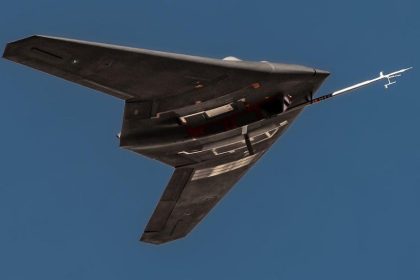
New photo shows that China has really copied the U.S. RQ-170 Sentinel stealth drone June 2, 2013
Posted by David Cenciotti in : China, Drones , 2commentsThe following image, grabbed by Chinese forums, is circulating on the Internet.
Image source: http://hobbyshanghai.com.cn/
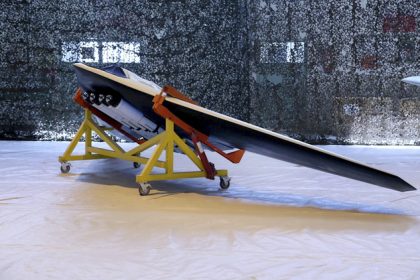
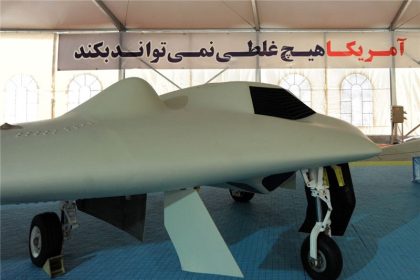
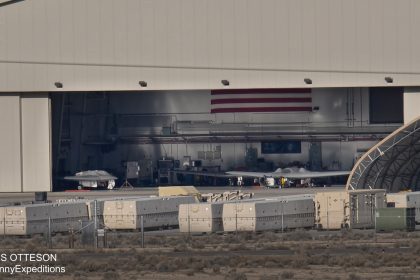
It allegedly shows a series of brand new UAVs (unamanned aerial vehicles) one of those resembles the famous Lockheed Martin RQ-170 Sentinel, one of those was captured in Iran in 2011.
Last Februrary, Iran released footage that proves it has, if not literally decoded, at least accessed some of the data stored inside the U.S. stealthy RQ-170 drone captured in December 2011.
Previously, in Aug. 2012, The Aviationist published an article titled: Chinese delegation currently in Iran to copy the U.S. stealthy RQ-170 drone captured in 2011 about the news that a group of 17 Chinese expert had visited Iran not only to inspect, but also to collect and bring back to China some key components of the U.S. RQ-170 drone captured by Iran in December 2011.
That article ended with the following text:
“As already explained when commenting Iran’s claims that they had decoded the stealthy drone, while the internal memories were (probably) automatically erased as a consequence of the loss of control procedure and data will never been recovered, the circuitry, lenses, sensors have probably survived the mysterious crash landing.
Therefore they can be evaluated and tested.
And copied, one of the tasks China does better.”
If the above image is genuine, China has already cloned the stealthy drone the U.S. lost (almost intact) in Iran.
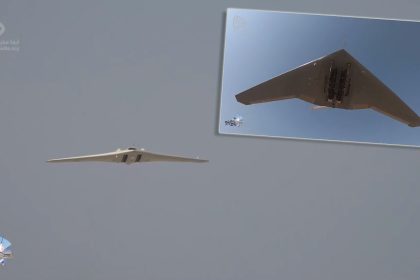
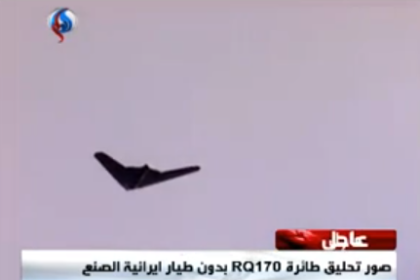
Last week Iranian officials claimed they are ready to fly their own RQ-170 copy as well.
Related articles
“Iran has downed another foreign drone,” but it’s only a bad translation February 24, 2013
Posted by David Cenciotti in : Iran , 2commentsIt looks like a bad translation was the cause of the news that Iran had captured another foreing drone during “Great Prophet 8″ drills conducted in southern Iran on Feb. 23.
According to some media outlets, Gen. Hamid Sarkheili, a spokesman for the exercise, had said that Islamic Revolution Guards Corps units had hijacked an unmanned aircraft that was trying to enter Iranian airspace.
However, what Sarkheili had described was one of the scenarios of the wargames, which included electronic warfare aimed at taking control of enemy drone’s navigation system and forcing it to land; a hijacking as the one allegedly achieved to capture a CIA-operated stealth RQ-170 Sentinel drone in December 2011.
Therefore, the UAV (unmanned aerial vehicle) forced to land was, if any, an Iranian part playing the role of an enemy drone.
Here’s the original article, and below you can find the translation by Google Translator based on which the news of a new downing spread:
“The defense correspondent of Fars News Agency , Sardar Muhammad Azam 8th Army Corps drill Srkhyly spokesman recently told reporters at the end of the exercise in a foreign UAV announced.”
In December 2012, Tehran announced it had captured a ScanEagle UAV with minimal damage; whereas earlier this month it released footage allegedly stored inside the U.S. stealthy RQ-170 drone captured in December 2011.
Related articles
Iran releases decoded footage from captured U.S stealthy RQ-170 drone February 6, 2013
Posted by David Cenciotti in : Captured Stealth Drone, Iran , 13commentsIran has just released footage that proves it has, if not literally decoded, at least accessed some of the data stored inside the U.S. stealthy RQ-170 drone captured in December 2011.
The video, that was aired by an Iranian TV, as part of an interview in which Sardar Hajizadeh, the Commander of the Islamic Revolution Guards Corps (IRGC) Aerospace Forces, tells how the drone was captured and how its technology was successfully accessed and decoded, is the first evidence Iran has found something interesting in the unmanned aircraft’s intelligence gathering sensors and internal hard disks.
So far, Iran claims were never backed by evidences: some blurry details about its activity in California and Afghanistan and some unrelevant information; data that could be retrieved with a little of OSINT (Open Source INTelligence) and some spying.
Now, the new video clearly shows footage recorded by the drone underbelly camera: the area surrounding Kandahar airfield (KAF) as the RQ-170 is about to land, a small building (possibly being spied), a C-130 and at least one Reaper drone among shelters at KAF.
Nothing really special, still something that clearly shows Iranians did find something inside the Sentinel and were able to extract and decode it.
Hence, the drone’s internal memories still contained some useful information and were not fully automatically erased as a consequence of the loss of control procedure. To such an extent data, including video recordings from the drone’s FLIR turret, was recovered.
Noteworthy, some still images (that you can find in the longer video here below) show the drone immediately after being recovered in the desert and, later, moved with a helicopter sling load.
How the “Beast of Kandahar” crash landed in Iran remains a mystery: Tehran claims it was hacked, but the stealth drone, undetected by any radar, might have crash landed for a failure somewhere in eastern Iran where it was found (possibly by accident). And where the U.S. could not blow it up.
Related articles
If Iran has decoded all data in the captured U.S. stealth RQ-170 drone it’s no big deal December 10, 2012
Posted by David Cenciotti in : Captured Stealth Drone , 2commentsIn the last of a series of similar claims, a senior Iranian commander announced that Tehran has just extracted all the data stored in the RQ-170 Sentinel stealth drone which was captured last year.
“All the intelligence existing in this drone has been completely decoded and extracted and we know each and every step it has taken (during its missions),” Commander of the Islamic Revolution Guards Corps (IRGC) Aerospace Force Brigadier General Amir Ali Hajizadeh said, according to the FARS News Agency.
Noteworthy, he went on to say: “The US President (Barack Obama) had told the Israeli officials that the drone was tasked with spying on Iran’s nuclear program, but our experts found after decoding the drone that it had not performed even a single nuclear mission over Iran.”
Although it is possible that the batwing’s internal memories were not completely wiped out following the loss of satellite link with the ground control station in spite of the automatic erase that should start as a consequence of the loss of control procedure to prevent data from being recovered, it’s hard to believe something really interesting was still stored on the Sentinel when it was recovered.
Most probably, pre-planned waypoints, routes, other navigation stuff, along with some radio communication setting to establish satellite links with the remote control station: something quite “interesting” to understand the procedures used by the U.S. to spy on Iran, to guess the preferred routes, the operating altitudes, but nothing really crucial, especially if we consider that, unlike the X-47B, the RQ-170 is no longer the American cutting edge robot tech.
On the other side, as already explained, the circuitry, lenses, memories and sensors that survived the crash landing might have been evaluated, tested, copied and, possibly, improved with the help of Russia and China.
Related articles
Iran has captured another U.S. spy drone. Once again with minimal damage. December 4, 2012
Posted by David Cenciotti in : Drones, Iran , 4commentsOne year after a U.S. stealthy RQ-170 Sentinel drone was captured near the city of Kashmar, some 140 miles (225km) from the Afghan border, after it had violated the Iranian airspace on a spying mission from Kandahar airfield, in Afghanistan, looks like Tehran has captured another U.S. robot.
On Dec. 5, Iran’s Islamic Revolution Guards Corps (IRGC) Navy Commander Rear Admiral Ali Fadavi announced that Iran is in possession of Scan Eagle drone that entered the Iranian airspace over the Persian Gulf.
Indeed, IRGC released footage of the captured drone that, just like the RQ-170, seems to be in quite good shape.
The ScanEagle is a tiny low-cost robot with a 10ft wingspan built by Insitu, a subsidiary of Boeing. It can stay aloft for more than 20 hours, at a cruising speed of 60 knots. It is equipped with a stabilized turret system containing electro-optical and IR (Infra-red) cameras that can provide real time video feeds to operators in a ground control stations within a range exceeding 100 km.
It is runway independent and it can be catapulted from ships. Indeed, it can be launched autonomously via a pneumatic wedge catapult launcher and flies pre-programmed or operator-initiated missions guided by GPS and its onboard flight-control system.
At the end of the mission, it is retrieved using a “Skyhook” system in which the UAV catches a rope hanging from a 50-foot high pole with a wingtip hook.
Referring to the captured ScanEagle drone, Brigadier General Amirali Hajizadeh, the commander of the Aerospace Division of the Islamic Revolution Guards Corps (IRGC), said that the drone was hijacked by Iranian forces as it was flying an ISR (Intelligence Surveillance Reconnaissance) mission around Kharg Island, in southern Iran.
Last month, two Iranian Su-25 jets tried (and failed) to shoot down an U.S. MQ-1 Predator that had violated the Iranian airspace over the Persian Gulf.
Although it’s unclear how the Iranians put their hands on the ScanEagle (the U.S. Navy denies it has lost any drone lately), this new episode proves that:
- U.S. spy robot activity inside Tehran’s airspace is quite intense and involves several different platforms, from the batwing RQ-170, to the Predator, to the small ship-launched Scan Eagle.
- Intelligence gathering missions take place both along the eastern and western borders of the country.
- In a way or another one, Iran is either lucky to recover crash landed drones with minimal damage or surprisingly proficient at identifying, tracking and possibly hijacking such drones.