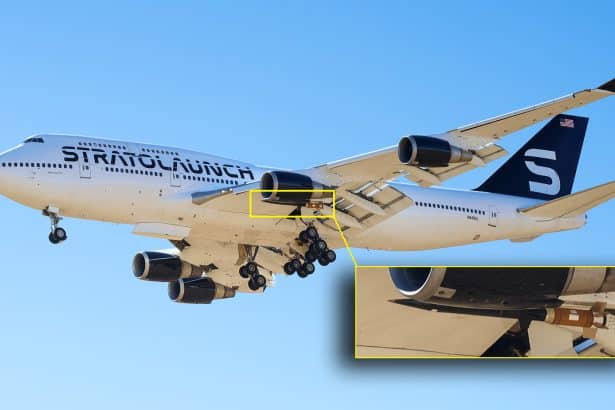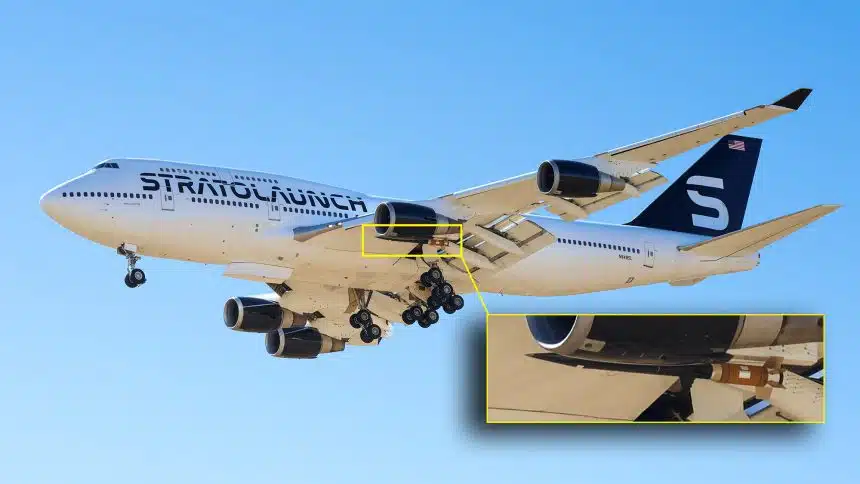
Stratolaunch’s Boeing 747-400 carrier aircraft was recently spotted in Mojave carrying a previously unseen rocket under its left wing, while accompanied by a Cessna Citation acting as chase aircraft.
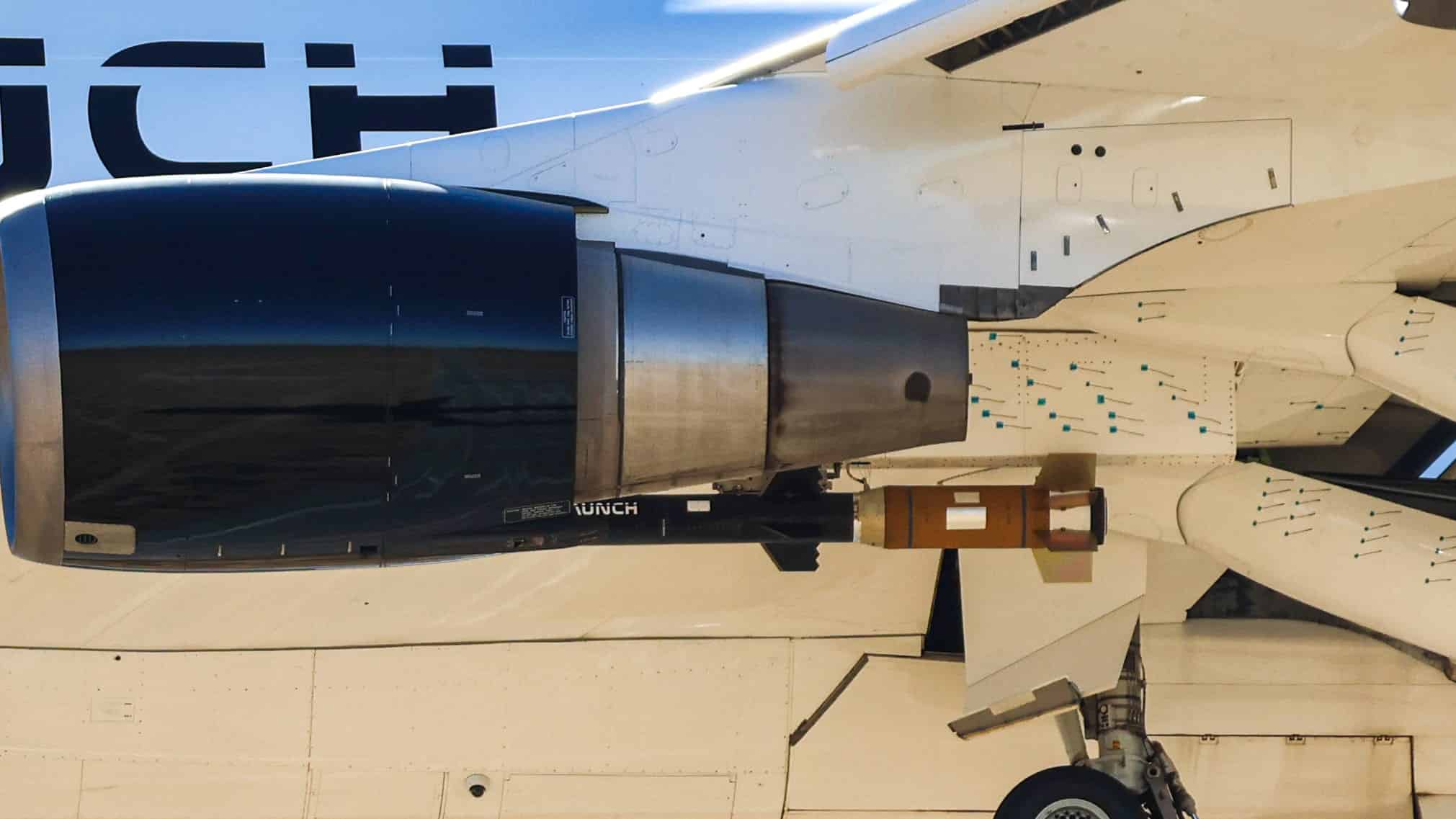
The Boeing 747-400 owned by Stratolaunch, known also as “Spirit of Mojave,” has been spotted carrying a previously unseen rocket under its left wing. In addition to the external payload, the aircraft is also fitted with tufts on the pylon and the underside of the wing behind the rocket.
The aircraft was spotted by aviation photographer Brennan O’Neill, who kindly shared the photos with us. O’Neill told us the photos were captured in the afternoon of Oct. 9 while the aircraft, accompanied by a Cessna Citation business jet, was landing at the Mojave Air & Space Port, California.
Visualizza questo post su Instagram
It appears the aircraft might have been involved in a test flight of a previously undisclosed rocket to be added to Stratolaunch’s test capabilities for hypersonic systems. The test flight was most likely a captive carry mission to assess the behavior of the rocket when installed on the Boeing 747 and to study the airflow around it.
In fact, tuft testing is a visualization technique that is used in both flight test and wind tunnel testing to study air flow direction, strength, and even boundary layer properties. Tufts are small lengths of string that are attached to the surface of the aircraft or the model, which the air blows and points downstream as it flows over them.
In 2018, Stratolaunch announced four new launch vehicles to be added to its fleet, including the already existing Pegasus rocket, two variants of a Medium Launch Vehicle yet to be developed and a future space plane. Those programs have been abandoned, as the company’s website now lists only the Talon-A autonomous and reusable hypersonic flight test platform, a new variant called Talon+ and the previously announced space plane.
Stratolaunch says on its website that, as demand for hypersonic capabilities continues to grow, it is working to expand its portfolio of reusable test vehicles, expendable targets and weapons sub-systems. The unknown rocket might be one of these new capabilities to be added to Stratolaunch’s portfolio.
What is the unidentified rocket?
The identity of the object carried beneath Spirit of Mojave’s left wing remains unknown. The rocket was carried in the same position where the Boeing 747 was designed to carry an extra, non-operational, engine between the fuselage and the inner engine on the left wing, a feature called “Fifth Pod” and often used to transport spare engines where needed without using a charter flight.
For the new role as airborne launch platform, the aircraft was equipped with a custom pylon installed on the same location. However, it differs from the pylon used to carry the Talon-A, which is positioned on the centerline below the fuselage.
The available photographs do not provide enough detail to establish whether this rocket is a launch system, a propulsion test article or another type of experimental payload. However, an additional rocket booster can also be seen installed in the rear.
The presence of tufts around the pylon and on the underside of the wing is particularly noteworthy. As mentioned earlier, they could help engineers visualize airflow around the external store, its mounting structure and the wing, assessing the aerodynamic effects of carrying a new payload and helping to validate computational fluid dynamics (CFD) simulations.
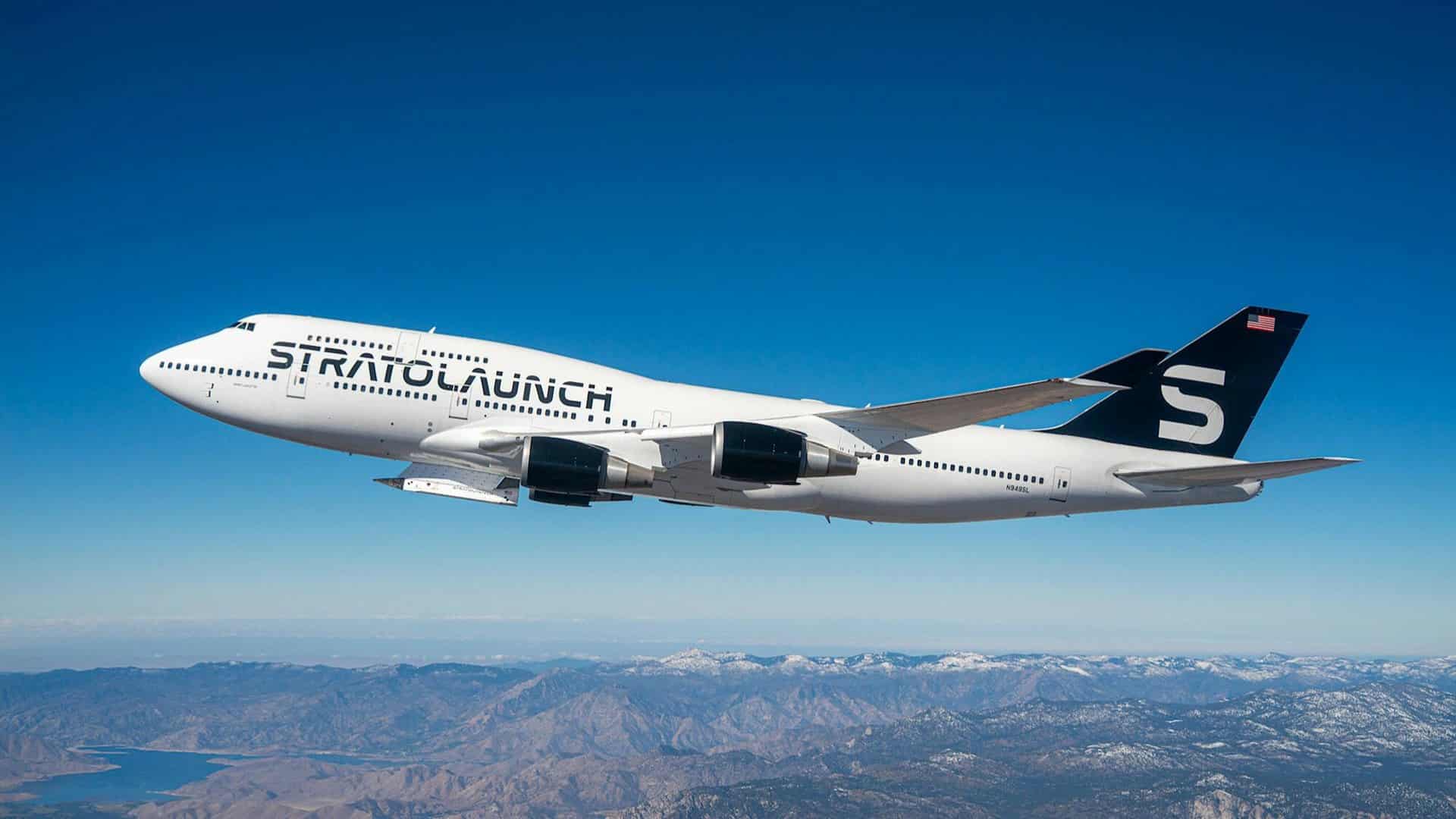
The configuration could therefore be consistent with a captive-carry test, during which an aircraft carries an experimental article without releasing it. The presence of the Cessna Citation accompanying the Boeing 747s, most likely as a safety chase, further points to this possibility.
Stratolaunch is expanding its hypersonic testing capabilities
Stratolaunch has increasingly focused on hypersonic flight testing since abandoning its original plans to develop a family of air-launched orbital rockets. The company now operates a fleet of specialized aircraft and test vehicles designed to support the development and evaluation of hypersonic technologies.
Its best-known system is Talon-A, an autonomous, rocket-powered hypersonic testbed designed to land at the end of the test mission and reused, instead of being expendable. The company also operates “Roc,” a six-engine, twin fuselage aircraft which is currently the aircraft with the world’s largest wingspan.
The Boeing 747-400 Spirit of Mojave provides a second airborne launch platform. The aircraft was previously known as “Cosmic Girl” and owned by Virgin Orbit, until the company ceased operations in 2023 and the aircraft was bought by Stratolaunch.

The company recently announced another expansion of its flight test capabilities with the acquisition of a Boeing 777-200ER, announced on Sep. 30, 2026. The aircraft, which will now undergo a series of modifications for its new role, will support the launch of Talon-A hypersonic test vehicles from 2027, increasing overall flight capacity by 35%.
The company is currently working on the Department of War’s Multi-Service Advanced Capability Hypersonics Test Bed (MACH-TB) project which is creating an affordable flight test bed to rapidly increase hypersonic flight test capacity. The objective of MACH-TB 2.0 is to provide an affordable bridge between hypersonic ground tests and system level flight tests and reduce overall hypersonic development risks and time.
Thanks again to Brennan O’Neill for the photo he sent us. Make sure to follow him on Instagram for more!