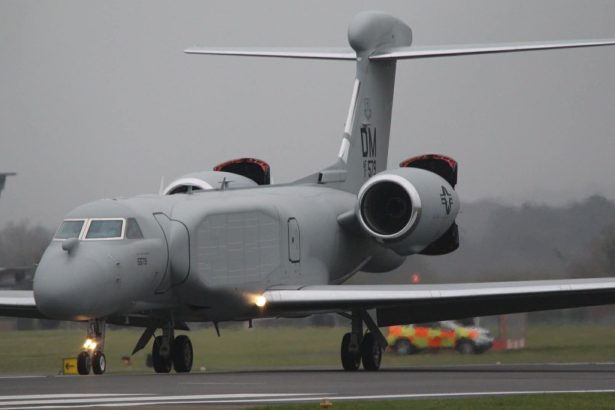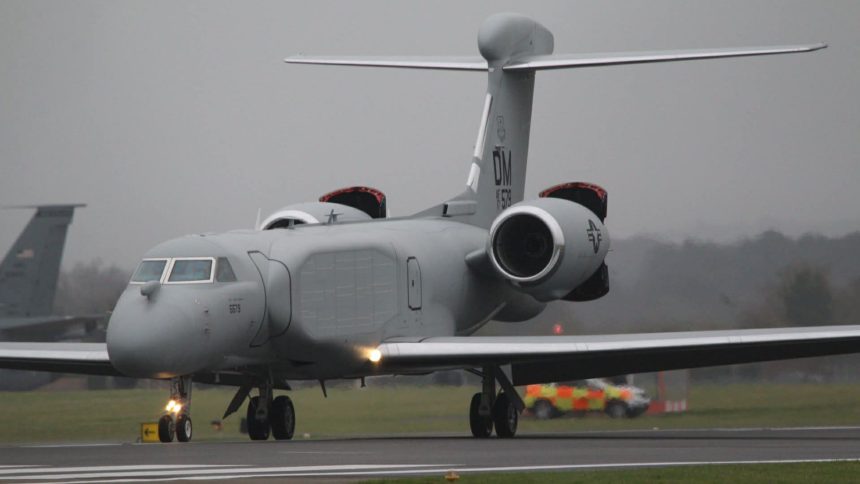
Two EA-37B Compass Call aircraft stopped at RAF Mildenhall for fuel during what may be the type’s first operational deployment abroad, reports suggesting Turkey as their destination.
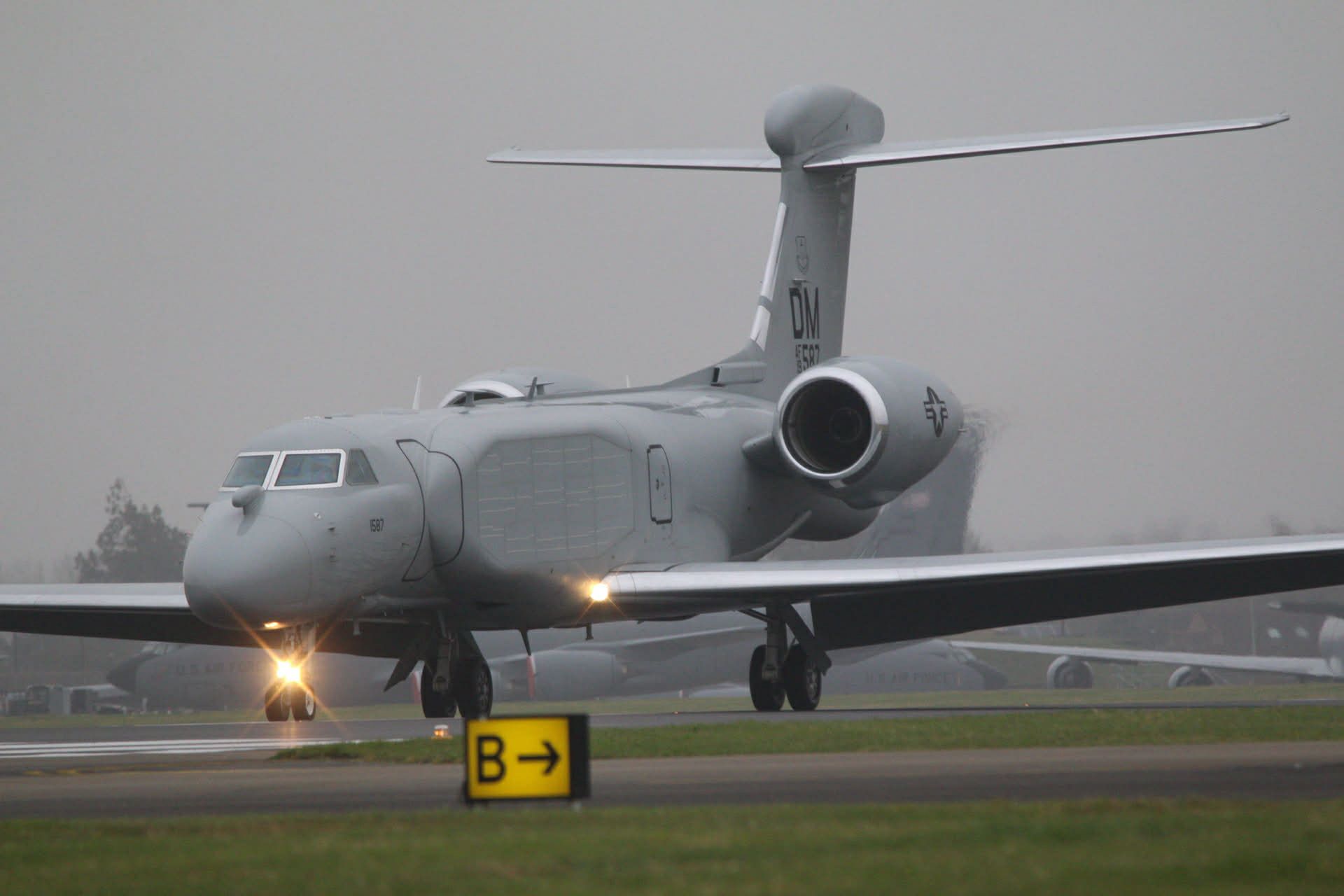
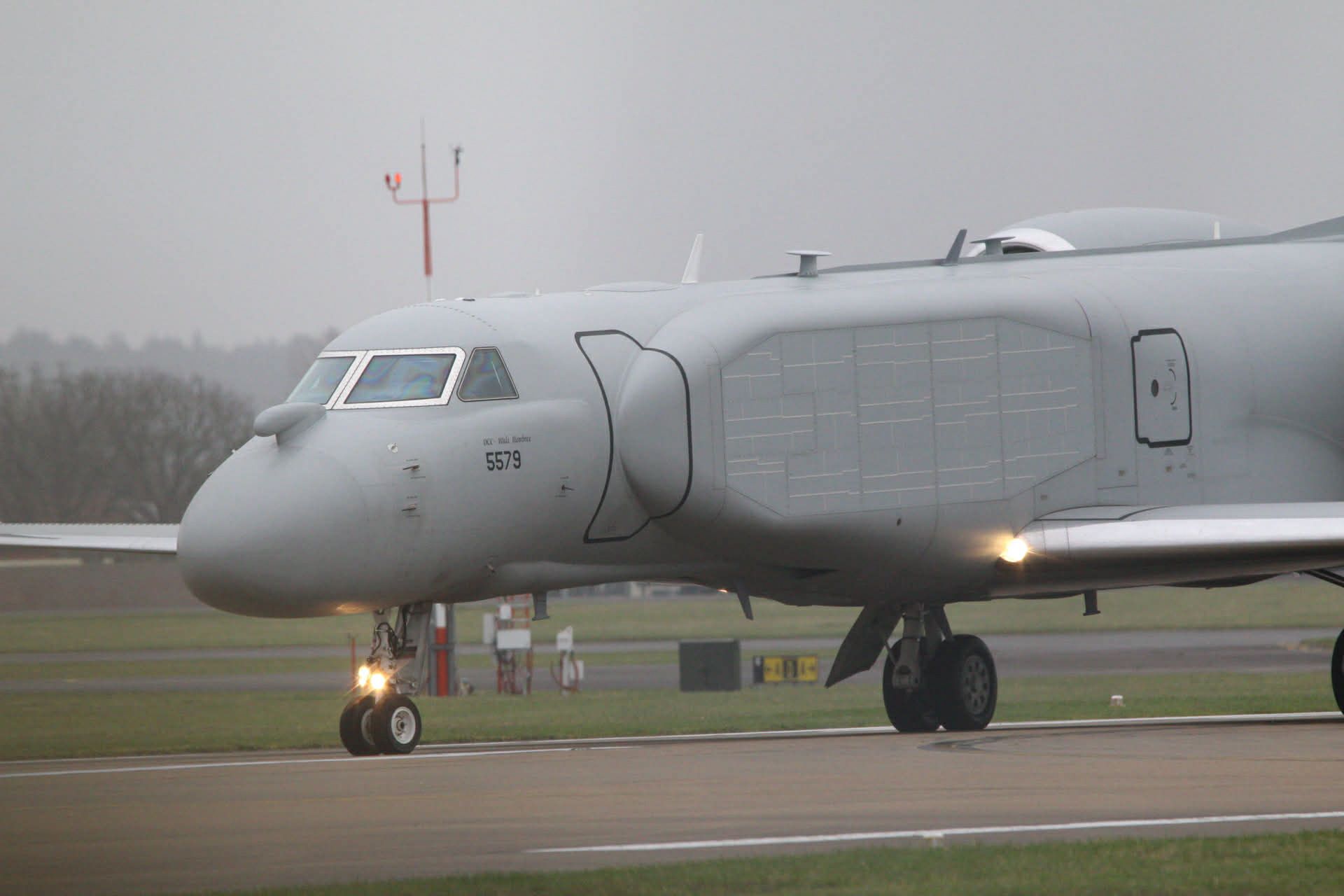
Two U.S. Air Force EA-37B Compass Call electronic warfare aircraft have arrived at RAF Mildenhall, UK, on Mar. 31, 2026. The aircraft departed on Mar. 30 from Davis-Monthan Air Force Base, Arizona, and arrived in the UK after a fuel stop at Joint Base McGuire-Dix-Lakehurst, New Jersey.
Our friend and contributor Glenn Lockett was able to snap some images of the two aircraft upon their arrival at RAF Mildenhall.
The EA-37s, flying with the callsigns AXIS41 and AXIS 43, were spotted on flight tracking websites upon departure and are expected to later fly to Turkey. In fact, a Boeing 747-400 belonging to Kalitta Air, which usually flies transport missions on behalf of the U.S. Transportation Command, has landed at Davis-Monthan and is said to be scheduled to fly to Istanbul, according to flight trackers.
USAF EA-37B #AXIS41 & #AXIS43 out of Davis–Monthan AFB are inbound to RAF Mildenhall after a stop at McGuire AFB.
19-1587 / #AE17CD
17-5579 / #AE142E pic.twitter.com/3QqHtFgqJS
— EISNspotter (@EISNspotter) March 31, 2026
These indications and claims about two EC-130H Compass Call aircraft damaged in the recent Iranian attack at Prince Sultan Air Base, Saudi Arabia, are leading many to believe this could be the first operational deployment of the EA-37B Compass Call Rehost. In January 2026, when the aircraft first deployed to Europe, the Air Force said the EA-37 was not yet operational.
A Kalitta Air 747-400 also arrived at Davis-Monthan this morning, with a follow-on flight plan to Istanbul. pic.twitter.com/UuVLg64Qtk
— KIWA Spotter (@KiwaSpotter) March 31, 2026
The service previously said the Initial Operational Capability (IOC) is expected for this year. The recent 2025 Director, Operational Test & Evaluation report further added that a full-fielding decision is expected in the first quarter of Fiscal Year 2026.
We may be seeing an unscheduled deployment of an EA-37B. A Kalitta 747-400 went into DM, with a follow on flight plan to Istanbul. EA-37B 17-5579 is heading northeast out of DM as AXIS43. That’s a deployment callsign. pic.twitter.com/dR000wKVfP
— Steven Fortson (@zaphod58) March 30, 2026
Should the deployment to the Middle East be confirmed, the EA-37B would join the already large variety of capabilities that have been put in action for Operation Epic Fury. The aircraft is meant to provide electronic attack effects that help protect U.S. and allied forces in contested environments, while also complicating an adversary’s – in this case Iran’s – ability to coordinate and control forces.
Missing in the conversation about the attack on Prince Sultan Airbase is the absence of 3 C-130 type aircraft in proximity to the KC-135/135’s that “appear” to have been damaged/destroyed in an attack. At least two EC-130’s were deployed to CentCom AOR and the -130’s on the ramp… pic.twitter.com/LOn7M61p39
— MeNMyRC (@MeNMyRC1) March 30, 2026
Notably, the aircraft might also work in cooperation with the RC-135 Rivet Joint. In fact, the U.S. Air Force has been working on the integration of two its premiere airborne EW (Electronic Warfare) and ISR (Intelligence, Surveillance and Reconnaissance) assets.
The goal is to bring together the sensing and intelligence capabilities of the RC-135 with the electronic attack functions of the EA-37B to evolve the way the Air Force fights in the electromagnetic spectrum. With the RC-135 already deployed in the Middle East, flying combined sorties similarly to the ones flown in the U.S. would be straightforward.
“The synergistic integration of Rivet Joint’s intelligence gathering with Compass Call’s electronic warfare capabilities has proven to be a game-changer on the modern battlefield. We’re not simply flying sorties; we’re creating a new paradigm. By refining tactics, techniques, and procedures, we’re ensuring our forces maintain a decisive advantage in the electromagnetic spectrum,” said Capt. Jasmine Harris, 38th RS, weapons & tactics flight commander.
The EA-37B Compass Call
The Compass Call system is an airborne tactical electronic attack weapon system previously installed on a heavily modified version of the C-130 Hercules, called EC-130H Compass Call. This system disrupts enemy command and control communications, radars, and navigation systems and limits adversary coordination, which is essential for enemy force management.
Following the type’s retirement announced in 2014, the U.S. Air Force initiated the Compass Call Rehost program, which is moving the current Compass Call systems from the EC-130H to the new EA-37B, based on the Gulfstream G550 Conformal Airborne Early Warning Aircraft (CAEW) airframe. The G550 has increased speed, endurance, and extended stand-off range over the legacy EC-130H aircraft, says L3Harris, providing significantly improved survivability, as well as providing improved stand-off jamming capability and flexibility to counter sophisticated communications and radar threats.
As the U.S. Department of Defense’s only long-range, full-spectrum stand-off electromagnetic warfare jamming platform, the Compass Call plays a key role in the US Suppression of Enemy Air Defense (SEAD) strategy, alongside the EA-18G Growler and the F-16CM Block 50/52 Fighting Falcon. Future upgrades will boost counter-C5ISRT capabilities, incorporating software-defined radios and an open architecture to quickly adapt to emerging threats.
The first five EA-37B aircraft will host the current Baseline 3 variant of Compass Call, which will be “transplanted” from the retired EC-130Hs. The remaining aircraft are scheduled to receive the upgraded Baseline 4 variant currently in development, which will reportedly introduce a new low-band jammer system. It is not known which variant will be requested by the Italian Air Force and also which variant the US open will be open to provide.
The core of the new Baseline 4 system is BAE Systems’ Small Adaptive Bank of Electronic Resources (SABER) technology, built around a suite of Software Defined Radios (SDRs) utilizing an open system architecture. SABER represents a significant technological leap, enabling the transition of the Compass Call weapon system from a hardware-based platform to a software-driven electromagnetic spectrum (EMS) warfare capability.
Considering that the EA-37B airframe has a much smaller size than the EC-130H, reducing the size, weight and power (SWaP) requirements of the prime mission equipment was a key point of the program. This was achieved thanks to the new open-system hardware and software solution that is being adopted for the EA-37B which, by the way, also resulted in a much lower cooling requirement for all onboard electronics.
As a result of all the program’s efforts, the EA-37B’s operating costs will be cut in half compared to the EC-130H Compass Call, while also being able to perform its mission at higher altitudes and speed and longer ranges and durations. The G550-based aircraft will also be optimized to perform missions in Anti-Access, Area-Denial (A2/AD) environments, while also being able to be easily upgraded to face new threats thanks to its Modular Open Systems Architecture.
Even more advanced capabilities could find their way into the Compass Call’s electronics and software, as Chris O’Donnell, Deputy Assistant Secretary of Defense, Platform and Weapon Portfolio Management, said in 2022 that the Department of Defense needs targeted investments and innovative and novel capabilities, such as cognitive EW, to keep the edge over adversaries and to counter advanced and non-traditional threats. As a matter of fact, cognitive EW capabilities are already being tested with the Angry Kitten ECM pod, so it is totally expectable that someday they will end up on the EA-37B.
You can find out more about the EA-37B Compass Call in the detailed report we published here at The Aviationist in 2023.