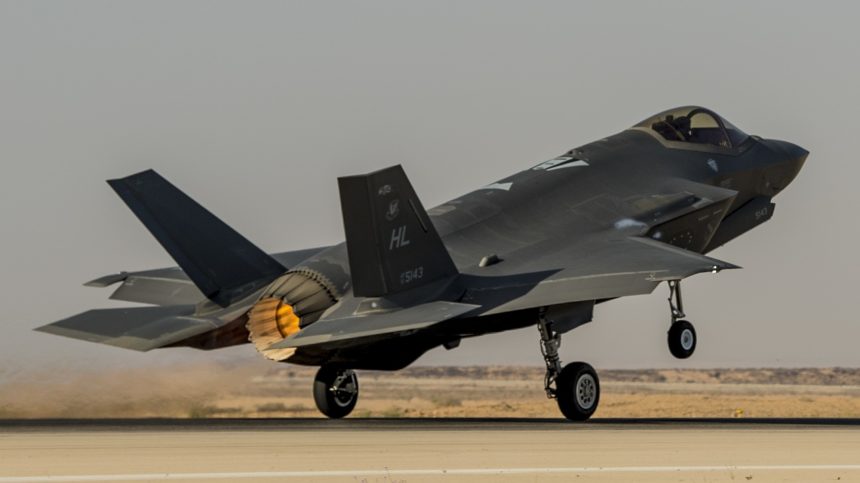
For the second time, President Trump says that the U.S. agreed to sell F-35s to Saudi Arabia as relations between the two countries keep improving.
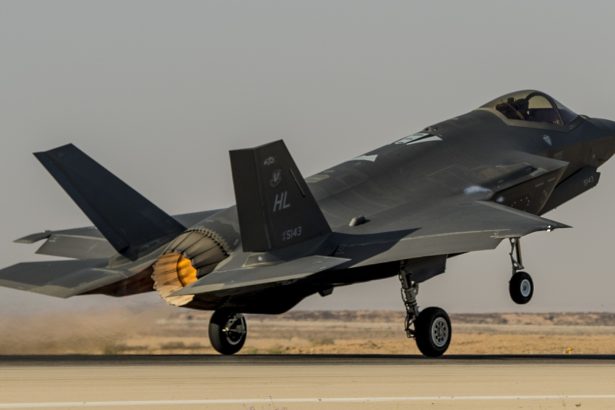
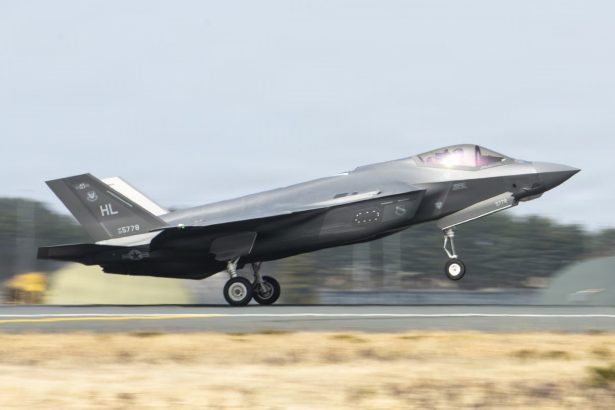
For the second time since late last year, reports of U.S. acquiescence for the sale of F-35A Lightning II stealth fighters to the Kingdom of Saudi Arabia (KSA) has appeared, this time from President Donald Trump himself. The statement was in Trump’s address at the Future Investment Priority Summit in Miami, Florida, on Mar. 28, 2026.
“For the very first time, we agreed to sell Saudi Arabia perhaps the most capable fighter jet ever built, the F-35,” Trump said. The President also made other comments about U.S. military achievements in the campaign against Iran, criticism of the regime in Tehran and burgeoning ties with Riyadh and its leader, Crown Prince Mohammed bin Salman Al Saud (MBS), during his nearly 90-minute speech.
On Nov. 4, 2025, Reuters reported, quoting White House and DoW officials in deep background, that the Trump administration was considering a sale of 48 F-35s to Saudi Arabia, after the request had “cleared a key Pentagon hurdle.” This was ahead of a MBS’s visit to Washington at the time. The final deal would need to go through formal approval by multiple offices, including Congress, Department of State, Department of Defense, and a Defense Security Cooperation Agency (DSCA) notification.
This is not to mention a series of diplomatic hurdles with relation to Israel, the outcome of the ongoing war with Iran and wider West Asian politics.
Trump:
We agreed to sell the F-35 to Saudi Arabia. The F-35 is amazing; we sell them very sparingly—we don’t want other people to have them. pic.twitter.com/s8GvBaXn32
— Clash Report (@clashreport) March 27, 2026
The geopolitics of selling F-35s to Saudi Arabia
Arms sales potentially worth nearly $142 billion have driven Trump’s diplomacy with the KSA since his return to office, with the White House calling them “the largest defense cooperation agreement” by Washington. F-35 sales to Saudi Arabia also aids, at least theoretically, eroding Beijing’s rising influence in the West Asia and North Africa region.
However, with countries like Egypt merely using their burgeoning ties with China as leverage to accelerate stalled weapons deals and extract greater geopolitical concessions, creeping Chinese influence isn’t an immediate threat. At the same time, an F-35 sale to KSA wouldn’t hurt Riyadh’s ties with Beijing either, since it maintains an eastward-shift by joining the Shanghai Cooperation Organization (SCO) and participates in the Brazil Russia India China-Plus (BRICS+) grouping.
An immediate impact, if any, would be contradicting the stated U.S. policy of maintaining Israel’s qualitative edge in the region. An exception for the KSA to access the F-35 would have been normalizing ties with Israel under the 2020’s Abraham Accords, which Riyadh has still held off from doing, unlike the United Arab Emirates (UAE), Bahrain and Morocco.
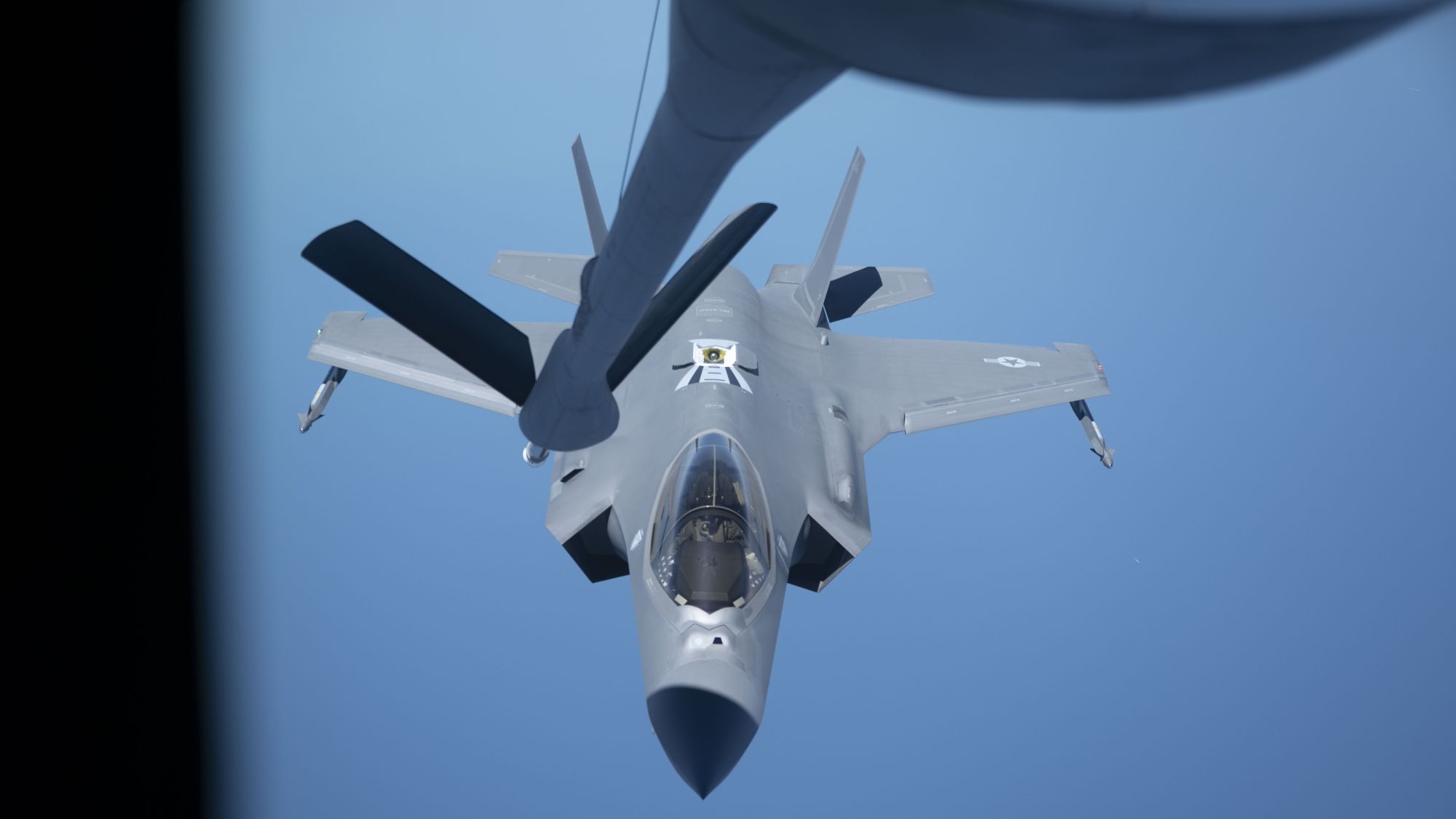
Trump repeated that offer at the Future Investment Initiative Priority summit in Miami on Mar. 28, 2026, speaking about the region’s future. “The Middle East will be transformed, and the future of that region is never, I don’t think it’s ever looked brighter […] We did the Abraham Accords. I hope you’re going to be getting into the Abraham Accords finally,” Trump said.
This is what Trump said in full about F-35s for KSA at the FFIP, while praising Crown Prince Mohammed bin Salman Al Saud (MbS):
“When I hosted the crown prince at the White House last fall, we officially designated the Kingdom as a major non-NATO ally […] And for the very first time, we agreed to sell Saudi Arabia perhaps the most capable fighter jet ever built, the F-35.
The F-35 is amazing, and we sell them very sparingly. We don’t want other people to have them. I’m confident that this partnership and so many others around the world will continue to grow and thrive […]”
While Riyadh’s reluctance was in part driven by the situation in Palestine, this is likely to now change. The Gulf countries, which have come under relentless Iranian strikes because they host U.S. military bases and were willing to reconcile with Iran, are now reportedly pushing Trump to not end his campaign prematurely.
What would it mean for the RSAF
If the Royal Saudi Air Force (RSAF) does lay its hands on the F-35A, the aircraft is likely to replace around 80 of the service’s Panavia Tornado IDS strike aircraft. Reuters also reported on Nov. 20, 2025, that Riyadh’s F-35s would not be as sophisticated as the Israeli Air Force’s F-35I Adir, but nevertheless the F-35A would still mark a major capability upgrade.
הוא אדיר והוא גם בדרך לאיראן 😌
תיעוד מיוחד של מטוסי ה- F-35I בדרכם לתקיפה: pic.twitter.com/EKf9tPFmlm
— Israeli Air Force (@IAFsite) March 15, 2026
Tel Aviv has the unique privilege of heavily customizing its Lightning IIs with its own hardware, believed to include encrypted communications, data linking and networking suites. However, the most fascinating inclusions are stealthy 600 gallon drop tanks and Conformal Fuel Tanks (CFT), increasing their combat range and reducing the need for aerial refuelers during strikes on Iran.
The rest of the RSAF’s fleet is also capable, consisting of 84 new-build F-15SA, one of the most advanced variants of the Eagle, and 65-68 F-15S aircraft upgraded to the F-15SR (Saudi Retrofit) standard. The service also has 72 Eurofighter Typhoons, although a deal for new aircraft has been frozen because of objections by Germany over human rights issues.
Conclusion
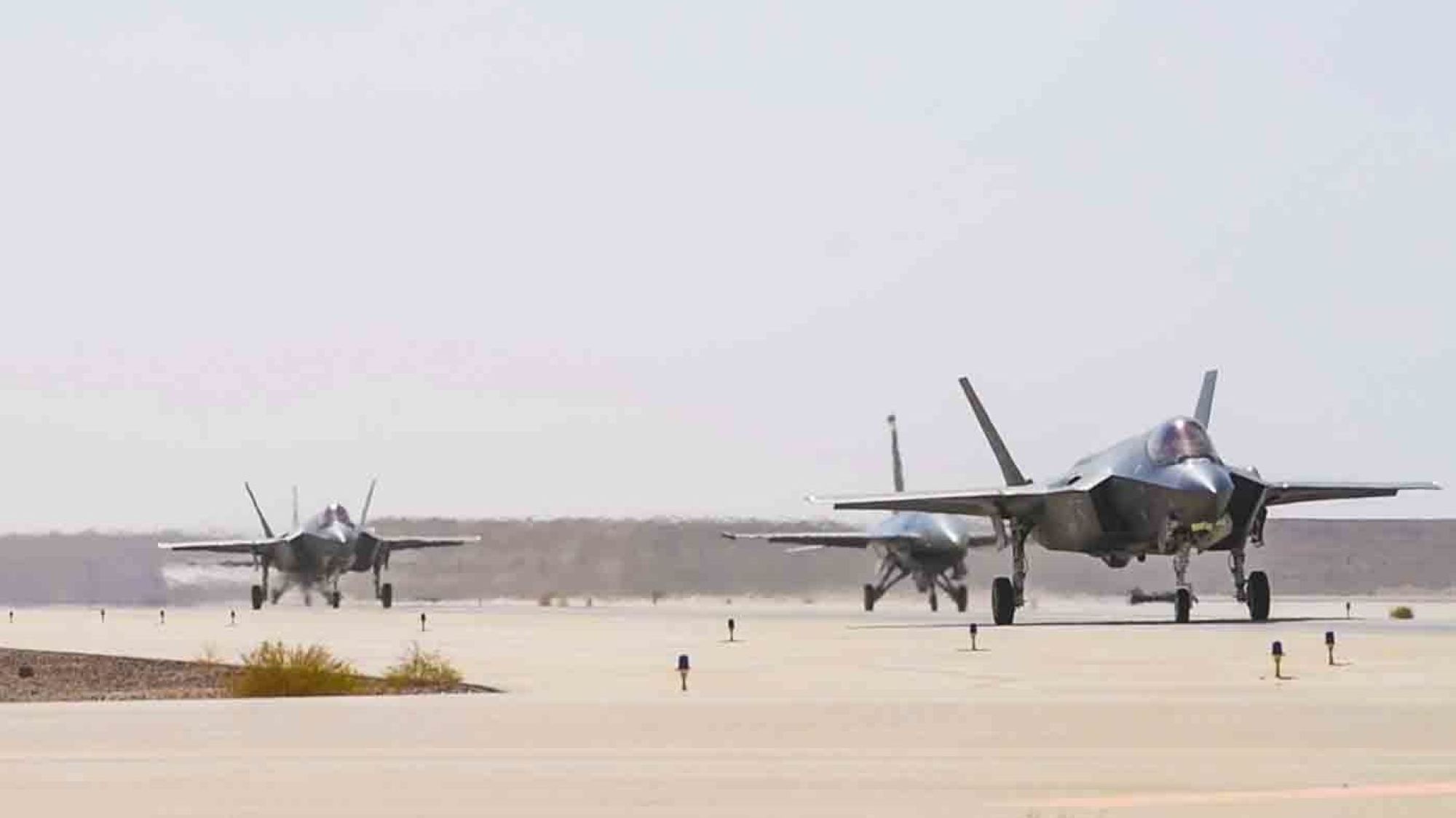
The ongoing war in the Middle East does warrant the need for U.S. and allies to collectively have advanced capabilities, notwithstanding the diplomatic hurdles in mounting a combined U.S., Israeli and Gulf Arab campaign against Iran. By Mar. 29, 2026, KSA’s Ministry of Defense had reported the destruction of one Iranian ballistic missile near Riyadh, and 18 drones.
אלפי חימושים, אלפי מטרות, מאות מטסים | נתונים ותיעודים חדשים מפעילות חיל-האוויר מתחילת מבצע “שאגת הארי”:https://t.co/lWCzmbyPlp pic.twitter.com/j7aJ5DjB8H
— Israeli Air Force (@IAFsite) March 19, 2026
While the loss of three U.S. F-15Es and the KC-135 over Iraq has been attributed respectively to friendly fire and a mid-air collision, the extremely close attempts on the F-35, the F/A-18 Super Hornet and the strike on the KC-135s and the E-3 Sentry AWACS at Prince Sultan Air Base in Saudi Arabia bare an undiminished Iranian standoff strike capability.
Analysts had warned even before the latest conflict that Iran would reserve its exquisite ballistic, cruise missile, drone and surface-to-air arsenal for a longer, months-long escalatory campaign. Even after a month of continuous airstrikes, it is being reported that only a third of Iran’s missile arsenal might have been destroyed.
SCOOP!!! — The United States can only determine with certainty that it has destroyed about a third of Iran’s vast missile arsenal.
The status of around another third is less clear but bombings likely damaged, destroyed or buried those missiles in underground tunnels and bunkers,…
— Phil Stewart (@phildstewart) March 27, 2026