The B-52H Stratofortress is continuing the integration tests with the AGM-181 Long Range Stand Off (LRSO) missile, the Air Force’s next-gen stealth nuclear cruise missile.
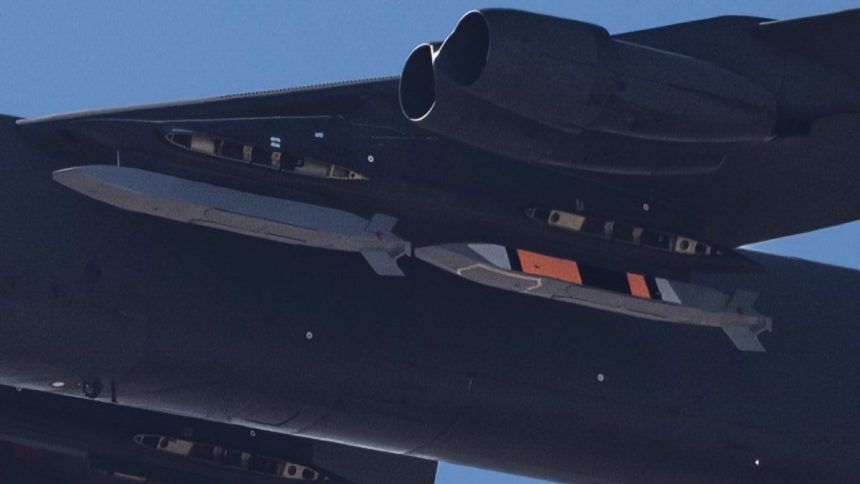
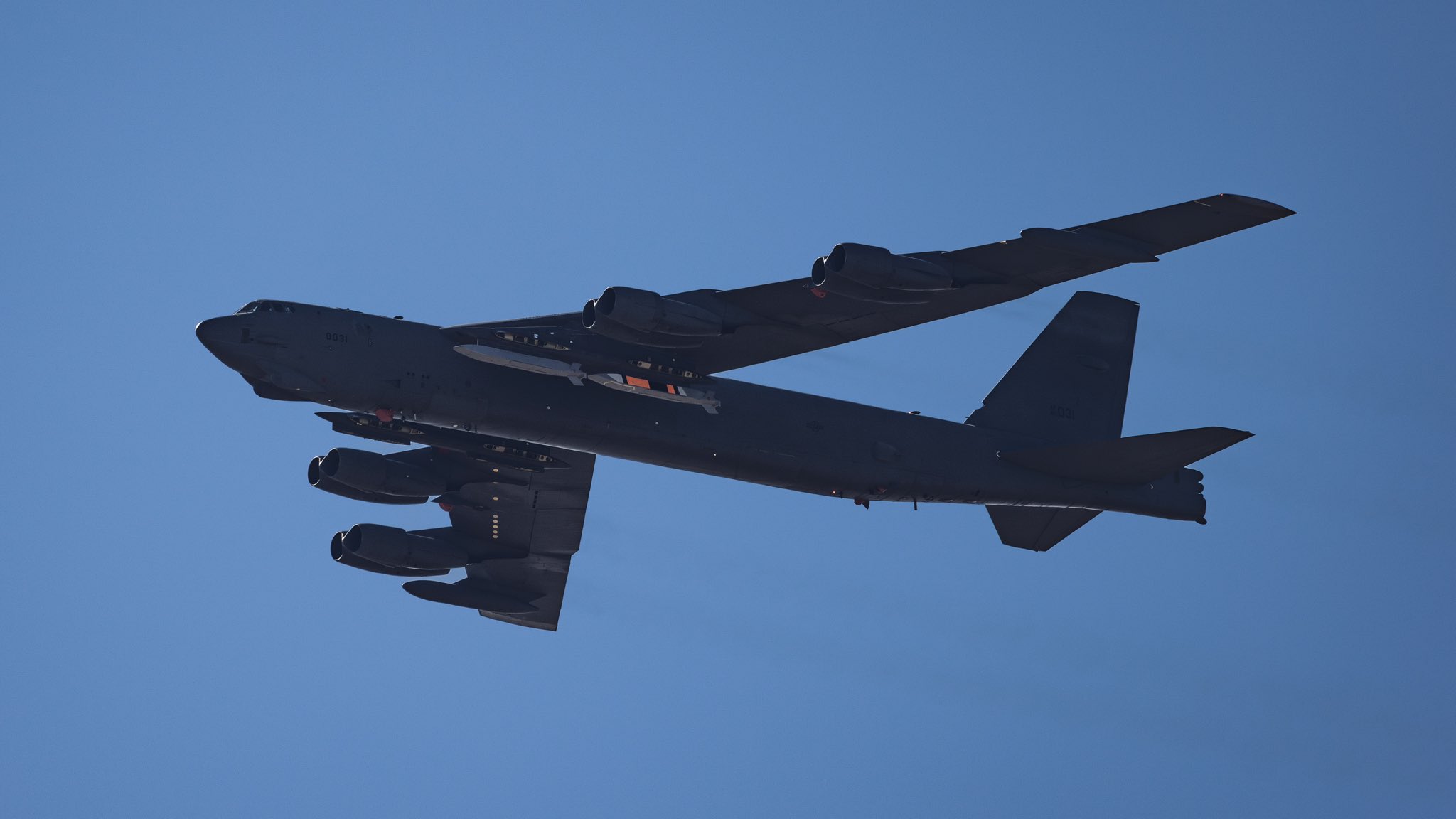
The U.S. Air Force is progressing with the integrations tests of the AGM-181 Long Range Stand Off (LRSO) missile, the service’s next-gen stealth nuclear cruise missile, on the B-52H Stratofortress bomber. The aircraft was spotted in flight over California with two inert LRSOs under its wings by aviation photographer Jarod Hamilton.
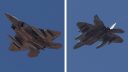
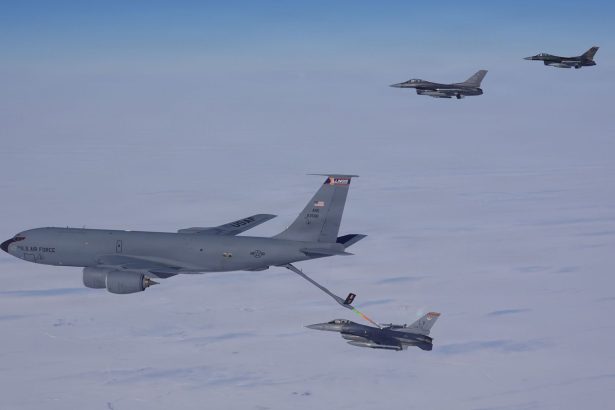
Interestingly, Jarod also captured the bomber while flying behind one of Edwards Air Force Base’s NKC-135R Stratotankers, identifiable by its white and gray livery, which support the base’s test programs. Making this even more interesting, the third aircraft in the formation appears to be the F-22 which was recently spotted in flight with the new stealthy Low Drag Tank and Pylon (LDTP) and stealthy pods for additional equipment.
“Only at Edwards, could you find a formation like this” pic.twitter.com/cc2X09yXJJ
— jmh.creates (@JarodMHamilton) March 21, 2026
The bomber is now being routinely spotted during the testing of the new weapon, suggesting that the effort may be ramping up. The service is expected to take a decision for the low-rate initial production of LRSO by Fiscal Year 2027.
Notably, the weapon was only first unveiled last year, when in June the Air Force released the first official rendering of the AGM-181. This was followed by the first photos of the weapons captured in flight by Californian spotters in November.
Here’s TORCH92 with some nice jewelry. pic.twitter.com/YUBt4iWAJR
— jmh.creates (@JarodMHamilton) March 21, 2026
Both in November and now, the B-52 used for the tests was flying with the TORCH callsign, used by Edwards Air Force Base’s 419th Flight Test Squadron. The squadron is responsible for the developmental test for the B-1B Lancer, B-2A Spirit, and B-52H Stratofortress bombers.
Also similarly to previous occasions, the weapons are installed on a Multiple Ejector Rack (MER), which can hold up to six weapons. The MER is used by the B-52H to carry multiple types of ordinance, and not only the AGM-181.
As we observed in our previous coverage of the AGM-181’s sightings, when highly classified assets like this are seen in plain daylight, it is often not by coincidence. The fact that the weapon was flown at low altitude in clear conditions may indicate that the U.S. Air Force wanted it to be seen.
The AGM-181 LRSO
The AGM-181 Long Range Standoff (LRSO) Cruise Missile is a long range survivable standoff weapon capable of delivering lethal nuclear effects on strategic targets, which will replace the aging AGM-86 Air Launched Cruise Missile (ALCM). The LRSO will be integrated on both the B-52 Stratofortress and B-21 Raider bomber aircraft.
The LRSO weapon system will be capable of penetrating and surviving advanced Integrated Air Defense Systems (IADS) from significant standoff ranges to prosecute strategic targets in support of the Air Force’s global attack capability and strategic deterrence core function.
The LRSO is a priority for the Air Force as the U.S. is working to modernize its nuclear triad, and has been defined as a critical capability for the B-21 Raider. The new stealth bomber is set to be equipped with three nuclear weapons: the AGM-181 LRSO cruise missile and the B61-12 and B61-13 bombs, with the latter used exclusively by the Raider.
The B-21 Raider conducts refueling tests over California pic.twitter.com/xrjf62KKjv
— jmh.creates (@JarodMHamilton) March 19, 2026
In 2020, the Air Force selected Raytheon as the prime contractor for the program and, a year later, LRSO entered Engineering, Manufacturing, and Development (EMD). In 2022, it was revealed that LRSO conducted nine successful major flight tests demonstrating its ability to safely separate from the B-52H aircraft, as well as weapon flight surface deployment, engine operations, flight control actuations and controlled flight.
Initially, the Air Force and Congress have also been discussing potential acquisition of conventionally armed variants of the missile. However, it was later decide to not pursue a conventional warhead version of the LRSO, with the Air Force now looking to the AGM-158B JASSM-ER (Joint Air-to-Surface Standoff Missile-Extended Range) and the AGM-158D JASSM-XR (JASSM-Extreme Range) to fill the requirement for a conventional air-launched cruise missile.
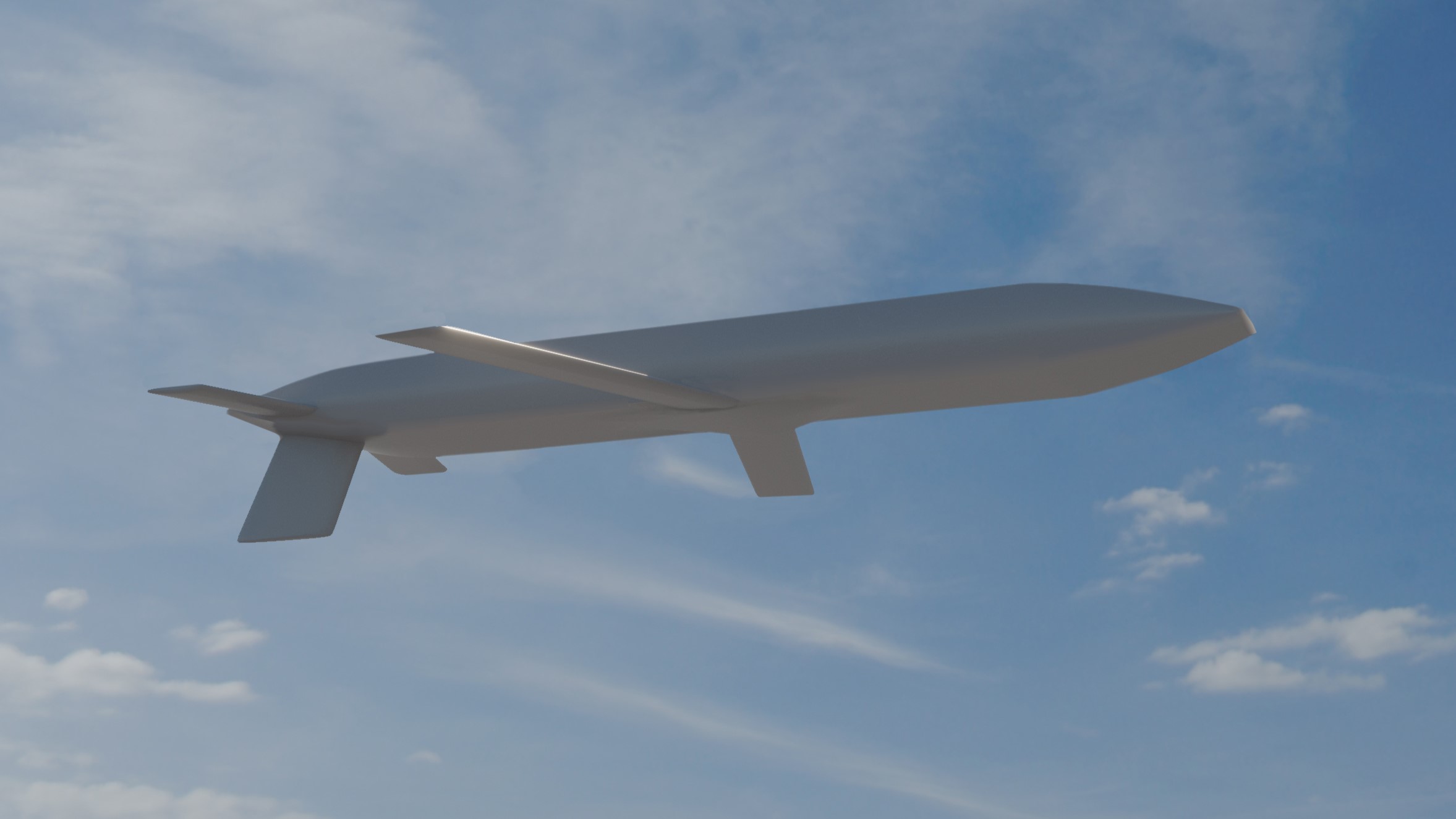
The Air Force mentioned in its fact sheets that a total of 1,715 of AGM-86B missiles were produced, although in 2007 the service announced the decision to reduce the inventory to 528 missiles. The weapons are set to be retired by 2030, replaced by approximatively 1,020 AGM-181s, according to The War Zone, quoting a Pentagon acquisition report.
In late 2022, the program’s total cost was estimated in about $16 billion, with the most recent estimates mentioning a cost per unit of about $14 million, instead of the expected $10 million, as reported in 2024 by Air and Space Forces Magazine. A low-rate initial production decision is expected in fiscal year 2027.